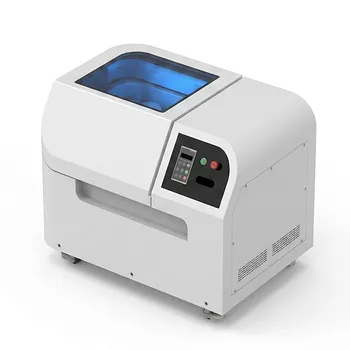
What are the technical advantages of using a vertical ball mill for MWCNT epoxy dispersion vs. solution-based methods?
Updated 5 months ago
Vertical ball milling utilizes high-energy mechanochemical forces to disperse multi-walled carbon nanotubes (MWCNTs) directly into epoxy resin without the use of liquid carriers. This method eliminates the need for large volumes of solvent, thereby preventing structural porosity caused by evaporation and removing the complex requirement for solvent recovery. Consequently, it offers a more streamlined, scalable, and environmentally sustainable path for industrial composite production.
The vertical ball mill transforms MWCNT dispersion from a chemical-intensive process to a mechanical one, solving the critical "porosity problem" inherent in solution-based methods while enhancing the uniformity of the final composite.
The Mechanochemical Advantage of Vertical Milling
Superior Breakdown of Nanotube Aggregates
MWCNTs naturally exist as tightly bound aggregates that are difficult to separate using traditional stirring. A vertical ball mill uses high-energy impact and shear forces generated by grinding media to physically de-agglomerate these bundles.
This intensive mechanical action ensures that the MWCNTs are uniformly distributed throughout the resin matrix. High uniformity is essential for maintaining consistent mechanical properties and enhancing the overall toughness of the finished material.
High-Concentration Processing
Unlike solution-based methods that require significant dilution, mechanochemical milling supports high-concentration reaction environments. This allows for the direct integration of nanotubes into the resin at the desired weight percentage without the "thinning" effect of solvents.
By maintaining a high concentration, the process achieves superior repeatability. It also eliminates the need for post-processing steps like centrifugal concentration or complex purification, which are standard in solution-based workflows.
Eliminating Solvent-Related Structural Risks
Prevention of Matrix Porosity
In solution-based dispersion, solvents must be evaporated after the nanotubes are mixed into the resin. Any residual solvent can lead to porosity and micro-voids within the cured epoxy, which significantly weakens the material’s structural integrity.
Vertical ball milling is a solvent-free process, meaning the resin’s chemical composition remains stable from mixing to curing. This results in a "dead-dense" composite structure with significantly fewer defects.
Streamlined Industrial Workflow
The elimination of solvents simplifies the entire production chain by removing the need for solvent recovery systems and hazardous waste management. This makes the vertical ball mill particularly suitable for the industrial-scale production of specialized materials, such as wave-absorbing composites.
Because there are fewer steps involving liquid handling and drying, the production efficiency is greatly increased. This allows manufacturers to move from lab-scale experimentation to mass production with fewer technical hurdles.
Technical Efficiency and Energy Density
Enhanced Energy Density and Particle Refinement
Vertical configurations, especially stirred variants, offer a significantly higher energy density compared to traditional horizontal ball mills. This allows the equipment to reach sub-micron levels of dispersion in a much shorter duration.
The intense agitation creates a narrower particle size distribution. This precision ensures that the MWCNTs provide a consistent network within the epoxy, which is vital for electrical conductivity and structural reinforcement.
Increased Specific Surface Area
Mechanical grinding effectively shortens the length of the nanotubes and breaks down aggregates, which increases the specific surface area of the particles. This change provides more active sites for the nanotubes to interface with the epoxy resin.
The increased surface area improves the interfacial bonding between the nanotubes and the matrix. Stronger bonding translates to better load transfer and improved performance under mechanical stress.
Understanding the Trade-offs
Mechanical Damage to Nanotube Structure
The high-energy impact that breaks aggregates can also lead to the unintentional shortening of the nanotubes. If the milling duration is too long, the aspect ratio of the MWCNTs may decrease, potentially impacting the electrical percolation threshold of the composite.
Heat Generation and Resin Stability
The friction and impact within a vertical mill generate significant heat during operation. If not properly managed through cooling jackets, this heat could potentially trigger a premature reaction (partial curing) in certain sensitive epoxy systems.
Implementing Vertical Milling in Your Workflow
Recommendations for Success
- If your primary focus is structural integrity: Use vertical ball milling to eliminate solvent-induced porosity and ensure a dense, defect-free epoxy matrix.
- If your primary focus is industrial throughput: Adopt this method to bypass the time-consuming solvent evaporation and recovery phases of production.
- If your primary focus is precise electrical properties: Carefully calibrate milling time and energy to balance aggregate breakdown with the preservation of the nanotubes' aspect ratio.
By transitioning to vertical ball milling, you replace chemical complexity with mechanical precision, resulting in a more robust and scalable manufacturing process for MWCNT-reinforced resins.
Summary Table:
| Feature | Vertical Ball Milling (Mechanochemical) | Solution-Based Methods |
|---|---|---|
| Solvent Usage | Solvent-free; direct resin integration | High volume of liquid carriers required |
| Structural Integrity | High density; zero solvent-induced porosity | Risk of micro-voids during evaporation |
| Processing Speed | High energy density; rapid de-agglomeration | Slow; requires long drying/recovery phases |
| Scalability | Streamlined industrial workflow | Complex due to hazardous waste/recovery |
| Uniformity | High shear ensures narrow size distribution | Often limited by aggregate re-stacking |
Elevate Your Material Research with Precision Engineering
Are you looking to eliminate porosity and maximize the performance of your MWCNT composites? At [Your Brand Name], we provide complete laboratory sample preparation solutions tailored for advanced material science. Our expertise in powder processing and compaction equipment ensures your research moves seamlessly from the lab to industrial scale.
Our specialized equipment range includes:
- Advanced Milling: Vertical mills, planetary ball mills, jet mills, and cryogenic grinders for sub-micron dispersion.
- Precision Pressing: A full spectrum of hydraulic presses, including Cold/Warm Isostatic Presses (CIP/WIP), vacuum hot presses, and XRF pellet presses.
- Processing Essentials: High-efficiency powder mixers, defoaming mixers, and vibratory sieve shakers.
Whether you are a researcher focused on structural integrity or a distributor seeking reliable OEM/ODM support and high-performance equipment, we are here to help. Contact us today to discuss how our solutions can optimize your MWCNT dispersion and material processing workflows!
References
- Bien Che Dong, Nieu Huu Nguyen. The impact of different multi-walled carbon nanotubes on the X-band microwave absorption of their epoxy nanocomposites. DOI: 10.1186/s13065-015-0087-2
Mentioned Products
- Vertical Production Planetary Ball Mill for High Throughput Powder Processing
- Vertical Square Planetary Ball Mill for Laboratory Sample Preparation and Nanoscale Grinding
- Vertical Semi Circular Planetary Ball Mill for Laboratory Precision Grinding
- Mass Production Nano Sand Mill for Industrial Nanomaterial Grinding and Dispersion
- Multi-Platform Nanoscale High-Energy Vibratory Ball Mill
People Also Ask
- What is the function of a high-performance planetary ball mill in AMZ laminates? Master Ceramic Homogenization.
- What is the role of a planetary ball mill in Al–Si3N4 nanocomposite prep? Achieve Uniform Homogenization
- What is the function of a planetary ball mill in lanthanum hexaaluminate synthesis? Master Micron-Level Homogenization
- What role does a planetary ball mill play in the synthesis of Er-doped PMN-PT ceramics? Enhancing Homogeneity & Purity
- What are the advantages of using a planetary ball mill for the fine grinding of barium silicate glass powder? Peak Results

Tech Team · PowderPreparation
Last updated on May 14, 2026
Related Products
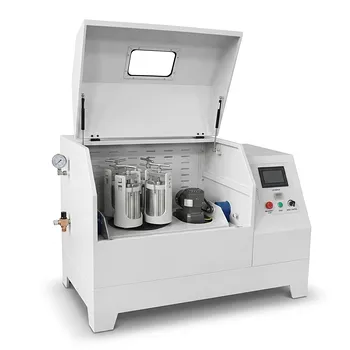
Vertical Production Planetary Ball Mill for High Throughput Powder Processing
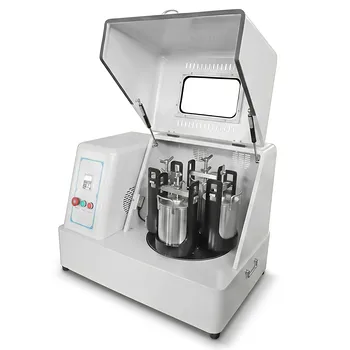
Vertical Square Planetary Ball Mill for Laboratory Sample Preparation and Nanoscale Grinding
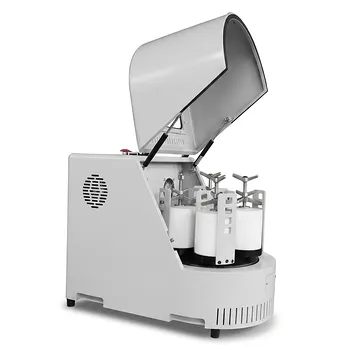
Vertical Semi Circular Planetary Ball Mill for Laboratory Precision Grinding
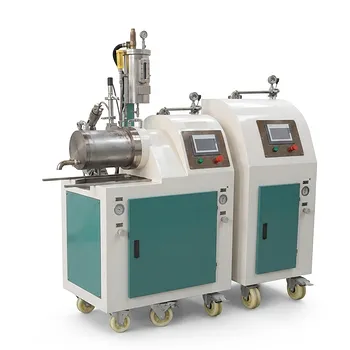
Mass Production Nano Sand Mill for Industrial Nanomaterial Grinding and Dispersion

Multi-Platform Nanoscale High-Energy Vibratory Ball Mill

High Throughput Micro Ball Mill for Cryogenic Grinding and Laboratory Cell Disruption
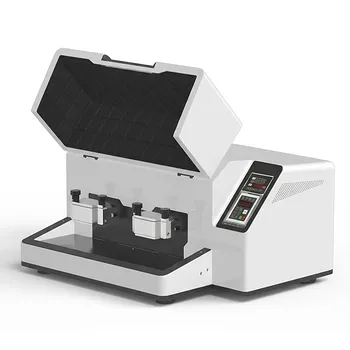
Nanoscale High-Energy Vibratory Ball Mill for Laboratory Sample Preparation, Mechanochemistry, and Mechanical Alloying
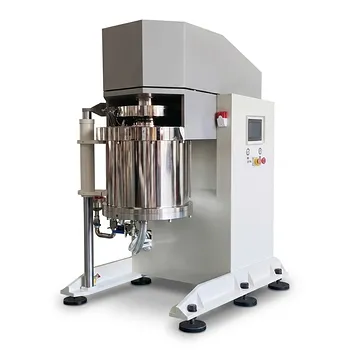
Vertical Nano Bead Mill for Ceramic Materials with Permanent Magnet Motor and High Efficiency Grinding

High Energy Planetary Ball Mill for Nano Scale Grinding and Mechanical Alloying
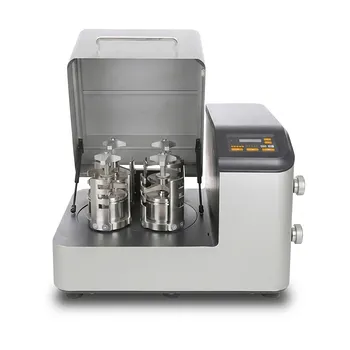
High Energy Planetary Ball Mill for Nano Scale Grinding and Colloidal Mixing in Material Science Research
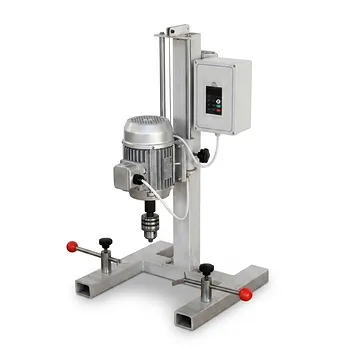
Laboratory Disperser and Sand Mill for Grinding Dispersing Emulsifying
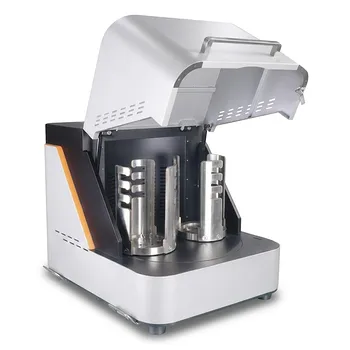
High Energy Laboratory Planetary Ball Mill for Nano Grinding and Colloidal Mixing of Hard and Brittle Materials
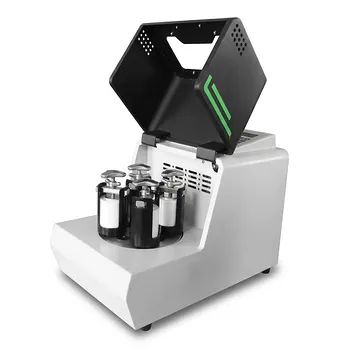
Miniature Planetary Ball Mill with Vacuum Grinding and High Efficiency for Laboratory Sample Preparation

High Energy Laboratory Planetary Ball Mill for Nano Grinding and Material Science Sample Preparation
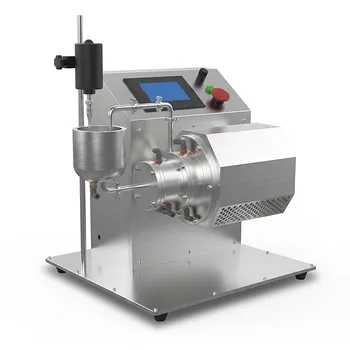
Laboratory Horizontal Pin Nano Sand Mill
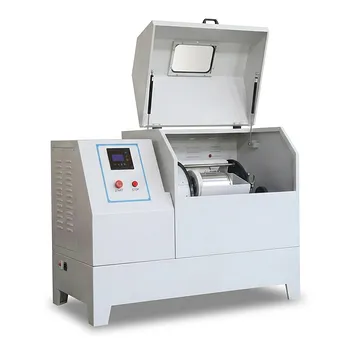
Heavy Duty Horizontal Planetary Ball Mill for Efficient Industrial Grinding and Sample Preparation

High Energy Hybrid Vibratory Ball Mill for Grinding Mixing and Cell Disruption
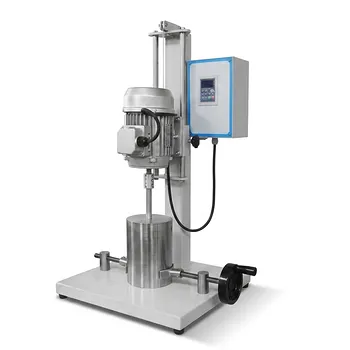
Laboratory Sand Mill Grinding Dispersing Machine for Wet Particle Size Reduction
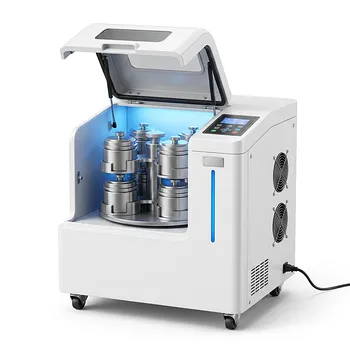
High Energy Omnidirectional Planetary Ball Mill 20L