Why are zirconia grinding balls selected for MoS2 electrodes? Maximize exfoliation and ensure chemical purity.
Updated 5 months ago
Zirconia grinding balls are selected for the liquid-phase processing of $\text{MoS}_2$ electrodes because they provide the high kinetic energy necessary to exfoliate molybdenum disulfide layers while maintaining strict chemical purity. Their high density and strength allow them to overcome the van der Waals forces that bind $\text{MoS}_2$ layers together, facilitating the creation of high-performance nanosheets. Furthermore, zirconia’s chemical inertness prevents the introduction of impurities that would otherwise degrade the ionic conductivity of sulfide-based solid electrolytes.
Core Takeaway: Zirconia media offer a unique combination of high mechanical impact and chemical stability, ensuring that $\text{MoS}_2$ is effectively delaminated without contaminating the sensitive electrochemical environment of the battery components.
Mechanical Force and Interlayer Exfoliation
Overcoming van der Waals Forces
Molybdenum disulfide ($\text{MoS}_2$) consists of layers held together by relatively weak van der Waals forces, which must be broken to maximize the material's electrochemical surface area. Zirconia balls possess the high strength and high density required to generate the intense kinetic energy needed to shear these layers apart.
Facilitating Liquid-Phase Exfoliation
During liquid-phase processing, the grinding media must provide sufficient mechanical impact and shear forces to disperse the $\text{MoS}_2$ into the solvent. The energy provided by zirconia media ensures a high degree of interlayer exfoliation, resulting in thinner nanosheets that improve the rate capability of the final electrode.
Preserving Electrochemical Performance
The Role of Chemical Inertness
Sulfide-based solid electrolytes are highly sensitive to contamination, which can occur if the grinding media reacts with the precursors. Zirconia is chosen for its excellent chemical inertness, ensuring that no unwanted chemical reactions take place during the synthesis process.
Protecting Ionic Conductivity
The introduction of foreign metallic or oxide impurities can significantly hinder the ionic conductivity of the electrolyte-electrode interface. By using zirconia, processors ensure that the final material maintains its intended chemical composition and high performance levels.
Physical Properties of Zirconia Media
High Hardness and Efficiency
Zirconia's high hardness minimizes the deformation of the media during high-energy milling, allowing for the maximum transfer of energy to the $\text{MoS}_2$ particles. This efficiency reduces the time required to reach the desired particle size or degree of exfoliation.
Exceptional Wear Resistance
Because zirconia exhibits superior wear resistance, the rate of media erosion is extremely low compared to other materials. Even when minimal wear does occur, the resulting debris is often more compatible with high-performance ceramic systems than metallic contaminants.
Understanding the Trade-offs
Impact of Media Wear
While zirconia is wear-resistant, long-duration high-energy milling will inevitably produce some nano-scale wear debris. In systems that do not naturally contain zirconium, this introduces "heterogeneous" impurities, though they are generally less detrimental than those from steel or alumina media.
Weight and Equipment Stress
The high density of zirconia media, while beneficial for energy transfer, places significant mechanical stress on the milling equipment. Operators must ensure that the mill's motor and internal linings are rated for the high-mass loads associated with zirconia to prevent premature equipment failure.
How to Apply This to Your Project
When selecting grinding media for electrode or electrolyte processing, your choice should align with the specific chemical and physical requirements of your material system.
- If your primary focus is maximizing exfoliation density: Use high-density stabilized zirconia to ensure the maximum kinetic energy is applied to break van der Waals bonds.
- If your primary focus is absolute chemical purity in sulfide systems: Prioritize high-purity zirconia over alumina or metallic media to prevent the degradation of ionic conductivity.
- If your primary focus is processing materials that already contain Zirconium: Zirconia media is the definitive choice as it follows the "homogeneous grinding principle," ensuring any wear debris is chemically identical to your product.
Zirconia serves as the gold standard for $\text{MoS}_2$ processing by balancing the aggressive mechanical requirements of exfoliation with the delicate chemical requirements of battery chemistry.
Summary Table:
| Key Property | Advantage for MoS2 Processing | Impact on Performance |
|---|---|---|
| High Density | Generates intense kinetic energy | Effectively breaks van der Waals forces for exfoliation |
| Chemical Inertness | Prevents reactions with precursors | Protects the ionic conductivity of sulfide electrolytes |
| High Hardness | Efficient energy transfer | Reduces processing time to reach desired nanosheet thickness |
| Wear Resistance | Minimal media erosion | Ensures the electrochemical environment remains contaminant-free |
Elevate Your Battery Material Research with Precision Solutions
At [Brand Name], we provide complete laboratory sample preparation solutions tailored for material science and high-performance electrode development. We specialize in advanced powder processing and compaction equipment designed to meet the rigorous demands of battery chemistry.
Our extensive product line supports your entire workflow:
- Advanced Milling: Optimize MoS2 exfoliation with our planetary ball mills, jet mills, and high-purity zirconia media.
- Preparation & Sizing: Precise crushers (jaw/roll), cryogenic grinders, and vibratory sieve shakers for consistent particle control.
- Mixing Excellence: Achieve perfect homogeneity with our powder mixers and specialized defoaming mixers.
- Precision Compaction: A full spectrum of hydraulic presses, including Cold/Warm Isostatic Presses (CIP/WIP), hot presses, and vacuum hot presses for superior pellet and electrode fabrication.
Ready to enhance your lab's efficiency and material purity?
Contact our technical experts today to discuss how our specialized equipment can accelerate your research and production goals.
References
- Kazuto Fujiwara, Hiroshi Inoue. Unveiling the Capacity Boosting Mechanism of the MoS<sub>2</sub> Electrode by Focusing on the Under Potential Deposition in All‐Solid‐State Batteries Prepared by One‐Pot One‐Step Liquid Phase Mixing. DOI: 10.1002/adsu.202500426
Mentioned Products
- Vertical Semi Circular Planetary Ball Mill for Laboratory Precision Grinding
- Vertical Square Planetary Ball Mill for Laboratory Sample Preparation and Nanoscale Grinding
- High Energy Laboratory Planetary Ball Mill for Nano Grinding and Material Science Sample Preparation
- 8L Planetary Ball Mill for Laboratory Grinding and Sample Preparation
- Heavy Duty Horizontal Planetary Ball Mill for Efficient Industrial Grinding and Sample Preparation
People Also Ask
- What role does a planetary ball mill play in the synthesis of Li6PS5Cl (LPSCl)? Unlock High Ionic Conductivity
- Why is a planetary ball mill essential for SiBCN-rGO wet-spinning? Achieve Superior Dispersion and Spinnability
- Why is an intermittent grinding process required for perovskites in a planetary ball mill? Ensure Stability & Purity
- Why is a planetary ball mill required for PET micronization? Ensure Accurate Chemical Analysis of Reprocessed PET
- How does mechanized planetary ball milling compare to manual agate grinding? Optimize sulfide standard material precision.

Tech Team · PowderPreparation
Last updated on May 14, 2026
Related Products

Vertical Semi Circular Planetary Ball Mill for Laboratory Precision Grinding

Vertical Square Planetary Ball Mill for Laboratory Sample Preparation and Nanoscale Grinding

High Energy Laboratory Planetary Ball Mill for Nano Grinding and Material Science Sample Preparation

8L Planetary Ball Mill for Laboratory Grinding and Sample Preparation

Heavy Duty Horizontal Planetary Ball Mill for Efficient Industrial Grinding and Sample Preparation

Miniature Planetary Ball Mill with Vacuum Grinding and High Efficiency for Laboratory Sample Preparation

High Energy Omnidirectional Planetary Ball Mill 20L

High Energy Omnidirectional Planetary Ball Mill 16L
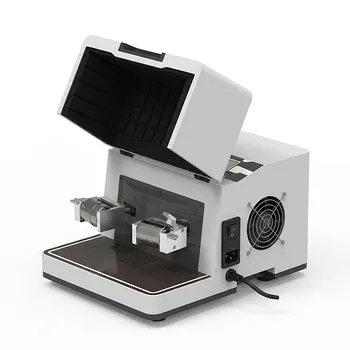
High Energy Hybrid Vibratory Ball Mill for Grinding Mixing and Cell Disruption
