How does the diameter of the grinding media influence the efficiency and outcome of the drug milling process? | Guide
Updated 4 months ago
The diameter of your grinding media is the primary factor determining the collision frequency and energy distribution within a milling chamber. By selecting the correct media size, you directly control the final particle size distribution, the speed of the nanonization process, and the total energy efficiency of the operation.
Core Takeaway: Smaller grinding media maximize the number of contact points to accelerate the production of sub-200nm particles, whereas larger media provide the high-impact force necessary to fracture coarse feedstocks.
The Mechanics of Contact and Collision Frequency
Maximizing Contact Point Density
The total number of contact points in a milling chamber increases exponentially as the diameter of the grinding media decreases. For a fixed volume, smaller beads (such as 0.1 mm to 0.3 mm) occupy the space more densely than larger beads.
This high density ensures that drug particles are captured and fractured more frequently. The result is a more uniform distribution of shear forces throughout the slurry, which is essential for consistent drug quality.
Accelerating the Nanonization Process
In drug formulation, achieving a particle size of less than 200 nm requires a high collision frequency. Smaller media provide the specific surface area needed to hit the "grinding limit" of the material more effectively.
Using beads with diameters in the range of 0.1 mm to 0.2 mm allows manufacturers to reach these ultra-fine scales rapidly. This makes smaller media the gold standard for nano-suspensions and high-bioavailability formulations.
Impact Force vs. Stress Intensity
The Strength of Single Impacts
While small beads offer frequency, larger grinding media (1.0 mm to 30 mm) provide significantly higher stress intensity per individual hit. This kinetic energy is required to break the strong crystalline bonds of bulk raw materials.
If the media is too small for a coarse feed, the beads may simply "bounce" off the particles without fracturing them. Larger media are therefore utilized for coarse crushing and initial bulk mixing before fine grinding begins.
The 3:1 Feed Ratio Rule
To ensure effective capture and breakage, a standard engineering rule is that the grinding media should be at least three times larger than the largest particle in the feed material.
If your starting material consists of 100-micron crystals, your media should generally be no smaller than 300 microns (0.3 mm). Violating this ratio often leads to "cushioning," where the media moves around the particles rather than through them.
Understanding the Trade-offs and Pitfalls
The Risk of Increased Milling Time
Smaller media can actually increase total milling time if the equipment lacks the power density to move the beads effectively. Because smaller beads have less mass, they require higher agitator speeds to generate sufficient centrifugal force for a fracture.
Contamination and Media Wear
The increased surface area of smaller beads also means there is more media-to-media contact. This can lead to higher rates of attrition and potential contamination of the drug product.
To mitigate this, high-density, chemically inert materials like yttria-stabilized zirconia are preferred. These materials minimize metallic shedding while maintaining the hardness necessary for efficient refinement.
Energy Transfer and Power Density
The efficiency of the diameter choice is highly dependent on the milling technology used. High-energy mills can utilize tiny beads effectively, while low-energy or gravity-based mills may require the weight of larger balls to achieve any significant particle reduction.
Making the Right Choice for Your Goal
How to Apply This to Your Project
To optimize your milling process, you must match the media diameter to your specific stage of production and your final target size.
- If your primary focus is producing sub-200nm nano-formulations: Use the smallest possible media (0.1 mm to 0.3 mm) to maximize collision frequency and reach the grinding limit quickly.
- If your primary focus is processing coarse bulk material: Select larger media (1.0 mm to 5.0 mm) that follow the 3:1 ratio rule to ensure there is enough impact energy to fracture large crystals.
- If your primary focus is minimizing contamination: Choose high-density ceramic media with a moderate diameter to balance milling speed with reduced surface wear.
- If your primary focus is increasing surface activity for coatings: Utilize fine 1 mm media in high-energy mills to accelerate particle refinement and enhance the phase content of the powder.
Selecting the optimal media diameter is a balancing act between the physical size of the feed material and the sophisticated requirements of the final drug delivery system.
Summary Table:
| Media Diameter | Primary Mechanism | Target Outcome | Key Advantage |
|---|---|---|---|
| 0.1 - 0.3 mm | High Collision Frequency | Nanonization (<200nm) | Maximum contact points for ultra-fine uniformity |
| 0.3 - 1.0 mm | Balanced Stress | Fine Grinding | Optimal for 3:1 ratio with micron-sized feed |
| 1.0 - 30.0 mm | High Impact Force | Coarse Crushing | Breaks strong crystalline bonds in bulk materials |
Optimize Your Material Preparation with Expert Solutions
Achieving the perfect particle size distribution requires more than just the right media—it requires precision-engineered equipment. At our core, we provide complete laboratory sample preparation solutions tailored for material science.
Whether you are scaling up nanonization or processing bulk raw materials, our extensive product line supports your entire workflow:
- Advanced Milling: Planetary ball mills, jet mills, disc mills, and liquid nitrogen cryogenic grinders for ultra-fine refinement.
- Powder Processing: High-efficiency crushers (jaw/roll), powder mixers, and vibratory/air-jet sieve shakers.
- Compaction Excellence: A full spectrum of hydraulic presses, including Cold/Warm Isostatic Presses (CIP/WIP), vacuum hot presses, and XRF pellet presses.
Ready to enhance your lab's efficiency and product consistency? Contact us today to consult with our specialists and find the ideal equipment for your specific drug formulation and material processing needs.
References
- Hironori Tanaka, Ken‐ichi Ogawara. Nanocrystal Preparation of Poorly Water-Soluble Drugs with Low Metal Contamination Using Optimized Bead-Milling Technology. DOI: 10.3390/pharmaceutics14122633
Mentioned Products
- Laboratory Disc Mill Medium Hard Material Grinding Coal Coke Ore Pulverizer
- Water Cooled Pulse Jet Ultra Fine Pulverizer for Continuous Grinding
- Small Vibrating Ultrafine Grinder for Traditional Chinese Medicine
- Small Laboratory Colloid Mill for Ultra-Fine Wet Grinding and Emulsification
- Continuous Feeding Grinding Mill for Dry Fibrous Tough and Hard Materials in Laboratory and Small Production
People Also Ask
- What is the primary function of a laboratory disc mill for oyster shells? Boost Reactivity & Analytical Precision
- What is the function of a laboratory mill in Cassia tora L. seed analysis? Master Precision Thermal Data Prep.
- What is the purpose of using a laboratory mill to grind dried precipitates? Optimize TiO2/AuNRs Catalyst Homogeneity
- What role does a laboratory mill play in the study of lignite coal co-combustion? Optimizing Fuel Blends and Reactivity
- What function does a laboratory mill serve in corn starch saccharification experiments? Optimize Surface Area & Reactions

Tech Team · PowderPreparation
Last updated on May 14, 2026
Related Products
Laboratory Disc Mill Medium Hard Material Grinding Coal Coke Ore Pulverizer
Water Cooled Pulse Jet Ultra Fine Pulverizer for Continuous Grinding
Small Vibrating Ultrafine Grinder for Traditional Chinese Medicine
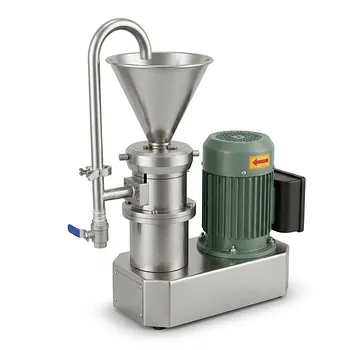
Small Laboratory Colloid Mill for Ultra-Fine Wet Grinding and Emulsification
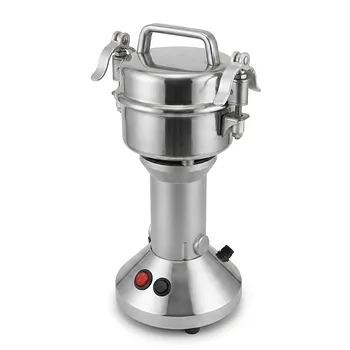
Continuous Feeding Grinding Mill for Dry Fibrous Tough and Hard Materials in Laboratory and Small Production
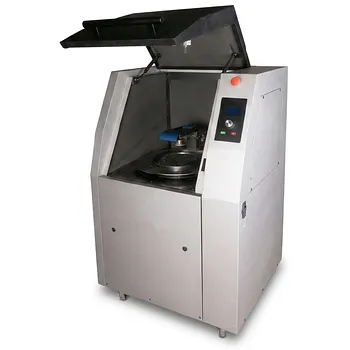
High Speed Vibratory Disc Mill for Spectral Analysis Sample Preparation and Rapid Powder Grinding
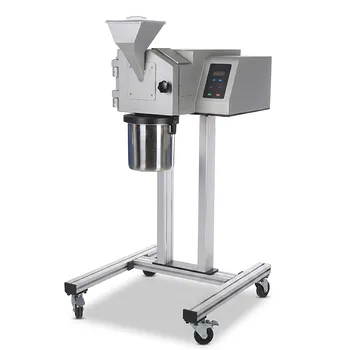
Cross Beater Mill for Brittle Material Grinding and Continuous Fine Crushing Industrial Sample Preparation
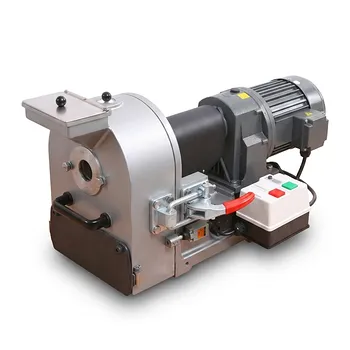
Laboratory Disc Mill for Fine Sample Preparation of Hard and Brittle Materials
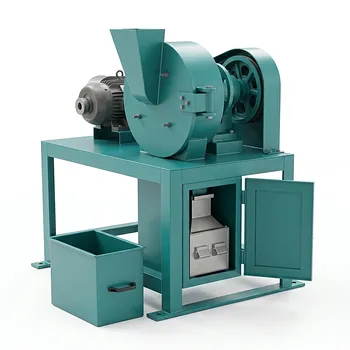
Sealed Disc Pulverizer Customized Model
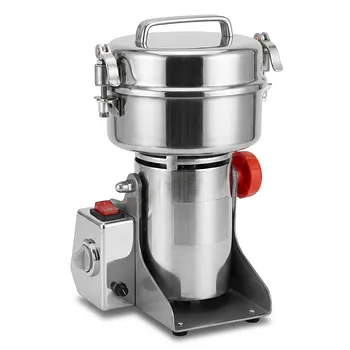
High Speed Laboratory Powder Grinder Small Batch Sample Preparation Mill
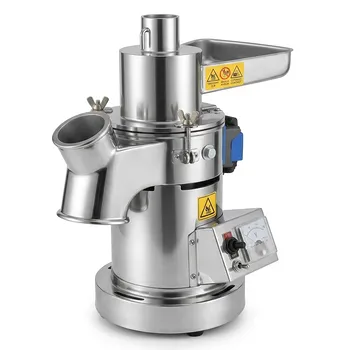
Continuous Feeding Grinder High Efficiency Pulverizer for Lab Sample Preparation

High Energy Laboratory Planetary Ball Mill for Nano Grinding and Material Science Sample Preparation
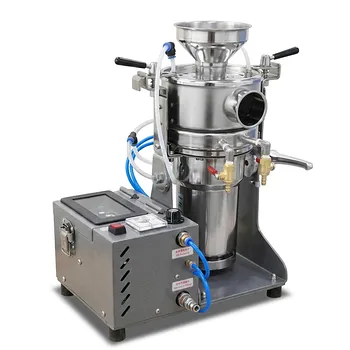
Water Cooled Pulse Jet Ultrafine Grinder
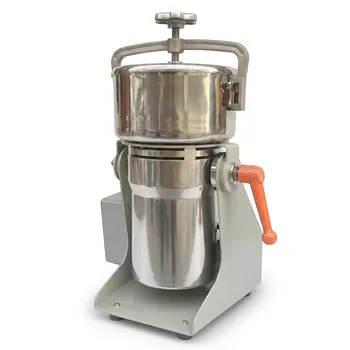
High Speed Laboratory Grinder Efficient Stainless Steel Powder Pulverizer Universal Material Science Mill for Sample Preparation
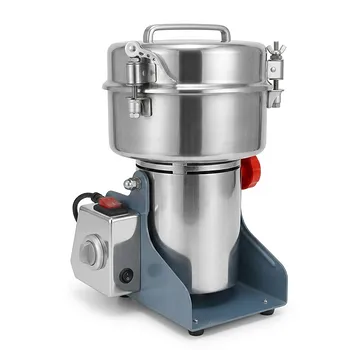
Small High-Speed Grinder for Efficient Laboratory Sample Preparation
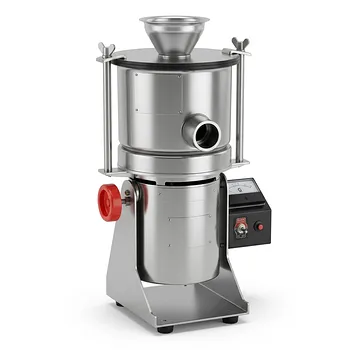
Laboratory Ultrafine Impact and Airflow Grinder for Precise Particle Size Control
Vertical Semi Circular Planetary Ball Mill for Laboratory Precision Grinding

Vertical Square Planetary Ball Mill for Laboratory Sample Preparation and Nanoscale Grinding
Laboratory Basket Sand Mill for Wet Grinding and Dispersion of Viscous Slurries