Why is high-purity argon vital for Ni-Mn-Sn ball milling? Prevent oxidation and ensure phase purity.
Updated 4 months ago
The use of a high-purity argon atmosphere is essential to prevent the rapid oxidation of reactive manganese and tin surfaces during the mechanical alloying process.
In high-energy ball milling (HEBM), the intense physical impact creates fresh, highly reactive metallic surfaces that are extremely susceptible to atmospheric contamination. An argon environment acts as an inert shield, preventing oxygen from infiltrating the metallic crystal lattice and ensuring the synthesized Ni-Mn-Sn alloy maintains its intended chemical and magnetic profile.
High-purity argon provides an oxygen-free environment that prevents the formation of detrimental oxides like MnO and SnO. This isolation is critical for maintaining the precise chemical stoichiometry required to successfully form the functional Heusler phase.
The Mechanics of Atmospheric Protection
Preventing Oxidation of Reactive Surfaces
During high-energy milling, manganese (Mn) and tin (Sn) powders are subjected to continuous fracture and cold-welding. This process generates fresh metallic surfaces that have high surface energy and a natural affinity for oxygen.
Without an argon shield, these surfaces would react instantly with air to form MnO or SnO. Argon effectively displaces oxygen within the milling jar, keeping the metal atoms in their elemental state for proper alloying.
Managing Localized Thermal Energy
The intense mechanical collisions in a planetary ball mill generate significant localized high temperatures. These "hot spots" provide the activation energy necessary for rapid oxidation if even trace amounts of oxygen are present.
An inert argon atmosphere ensures that these thermal spikes do not trigger unintended chemical reactions. This allows the kinetic energy of the mill to be used exclusively for grain refinement and phase transformation rather than combustion.
Preserving Surface Area Integrity
As powders are reduced to nanometer sizes, their specific surface area increases exponentially. This increased surface area makes the material disproportionately more reactive than its bulk counterpart.
High-purity argon provides a stable environment for these nano-powders to exist without degrading. This is vital for maintaining the structural purity of the powder system throughout long milling cycles.
Impact on Phase Purity and Magnetic Properties
Ensuring Heusler Phase Formation
The functional properties of Ni-Mn-Sn systems depend entirely on the formation of the Heusler phase crystal structure. Any deviation in chemical accuracy caused by oxidation will prevent this phase from forming correctly.
By eliminating oxygen impurities, argon ensures that the chemical stoichiometry remains precise. This precision is the foundation for the material’s unique magneto-caloric and shape-memory effects.
Protecting Magnetic Performance
Oxides are non-magnetic or have vastly different magnetic signatures than the target alloy. The presence of unwanted oxide phases like MnO disrupts the magnetic exchange interactions within the crystal lattice.
Maintaining a high-purity environment guarantees the magnetic integrity of the final product. This ensures that the resulting material meets the performance specifications required for technical applications.
Understanding the Trade-offs
Purity vs. Cost and Complexity
Maintaining a 99.999% purity argon atmosphere requires specialized equipment and high-quality seals. While this increases the operational cost and setup time, the alternative is a contaminated sample that often lacks functional value.
Seal Integrity Risks
The effectiveness of the argon atmosphere is entirely dependent on the mechanical integrity of the milling jar seals. Even a microscopic leak can introduce enough oxygen to ruin a Ni-Mn-Sn system over a long milling duration.
Processing Time Considerations
Using an inert gas does not change the physics of the milling itself, but it does allow for longer milling cycles without the risk of material degradation. This is a critical trade-off that enables the production of finer, more homogenous powders.
How to Apply This to Your Project
High-purity argon is a non-negotiable requirement for synthesizing reactive metallic systems through mechanical alloying.
- If your primary focus is magnetic performance: You must use the highest grade of argon available (5.0 grade or higher) to ensure no trace oxygen disrupts the Heusler phase.
- If your primary focus is phase purity: Ensure your milling jars are vacuum-tested and backfilled with argon at a slight positive pressure to prevent atmospheric ingress.
- If your primary focus is cost-efficiency: Consider using smaller, high-quality jars with premium seals to minimize the volume of high-purity gas required while maintaining protection.
The strategic use of high-purity argon transforms high-energy ball milling from a destructive process into a precise tool for advanced material synthesis.
Summary Table:
| Key Requirement | Role of Argon Atmosphere | Impact on Ni-Mn-Sn System |
|---|---|---|
| Oxidation Prevention | Shields highly reactive fresh Mn/Sn surfaces | Prevents formation of detrimental MnO and SnO |
| Thermal Management | Inhibits reactions at localized thermal "hot spots" | Directs energy toward grain refinement, not combustion |
| Stoichiometry Control | Maintains precise chemical ratios during milling | Ensures the formation of the functional Heusler phase |
| Property Protection | Eliminates non-magnetic oxide impurities | Preserves magneto-caloric and shape-memory effects |
Achieve Precision in Advanced Material Synthesis
Successful mechanical alloying of reactive systems like Ni-Mn-Sn requires both high-energy impact and absolute atmospheric control. We provide complete laboratory sample preparation solutions designed to protect your material's chemical and magnetic integrity.
Our specialized equipment range includes:
- High-Energy Milling: Planetary ball mills, jet mills, and cryogenic grinders for nanometer grain refinement.
- Atmosphere Integrity: Vacuum-tested milling jars and accessories for high-purity inert gas processing.
- Powder Compaction: A full spectrum of hydraulic presses, including Cold/Warm Isostatic Presses (CIP/WIP), hot presses, and vacuum hot presses.
Whether you are developing shape-memory alloys or advanced magnetic materials, our equipment ensures your research is never compromised by contamination.
Contact our technical experts today to optimize your powder processing and compaction workflow!
References
- Florin Popa, I. Chicinaş. Phase Evolution by Annealing of Mechanically Activated Ni, Mn, and Sn Elemental Powders Mixture with the Ni2MnSn Heusler Compound Ratio. DOI: 10.3390/ma18245642
Mentioned Products
- High Energy Planetary Ball Mill for Nano Scale Grinding and Mechanical Alloying
- High Energy Hybrid Vibratory Ball Mill for Grinding Mixing and Cell Disruption
- High Energy Laboratory Planetary Ball Mill for Nano Grinding and Material Science Sample Preparation
- High Energy Planetary Ball Mill for Nano Scale Grinding and Colloidal Mixing in Material Science Research
- High Energy Omnidirectional Planetary Ball Mill 16L
People Also Ask
- Why is a high-energy planetary ball mill used for nano-milling As4Se3? Achieve Expert Structural Transformation
- What role do high-energy planetary ball mills play in FDM composite filament preparation? Optimize Material Performance
- What is the role of a high-energy planetary ball mill in the exfoliation of modified WSe2? Achieve Nano-Precision
- What is the function of a planetary ball mill in glass-ceramic sintering? Optimize Reactivity and Uniformity
- What is the role of a high-energy planetary ball mill in the preparation of high-performance nano-ceramics? Key Guide

Tech Team · PowderPreparation
Last updated on Jun 03, 2026
Related Products

High Energy Planetary Ball Mill for Nano Scale Grinding and Mechanical Alloying

High Energy Hybrid Vibratory Ball Mill for Grinding Mixing and Cell Disruption

High Energy Laboratory Planetary Ball Mill for Nano Grinding and Material Science Sample Preparation
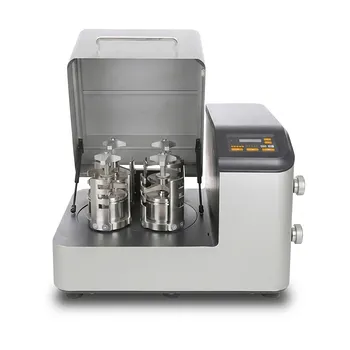
High Energy Planetary Ball Mill for Nano Scale Grinding and Colloidal Mixing in Material Science Research

High Energy Omnidirectional Planetary Ball Mill 16L
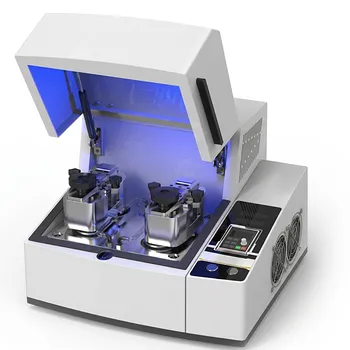
Laboratory Nano High Energy Ball Mill Ultrafine Grinding Mechanical Alloying

Nano High Energy Vibratory Ball Mill with Heating and Temperature Control

Ultra-Low Temperature Cryogenic High-Energy Vibratory Ball Mill
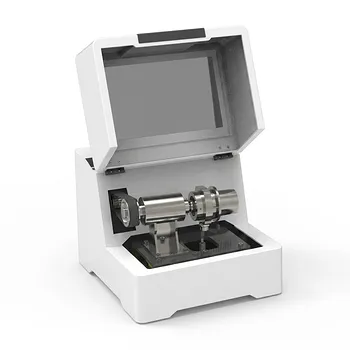
Single Tank High Energy Vibratory Ball Mill for Laboratory Grinding and Mixing

High Energy Omnidirectional Planetary Ball Mill 20L
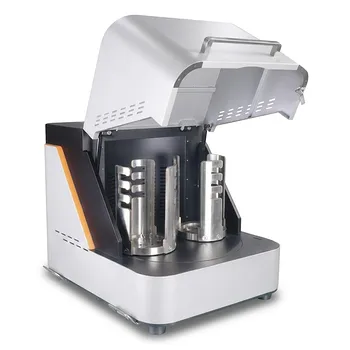
High Energy Laboratory Planetary Ball Mill for Nano Grinding and Colloidal Mixing of Hard and Brittle Materials
Dual Jar High Energy Vibratory Ball Mill

Nanoscale High-Energy Vibratory Ball Mill for Laboratory Sample Preparation, Mechanochemistry, and Mechanical Alloying

Multi-Platform Nanoscale High-Energy Vibratory Ball Mill

Nano High Energy Vibratory Ball Mill for Laboratory Sample Preparation

Heating Temperature Controlled High Energy Vibratory Ball Mill

Vertical Square Planetary Ball Mill for Laboratory Sample Preparation and Nanoscale Grinding

8L Planetary Ball Mill for Laboratory Grinding and Sample Preparation
Nanoscale High Energy Vibratory Ball Mill Low Temperature
