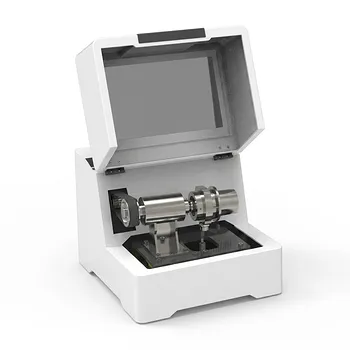
What is the role of a high-energy planetary ball mill in the preparation of high-performance nano-ceramics? Key Guide
Updated 5 months ago
The high-energy planetary ball mill is the fundamental tool for synthesizing high-performance nano-ceramics. It utilizes intense mechanical forces—including impact, attrition, and shear—generated by high-speed rotation to refine conventional ceramic particles to sizes below 100 nanometers. This equipment is essential for increasing the specific surface area and reactivity of powders, ensuring that different chemical components are mixed with molecular-level uniformity to facilitate high-density sintering.
The high-energy planetary ball mill acts as a critical mechanical activator, using high-frequency impact to refine powders to the nanoscale while simultaneously homogenizing multi-component mixtures. This process maximizes the chemical potential of the powder, allowing for the creation of dense, high-strength ceramics at significantly lower temperatures than traditional methods.
Mechanisms of Particle Refinement
The Power of Multi-Directional Forces
High-energy planetary ball mills operate through the dual motion of revolution and rotation. This complex movement causes the grinding balls to exert extreme impact and shear forces on the raw materials, pulverizing them far more effectively than standard milling.
Breaking the 100nm Barrier
By repeatedly fracturing and cold-welding material, the mill reduces oxide or non-oxide raw materials to sub-micron or nanometer scales. This drastic reduction in size is the prerequisite for achieving the unique physical properties associated with nanoceramics, such as enhanced ductility or transparency.
De-agglomeration and Surface Coating
Beyond simple crushing, these mills are highly effective at breaking down large particle agglomerates. In wet mixing processes, the high-energy environment ensures that dispersants or binders uniformly coat the particle surfaces, resulting in highly stable, low-viscosity slurries.
Enhancing Sintering and Reactivity
Increasing the Sintering Driving Force
By significantly increasing the specific surface area of the powder, the milling process enhances the chemical potential difference. This increased energy state serves as a powerful sintering driving force, encouraging grain rearrangement and densification.
Lowering Reaction Temperatures
Because the particles are refined and highly reactive, the temperature required for solid-state reactions is often reduced. This allows for the synthesis of advanced materials, like high-entropy ceramics, at lower thermal budgets while maintaining precise stoichiometric control.
Inhibiting Abnormal Grain Growth
The uniform particle size distribution produced by planetary milling helps control the microstructure during the heating phase. By ensuring a consistent starting point, the mill effectively inhibits abnormal grain growth, which is vital for maintaining the mechanical integrity of the final ceramic.
Achieving Structural Homogeneity
Molecular-Level Mixing
For complex ceramics involving multiple metal oxides or carbon materials, the mill achieves deep homogenization. This ensures that the various elements are distributed evenly at the atomic level, preventing localized defects and ensuring a consistent phase structure.
Foundation for Phase Synthesis
In specialized applications like electron beam irradiation or rapid melting, planetary milling provides the necessary physical foundation. The intimate contact between components created during milling allows for nearly instantaneous phase transitions and synthesis.
Understanding the Trade-offs
The Risk of Media Contamination
The high-energy nature of the process can lead to significant wear on the grinding balls and the mill jar. If the milling media is not made of the same material as the ceramic powder, impurities can be introduced, potentially degrading the electrical or mechanical properties of the final product.
Excessive Heat Generation
The intense friction and impact generate substantial heat during operation, which can lead to unwanted phase changes or the oxidation of sensitive materials. Professionals must often use "cycle milling" or specialized cooling systems to manage the temperature of the internal chamber.
Mechanical Amorphization
In some cases, over-milling can lead to the loss of crystallinity, turning the ceramic powder amorphous. While this can sometimes increase reactivity, it may also complicate subsequent processing steps or lead to unpredictable shrinkage during sintering.
Applying This Technology to Your Project
Recommendations for Implementation
- If your primary focus is Maximum Mechanical Strength: Utilize high-energy milling to achieve grain boundary refinement, as this directly boosts the fracture toughness and elastic modulus of the final ceramic.
- If your primary focus is Energy Efficiency: Focus on maximizing the specific surface area during milling to lower the required sintering temperature and reduce overall manufacturing costs.
- If your primary focus is Complex Material Synthesis: Use planetary milling for wet-mixing stoichiometric ratios of rare earth oxides to ensure the deep homogenization required for high-entropy ceramic production.
Strategic use of high-energy planetary ball milling is the most reliable path to achieving the structural precision and enhanced reactivity required for modern high-performance nanoceramics.
Summary Table:
| Key Role | Mechanism / Action | Impact on Final Product |
|---|---|---|
| Particle Refinement | Dual rotation/revolution impact and shear forces | Reduces size to <100nm for enhanced ductility |
| Sintering Enhancement | Increasing specific surface area & chemical potential | Lower sintering temperatures and higher density |
| Structural Homogeneity | Molecular-level mixing of multi-component powders | Prevention of localized defects and phase errors |
| Grain Growth Control | Uniform particle size distribution | Inhibits abnormal grain growth for high strength |
| De-agglomeration | Breaking down clusters in wet/dry processes | Improved slurry stability and flowability |
Optimize Your Nano-Ceramic Production with Expert Solutions
Achieving structural precision in material science requires more than just high-quality raw materials—it requires superior processing equipment. At Our Laboratory Solutions, we specialize in providing complete laboratory sample preparation solutions for material science, focusing on advanced powder processing and compaction.
Whether you need to refine powders using our high-energy planetary ball mills, jet mills, or cryogenic grinders, or require precision compaction with our Cold/Warm Isostatic Presses (CIP/WIP) and vacuum hot presses, we have the specialized tools to elevate your research. Our extensive range also includes:
- Size Reduction: Jaw/roll crushers and disc mills.
- Sieving & Mixing: Air-jet sieve shakers, powder mixers, and defoaming mixers.
- Compaction: Standard lab presses, XRF pellet presses, and hot presses.
Ready to enhance your lab's efficiency and material performance?
Contact us today to find the perfect equipment for your project!
References
- Antonio Adrián Arciénaga Morales, Britta Thomsen. Some insights into nanotechnology innovation processes and patterns for advanced materials. DOI: 10.22201/fca.24488410e.2019.1805
Mentioned Products
- High Energy Planetary Ball Mill for Nano Scale Grinding and Mechanical Alloying
- High Energy Omnidirectional Planetary Ball Mill 16L
- High Energy Laboratory Planetary Ball Mill for Nano Grinding and Colloidal Mixing of Hard and Brittle Materials
- High Energy Omnidirectional Planetary Ball Mill 20L
- High Energy Planetary Ball Mill for Nano Scale Grinding and Colloidal Mixing in Material Science Research
People Also Ask
- Why is a high-energy planetary ball mill used for nano-milling As4Se3? Achieve Expert Structural Transformation
- What role do high-energy planetary ball mills play in FDM composite filament preparation? Optimize Material Performance
- What is the role of a high-energy planetary ball mill in the exfoliation of modified WSe2? Achieve Nano-Precision
- What is the function of a planetary ball mill in glass-ceramic sintering? Optimize Reactivity and Uniformity
- What is the role of the high-energy planetary ball mill in HfB2-SiC prep? Achieve Homogeneity & Mechanical Activation

Tech Team · PowderPreparation
Last updated on May 14, 2026
Related Products
High Energy Planetary Ball Mill for Nano Scale Grinding and Mechanical Alloying
High Energy Omnidirectional Planetary Ball Mill 16L
High Energy Laboratory Planetary Ball Mill for Nano Grinding and Colloidal Mixing of Hard and Brittle Materials
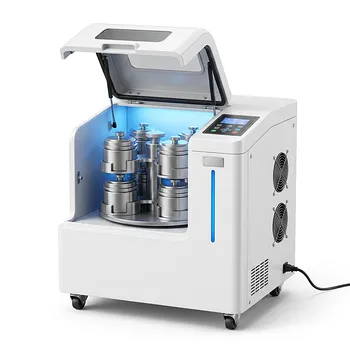
High Energy Omnidirectional Planetary Ball Mill 20L
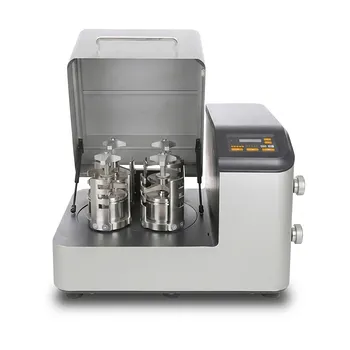
High Energy Planetary Ball Mill for Nano Scale Grinding and Colloidal Mixing in Material Science Research
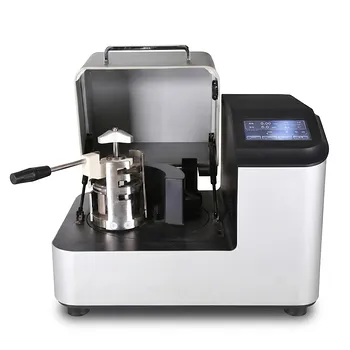
High Energy Laboratory Planetary Ball Mill for Nano Grinding and Material Science Sample Preparation

8L Planetary Ball Mill for Laboratory Grinding and Sample Preparation
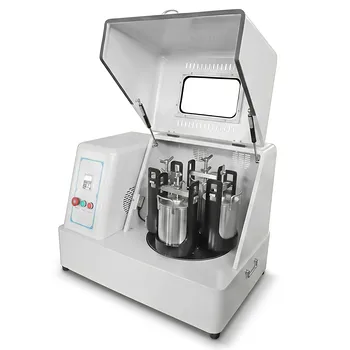
Vertical Square Planetary Ball Mill for Laboratory Sample Preparation and Nanoscale Grinding
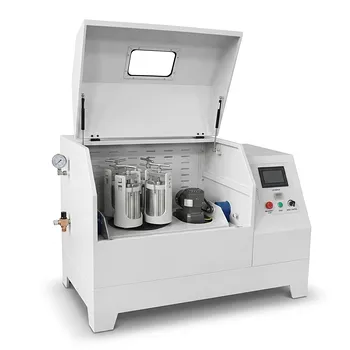
Vertical Production Planetary Ball Mill for High Throughput Powder Processing
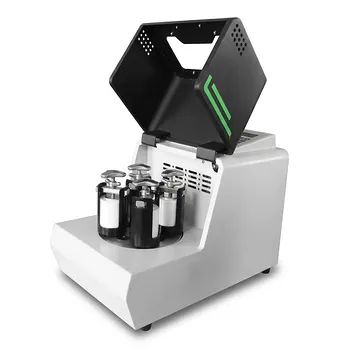
Miniature Planetary Ball Mill with Vacuum Grinding and High Efficiency for Laboratory Sample Preparation
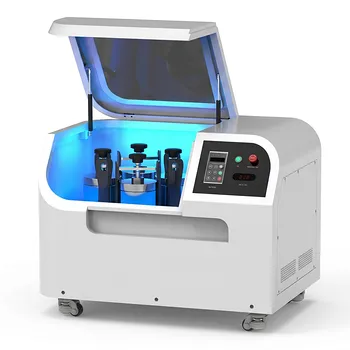
Planetary Ball Mill 12L
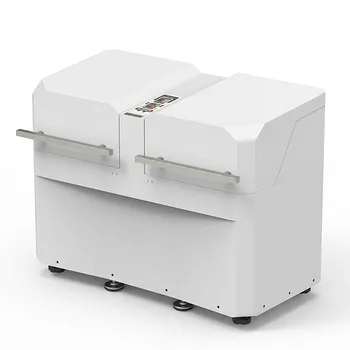
Dual Station Planetary Ball Mill 24L
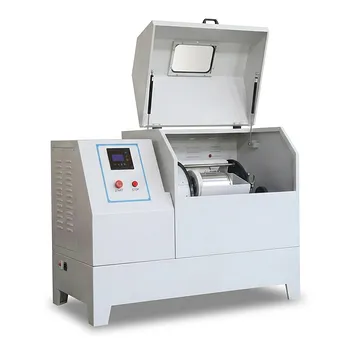
Heavy Duty Horizontal Planetary Ball Mill for Efficient Industrial Grinding and Sample Preparation

Multi-Platform Nanoscale High-Energy Vibratory Ball Mill
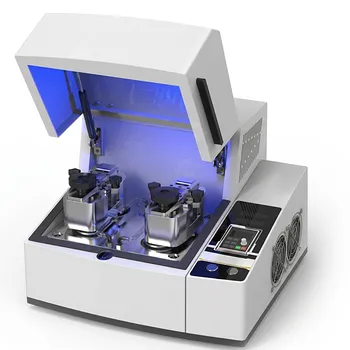
Laboratory Nano High Energy Ball Mill Ultrafine Grinding Mechanical Alloying

High Energy Hybrid Vibratory Ball Mill for Grinding Mixing and Cell Disruption

Nano High Energy Vibratory Ball Mill with Heating and Temperature Control
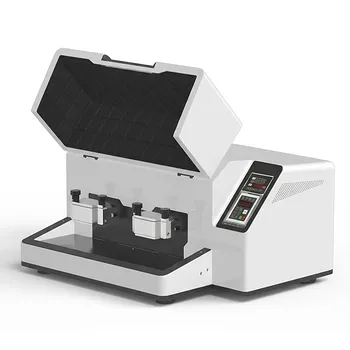
Nanoscale High-Energy Vibratory Ball Mill for Laboratory Sample Preparation, Mechanochemistry, and Mechanical Alloying

Nano High Energy Vibratory Ball Mill for Laboratory Sample Preparation