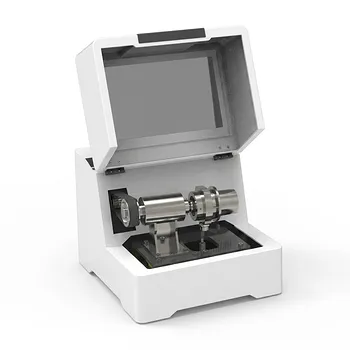
What is the function of a planetary ball mill in glass-ceramic sintering? Optimize Reactivity and Uniformity
Updated 4 months ago
In the synthesis of lithium boron vanadate glass-ceramics, a high-energy planetary ball mill serves as the critical engine for both mechanical refinement and chemical homogenization. It utilizes high-speed rotational energy to facilitate deep interaction between pre-synthesized rare earth vanadate nanoparticles and the glass matrix powders. This process establishes the essential physical foundation required to achieve a high-quality, uniform microstructure during the subsequent sintering stages.
The high-energy planetary ball mill is not merely a mixing tool but a precision instrument that regulates particle size and distribution. By inducing mechanical defects and ensuring atomic-level uniformity, it directly controls the crystallization kinetics and final density of the glass-ceramic material.
The Mechanics of High-Energy Milling
Generation of Impact and Shear Forces
The mill operates by utilizing high-frequency rotation to generate intense centrifugal forces. These forces drive grinding media within the jar to exert high-energy impact, friction, and shear on the raw material powders.
Particle Size Refinement
This mechanical energy reduces bulk materials and micron-sized glass powders down to the sub-micron or nanometer scale. By regulating the specific surface area, the mill ensures the powder is optimized for high-density packing during the molding process.
Activation through Mechanical Stress
Beyond simple reduction, the high-speed grinding—typically ranging from 300 to 500 rpm—induces microstructural defects within the powder. These defects create metastable states that increase the chemical reactivity of the particles before sintering begins.
Facilitating Deep Homogenization
Uniform Nanoparticle Distribution
For lithium boron vanadate ceramics, the mill ensures that rare earth vanadate nanoparticles are distributed evenly throughout the glass matrix. This "deep mixing" prevents the clustering of secondary phases, which is vital for maintaining consistent material properties.
Enhancement of Solid-Phase Reactions
The uniform contact between multi-component materials, such as lithium-based compounds and oxides, initiates mechano-chemical reactions. This atomic-level mixing is a prerequisite for rapid solid-solution formation during the heating cycle.
Regulation of Crystallization Kinetics
By controlling the initial particle size, the milling process directly influences the crystallization kinetics. This ensures that the final crystal size remains uniform and is typically maintained below 1 micron, preventing overgrowth that could degrade mechanical or electrical performance.
Understanding the Trade-offs
Contamination from Grinding Media
The intense energy required for refinement often leads to wear and tear of the grinding jars and balls. This can introduce impurities (such as alumina or zirconia) into the lithium boron vanadate mixture, potentially altering its dielectric or thermal properties.
Risk of Particle Agglomeration
While high-energy milling increases the specific surface area, excessively long milling times can lead to agglomeration. These clusters of fine particles can trap air or create density gradients, resulting in pores or cracks during the sintering phase.
Thermal Sensitivity of Glass Powders
The friction generated during high-speed rotation can significantly increase the temperature within the milling jar. If not managed via interval cooling or wet milling, this heat can cause premature softening or unwanted phase changes in the glass matrix.
How to Apply This to Your Process
Optimization Strategies for Professional Synthesis
The success of the sintering process depends on balancing milling intensity with material integrity. Your choice of parameters should align with the specific performance requirements of the glass-ceramic.
- If your primary focus is Maximum Density: Prioritize longer milling durations at moderate speeds to maximize sub-micron particle fractions (e.g., aiming for 30% sub-micron content) to improve packing density.
- If your primary focus is Phase Purity: Utilize high-speed, short-interval dry milling to induce mechanical activation without excessive heat buildup or media contamination.
- If your primary focus is Microstructural Uniformity: Ensure the use of chemically compatible grinding media (like YSZ) and a wet mixing process to prevent nanoparticle clustering.
Properly calibrated high-energy milling transforms raw powder into a highly reactive, homogenous precursor that is essential for producing high-performance lithium-based glass-ceramics.
Summary Table:
| Key Function | Mechanical Action | Sintering Benefit |
|---|---|---|
| Particle Refinement | High-energy impact & shear forces | Achieves sub-micron size for high-density packing |
| Homogenization | Atomic-level deep mixing | Prevents phase clustering; ensures uniform microstructure |
| Activation | Induction of structural defects | Lowers reaction energy; accelerates crystallization kinetics |
| Thermal Control | Interval cooling & wet milling | Prevents premature softening or unwanted phase changes |
Elevate Your Material Synthesis with Precision Equipment
Achieving the perfect microstructure in lithium boron vanadate glass-ceramics requires more than just mixing—it requires precise control over particle energy and distribution. We provide complete laboratory sample preparation solutions tailored for advanced material science.
Whether you are refining powders or forming final components, our specialized equipment ensures consistency and performance:
- Powder Processing: High-energy planetary ball mills, jet mills, and cryogenic grinders for sub-micron refinement.
- Sample Preparation: Specialized crushers, sieve shakers, and high-efficiency mixers (powder/defoaming).
- Advanced Compaction: A full spectrum of hydraulic presses, including Cold/Warm Isostatic Presses (CIP/WIP), hot presses, and vacuum hot presses for maximum density.
Ready to optimize your sintering results? Contact our experts today to find the ideal milling and pressing solution for your laboratory needs.
References
- O. Chukova, Emmanuel Stratakis. The Effects of the Incorporation of Luminescent Vanadate Nanoparticles in Lithium Borate Glass Matrices by Various Methods. DOI: 10.3390/solids5040032
Mentioned Products
- High Energy Planetary Ball Mill for Nano Scale Grinding and Mechanical Alloying
- High Energy Omnidirectional Planetary Ball Mill 16L
- High Energy Laboratory Planetary Ball Mill for Nano Grinding and Colloidal Mixing of Hard and Brittle Materials
- High Energy Omnidirectional Planetary Ball Mill 20L
- High Energy Planetary Ball Mill for Nano Scale Grinding and Colloidal Mixing in Material Science Research
People Also Ask
- Why is a high-energy planetary ball mill used for nano-milling As4Se3? Achieve Expert Structural Transformation
- What role do high-energy planetary ball mills play in FDM composite filament preparation? Optimize Material Performance
- What is the role of a high-energy planetary ball mill in the exfoliation of modified WSe2? Achieve Nano-Precision
- What is the role of a high-energy planetary ball mill in the preparation of high-performance nano-ceramics? Key Guide
- What is the role of the high-energy planetary ball mill in HfB2-SiC prep? Achieve Homogeneity & Mechanical Activation

Tech Team · PowderPreparation
Last updated on Jun 03, 2026
Related Products
High Energy Planetary Ball Mill for Nano Scale Grinding and Mechanical Alloying
High Energy Omnidirectional Planetary Ball Mill 16L
High Energy Laboratory Planetary Ball Mill for Nano Grinding and Colloidal Mixing of Hard and Brittle Materials
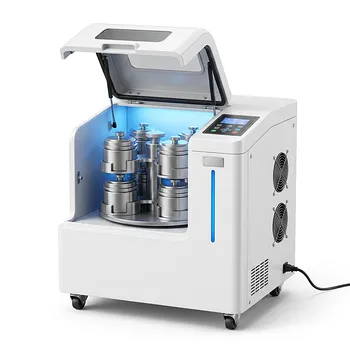
High Energy Omnidirectional Planetary Ball Mill 20L
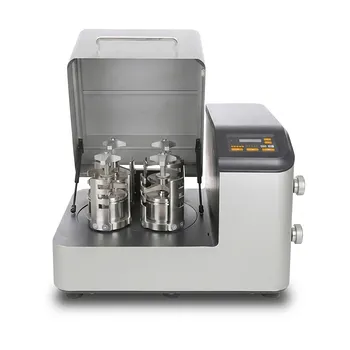
High Energy Planetary Ball Mill for Nano Scale Grinding and Colloidal Mixing in Material Science Research
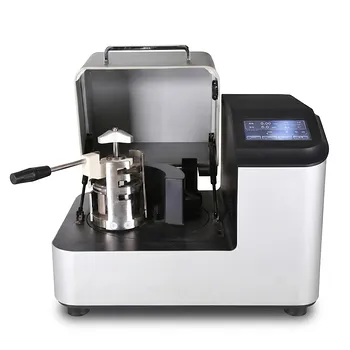
High Energy Laboratory Planetary Ball Mill for Nano Grinding and Material Science Sample Preparation
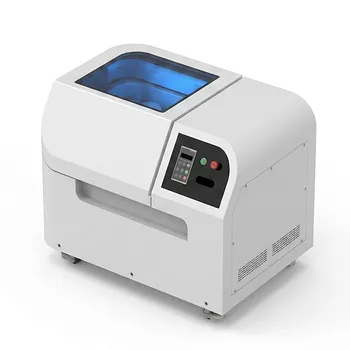
8L Planetary Ball Mill for Laboratory Grinding and Sample Preparation
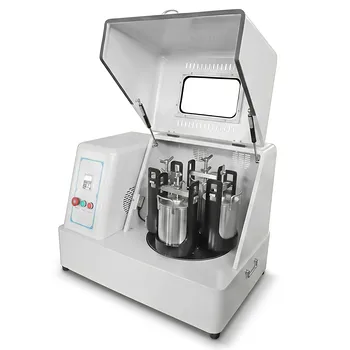
Vertical Square Planetary Ball Mill for Laboratory Sample Preparation and Nanoscale Grinding
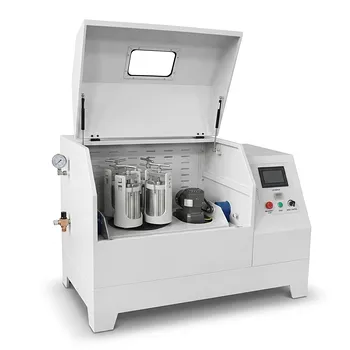
Vertical Production Planetary Ball Mill for High Throughput Powder Processing
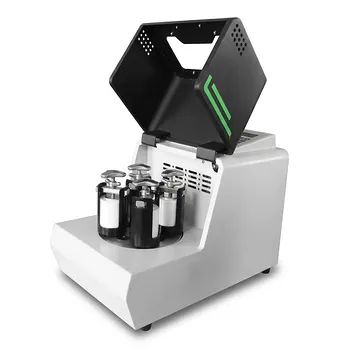
Miniature Planetary Ball Mill with Vacuum Grinding and High Efficiency for Laboratory Sample Preparation
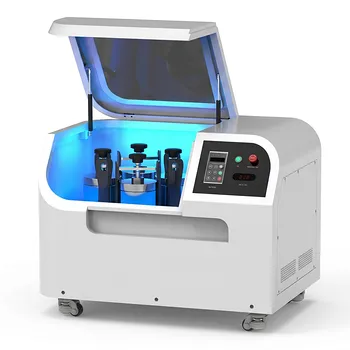
Planetary Ball Mill 12L
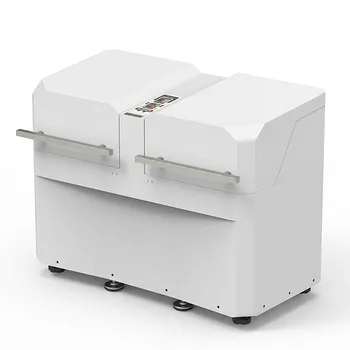
Dual Station Planetary Ball Mill 24L
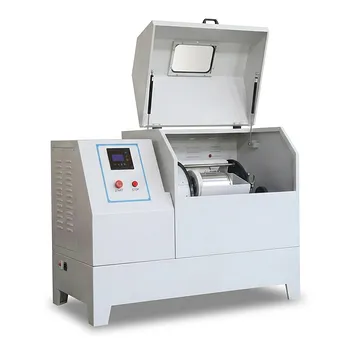
Heavy Duty Horizontal Planetary Ball Mill for Efficient Industrial Grinding and Sample Preparation
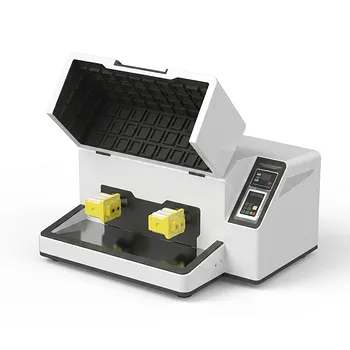
Multi-Platform Nanoscale High-Energy Vibratory Ball Mill
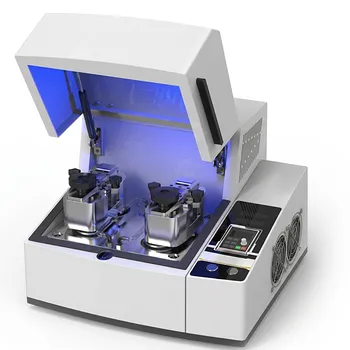
Laboratory Nano High Energy Ball Mill Ultrafine Grinding Mechanical Alloying

High Energy Hybrid Vibratory Ball Mill for Grinding Mixing and Cell Disruption
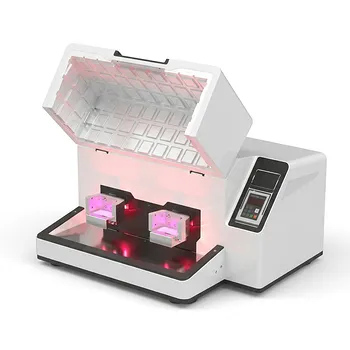
Nano High Energy Vibratory Ball Mill with Heating and Temperature Control
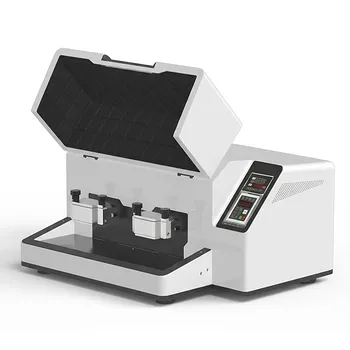
Nanoscale High-Energy Vibratory Ball Mill for Laboratory Sample Preparation, Mechanochemistry, and Mechanical Alloying
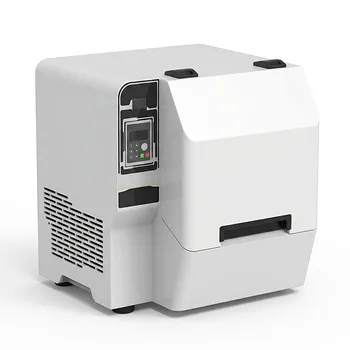
Nano High Energy Vibratory Ball Mill for Laboratory Sample Preparation