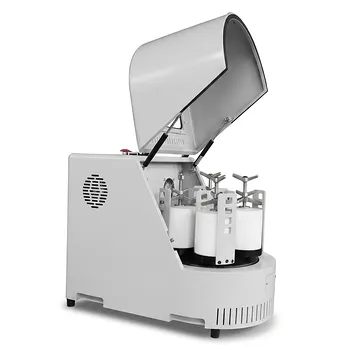
What role do high-energy planetary ball mills play in FDM composite filament preparation? Optimize Material Performance
Updated 4 months ago
High-energy planetary ball mills are the critical bridge between raw nano-fillers and high-performance FDM filaments. These machines use intense impact and shear forces to ensure that reinforcements like carbon nanotubes, graphene, or ceramic nanoparticles are uniformly dispersed within a polymer matrix. This level of microscopic homogeneity is essential for preventing nozzle clogs during 3D printing and ensuring the final part has consistent mechanical and thermal properties.
The primary role of a high-energy planetary ball mill is to achieve uniform filler dispersion and particle refinement through mechanical alloying. This process eliminates material clumps that cause structural weaknesses, ensuring that FDM-printed composites meet rigorous engineering standards.
Achieving Uniform Nano-Filler Dispersion
Breaking Down Agglomerates
Nano-fillers such as carbon nanotubes (CNTs) and graphene have a natural tendency to clump together due to van der Waals forces. High-energy planetary ball mills utilize high-speed rotation to generate the impact and shear forces necessary to break these clusters apart.
Without this intensive mixing, the fillers remain as "islands" within the filament. This leads to stress concentrations where the material is likely to fail under load, compromising the integrity of the 3D-printed part.
Ensuring Isotropic Performance
Uniformity at the microscopic level is fundamental to preventing directional performance variations. In FDM, where layers are deposited sequentially, any inconsistency in the material can lead to unpredictable shrinkage or warping.
By achieving a homogeneous mix, the mill ensures that frictional properties and thermal expansion remain consistent throughout the entire length of the filament. This results in more reliable extrusion and better interlayer adhesion.
Particle Refinement and Surface Reactivity
Refining Particle Size for Nozzle Compatibility
FDM printers utilize small-diameter nozzles that are highly susceptible to clogging. High-energy milling performs mechanical refinement, reducing micro-scale additives down to the sub-micron or nano-scale.
This process creates an ideal Particle Size Distribution (PSD). A controlled PSD ensures that the composite material flows smoothly through the extruder without causing abrasive wear or sudden blockages.
Increasing Surface Energy and Reactivity
The violent collisions within the milling jar cause continuous fracturing and cold welding of particles. This mechanical action increases the surface energy and reactivity of the powder.
Higher surface energy facilitates better interfacial bonding between the reinforcement phases and the polymer matrix. Stronger bonds at the molecular level translate directly to higher tensile strength and better radiation shielding or electrical conductivity in the final composite.
Understanding the Trade-offs
Thermal Degradation Risks
The high-energy nature of planetary ball milling generates significant frictional heat. If not carefully managed through milling cycles or cooling breaks, this heat can degrade sensitive polymer matrices or oxidize metallic fillers.
Potential for Contamination
As the grinding balls and jar walls collide with high intensity, small amounts of media wear can contaminate the composite. It is critical to select milling media (such as zirconia or tungsten carbide) that is compatible with the final application to avoid altering the material's chemical profile.
Processing Time vs. Energy Input
While higher speeds (e.g., 600 rpm) achieve faster refinement, they also increase the risk of over-milling. Over-milling can lead to excessive grain growth or the destruction of the very nano-structures (like the high aspect ratio of nanotubes) that provide the reinforcement.
Making the Right Choice for Your Goal
How to Apply This to Your Project
- If your primary focus is mechanical strength: Prioritize longer milling times at moderate speeds to ensure deep, uniform embedding of reinforcements without fracturing the polymer chains.
- If your primary focus is electrical or thermal conductivity: Use high-speed milling to thoroughly de-agglomerate CNTs or graphene, creating an interconnected network throughout the matrix.
- If your primary focus is preventing nozzle wear: Focus on achieving a sub-micron Particle Size Distribution (PSD) through the use of smaller grinding media to eliminate oversized particles.
By mastering the high-energy milling process, engineers can transform standard polymers into advanced, functional composites ready for the complexities of FDM additive manufacturing.
Summary Table:
| Feature | Impact on Composite Filament | Benefit for FDM 3D Printing |
|---|---|---|
| Nano-filler Dispersion | Breaks down clusters of CNTs/graphene | Prevents nozzle clogs & structural weak points |
| Particle Refinement | Reduces particles to sub-micron scale | Ensures smooth extrusion & consistent flow |
| Surface Activation | Increases surface energy & bonding | Enhances tensile strength & interlayer adhesion |
| Mechanical Alloying | Creates homogeneous polymer-filler mix | Delivers isotropic mechanical/thermal properties |
Elevate Your Material Research with Precision Sample Preparation
Are you struggling with nozzle clogs or inconsistent mechanical properties in your FDM composites? At [Your Brand Name], we provide complete laboratory sample preparation solutions tailored for material science. Our high-energy planetary ball mills are engineered to deliver the microscopic homogeneity required for cutting-edge additive manufacturing.
Beyond milling, we specialize in a full spectrum of powder processing and compaction equipment to support your entire workflow:
- Size Reduction: Jaw/roll crushers, liquid nitrogen cryogenic grinders, and jet, disc, or rotor mills.
- Classification & Mixing: Vibratory/air-jet sieve shakers, powder mixers, and vacuum defoaming mixers.
- Compaction & Forming: A comprehensive range of hydraulic presses, including Cold/Warm Isostatic Presses (CIP/WIP), standard lab presses, XRF pellet presses, and advanced vacuum hot presses.
Whether you are refining nano-fillers or developing functional filaments, our expertise ensures your materials meet the most rigorous engineering standards.
Ready to optimize your composite production? Contact us today to find the perfect equipment for your lab!
References
- S. Raja, Karthik V. Shankar. Tribological Performance Enhancement in FDM and SLA Additive Manufacturing: Materials, Mechanisms, Surface Engineering, and Hybrid Strategies—A Holistic Review. DOI: 10.3390/lubricants13070298
Mentioned Products
- High Energy Planetary Ball Mill for Nano Scale Grinding and Mechanical Alloying
- High Energy Planetary Ball Mill for Nano Scale Grinding and Colloidal Mixing in Material Science Research
- High Energy Omnidirectional Planetary Ball Mill 16L
- High Energy Laboratory Planetary Ball Mill for Nano Grinding and Material Science Sample Preparation
- High Energy Laboratory Planetary Ball Mill for Nano Grinding and Colloidal Mixing of Hard and Brittle Materials
People Also Ask
- Why is a high-energy planetary ball mill used for nano-milling As4Se3? Achieve Expert Structural Transformation
- What is the role of a high-energy planetary ball mill in the exfoliation of modified WSe2? Achieve Nano-Precision
- What is the function of a planetary ball mill in glass-ceramic sintering? Optimize Reactivity and Uniformity
- What is the role of a high-energy planetary ball mill in the preparation of high-performance nano-ceramics? Key Guide
- What is the role of the high-energy planetary ball mill in HfB2-SiC prep? Achieve Homogeneity & Mechanical Activation

Tech Team · PowderPreparation
Last updated on Jun 03, 2026
Related Products

High Energy Planetary Ball Mill for Nano Scale Grinding and Mechanical Alloying
High Energy Planetary Ball Mill for Nano Scale Grinding and Colloidal Mixing in Material Science Research
High Energy Omnidirectional Planetary Ball Mill 16L

High Energy Laboratory Planetary Ball Mill for Nano Grinding and Material Science Sample Preparation
High Energy Laboratory Planetary Ball Mill for Nano Grinding and Colloidal Mixing of Hard and Brittle Materials
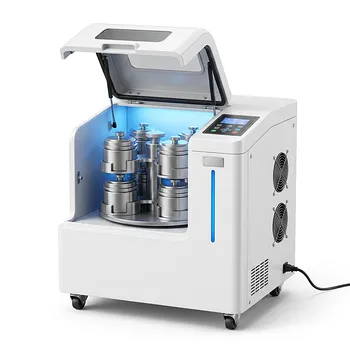
High Energy Omnidirectional Planetary Ball Mill 20L

8L Planetary Ball Mill for Laboratory Grinding and Sample Preparation
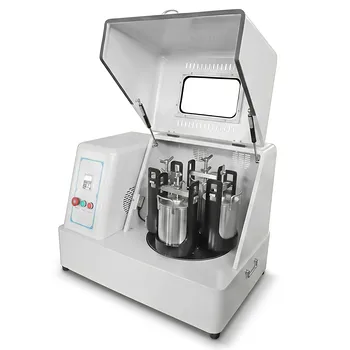
Vertical Square Planetary Ball Mill for Laboratory Sample Preparation and Nanoscale Grinding
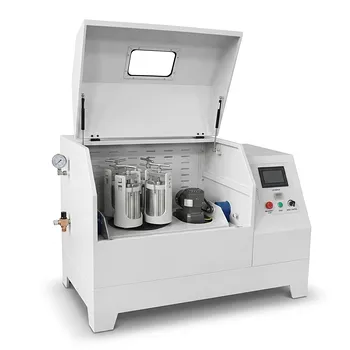
Vertical Production Planetary Ball Mill for High Throughput Powder Processing
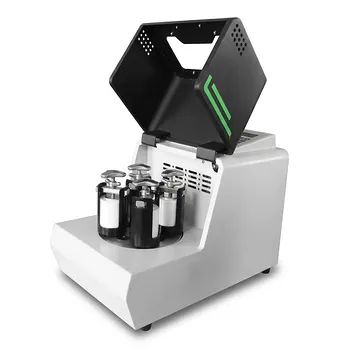
Miniature Planetary Ball Mill with Vacuum Grinding and High Efficiency for Laboratory Sample Preparation
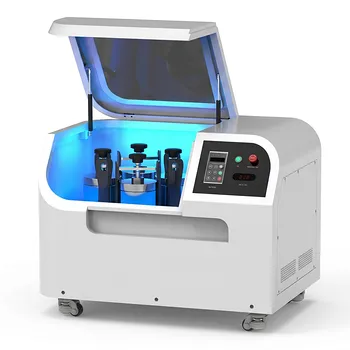
Planetary Ball Mill 12L
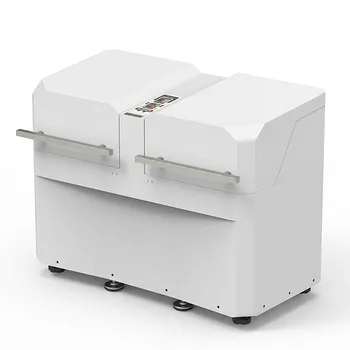
Dual Station Planetary Ball Mill 24L
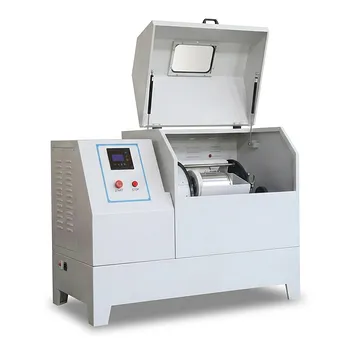
Heavy Duty Horizontal Planetary Ball Mill for Efficient Industrial Grinding and Sample Preparation
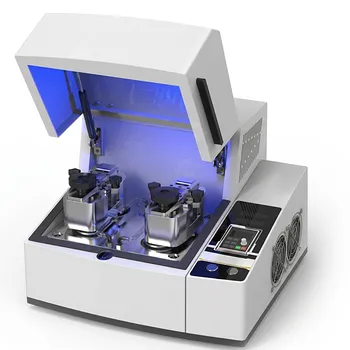
Laboratory Nano High Energy Ball Mill Ultrafine Grinding Mechanical Alloying

Multi-Platform Nanoscale High-Energy Vibratory Ball Mill
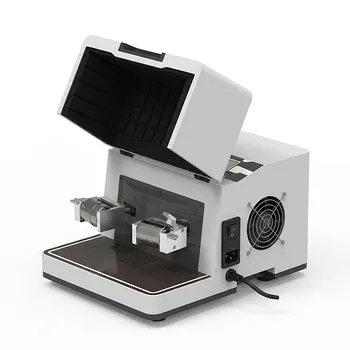
High Energy Hybrid Vibratory Ball Mill for Grinding Mixing and Cell Disruption

Nano High Energy Vibratory Ball Mill for Laboratory Sample Preparation
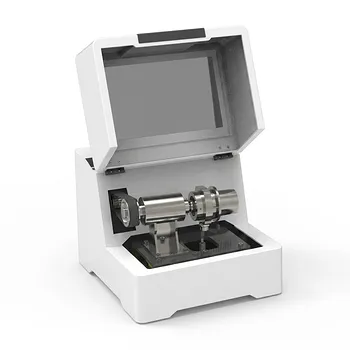
Single Tank High Energy Vibratory Ball Mill for Laboratory Grinding and Mixing
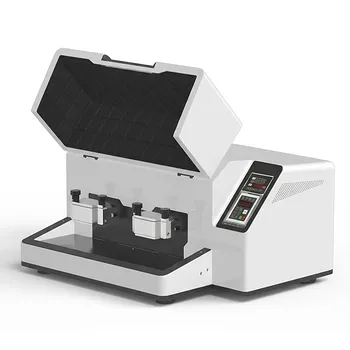
Nanoscale High-Energy Vibratory Ball Mill for Laboratory Sample Preparation, Mechanochemistry, and Mechanical Alloying