What is the role of a high-energy planetary ball mill in the exfoliation of modified WSe2? Achieve Nano-Precision
Updated 4 months ago
The high-energy planetary ball mill is the primary driver of mechanochemical exfoliation for modified Tungsten Diselenide ($WSe_2$). By generating intense impact and shear forces through high-speed rotation, the equipment physically peels apart the layered $WSe_2$ structure into thin nanosheets. Simultaneously, the energy produced during this process triggers the chemical grafting of modifiers, such as tannic acid (TA), onto the material's surface to create functionalized nano-fillers.
Core Takeaway: The planetary ball mill acts as a dual-action mechanochemical reactor that combines physical size reduction (exfoliation) with chemical synthesis (grafting). This process is essential for overcoming the Van der Waals forces of bulk $WSe_2$ while providing the activation energy needed for surface modification.
The Mechanics of Exfoliation
Generating Impact and Shear Forces
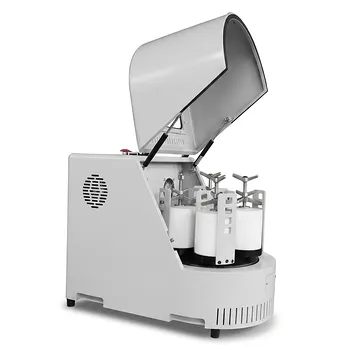
The planetary ball mill operates through a complex "sun and planet" motion where grinding jars rotate on their own axes while revolving around a central sun wheel. This movement generates high-frequency impact and intense shear forces between the grinding media and the $WSe_2$ particles.
Overcoming Interlayer Adhesion
Layered materials like $WSe_2$ are held together by relatively weak Van der Waals forces. The shear forces provided by the mill are specifically effective at sliding these layers apart, facilitating the transition from bulk material to thin-layered nanosheets.
Precision Refinement
Beyond simple separation, the process facilitates the ultra-refinement of the powder. This reduces the average particle size to the nanometer scale, significantly increasing the surface area available for subsequent chemical interactions or matrix integration.
Surface Modification and Functionalization
The Grafting of Tannic Acid (TA)
In the preparation of modified $WSe_2$, the energy provided by the mill is not just mechanical but also serves to drive chemical reactions. It promotes the chemical grafting of tannic acid (TA) onto the newly exposed surfaces of the $WSe_2$ nanosheets.
Enhancing Nano-filler Performance
This functionalization transforms the $WSe_2$ into a more effective nano-filler. By attaching TA to the surface, the material achieves better compatibility and dispersion within composite systems, preventing the nanosheets from re-aggregating.
Lowering Activation Energy
The mechanical action creates high-density lattice defects and accumulates strain energy within the particles. This energy reservoir reduces the chemical activation energy required for modification, allowing for functionalization that might otherwise require high temperatures or harsh solvents.
Understanding the Trade-offs and Pitfalls
Structural Degradation and Amorphization
While high energy is required for exfoliation, excessive milling can lead to lattice damage and a transition to an amorphous structure. If the milling duration is too long, the inherent crystalline properties of the $WSe_2$ may be compromised, affecting its electrical or mechanical performance.
Material Contamination
The high-intensity collisions within the jar can lead to media wear, where small amounts of the grinding balls or jar lining (e.g., stainless steel or zirconia) contaminate the $WSe_2$ powder. Selecting the correct grinding media is critical to maintaining the purity of the modified nanosheets.
Thermal Management Challenges
The friction and impact within a high-energy mill generate significant heat, which can lead to unwanted side reactions or the degradation of modifiers like tannic acid. Periodic cooling cycles or "rest periods" are often necessary to maintain the chemical integrity of the functional groups.
How to Apply This to Your Material Goals
Making the Right Choice for Your Project
Success in exfoliating and modifying $WSe_2$ depends on balancing energy input with material structural integrity.
- If your primary focus is maximum exfoliation (thinnest layers): Prioritize higher rotation speeds and longer milling times, but monitor for structural amorphization via XRD.
- If your primary focus is chemical functionality (high TA grafting): Focus on the ball-to-powder ratio to maximize collision frequency, ensuring sufficient energy is available for covalent bonding.
- If your primary focus is material purity: Utilize jars and grinding media made of the same material as your target or highly wear-resistant ceramics like silicon nitride.
By precisely controlling the mechanochemical environment of the planetary mill, you can transform bulk Tungsten Diselenide into a high-performance, functionalized nanomaterial.
Summary Table:
| Feature | Mechanochemical Role | Material Impact |
|---|---|---|
| Force Generation | High-frequency impact & intense shear | Peels layered structures into thin nanosheets |
| Chemical Grafting | Provides activation energy for modifiers | Attaches Tannic Acid (TA) for functionalization |
| Size Reduction | Ultra-refinement to nanometer scale | Increases surface area & improves matrix dispersion |
| Process Control | Optimization of RPM & milling duration | Balances exfoliation with crystalline integrity |
Elevate Your Nanomaterial Synthesis with Precision Equipment
At our core, we provide complete laboratory sample preparation solutions for material science, specializing in the high-performance powder processing and compaction equipment required for advanced mechanochemical research.
Whether you are exfoliating 2D materials like $WSe_2$ or developing complex functionalized fillers, our extensive product lines are designed to deliver consistent, scalable results:
- Advanced Milling: High-energy planetary ball mills, jet mills, and liquid nitrogen cryogenic grinders for damage-controlled refinement.
- Material Processing: Sieve shakers (vibratory/air-jet), powder mixers, and defoaming mixers for perfect homogeneity.
- Precision Compaction: A full spectrum of hydraulic presses, including Cold/Warm Isostatic Presses (CIP/WIP), vacuum hot presses, and specialized XRF pellet presses.
Ready to optimize your lab’s efficiency and material performance? Contact our technical experts today to find the perfect solution for your specific application!
References
- F. -W. Tu, Qunchao Zhang. Synergistic Enhancement Effect of Polytetrafluoroethylene and WSe2 on the Tribological Performance of Polyetherimide Composites. DOI: 10.3390/lubricants13020044
Mentioned Products
- High Energy Planetary Ball Mill for Nano Scale Grinding and Mechanical Alloying
- High Energy Planetary Ball Mill for Nano Scale Grinding and Colloidal Mixing in Material Science Research
- High Energy Omnidirectional Planetary Ball Mill 16L
- High Energy Laboratory Planetary Ball Mill for Nano Grinding and Material Science Sample Preparation
- High Energy Laboratory Planetary Ball Mill for Nano Grinding and Colloidal Mixing of Hard and Brittle Materials
People Also Ask
- Why is a high-energy planetary ball mill used for nano-milling As4Se3? Achieve Expert Structural Transformation
- What role do high-energy planetary ball mills play in FDM composite filament preparation? Optimize Material Performance
- What is the function of a planetary ball mill in glass-ceramic sintering? Optimize Reactivity and Uniformity
- What is the role of a high-energy planetary ball mill in the preparation of high-performance nano-ceramics? Key Guide
- What is the role of the high-energy planetary ball mill in HfB2-SiC prep? Achieve Homogeneity & Mechanical Activation

Tech Team · PowderPreparation
Last updated on Jun 03, 2026
Related Products
High Energy Planetary Ball Mill for Nano Scale Grinding and Mechanical Alloying
High Energy Planetary Ball Mill for Nano Scale Grinding and Colloidal Mixing in Material Science Research
High Energy Omnidirectional Planetary Ball Mill 16L

High Energy Laboratory Planetary Ball Mill for Nano Grinding and Material Science Sample Preparation
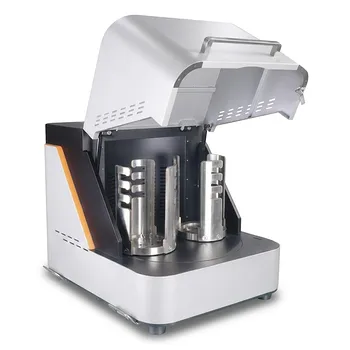
High Energy Laboratory Planetary Ball Mill for Nano Grinding and Colloidal Mixing of Hard and Brittle Materials
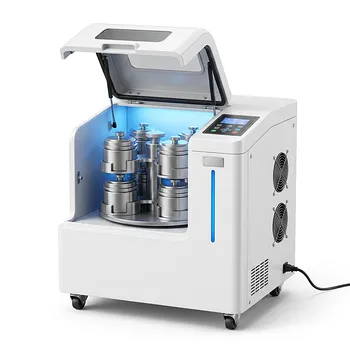
High Energy Omnidirectional Planetary Ball Mill 20L
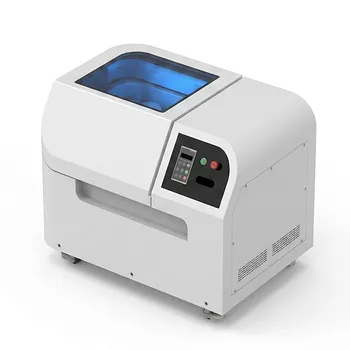
8L Planetary Ball Mill for Laboratory Grinding and Sample Preparation

Vertical Square Planetary Ball Mill for Laboratory Sample Preparation and Nanoscale Grinding

Vertical Production Planetary Ball Mill for High Throughput Powder Processing

Miniature Planetary Ball Mill with Vacuum Grinding and High Efficiency for Laboratory Sample Preparation
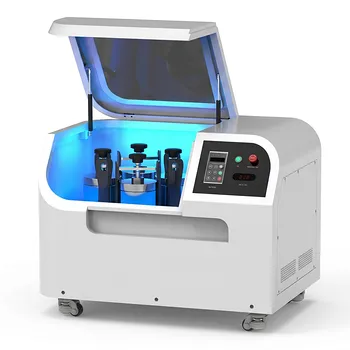
Planetary Ball Mill 12L
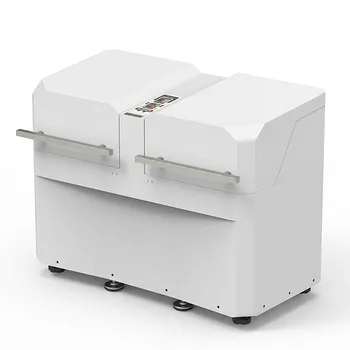
Dual Station Planetary Ball Mill 24L
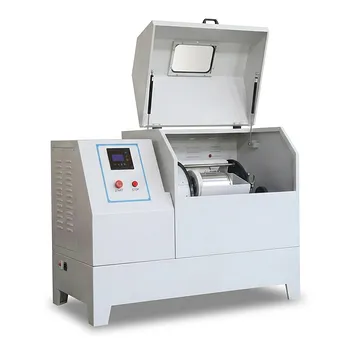
Heavy Duty Horizontal Planetary Ball Mill for Efficient Industrial Grinding and Sample Preparation
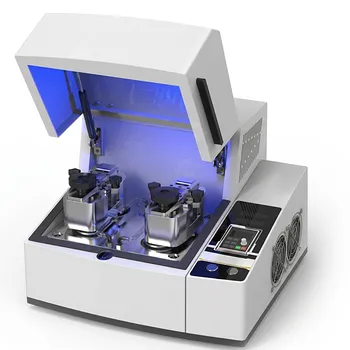
Laboratory Nano High Energy Ball Mill Ultrafine Grinding Mechanical Alloying
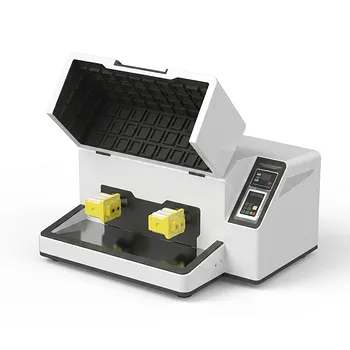
Multi-Platform Nanoscale High-Energy Vibratory Ball Mill
High Energy Hybrid Vibratory Ball Mill for Grinding Mixing and Cell Disruption

Nano High Energy Vibratory Ball Mill for Laboratory Sample Preparation
Single Tank High Energy Vibratory Ball Mill for Laboratory Grinding and Mixing
Nanoscale High-Energy Vibratory Ball Mill for Laboratory Sample Preparation, Mechanochemistry, and Mechanical Alloying