Why is an intermittent operation mode required when preparing graphene-coated copper particles? Ensure Material Integrity
Updated 5 months ago
Intermittent operation is a fundamental thermal management strategy required to preserve the material properties of both graphene and copper during high-energy ball milling. Without these cooling pauses, the intense mechanical energy converted into heat would cause the graphene to degrade structurally and the copper powder to undergo rapid oxidation or uncontrolled agglomeration.
Core Takeaway: The intermittent mode transforms the ball milling process from a heat-driven environment to a controlled mechanochemical interaction. This ensures that the energy applied is used for coating and refinement rather than triggering thermal degradation or chemical instability.
Thermal Management and Material Integrity
Protecting Graphene’s Structural Properties
Graphene nanoplatelets are sensitive to the extreme localized temperatures generated during high-frequency collisions in the mill. Excessive heat can lead to structural degradation or defects in the carbon lattice, stripping the graphene of its superior mechanical and electrical properties.
By implementing a "rest" period, the system prevents the internal temperature from reaching a point where the chemical stability of the graphene reinforcement is compromised.
Preventing Copper Oxidation and Phase Changes
Copper powder is highly susceptible to oxidation when exposed to the elevated temperatures common in a continuous high-energy milling jar. Intermittent operation ensures the process stays near room temperature, preventing the formation of unwanted copper oxides that would interfere with the coating process.
Strict temperature control also prevents unwanted phase transformations, ensuring that the final composite maintains the intended metallic characteristics.
Process Efficiency and Stability
Controlling Cold Welding and Agglomeration
High temperatures soften copper particles, leading to a phenomenon known as cold welding, where the powder sticks to the grinding balls and the vial walls. Intermittent pauses allow for heat dissipation, which reduces the ductility of the copper enough to prevent it from clumping.
This thermal balance is essential for maintaining particle refinement efficiency, ensuring the graphene is coated uniformly across the surface of the copper rather than being trapped inside large, welded aggregates.
Ensuring Equipment Safety and Solvent Stability
Many milling processes utilize ethanol or other dispersants which can volatilize or create pressure buildup if the jar overheats. Intermittent cooling protects the seals of the milling system and prevents the internal pressure from reaching dangerous levels.
Maintaining a stable temperature ensures that the synthesis remains a mechanically driven process, allowing for consistent and repeatable production of the graphene-coated particles.
Understanding the Trade-offs
While intermittent operation is essential for quality, it introduces a significant increase in total processing time. A 30-minute milling cycle followed by a 10-minute cooling period effectively increases the production timeline by 33%, which can impact throughput in industrial settings.
Furthermore, frequent starting and stopping places specific mechanical stress on the motor and drive system of the ball mill. However, these trade-offs are generally considered necessary, as continuous operation would likely result in a failed batch due to powder clumping or material degradation.
How to Apply This to Your Project
When designing your milling protocol, your intermittent cycle should be dictated by the sensitivity of your specific raw materials and the energy of your equipment.
- If your primary focus is Maximum Structural Integrity: Utilize longer cooling periods (e.g., 1:1 ratio of milling to rest) to ensure the temperature never exceeds the threshold for graphene defect formation.
- If your primary focus is Production Throughput: Experiment with shorter, more frequent pauses (e.g., 10 minutes milling / 5 minutes rest) while monitoring the external jar temperature to find the minimum effective cooling time.
- If your primary focus is Preventing Agglomeration: Use a cooling-assisted milling jar or cryo-milling techniques to further supplement the intermittent rest periods and keep the copper particles brittle enough for efficient refinement.
By treating temperature as a primary variable in your mechanochemical synthesis, you ensure the production of a high-performance composite that fully leverages the properties of graphene.
Summary Table:
| Factor | Continuous Operation Risk | Intermittent Mode Benefit |
|---|---|---|
| Graphene Structure | Thermal degradation & lattice defects | Preserves mechanical & electrical properties |
| Copper Oxidation | High risk of forming unwanted oxides | Maintains metallic purity & coating quality |
| Particle Morphology | Cold welding & heavy agglomeration | Ensures uniform coating & particle refinement |
| Solvent Stability | Pressure buildup & volatilization | Maintains safe internal pressure & liquid phase |
| Equipment | Overheating & seal damage | Protects motor, drive system, and jar seals |
Optimize Your Material Synthesis with Precision Milling Solutions
Achieving the perfect graphene-coated composite requires more than just a protocol—it requires high-performance equipment designed for rigorous thermal management. At [Brand Name], we provide complete laboratory sample preparation solutions for material science, specializing in advanced powder processing and compaction equipment.
Our extensive range includes:
- High-Energy Mills: Planetary ball mills, jet mills, and disc mills engineered for precise particle refinement.
- Thermal Control: Liquid nitrogen cryogenic grinders for heat-sensitive materials.
- Preparation & Sizing: Jaw/roll crushers, sieve shakers, and powder mixers.
- Advanced Compaction: A full spectrum of hydraulic presses, including Cold/Warm Isostatic Presses (CIP/WIP), vacuum hot presses, and XRF pellet presses.
Whether you are refining nanoparticles or scaling up composite production, our experts are here to help you select the right equipment to ensure structural integrity and process repeatability.
Ready to elevate your research? Contact our technical team today to find your solution.
References
- Xue Zhang, Shuai Zhang. Research on microstructure and properties of Gr@Cu reinforced 6061 aluminum matrix composites. DOI: 10.1088/1742-6596/3112/1/012096
Mentioned Products
- High Energy Planetary Ball Mill for Nano Scale Grinding and Mechanical Alloying
- High Energy Omnidirectional Planetary Ball Mill 16L
- Ultra-Low Temperature Cryogenic High-Energy Vibratory Ball Mill
- High Energy Hybrid Vibratory Ball Mill for Grinding Mixing and Cell Disruption
- Nano High Energy Vibratory Ball Mill with Heating and Temperature Control
People Also Ask
- Why is a high-energy planetary ball mill used for nano-milling As4Se3? Achieve Expert Structural Transformation
- What role do high-energy planetary ball mills play in FDM composite filament preparation? Optimize Material Performance
- What is the role of a high-energy planetary ball mill in the exfoliation of modified WSe2? Achieve Nano-Precision
- What is the function of a planetary ball mill in glass-ceramic sintering? Optimize Reactivity and Uniformity
- What is the role of a high-energy planetary ball mill in the preparation of high-performance nano-ceramics? Key Guide

Tech Team · PowderPreparation
Last updated on May 14, 2026
Related Products
High Energy Planetary Ball Mill for Nano Scale Grinding and Mechanical Alloying

High Energy Omnidirectional Planetary Ball Mill 16L
Ultra-Low Temperature Cryogenic High-Energy Vibratory Ball Mill
High Energy Hybrid Vibratory Ball Mill for Grinding Mixing and Cell Disruption

Nano High Energy Vibratory Ball Mill with Heating and Temperature Control

High Energy Laboratory Planetary Ball Mill for Nano Grinding and Material Science Sample Preparation
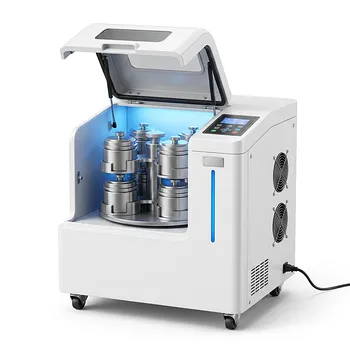
High Energy Omnidirectional Planetary Ball Mill 20L
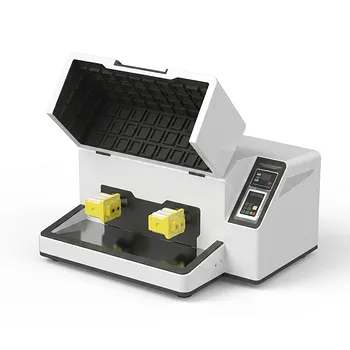
Multi-Platform Nanoscale High-Energy Vibratory Ball Mill
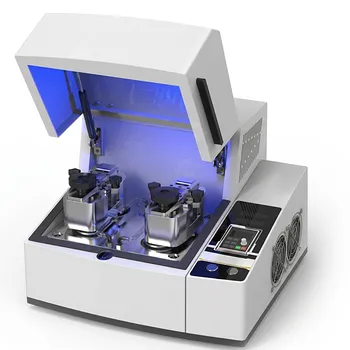
Laboratory Nano High Energy Ball Mill Ultrafine Grinding Mechanical Alloying
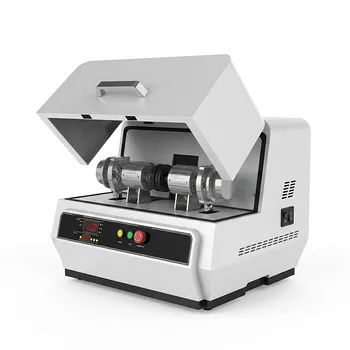
Dual Jar High Energy Vibratory Ball Mill
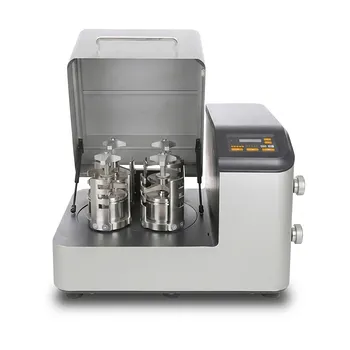
High Energy Planetary Ball Mill for Nano Scale Grinding and Colloidal Mixing in Material Science Research
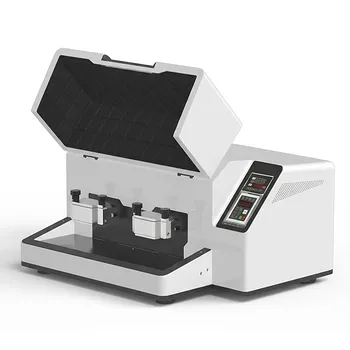
Nanoscale High-Energy Vibratory Ball Mill for Laboratory Sample Preparation, Mechanochemistry, and Mechanical Alloying
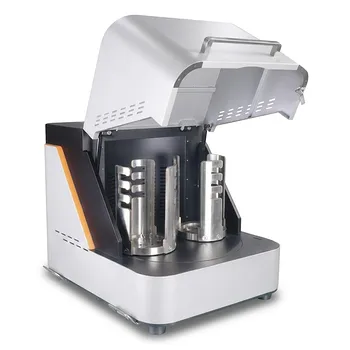
High Energy Laboratory Planetary Ball Mill for Nano Grinding and Colloidal Mixing of Hard and Brittle Materials

Single Tank High Energy Vibratory Ball Mill for Laboratory Grinding and Mixing
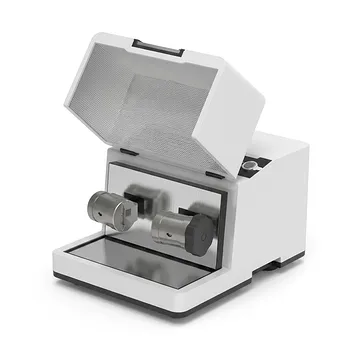
Heating Temperature Controlled High Energy Vibratory Ball Mill

Nano High Energy Vibratory Ball Mill for Laboratory Sample Preparation
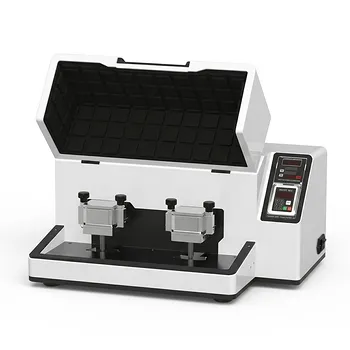
Nanoscale High Energy Vibratory Ball Mill Low Temperature
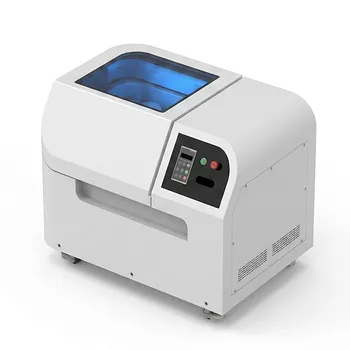
8L Planetary Ball Mill for Laboratory Grinding and Sample Preparation

Vertical Square Planetary Ball Mill for Laboratory Sample Preparation and Nanoscale Grinding