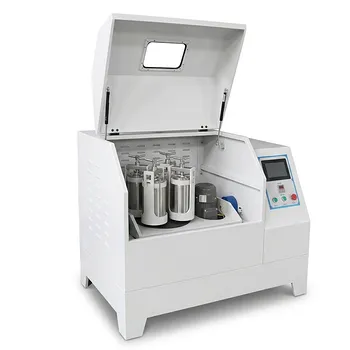
What is the role of a high-energy planetary ball mill in mechanical alloying? Master Solid-State Synthesis for MMNCs
Updated 4 months ago
The high-energy planetary ball mill serves as the fundamental engine for solid-state synthesis in the production of metal matrix nanocomposites (MMNCs). By leveraging intense rotational forces, this equipment induces a continuous cycle of fracturing and cold welding that embeds nano-reinforcements into a metallic matrix, resulting in a powders with a homogeneous microstructure and nanometer-scale grain sizes.
High-energy planetary ball milling transforms raw powders into advanced nanocomposites by using mechanical energy to drive atomic-level diffusion and uniform phase distribution. It is the critical bridge between separate elemental components and a fully integrated, high-performance composite material.
The Mechanics of High-Energy Processing
Force Generation via Counter-Rotation
The planetary ball mill operates on a unique principle where the milling jars and the supporting sun disk rotate in opposite directions. This counter-rotation generates intense friction and shear forces that are significantly higher than those found in traditional milling equipment.
The Cycle of Impact and Deformation
Within the jars, high-speed collisions occur between the grinding balls, the powder particles, and the jar walls. These violent impacts subject the powder to severe plastic deformation, which is the prerequisite for both particle refinement and alloying.
Mechanical Alloying through Cold Welding and Fracturing
The core of the process is a repetitive sequence where particles are flattened, cold welded together, and then fractured. This continuous fracturing and cold welding ensures that the reinforcement phase is physically trapped and uniformly distributed within the metal matrix.
Achieving Nanostructural Homogeneity
Refinement of the Reinforcement Phase
High-energy milling is required to break down introduced reinforcement phases—such as alumina or hydroxyapatite—to the nanoscale. This refinement is essential for maximizing the mechanical properties of the final composite, such as hardness and tensile strength.
Promoting Atomic Diffusion and Solid Solutions
The process introduces significant lattice distortions and increases the contact surface area between different particles. These factors facilitate solid-state diffusion at lower temperatures, allowing for the creation of solid solution alloys and pre-alloyed powders that would be difficult to achieve via traditional melting.
In-Situ Synthesis and Chemical Activation
In specific applications, such as Titanium Carbide composites, the mill provides enough mechanical activation energy to trigger chemical reactions. Known as a Mechanically Stimulated Reaction (MSR), this allows for the in-situ synthesis of reinforcements directly within the matrix over very short durations.
Understanding the Trade-offs and Challenges
Contamination and Material Purity
The high-intensity collisions that drive alloying also cause wear on the grinding balls and jar walls. This can lead to elemental contamination of the composite powder, potentially altering the desired chemical composition and properties.
Heat Management and Energy Intensity
Generating high energy (often measured in intensities such as 7.0 W/g) produces significant heat within the milling jars. If not managed through process control or cooling, this heat can lead to unwanted grain growth or even the decomposition of sensitive reinforcement phases.
Processing Time vs. Powder Quality
While longer milling times generally improve homogeneity, excessive milling can lead to over-processing. This may result in overly brittle powders that are difficult to compact and sinter in subsequent powder metallurgy stages.
How to Apply This to Your Project
Making the Right Choice for Your Goal
To achieve the best results with a high-energy planetary ball mill, your processing parameters must align with your specific material objectives.
- If your primary focus is Grain Refinement: Prioritize higher rotational speeds and specific ball-to-powder ratios to maximize impact frequency and lattice distortion.
- If your primary focus is In-Situ Synthesis: Focus on achieving a critical energy intensity threshold (e.g., 7.0 W/g) to trigger the necessary Mechanically Stimulated Reactions (MSR).
- If your primary focus is Homogeneous Distribution: Utilize a cycle of moderate energy over a longer duration to ensure the reinforcement phase is fully embedded through repeated cold welding and fracturing.
By mastering the mechanical energy of the planetary mill, you can engineer metal matrix nanocomposites with precision-controlled microstructures that far exceed the capabilities of conventional mixing.
Summary Table:
| Key Feature | Mechanism | Benefit for MMNCs |
|---|---|---|
| Energy Generation | Counter-rotation of jars & sun disk | High friction/shear for severe plastic deformation |
| Mechanical Alloying | Cycle of cold welding & fracturing | Homogeneous distribution of nano-reinforcements |
| Grain Refinement | High-speed impact energy | Achievement of nanometer-scale grain sizes |
| Solid-State Diffusion | Lattice distortion | Creation of solid solutions at lower temperatures |
| MSR Activation | Mechanical activation energy | In-situ synthesis of reinforcements (e.g., TiC) |
Elevate Your Material Synthesis with Precision Powder Solutions
Achieving the perfect nanostructural homogeneity in metal matrix nanocomposites requires more than just equipment—it requires the right mechanical energy. At our core, we provide complete laboratory sample preparation solutions tailored for material science professionals.
Whether you are refining powders or compacting advanced composites, our extensive product line is designed to meet your most rigorous standards:
- Advanced Milling: Planetary ball mills, jet mills, liquid nitrogen cryogenic grinders, and rotor mills.
- Sieving & Mixing: Vibratory/air-jet sieve shakers and high-efficiency powder/defoaming mixers.
- Compaction Excellence: A full spectrum of hydraulic presses, including Cold/Warm Isostatic Presses (CIP/WIP), hot presses, and vacuum hot presses.
Ready to optimize your mechanical alloying process? Contact our experts today to discover how our high-energy mills and compaction equipment can transform your research and production outcomes.
References
- Josny Joy, Sesha S. Srinivasan. Recent Developments on the Synthesis of Nanocomposite Materials via Ball Milling Approach for Energy Storage Applications. DOI: 10.3390/app12189312
Mentioned Products
- High Energy Planetary Ball Mill for Nano Scale Grinding and Mechanical Alloying
- Laboratory Nano High Energy Ball Mill Ultrafine Grinding Mechanical Alloying
- High Energy Omnidirectional Planetary Ball Mill 16L
- Nanoscale High-Energy Vibratory Ball Mill for Laboratory Sample Preparation, Mechanochemistry, and Mechanical Alloying
- High Energy Omnidirectional Planetary Ball Mill 20L
People Also Ask
- Why is a high-energy planetary ball mill used for nano-milling As4Se3? Achieve Expert Structural Transformation
- What role do high-energy planetary ball mills play in FDM composite filament preparation? Optimize Material Performance
- What is the role of a high-energy planetary ball mill in the exfoliation of modified WSe2? Achieve Nano-Precision
- What is the function of a planetary ball mill in glass-ceramic sintering? Optimize Reactivity and Uniformity
- What is the role of a high-energy planetary ball mill in the preparation of high-performance nano-ceramics? Key Guide

Tech Team · PowderPreparation
Last updated on Jun 03, 2026
Related Products

High Energy Planetary Ball Mill for Nano Scale Grinding and Mechanical Alloying
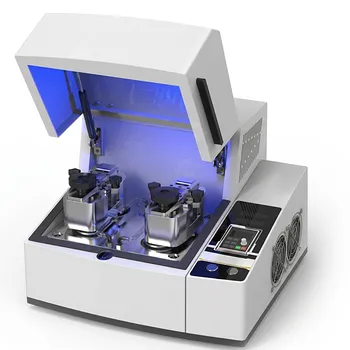
Laboratory Nano High Energy Ball Mill Ultrafine Grinding Mechanical Alloying
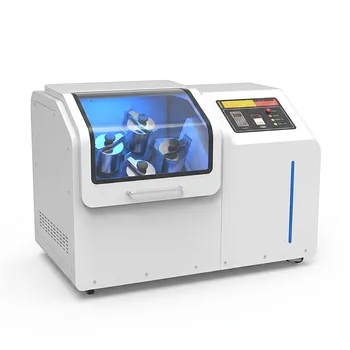
High Energy Omnidirectional Planetary Ball Mill 16L
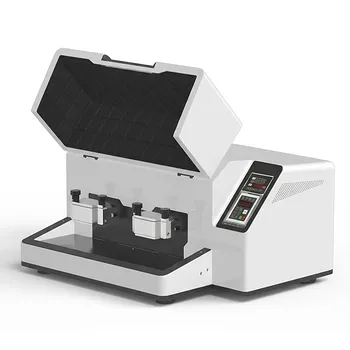
Nanoscale High-Energy Vibratory Ball Mill for Laboratory Sample Preparation, Mechanochemistry, and Mechanical Alloying
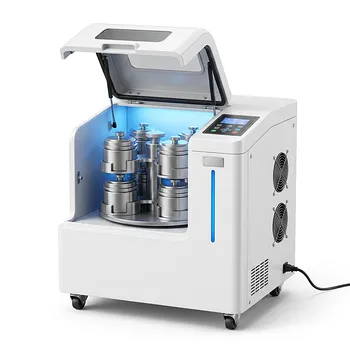
High Energy Omnidirectional Planetary Ball Mill 20L
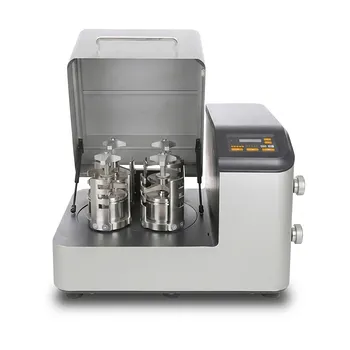
High Energy Planetary Ball Mill for Nano Scale Grinding and Colloidal Mixing in Material Science Research
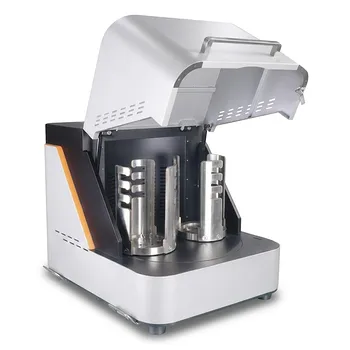
High Energy Laboratory Planetary Ball Mill for Nano Grinding and Colloidal Mixing of Hard and Brittle Materials

8L Planetary Ball Mill for Laboratory Grinding and Sample Preparation
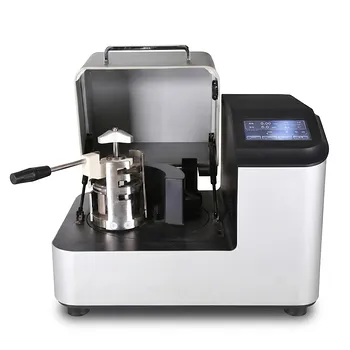
High Energy Laboratory Planetary Ball Mill for Nano Grinding and Material Science Sample Preparation
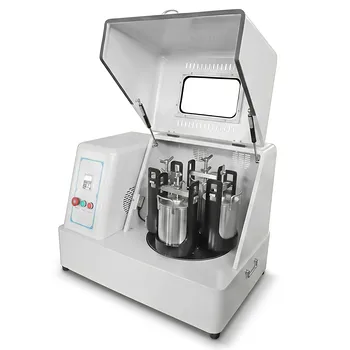
Vertical Square Planetary Ball Mill for Laboratory Sample Preparation and Nanoscale Grinding
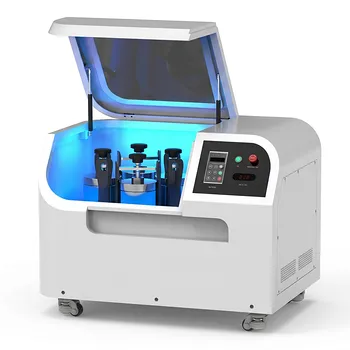
Planetary Ball Mill 12L
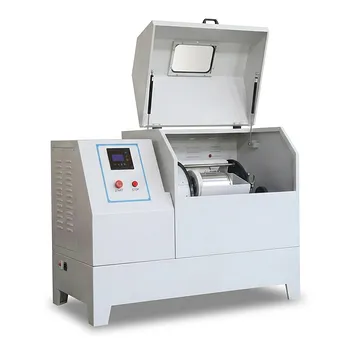
Heavy Duty Horizontal Planetary Ball Mill for Efficient Industrial Grinding and Sample Preparation

Miniature Planetary Ball Mill with Vacuum Grinding and High Efficiency for Laboratory Sample Preparation
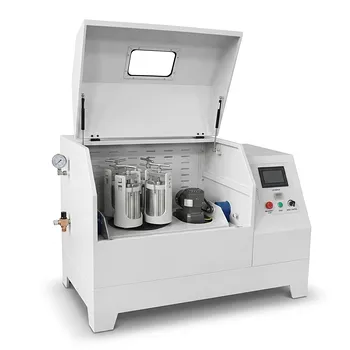
Vertical Production Planetary Ball Mill for High Throughput Powder Processing
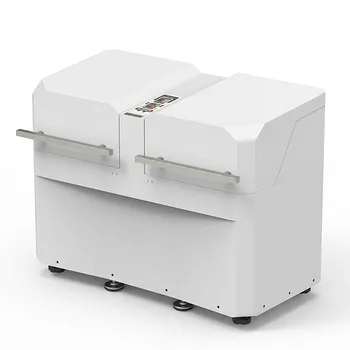
Dual Station Planetary Ball Mill 24L
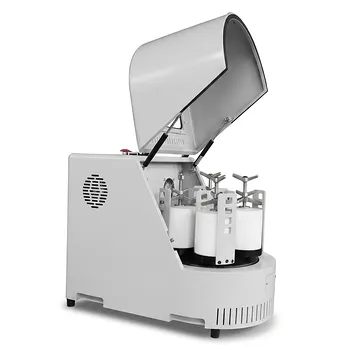
Vertical Semi Circular Planetary Ball Mill for Laboratory Precision Grinding
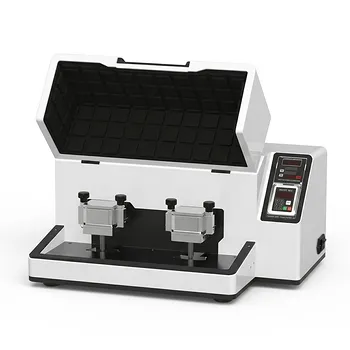
Nanoscale High Energy Vibratory Ball Mill Low Temperature

High Energy Hybrid Vibratory Ball Mill for Grinding Mixing and Cell Disruption
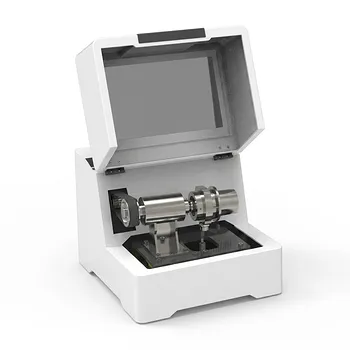
Single Tank High Energy Vibratory Ball Mill for Laboratory Grinding and Mixing