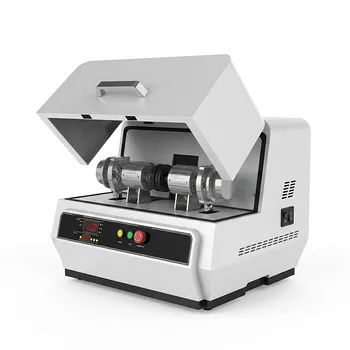
What is the role of a high-energy planetary ball mill in Li2ZrO3 and LBS prep? Achieve Superior Electrolyte Density
Updated 4 months ago
High-energy planetary ball milling is the foundational processing step for synthesizing lithium metal zirconate ($Li_2ZrO_3$) and borosilicate glass (LBS) composites. It utilizes intense impact and shear forces generated by high-speed rotation to achieve micro-scale homogenization and significant particle size reduction. This process transforms the raw powder into a refined precursor that is physically and chemically prepared for high-density solid electrolyte fabrication.
Core Takeaway: The role of the high-energy planetary ball mill is to refine the $Li_2ZrO_3$ and LBS mixture into a sub-micron scale powder, providing the high surface energy and uniform distribution required for successful sintering and densification of solid electrolytes.
Mechanical Refinement and Particle Size Distribution
Direct Reduction of Particle Size
In the mixing phase, the high-energy planetary ball mill significantly reduces the average particle size of the $Li_2ZrO_3$ and LBS powder from an initial 4–5 micrometers down to 2–3 micrometers. This reduction is achieved through the violent collisions between the grinding balls, the powder particles, and the jar walls.
Increasing Sub-Micron Proportions
Beyond simple reduction, the process increases the proportion of sub-micron particles to approximately 30% of the total volume. This shift in the Particle Size Distribution (PSD) is critical for filling voids during the subsequent fabrication stages.
Eliminating Agglomerates
High-speed rotation generates the friction and shear forces necessary to break down large agglomerates inherent in the raw starting materials. By eliminating these clusters, the mill ensures that the LBS glass phase can distribute evenly around the $Li_2ZrO_3$ grains.
Enhancing Chemical and Physical Reactivity
Increasing Specific Surface Area
As the mill mechanically refines the particles, it exponentially increases the specific surface area of the powder. This increased area enhances the contact points between the $Li_2ZrO_3$ and the LBS glass matrix.
Mechanical Activation and Surface Energy
The high-energy collisions induce mechanochemical treatment, which increases the surface energy of the powders. This energy provides the necessary reaction activity to facilitate better phase distribution and bonding during subsequent solid-state synthesis.
Precision Stoichiometric Control
The intensive mixing environment ensures that the stoichiometric ratio of the lithium metal zirconate and borosilicate glass remains uniform throughout the entire batch. This microscopic uniformity prevents localized imbalances that could lead to secondary, undesirable phases during sintering.
The Foundation for High-Density Electrolytes
Establishing Sintering Precursors
The refined powder acts as a high-quality precursor that directly determines the densification degree of the final composite. A finer, more uniform powder allows for lower sintering temperatures and more predictable grain growth.
Microstructural Uniformity
By achieving a uniform embedding of components at the microscopic scale, the mill establishes a foundation for a homogeneous microstructure. This uniformity is essential for the consistent ionic conductivity required in solid-state battery applications.
Understanding the Trade-offs
Potential for Media Contamination
The high-energy nature of the process can lead to wear on the grinding balls and the milling jar. This wear may introduce trace impurities into the $Li_2ZrO_3$-LBS composite, which could negatively impact the electrochemical performance if not carefully managed.
Heat Generation and Phase Stability
Intense friction and impact generate significant heat during the milling cycle. If the temperature is not controlled, it could lead to unintended phase transformations or premature softening of the borosilicate glass phase.
Energy Consumption vs. Refinement Diminishing Returns
While longer milling times generally lead to finer powders, there is a point of diminishing returns where particle size stabilizes. Extended milling beyond this point increases energy costs and the risk of contamination without providing further refinement.
How to Apply This to Your Project
Recommendations for Process Optimization
- If your primary focus is maximizing electrolyte density: Prioritize achieving the 30% sub-micron particle threshold to ensure optimal packing density during the pressing stage.
- If your primary focus is preventing chemical impurities: Utilize grinding media and jars made of materials identical or compatible with the composite, such as zirconia-based media.
- If your primary focus is reducing processing time: Optimize the rotation speed to maximize shear forces, as these are more effective than simple impact for refining the soft LBS glass phase.
By precisely controlling the high-energy milling parameters, you establish the critical physical foundation necessary to produce high-performance, high-density $Li_2ZrO_3$ and LBS composite solid electrolytes.
Summary Table:
| Process Function | Impact on Li2ZrO3-LBS Composite | Key Outcome |
|---|---|---|
| Particle Refinement | Reduces size from 4-5μm to 2-3μm | Higher sintering density |
| Sub-micron Generation | Increases <1μm particles to ~30% | Improved void filling & packing |
| Mechanical Activation | Boosts specific surface energy | Enhanced chemical reactivity |
| Homogenization | Uniform LBS glass phase distribution | Consistent ionic conductivity |
Elevate Your Material Research with Professional Lab Solutions
Precision in sample preparation is the key to breakthrough performance in solid-state electrolytes. We provide complete laboratory sample preparation solutions tailored for material science, specializing in high-performance powder processing and compaction equipment.
From achieving sub-micron refinement with our planetary ball mills, jet mills, and cryogenic grinders to fabricating high-density solid electrolytes using our Cold/Warm Isostatic Presses (CIP/WIP) and vacuum hot presses, we offer the full spectrum of tools you need. Our range also includes crushers, sieve shakers, and advanced mixers (powder and defoaming) to ensure your stoichiometric control is flawless.
Ready to optimize your $Li_2ZrO_3$ and LBS composite workflow? Contact our experts today to find the perfect equipment configuration for your lab's specific requirements.
References
- Anastasia V. Kalashnova, K. V. Druzhinin. Effect of Li2O–В2O3–SiO2 glass on conductivity, microstructure, and stability of Li2ZrO3 solid electrolyte. DOI: 10.15826/elmattech.2025.4.060
Mentioned Products
- High Energy Planetary Ball Mill for Nano Scale Grinding and Mechanical Alloying
- High Energy Omnidirectional Planetary Ball Mill 16L
- High Energy Laboratory Planetary Ball Mill for Nano Grinding and Colloidal Mixing of Hard and Brittle Materials
- High Energy Planetary Ball Mill for Nano Scale Grinding and Colloidal Mixing in Material Science Research
- High Energy Omnidirectional Planetary Ball Mill 20L
People Also Ask
- Why is a high-energy planetary ball mill used for nano-milling As4Se3? Achieve Expert Structural Transformation
- What role do high-energy planetary ball mills play in FDM composite filament preparation? Optimize Material Performance
- What is the role of a high-energy planetary ball mill in the exfoliation of modified WSe2? Achieve Nano-Precision
- What is the function of a planetary ball mill in glass-ceramic sintering? Optimize Reactivity and Uniformity
- What is the role of a high-energy planetary ball mill in the preparation of high-performance nano-ceramics? Key Guide

Tech Team · PowderPreparation
Last updated on Jun 03, 2026
Related Products
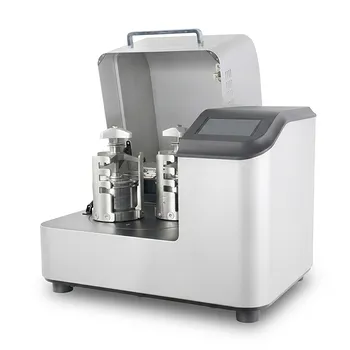
High Energy Planetary Ball Mill for Nano Scale Grinding and Mechanical Alloying
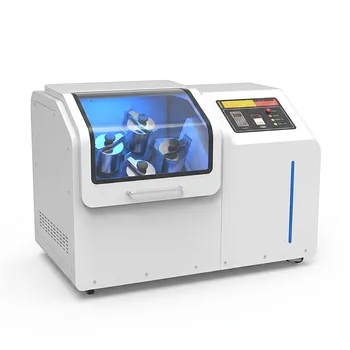
High Energy Omnidirectional Planetary Ball Mill 16L
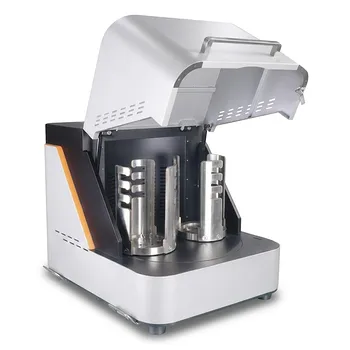
High Energy Laboratory Planetary Ball Mill for Nano Grinding and Colloidal Mixing of Hard and Brittle Materials
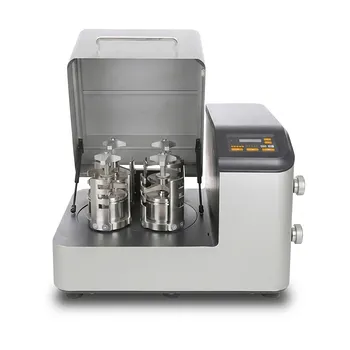
High Energy Planetary Ball Mill for Nano Scale Grinding and Colloidal Mixing in Material Science Research
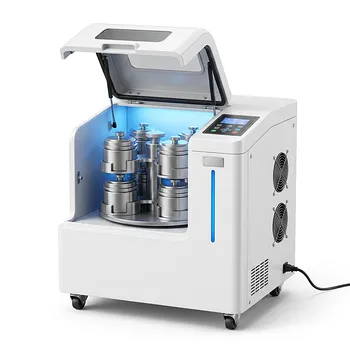
High Energy Omnidirectional Planetary Ball Mill 20L
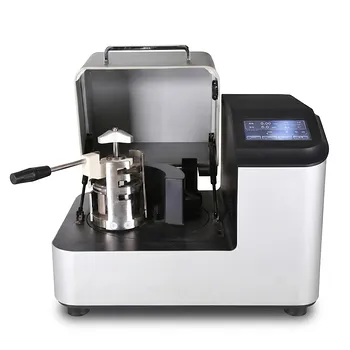
High Energy Laboratory Planetary Ball Mill for Nano Grinding and Material Science Sample Preparation
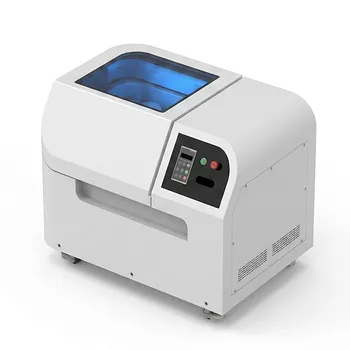
8L Planetary Ball Mill for Laboratory Grinding and Sample Preparation
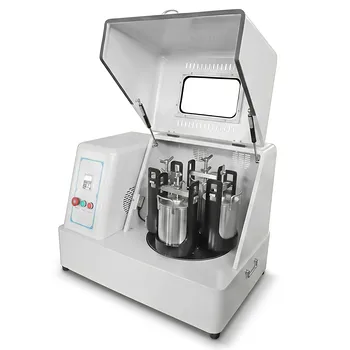
Vertical Square Planetary Ball Mill for Laboratory Sample Preparation and Nanoscale Grinding
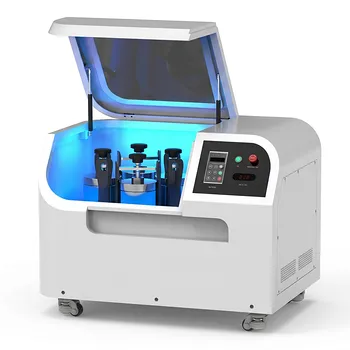
Planetary Ball Mill 12L
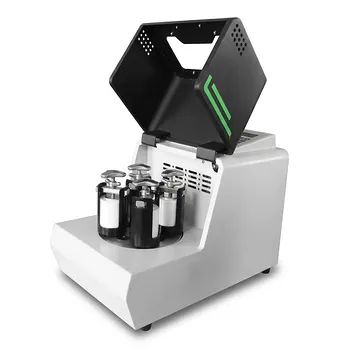
Miniature Planetary Ball Mill with Vacuum Grinding and High Efficiency for Laboratory Sample Preparation
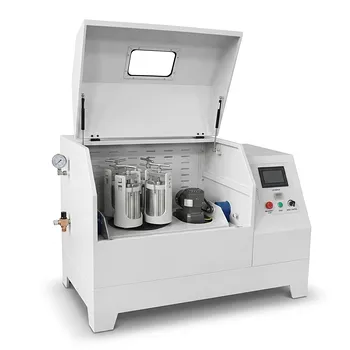
Vertical Production Planetary Ball Mill for High Throughput Powder Processing
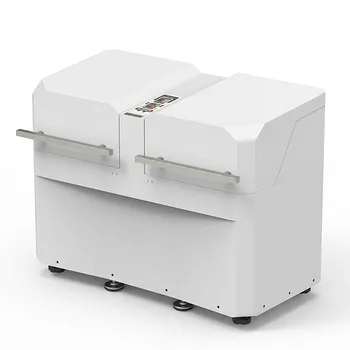
Dual Station Planetary Ball Mill 24L
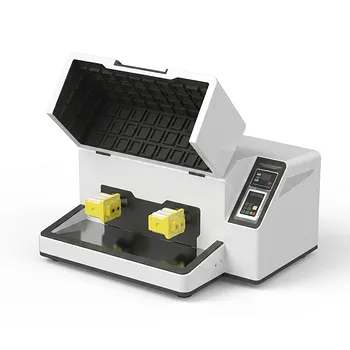
Multi-Platform Nanoscale High-Energy Vibratory Ball Mill

High Energy Hybrid Vibratory Ball Mill for Grinding Mixing and Cell Disruption
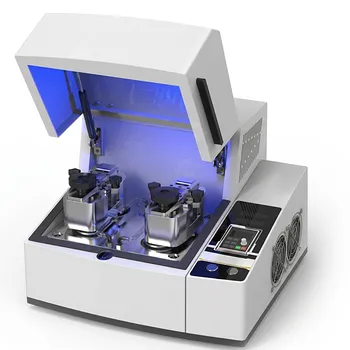
Laboratory Nano High Energy Ball Mill Ultrafine Grinding Mechanical Alloying

Nano High Energy Vibratory Ball Mill with Heating and Temperature Control
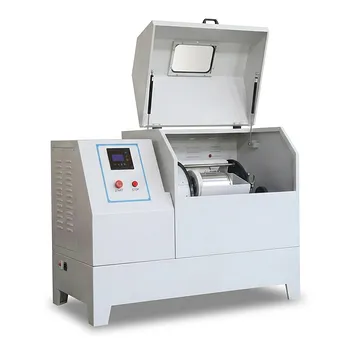
Heavy Duty Horizontal Planetary Ball Mill for Efficient Industrial Grinding and Sample Preparation
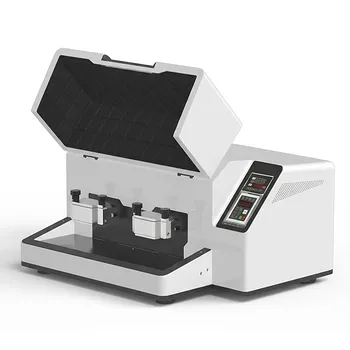
Nanoscale High-Energy Vibratory Ball Mill for Laboratory Sample Preparation, Mechanochemistry, and Mechanical Alloying

Nano High Energy Vibratory Ball Mill for Laboratory Sample Preparation