What is the primary function of a high-energy planetary ball mill in the preparation of dual-scale titanium materials?
Updated 3 months ago
The primary function of a high-energy planetary ball mill in the preparation of dual-scale titanium materials is the ultra-refinement of Grade 2 commercially pure titanium (Cp-Ti) sponge powders. Through intense high-energy impact and friction, the equipment reduces the average particle size of coarse powders from 150 microns down to approximately 3-micron nano-scale or micro-scale flaky particles. This morphological transformation is accompanied by a massive increase in material hardness and the creation of a critical deformation energy reservoir.
Core Takeaway: A high-energy planetary ball mill acts as a mechanical processor that transforms soft, coarse titanium sponge into ultra-refined, high-hardness flaky particles. This process simultaneously reduces particle size and maximizes internal dislocation density, providing the necessary energy for subsequent material strengthening.
The Mechanism of Ultra-Refinement
Rapid Size Reduction and Morphological Change
The planetary ball mill utilizes high-speed rotation to generate powerful impact and shear forces through the grinding media. These forces successfully break down 150-micron titanium sponge particles into 3-micron flaky particles. This shift to a "dual-scale" structure is essential for creating the unique microstructures found in advanced titanium composites.
Significant Hardness Enhancement
Mechanical processing leads to extreme plastic deformation of the titanium particles. This increases the material hardness from 200 HV0.025 to 800 HV0.025. The resulting particles are not only smaller but are physically transformed into high-strength precursors.
Creation of a Deformation Energy Reservoir
The intense milling process builds a high dislocation density within the titanium lattice. This stored mechanical energy serves as a reservoir that facilitates the formation of strengthening phases during later stages of material processing.
Secondary Roles in Titanium Processing
Achieving Component Homogeneity
Beyond simple refinement, the planetary ball mill is critical for rapidly mixing pure titanium with master alloys or reinforcing agents like graphene, TiC, or TiB. High-energy agitation ensures a uniform distribution of components in a fraction of the time required by traditional methods. This uniformity prevents component segregation during the final sintering process.
Inducing Solid-State Reactions
The mill serves as a reactor for mechanochemical processes, enabling solid-state alloying without the need for melting. For example, in NiTi alloys or Er-doped TiO2, the mechanical energy facilitates the diffusion of atoms and ions into the crystal lattice. This allows for the production of functional nanomaterials at a significantly lower cost.
Mechanical Activation for Sintering
Milling increases lattice distortion and creates a high density of defects within the material. These defects lower the energy barrier required for solid-state reactions. Consequently, the powder becomes more "active," accelerating atomic diffusion and facilitating the formation of new phases at lower sintering temperatures.
Understanding the Trade-offs
Risk of Material Contamination
The high-energy collisions that refine the titanium can also cause wear on the grinding jars and balls. This wear can introduce impurities from the milling media (such as iron or zirconia) into the high-purity titanium powder. Users must carefully select media materials that are compatible with their final application to avoid degrading material properties.
Heat Generation and Oxidation
Intense friction within the milling jar generates significant heat, which can lead to the unwanted oxidation of ductile titanium powders. Because titanium is highly reactive at elevated temperatures, milling must often be performed under inert atmospheres or with cooling intervals. Failing to manage thermal energy can result in brittle powders that do not sinter correctly.
How to Apply This to Your Project
Making the Right Choice for Your Goal
- If your primary focus is Grain Refinement: Operate the mill at high speeds with a high ball-to-powder ratio to maximize the impact energy required for nano-scale reduction.
- If your primary focus is Uniform Mixing: Use lower rotational speeds (e.g., 200 rpm) for shorter durations to achieve molecular-level blending without excessive deformation of the base particles.
- If your primary focus is Mechanical Activation: Prioritize longer milling times to maximize lattice distortion and dislocation density, which will lower your subsequent sintering temperatures.
The high-energy planetary ball mill is the indispensable engine of titanium refinement, providing the mechanical energy necessary to turn raw powders into high-performance, dual-scale materials.
Summary Table:
| Function | Key Outcome | Primary Mechanism |
|---|---|---|
| Ultra-Refinement | 150μm to 3μm particle reduction | High-energy impact and shear forces |
| Hardness Boost | 200 HV to 800 HV0.025 increase | Extreme plastic deformation |
| Energy Storage | High dislocation density reservoir | Accumulation of mechanical energy |
| Homogeneity | Uniform component distribution | Rapid high-speed agitation and mixing |
| Activation | Lowered sintering temperatures | Lattice distortion and defect creation |
Optimize Your Titanium Research with Expert Sample Prep Solutions
Achieving the perfect dual-scale microstructure requires more than just a mill—it requires a complete, integrated workflow. At [Brand Name], we provide comprehensive laboratory sample preparation solutions tailored for material science.
From high-energy planetary ball mills and jet mills for ultra-refinement to powder mixers for homogeneity, we ensure your precursors are perfectly prepared. To complete your process, we manufacture a full spectrum of compaction equipment, including Cold/Warm Isostatic Presses (CIP/WIP), vacuum hot presses, and standard lab presses for high-density sintering.
Ready to elevate your material performance? Contact our technical experts today to find the ideal processing and compaction equipment for your specific application!
References
- Tamás Mikó, Zoltán Gácsi. A Novel Process to Produce Ti Parts from Powder Metallurgy with Advanced Properties for Aeronautical Applications. DOI: 10.3390/aerospace10040332
Mentioned Products
- High Energy Planetary Ball Mill for Nano Scale Grinding and Mechanical Alloying
- High Energy Omnidirectional Planetary Ball Mill 16L
- High Energy Laboratory Planetary Ball Mill for Nano Grinding and Colloidal Mixing of Hard and Brittle Materials
- High Energy Omnidirectional Planetary Ball Mill 20L
- High Energy Planetary Ball Mill for Nano Scale Grinding and Colloidal Mixing in Material Science Research
People Also Ask
- Why is a high-energy planetary ball mill used for nano-milling As4Se3? Achieve Expert Structural Transformation
- What role do high-energy planetary ball mills play in FDM composite filament preparation? Optimize Material Performance
- What is the role of a high-energy planetary ball mill in the exfoliation of modified WSe2? Achieve Nano-Precision
- What is the function of a planetary ball mill in glass-ceramic sintering? Optimize Reactivity and Uniformity
- What is the role of a high-energy planetary ball mill in the preparation of high-performance nano-ceramics? Key Guide

Tech Team · PowderPreparation
Last updated on Jun 03, 2026
Related Products
High Energy Planetary Ball Mill for Nano Scale Grinding and Mechanical Alloying
High Energy Omnidirectional Planetary Ball Mill 16L
High Energy Laboratory Planetary Ball Mill for Nano Grinding and Colloidal Mixing of Hard and Brittle Materials
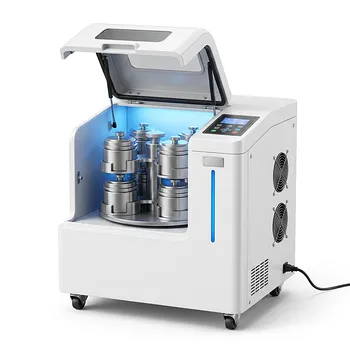
High Energy Omnidirectional Planetary Ball Mill 20L
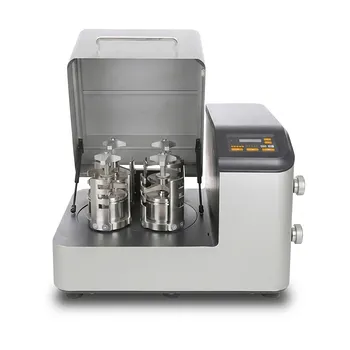
High Energy Planetary Ball Mill for Nano Scale Grinding and Colloidal Mixing in Material Science Research
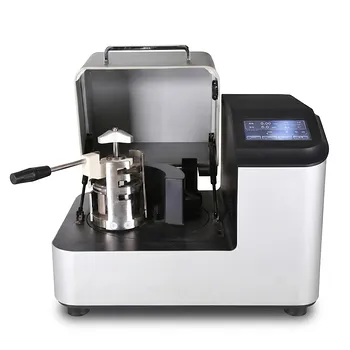
High Energy Laboratory Planetary Ball Mill for Nano Grinding and Material Science Sample Preparation
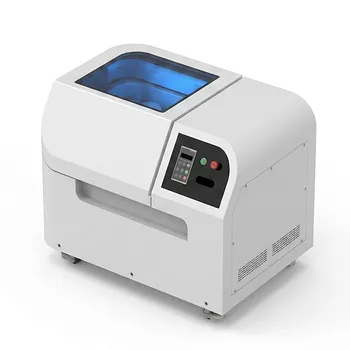
8L Planetary Ball Mill for Laboratory Grinding and Sample Preparation
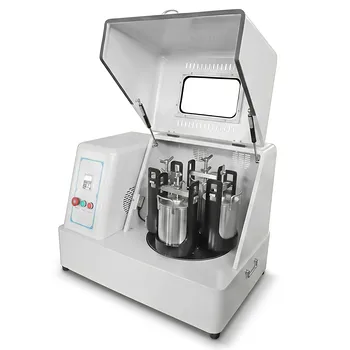
Vertical Square Planetary Ball Mill for Laboratory Sample Preparation and Nanoscale Grinding
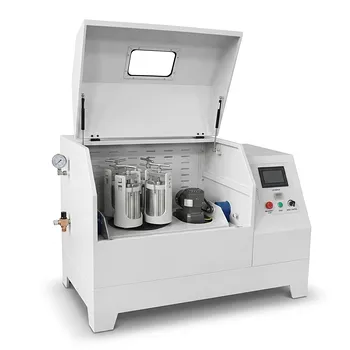
Vertical Production Planetary Ball Mill for High Throughput Powder Processing
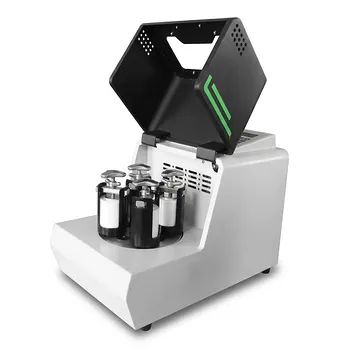
Miniature Planetary Ball Mill with Vacuum Grinding and High Efficiency for Laboratory Sample Preparation
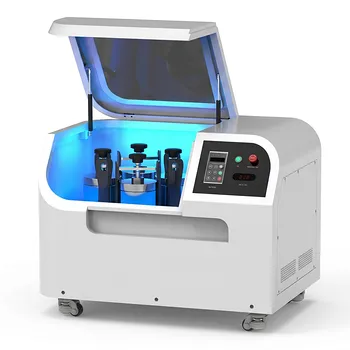
Planetary Ball Mill 12L
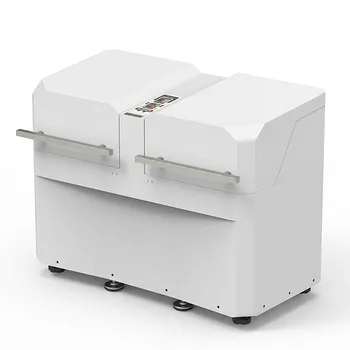
Dual Station Planetary Ball Mill 24L
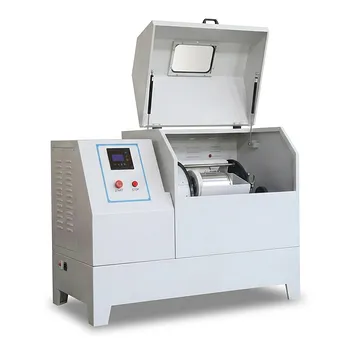
Heavy Duty Horizontal Planetary Ball Mill for Efficient Industrial Grinding and Sample Preparation
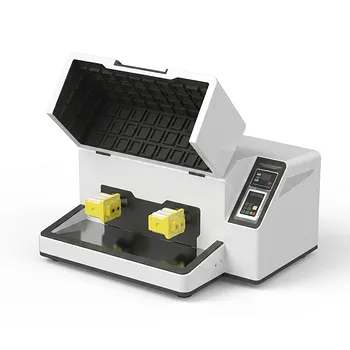
Multi-Platform Nanoscale High-Energy Vibratory Ball Mill
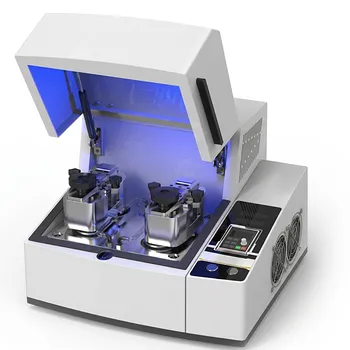
Laboratory Nano High Energy Ball Mill Ultrafine Grinding Mechanical Alloying
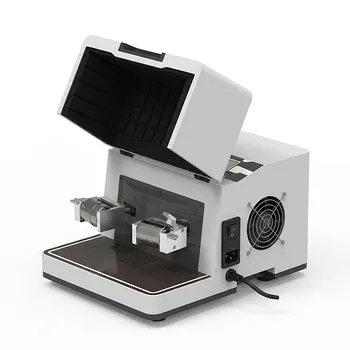
High Energy Hybrid Vibratory Ball Mill for Grinding Mixing and Cell Disruption

Nano High Energy Vibratory Ball Mill with Heating and Temperature Control
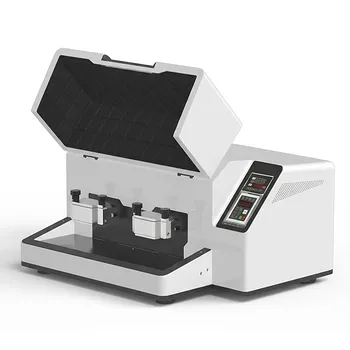
Nanoscale High-Energy Vibratory Ball Mill for Laboratory Sample Preparation, Mechanochemistry, and Mechanical Alloying
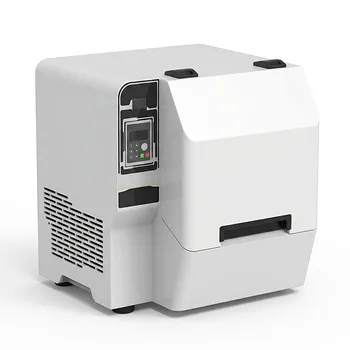
Nano High Energy Vibratory Ball Mill for Laboratory Sample Preparation