Why are low-energy ball milling parameters utilized when mixing dual-scale titanium powder? Preserve Shell Structures
Updated 4 months ago
Low-energy ball milling is utilized to achieve uniform distribution of titanium nano-flakes without compromising the physical integrity of the base powder. By maintaining low rotation speeds (typically around 100 rpm) and small ball-to-powder ratios (10:1), engineers can integrate refined particles into the surface pores of coarse sponge titanium. This specific energy profile is designed to create a precise three-dimensional shell structure rather than a fractured, homogenized mixture.
The primary objective of low-energy ball milling in dual-scale titanium systems is to facilitate structural coating rather than mechanical alloying. It allows for the precise positioning of nano-flakes onto coarse particles while preserving the distinct particle size distribution necessary for specialized composite performance.
Preserving Particle Morphology
Avoiding Particle Fracture
Low-energy parameters prevent the grinding media from generating enough impact force to shatter the coarse commercially pure titanium (Cp-Ti) sponge. This ensures the structural foundation of the dual-scale material remains intact throughout the mixing phase.
Protecting the Refined Nano-Flakes
While high-energy milling is often used to reduce particle size, these specific parameters aim to keep pre-refined nano-flakes at their engineered dimensions. Over-milling would lead to excessive cold-welding or further refinement, destroying the intended dual-scale architecture.
Engineering the Three-Dimensional Shell
Distribution into Surface Pores
The gentle tumbling action at low speeds encourages fine nano-flakes to migrate into the irregular surface pores of the coarse sponge particles. This creates a mechanical interlocking effect that is often lost when using high-energy impact forces.
Formation of the 3D Network
By utilizing a conservative ball-to-powder ratio, the process provides sufficient surface contact to "wrap" coarse particles in a shell of fine particles. This 3D shell structure is critical for achieving a uniform microstructure during subsequent pressing and sintering stages.
Understanding the Trade-offs
Mixing Time vs. Structural Integrity
Low-energy milling typically requires longer processing times to achieve homogenization compared to high-energy methods. Choosing these parameters means prioritizing the preservation of the dual-scale structure over industrial processing speed.
Limitations in De-agglomeration
Without the high-shear forces used in standard milling, some nano-particle agglomerates may persist. This requires the input powders to be of high quality, as the low-energy process lacks the power to break down stubborn clusters that high-energy milling handles easily.
Optimizing Your Milling Strategy
Depending on the specific requirements of your titanium composite, the application of milling energy must be carefully balanced.
- If your primary focus is preserving the original morphology of a porous matrix: Utilize low rotation speeds (e.g., 100 rpm) to ensure the grinding media provides gentle distribution rather than destructive impact.
- If your primary focus is creating a core-shell microstructure: Maintain a low ball-to-powder ratio (e.g., 10:1) to facilitate the coating of coarse particles with refined reinforcements without inducing unwanted mechanical alloying.
Mastering low-energy milling parameters allows for the creation of sophisticated, dual-scale architectures that would be destroyed by conventional high-intensity processing.
Summary Table:
| Parameter / Feature | Low-Energy Milling (e.g., 100 rpm) | Impact on Dual-Scale Titanium |
|---|---|---|
| Particle Integrity | High preservation | Prevents fracture of coarse sponge Ti and nano-flakes |
| Microstructure | 3D Shell/Core-shell formation | Enables mechanical interlocking in surface pores |
| Energy Profile | Low (approx. 10:1 ratio) | Facilitates structural coating over mechanical alloying |
| Mixing Objective | Uniform distribution | Achieves homogenization without destroying morphology |
| Processing Speed | Slower/Conservative | Prioritizes structural architecture over throughput |
Elevate Your Material Research with Precision Powder Solutions
Achieving the perfect dual-scale architecture requires more than just the right parameters—it requires the right equipment. At [Your Brand Name], we provide complete laboratory sample preparation solutions tailored for material science.
Whether you are refining titanium nano-flakes or compacting advanced composites, our extensive product line ensures superior results:
- Advanced Milling: Planetary ball mills, jet mills, and cryogenic grinders for precise particle size control.
- Comprehensive Preparation: Jaw/roll crushers, sieve shakers, and high-efficiency powder mixers.
- Precision Compaction: A full spectrum of hydraulic presses, including Cold/Warm Isostatic Presses (CIP/WIP), XRF pellet presses, and vacuum hot presses.
Ready to optimize your powder processing workflow? Contact our technical experts today to find the ideal equipment for your specific material challenges!
References
- Tamás Mikó, Zoltán Gácsi. A Novel Process to Produce Ti Parts from Powder Metallurgy with Advanced Properties for Aeronautical Applications. DOI: 10.3390/aerospace10040332
Mentioned Products
- Nanoscale High Energy Vibratory Ball Mill Low Temperature
- Ultra-Low Temperature Cryogenic High-Energy Vibratory Ball Mill
- High Energy Planetary Ball Mill for Nano Scale Grinding and Colloidal Mixing in Material Science Research
- Laboratory Nano High Energy Ball Mill Ultrafine Grinding Mechanical Alloying
- High Energy Planetary Ball Mill for Nano Scale Grinding and Mechanical Alloying
People Also Ask
- How does a high-energy vibratory ball mill improve the performance of MgH2? Optimize Hydrogen Storage Kinetics
- What is the importance of using a high-purity argon atmosphere during the high-energy ball milling of ceramic particles?
- What is the purpose of adding alcohol as a PCA during titanium ball milling? Prevent Cold Welding & Enhance Refinement
- What is the role of high-energy ball milling in antibacterial ceramic powders? Boost Reactivity & Homogeneity
- What is the function of high-energy ball milling in ZnO membrane slurry prep? Optimize Homogenization & Dispersion

Tech Team · PowderPreparation
Last updated on Jun 03, 2026
Related Products
Nanoscale High Energy Vibratory Ball Mill Low Temperature

Ultra-Low Temperature Cryogenic High-Energy Vibratory Ball Mill
High Energy Planetary Ball Mill for Nano Scale Grinding and Colloidal Mixing in Material Science Research
Laboratory Nano High Energy Ball Mill Ultrafine Grinding Mechanical Alloying

High Energy Planetary Ball Mill for Nano Scale Grinding and Mechanical Alloying

High Energy Laboratory Planetary Ball Mill for Nano Grinding and Colloidal Mixing of Hard and Brittle Materials

Vertical Square Planetary Ball Mill for Laboratory Sample Preparation and Nanoscale Grinding

High Energy Laboratory Planetary Ball Mill for Nano Grinding and Material Science Sample Preparation

Miniature Planetary Ball Mill with Vacuum Grinding and High Efficiency for Laboratory Sample Preparation

High Energy Hybrid Vibratory Ball Mill for Grinding Mixing and Cell Disruption
Single Tank High Energy Vibratory Ball Mill for Laboratory Grinding and Mixing

Nanoscale High-Energy Vibratory Ball Mill for Laboratory Sample Preparation, Mechanochemistry, and Mechanical Alloying

Nano High Energy Vibratory Ball Mill for Laboratory Sample Preparation

High Energy Omnidirectional Planetary Ball Mill 16L
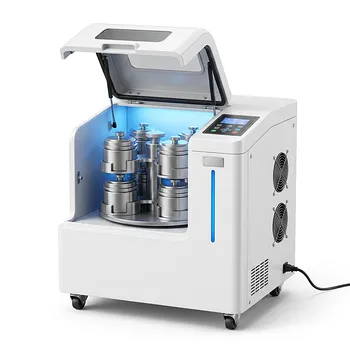
High Energy Omnidirectional Planetary Ball Mill 20L
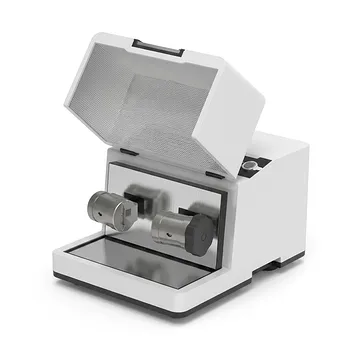
Heating Temperature Controlled High Energy Vibratory Ball Mill

Multi-Platform Nanoscale High-Energy Vibratory Ball Mill

8L Planetary Ball Mill for Laboratory Grinding and Sample Preparation
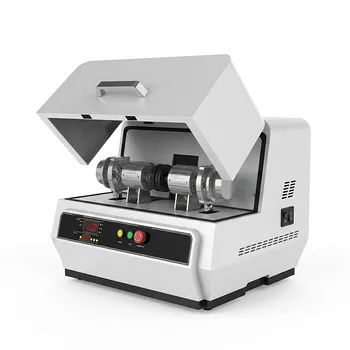
Dual Jar High Energy Vibratory Ball Mill
