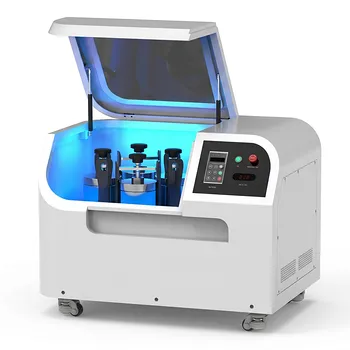
What is the Role of HEBM in High-Entropy H-SOFC Cathode Prep? Achieving Atomic-Level Homogenization
Updated 5 months ago
High-energy ball milling is the foundational mechanical activation step required to synthesize phase-pure high-entropy cathode powders. It employs intense impact and shear forces to achieve atomic-level mixing of five or more metal cations, ensuring the "cocktail effect" is realized. This process transforms coarse precursor oxides into highly reactive, nanostructured powders ready for subsequent thermal processing.
High-energy ball milling acts as a catalyst for solid-state synthesis by forcing heterogeneous cations into an atomic-scale distribution while simultaneously refining grain size. This dual action lowers the energy barrier for single-phase formation and ensures the microstructural uniformity critical for the performance of high-entropy H-SOFC cathodes.
Atomic-Level Homogenization and the "Cocktail Effect"
Overcoming Thermodynamic Barriers
High-entropy cathodes require the integration of five or more distinct metal cations into a single lattice, such as a perovskite or Ruddlesden-Popper (R-P) phase.
High-energy ball milling (HEBM) provides the mechanical energy necessary to overcome the thermodynamic resistance of mixing these diverse elements. This "forced mixing" ensures that the cations are distributed uniformly at the atomic scale before any heat is applied.
Establishing the Entropy-Stabilized Lattice
The primary goal of using multiple cations is to leverage the cocktail effect, where the interaction of different elements yields properties greater than the sum of their parts.
HEBM facilitates the preliminary alloying in the solid state, which is essential for stabilizing unique, single-phase crystal structures during the final sintering process. Without this level of homogenization, the cathode may suffer from phase separation or the formation of unwanted secondary oxides.
Physical Refinement and Enhanced Reactivity
Increasing Specific Surface Area
The high rotational speeds and impact forces of planetary ball mills effectively reduce raw material particles to the sub-micron or nanometer scale.
By significantly increasing the specific surface area, HEBM provides a higher "sintering driving force." This makes the powder much more reactive, allowing it to transition into the desired high-entropy phase more efficiently during calcination.
Mechanical Activation and Cold Welding
During the milling process, powder particles undergo repeated cycles of compression, cold welding, and fracturing.
This mechanical activation introduces lattice strain and defects, which lowers the activation energy required for subsequent chemical reactions. Consequently, researchers can often use lower calcination temperatures to achieve a fully formed perovskite phase, preserving the fine grain structure.
Impact on H-SOFC Cathode Performance
Lowering Sintering Temperatures
Because the milled powder is highly reactive and chemically uniform, it promotes the formation of a dense, single-phase structure at reduced temperatures.
This is particularly beneficial for H-SOFCs, where high sintering temperatures can lead to detrimental reactions between the cathode and the proton-conducting electrolyte. Reducing the thermal budget helps maintain the integrity of the cell's delicate interfaces.
Optimizing Ion-Conducting Networks
For high-entropy cathodes to function, they must facilitate the movement of protons, oxygen ions, and electrons.
HEBM ensures that dopants—such as zirconium- or cerium-based elements—are distributed perfectly within the matrix. This creates a continuous and uniform ion-conducting network, which is vital for maintaining low polarization resistance at the cathode.
Understanding the Trade-offs
The Risk of Media Contamination
The intense energy required for high-entropy synthesis often leads to wear and tear of the milling jars and media.
Common contaminants, such as zirconia (from grinding balls), can introduce impurities that alter the stoichiometry of the high-entropy phase. Careful selection of milling media and duration is required to balance reactivity with purity.
Structural Defects and Amorphization
Excessive milling can lead to a complete transition into an amorphous structure due to accumulated lattice strain.
While some amorphization can enhance reactivity, it may also lead to unpredictable phase transformations during heating. Achieving the "metastable" solid solution requires precise control over the milling time and energy input to avoid degrading the final crystal structure.
Applying HEBM to Your Cathode Synthesis
To successfully prepare high-entropy cathode powders, the milling strategy must align with your specific performance targets.
- If your primary focus is phase purity: Utilize longer milling durations at moderate speeds to ensure complete atomic homogenization of all five+ cations before calcination.
- If your primary focus is high triple-phase boundary (TPB) density: Prioritize high-speed planetary milling to achieve nanometer-scale grain refinement, which increases the available surface area for electrochemical reactions.
- If your primary focus is preventing interface reactions: Use HEBM to maximize powder reactivity, allowing you to lower the final co-sintering temperature and protect the electrolyte-cathode interface.
Mastering high-energy ball milling transforms the challenge of multi-element integration into a controllable process for creating next-generation H-SOFC components.
Summary Table:
| Key Mechanism | Function in Synthesis | Impact on H-SOFC Performance |
|---|---|---|
| Atomic Homogenization | Forces 5+ cations into a single lattice | Realizes the "cocktail effect" & phase purity |
| Physical Refinement | Reduces particles to sub-micron/nano scale | Increases triple-phase boundary (TPB) density |
| Mechanical Activation | Introduces lattice strain and defects | Lowers calcination and sintering temperatures |
| Forced Mixing | Prevents secondary oxide formation | Ensures a uniform ion-conducting network |
Optimize Your High-Entropy Material Synthesis
Achieving the perfect "cocktail effect" in H-SOFC cathodes requires precision at the atomic level. At [Company Name], we provide complete laboratory sample preparation solutions tailored for material science. Our expertise in powder processing and compaction equipment ensures your high-entropy powders achieve the reactivity and phase purity your research demands.
Our Specialized Equipment Includes:
- Advanced Milling: Planetary ball mills, jet mills, and liquid nitrogen cryogenic grinders for nanometer-scale refinement.
- Processing & Mixing: Powder mixers, defoaming mixers, and vibratory sieve shakers for perfect consistency.
- High-Pressure Compaction: A full spectrum of hydraulic presses, including Cold/Warm Isostatic Presses (CIP/WIP), vacuum hot presses, and XRF pellet presses.
Ready to elevate your laboratory's efficiency and material performance? Contact our technical experts today to find the ideal solution for your H-SOFC research!
References
- Hailu Dai, Lei Bi. High‐Entropy Cathodes for Proton‐Conducting Solid Oxide Fuel Cells: A Promising Yet Uncharted Frontier. DOI: 10.1002/sus2.70054
Mentioned Products
- High Energy Planetary Ball Mill for Nano Scale Grinding and Mechanical Alloying
- Ultra-Low Temperature Cryogenic High-Energy Vibratory Ball Mill
- High Energy Hybrid Vibratory Ball Mill for Grinding Mixing and Cell Disruption
- High Energy Omnidirectional Planetary Ball Mill 16L
- Multi-Platform Nanoscale High-Energy Vibratory Ball Mill
People Also Ask
- Why is a high-energy planetary ball mill used for nano-milling As4Se3? Achieve Expert Structural Transformation
- What role do high-energy planetary ball mills play in FDM composite filament preparation? Optimize Material Performance
- What is the role of a high-energy planetary ball mill in the exfoliation of modified WSe2? Achieve Nano-Precision
- What is the function of a planetary ball mill in glass-ceramic sintering? Optimize Reactivity and Uniformity
- What is the role of a high-energy planetary ball mill in the preparation of high-performance nano-ceramics? Key Guide

Tech Team · PowderPreparation
Last updated on May 14, 2026
Related Products
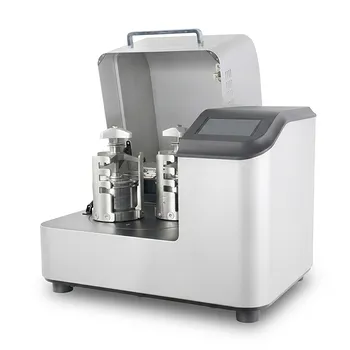
High Energy Planetary Ball Mill for Nano Scale Grinding and Mechanical Alloying

Ultra-Low Temperature Cryogenic High-Energy Vibratory Ball Mill

High Energy Hybrid Vibratory Ball Mill for Grinding Mixing and Cell Disruption
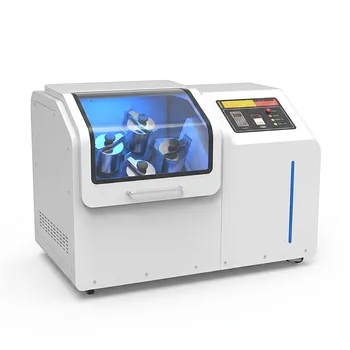
High Energy Omnidirectional Planetary Ball Mill 16L

Multi-Platform Nanoscale High-Energy Vibratory Ball Mill

Nano High Energy Vibratory Ball Mill with Heating and Temperature Control
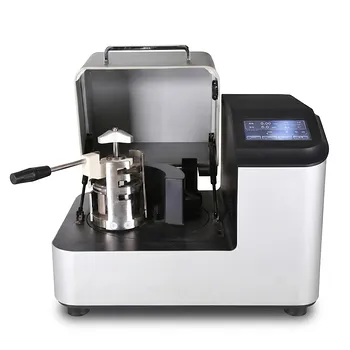
High Energy Laboratory Planetary Ball Mill for Nano Grinding and Material Science Sample Preparation
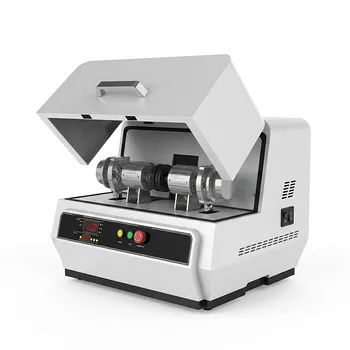
Dual Jar High Energy Vibratory Ball Mill
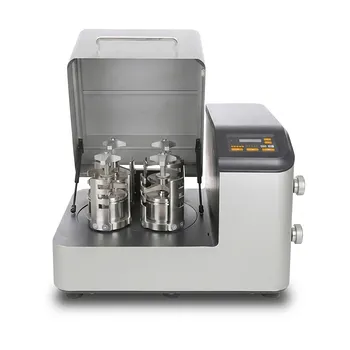
High Energy Planetary Ball Mill for Nano Scale Grinding and Colloidal Mixing in Material Science Research
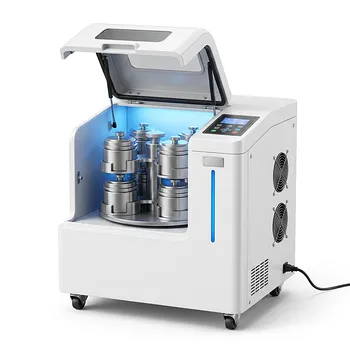
High Energy Omnidirectional Planetary Ball Mill 20L
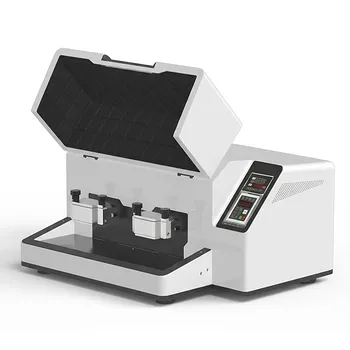
Nanoscale High-Energy Vibratory Ball Mill for Laboratory Sample Preparation, Mechanochemistry, and Mechanical Alloying
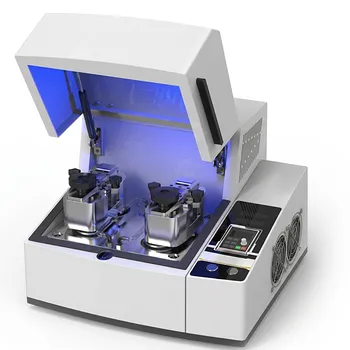
Laboratory Nano High Energy Ball Mill Ultrafine Grinding Mechanical Alloying
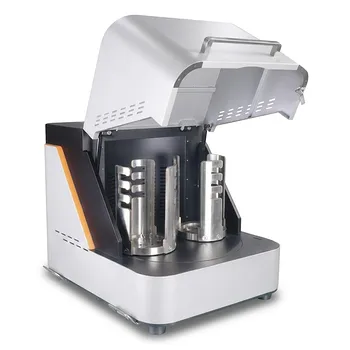
High Energy Laboratory Planetary Ball Mill for Nano Grinding and Colloidal Mixing of Hard and Brittle Materials
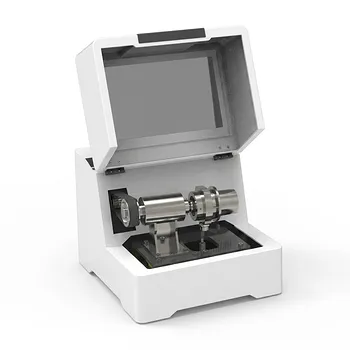
Single Tank High Energy Vibratory Ball Mill for Laboratory Grinding and Mixing

Heating Temperature Controlled High Energy Vibratory Ball Mill

Nano High Energy Vibratory Ball Mill for Laboratory Sample Preparation
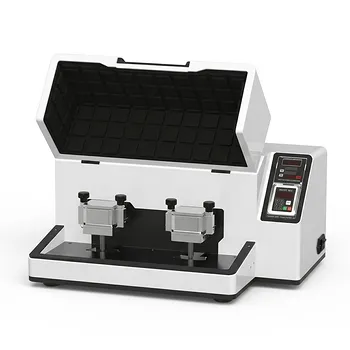
Nanoscale High Energy Vibratory Ball Mill Low Temperature

8L Planetary Ball Mill for Laboratory Grinding and Sample Preparation
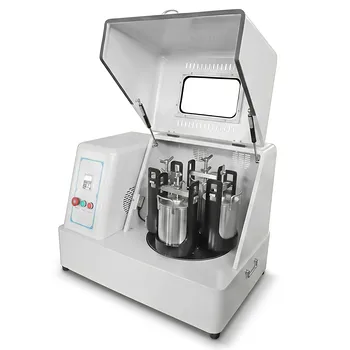
Vertical Square Planetary Ball Mill for Laboratory Sample Preparation and Nanoscale Grinding