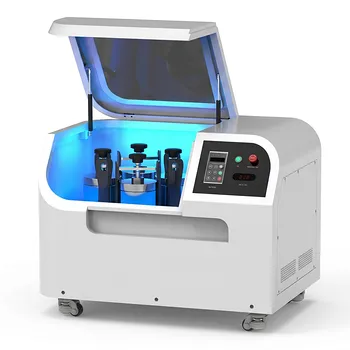
What is the function of high-energy ball milling in ZnO membrane slurry prep? Optimize Homogenization & Dispersion
Updated 4 months ago
High-energy ball milling is the critical homogenization step in slurry preparation. Its primary function is to mechanically break down zinc oxide (ZnO) particle agglomerates and ensure their uniform dispersion within a polymer solution. This process is the fundamental prerequisite for producing stable, defect-free slurries necessary for high-performance microfiltration membranes.
High-energy ball milling transforms bulk ZnO into a finely dispersed suspension by utilizing intense mechanical forces to overcome particle adhesion. This homogenization ensures that the final membrane possesses a uniform microstructure, preventing structural defects during the casting and sintering stages.
The Mechanics of Particle Refinement
The Impact of Mechanical Shear and Collision
High-energy equipment utilizes high-speed rotation to generate intense impact and shear forces between the grinding media and the powder. These forces are necessary to overcome the van der Waals forces that cause ZnO particles to clump or "agglomerate."
Achieving Nanoscale Refinement
The continuous grinding action reduces the average particle size of the ZnO powder, often reaching the nanoscale (below 500 nanometers). This reduction increases the surface area of the particles, which significantly enhances their reactivity and interaction with the surrounding medium.
Activation through Intrinsic Defects
The intense mechanical energy can trigger mechanochemical effects, introducing defects such as oxygen vacancies into the ZnO crystal lattice. While often a side effect of grinding, these defects can improve the chemical reactivity and functional properties of the resulting membrane.
Enhancing Slurry Stability and Rheology
Uniform Dispersion in Polymer Solutions
For microfiltration membranes, ZnO must be perfectly integrated with binders like polyvinyl alcohol (PVA) and water. Milling ensures that the active powder is not just mixed, but uniformly suspended, which prevents sedimentation and phase separation during the coating process.
Optimizing Flow and Viscosity
The milling process allows for the adjustment of the particle size distribution (PSD), which directly dictates the rheological properties of the slurry. A well-milled slurry exhibits lower viscosity at high solid content, making it easier to apply as an ultra-thin, consistent layer.
Ensuring Chemical Homogeneity
In formulations involving trace additives or dopants, high-energy milling ensures physical distribution uniformity. This prevents "hot spots" or localized areas of poor performance, ensuring the entire membrane surface functions consistently.
Understanding the Trade-offs
Risks of Over-Milling
Extending the milling duration beyond the optimal point can lead to excessive grain refinement or unwanted phase transformations. This may negatively impact the mechanical strength of the final sintered ceramic layer or alter its filtration characteristics.
Media Contamination
The high-speed impact of grinding balls can lead to media wear, where small amounts of the grinding material (such as zirconia or alumina) contaminate the ZnO slurry. Selecting the correct media material and hardness is essential to maintain the purity of the microfiltration layer.
Heat Generation and Polymer Degradation
High-energy milling generates significant heat, which can potentially degrade temperature-sensitive polymers like PVA. In sensitive applications, cooling systems or interval milling may be required to maintain the integrity of the binder.
How to Apply This to Your Slurry Preparation
To achieve the best results in membrane fabrication, your milling strategy should align with your specific performance targets.
- If your primary focus is a defect-free, ultra-thin layer: Prioritize the breakdown of hard agglomerates to ensure a smooth, "glanceable" slurry surface during the casting or coating process.
- If your primary focus is high chemical reactivity or antibacterial activity: Utilize higher energy settings to induce intrinsic defects and oxygen vacancies within the ZnO crystal structure.
- If your primary focus is consistent pore size distribution: Focus on controlling the milling time to achieve a narrow particle size distribution, which directly influences the grain size after sintering.
Successful membrane preparation relies on the transition from raw powder to a stable, homogenized suspension through precise mechanical intervention.
Summary Table:
| Function | Description | Key Benefit for Membranes |
|---|---|---|
| De-agglomeration | Breaks clusters via mechanical shear | Prevents structural defects and voids |
| Particle Refinement | Reduces ZnO to nanoscale (<500nm) | Increases reactivity and surface area |
| Slurry Stabilization | Uniformly suspends powder in binders | Prevents sedimentation during coating |
| Rheology Control | Optimizes particle size distribution | Enables smooth, ultra-thin layer casting |
| Activation | Induces crystal lattice defects | Enhances chemical and functional activity |
Elevate Your Material Research with Precision Sample Prep
Achieving the perfect ZnO slurry requires more than just mixing—it demands precision engineering. We provide complete laboratory sample preparation solutions tailored for material science. Our extensive equipment line is designed to handle every stage of your workflow:
- Powder Processing: High-performance planetary ball mills, jet mills, and disc mills for nanoscale refinement, plus crushers and sieve shakers for size control.
- Slurry Optimization: Specialized defoaming mixers and powder mixers to ensure uniform, bubble-free dispersions.
- Advanced Compaction: A full spectrum of hydraulic presses, including Cold/Warm Isostatic Presses (CIP/WIP), hot presses, and XRF pellet presses for high-density material fabrication.
Whether you are developing microfiltration membranes or advanced ceramics, our expertise ensures your samples meet the highest standards of consistency and quality.
Ready to optimize your laboratory results? Contact our experts today for a tailored solution!
References
- Boukhemis Boudaira, Noureddine Karboua. Preparation and characterization of ZnO microfiltration membrane and its support using kaolin (DD3) and CaCO3. DOI: 10.1590/0366-69132016623621972
Mentioned Products
- High Energy Planetary Ball Mill for Nano Scale Grinding and Mechanical Alloying
- Ultra-Low Temperature Cryogenic High-Energy Vibratory Ball Mill
- High Energy Hybrid Vibratory Ball Mill for Grinding Mixing and Cell Disruption
- High Energy Omnidirectional Planetary Ball Mill 16L
- Multi-Platform Nanoscale High-Energy Vibratory Ball Mill
People Also Ask
- Why is a high-energy planetary ball mill used for nano-milling As4Se3? Achieve Expert Structural Transformation
- What role do high-energy planetary ball mills play in FDM composite filament preparation? Optimize Material Performance
- What is the role of a high-energy planetary ball mill in the exfoliation of modified WSe2? Achieve Nano-Precision
- What is the function of a planetary ball mill in glass-ceramic sintering? Optimize Reactivity and Uniformity
- What is the role of a high-energy planetary ball mill in the preparation of high-performance nano-ceramics? Key Guide

Tech Team · PowderPreparation
Last updated on May 14, 2026
Related Products
High Energy Planetary Ball Mill for Nano Scale Grinding and Mechanical Alloying

Ultra-Low Temperature Cryogenic High-Energy Vibratory Ball Mill

High Energy Hybrid Vibratory Ball Mill for Grinding Mixing and Cell Disruption
High Energy Omnidirectional Planetary Ball Mill 16L

Multi-Platform Nanoscale High-Energy Vibratory Ball Mill
High Energy Laboratory Planetary Ball Mill for Nano Grinding and Material Science Sample Preparation

Nano High Energy Vibratory Ball Mill with Heating and Temperature Control
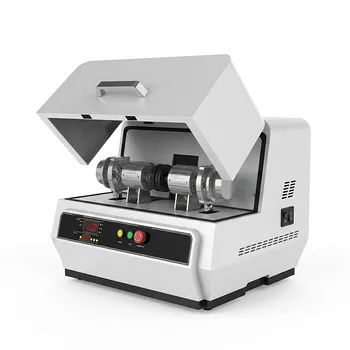
Dual Jar High Energy Vibratory Ball Mill
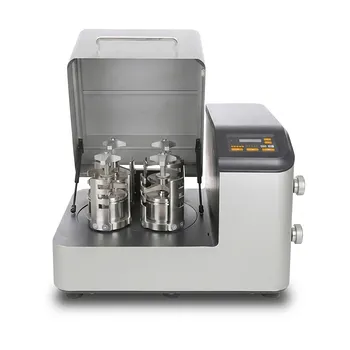
High Energy Planetary Ball Mill for Nano Scale Grinding and Colloidal Mixing in Material Science Research
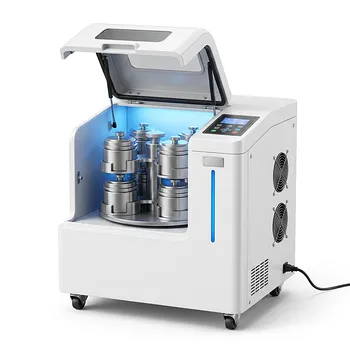
High Energy Omnidirectional Planetary Ball Mill 20L
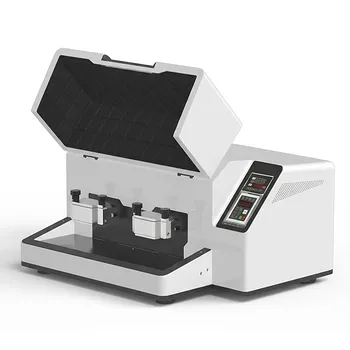
Nanoscale High-Energy Vibratory Ball Mill for Laboratory Sample Preparation, Mechanochemistry, and Mechanical Alloying
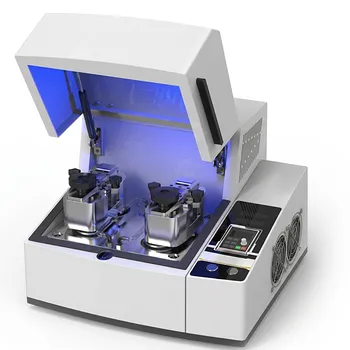
Laboratory Nano High Energy Ball Mill Ultrafine Grinding Mechanical Alloying
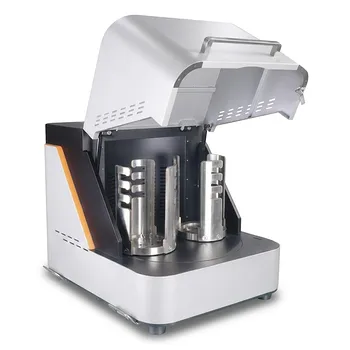
High Energy Laboratory Planetary Ball Mill for Nano Grinding and Colloidal Mixing of Hard and Brittle Materials
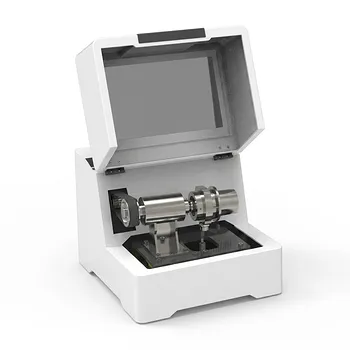
Single Tank High Energy Vibratory Ball Mill for Laboratory Grinding and Mixing

Heating Temperature Controlled High Energy Vibratory Ball Mill

Nano High Energy Vibratory Ball Mill for Laboratory Sample Preparation
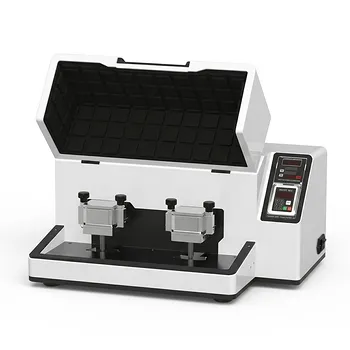
Nanoscale High Energy Vibratory Ball Mill Low Temperature
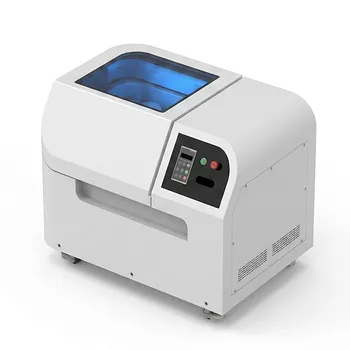
8L Planetary Ball Mill for Laboratory Grinding and Sample Preparation
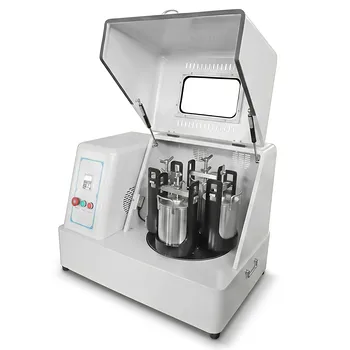
Vertical Square Planetary Ball Mill for Laboratory Sample Preparation and Nanoscale Grinding