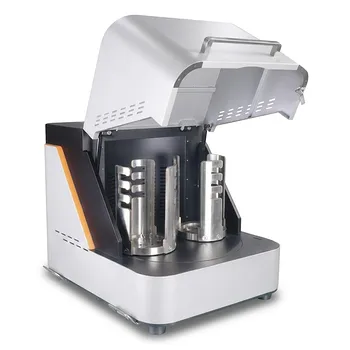
What is the primary purpose of using a vibratory ball mill in the preparation of respirable carbon fiber fragments?
Updated 4 months ago
The primary purpose of using a vibratory ball mill in this context is to mechanically pulverize long-range carbon fiber structures into respirable fragments for toxicological evaluation. By utilizing high-frequency swinging, the mill generates the multi-directional impact and shearing forces necessary to transform polyacrylonitrile-based precursors into standardized "WHO-type" fibers and granular fragments.
The vibratory ball mill acts as a high-energy processing tool that converts bulk carbon fibers into specific, respirable morphologies. This standardization is critical for researchers to accurately assess the health risks and inhalation toxicity of carbon fiber materials.
The Mechanics of Vibratory Pulverization
High-Frequency Energy Transfer
The vibratory ball mill operates by driving grinding media through high-frequency swinging motions. This motion creates a high-energy environment where kinetic energy is efficiently transferred to the carbon fiber precursors.
Multi-Directional Impact and Shearing
Unlike simple crushing, the vibratory action generates multi-directional impact, shearing, and grinding forces. These combined forces are essential for overcoming the high tensile strength of carbon fibers to facilitate structural breakdown.
Physical Accessibility and Surface Area
Similar to its use in cellulose processing, the mill increases the physical accessibility of the material. By breaking down the bulk structure, the process increases the specific surface area of the resulting fragments.
Achieving Specific Fragment Morphologies
Defining WHO-Type Fibers
A critical goal of this process is the production of WHO-type fibers, which are fiber-like fragments characterized by specific aspect ratios. These dimensions are crucial because they determine how fragments behave when inhaled into the respiratory system.
Breaking Long-Range Structures
The milling process specifically targets the long-range structure of polyacrylonitrile-based fibers. By disrupting this continuity, the mill produces a mixture of elongated fiber-like fragments and smaller granular particles.
Precise Control Through Vibration
Researchers can influence the final morphology by adjusting the vibration frequency and processing time. This level of control ensures the resulting fragments meet the strict requirements needed for reproducible scientific testing.
Understanding the Trade-offs and Limitations
Heat Generation and Material Alteration
The high-energy nature of vibratory milling can generate significant frictional heat. If not carefully monitored, this heat may potentially alter the chemical properties of the carbon fiber surface, which could skew toxicological results.
Over-Pulverization Risks
Extended milling times may lead to over-pulverization, where the desired fiber-like fragments are reduced entirely to amorphous dust. This loss of aspect ratio makes the material less representative of actual industrial fiber exposure.
Comparison With Other Milling Types
While planetary ball mills are often used for deep mixing and refining slurries, the vibratory ball mill is specifically favored here for its ability to create impact-driven fragmentation. Each mill type offers different force profiles that suit specific material outcomes.
Applying This to Your Research or Production
Making the Right Choice for Your Goal
The use of a vibratory ball mill should be tailored to the specific requirements of the material being analyzed and the intended exposure model.
- If your primary focus is toxicological testing: Use the vibratory ball mill to produce standardized WHO-type fragments that mimic respirable environmental hazards.
- If your primary focus is XRD quantitative analysis: Leverage high-frequency vibration to reduce particle size below 5 micrometers, minimizing micro-absorption and preferred orientation effects.
- If your primary focus is chemical modification: Utilize the mill to increase the specific surface area and physical accessibility of the fibers without destroying their inherent crystallinity.
Selecting the appropriate milling parameters is the definitive step in transforming bulk carbon precursors into precise, scientifically valid test materials.
Summary Table:
| Feature | Description | Key Benefit |
|---|---|---|
| Mechanism | High-frequency swinging & multi-directional impact | Efficiently breaks high-tensile carbon fibers |
| Output | WHO-type fragments & granular particles | Standardized morphology for inhalation toxicity studies |
| Energy Transfer | High-energy kinetic shearing | Increases specific surface area and accessibility |
| Process Control | Adjustable vibration frequency & time | Prevents over-pulverization and ensures reproducibility |
Optimize Your Material Preparation with Precision Solutions
Are you looking to achieve standardized particle morphologies for critical research or industrial production? Contact us today to discuss your specific requirements.
At our facility, we provide complete laboratory sample preparation solutions for material science, specializing in high-performance powder processing and compaction equipment. Our extensive product lines include:
- Milling & Grinding: Vibratory ball mills, planetary ball mills, jet mills, and liquid nitrogen cryogenic grinders.
- Crushing & Sieving: Jaw/roll crushers and vibratory/air-jet sieve shakers with precision test sieves.
- Mixing Solutions: Powder mixers and advanced defoaming mixers.
- Hydraulic Presses: A full spectrum of equipment including Cold/Warm Isostatic Presses (CIP/WIP), XRF pellet presses, and vacuum hot presses.
Whether you are conducting toxicological evaluations or XRD quantitative analysis, our equipment ensures the precision and durability your lab demands. Let us help you transform your bulk precursors into high-quality, scientifically valid materials.
References
- Nicolas Fischer, Daphne Bäger. Selective Enrichment of Fibrous Fragments Formed from Milled Carbon Fibers by Means of Gravitational Settling in a Liquid. DOI: 10.3390/fib13060069
Mentioned Products
- Single Tank High Energy Vibratory Ball Mill for Laboratory Grinding and Mixing
- Nano High Energy Vibratory Ball Mill for Laboratory Sample Preparation
- Nano High Energy Vibratory Ball Mill with Heating and Temperature Control
- Heating Temperature Controlled High Energy Vibratory Ball Mill
- High Energy Hybrid Vibratory Ball Mill for Grinding Mixing and Cell Disruption
People Also Ask
- What is the purpose of using a vibratory ball mill for Al-Ni-Fe alloy ribbons? Achieve High Catalytic Activity
- Why is a vibratory ball mill preferred over a planetary ball mill for rapid powder particle refinement? High-Speed Impact
- How does a high-energy vibratory ball mill improve the performance of MgH2? Optimize Hydrogen Storage Kinetics
- What role do high-energy ball mills play in the preparation of reinforcements for hybrid metal matrix composites?
- What role does a laboratory ball mill serve in the Berry and Bruce modified Bond method? Standardizing Ore Analysis

Tech Team · PowderPreparation
Last updated on May 14, 2026
Related Products
Single Tank High Energy Vibratory Ball Mill for Laboratory Grinding and Mixing

Nano High Energy Vibratory Ball Mill for Laboratory Sample Preparation

Nano High Energy Vibratory Ball Mill with Heating and Temperature Control
Heating Temperature Controlled High Energy Vibratory Ball Mill
High Energy Hybrid Vibratory Ball Mill for Grinding Mixing and Cell Disruption
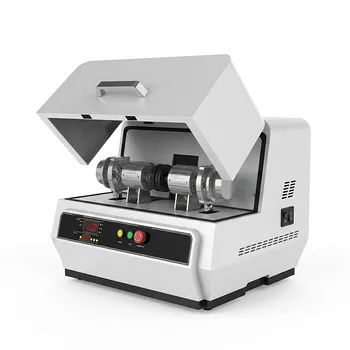
Dual Jar High Energy Vibratory Ball Mill
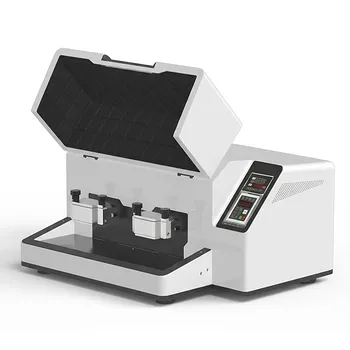
Nanoscale High-Energy Vibratory Ball Mill for Laboratory Sample Preparation, Mechanochemistry, and Mechanical Alloying
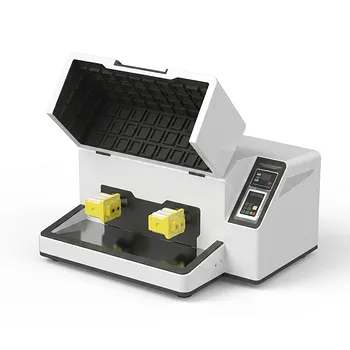
Multi-Platform Nanoscale High-Energy Vibratory Ball Mill
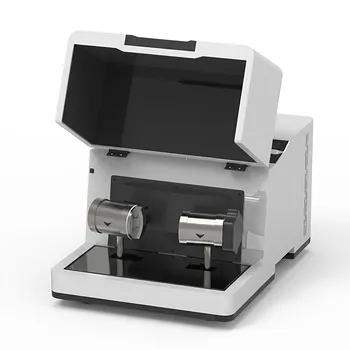
Ultra-Low Temperature Cryogenic High-Energy Vibratory Ball Mill
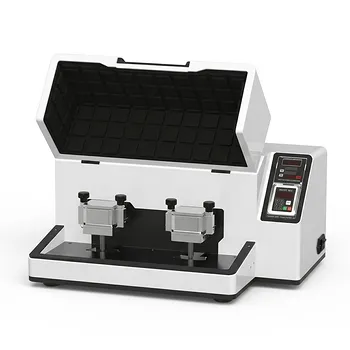
Nanoscale High Energy Vibratory Ball Mill Low Temperature
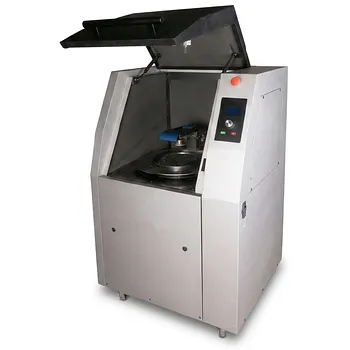
High Speed Vibratory Disc Mill for Spectral Analysis Sample Preparation and Rapid Powder Grinding
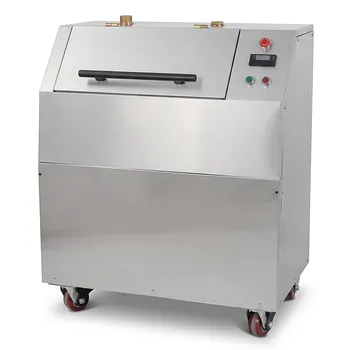
Vibratory Disc Mill for Rapid Fine Grinding and High Throughput Sample Preparation of Hard and Brittle Materials
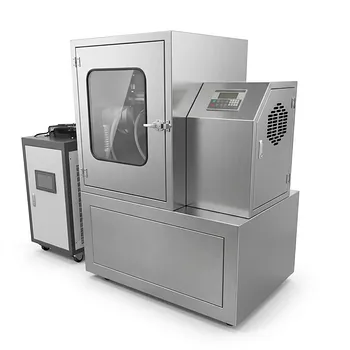
Vibratory Superfine Grinder for Ultra Fine Laboratory Powder Milling
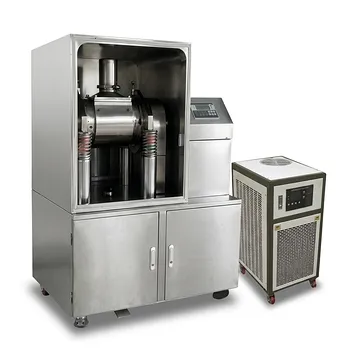
Small Vibrating Ultrafine Grinder for Traditional Chinese Medicine
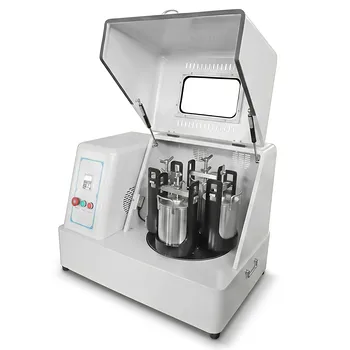
Vertical Square Planetary Ball Mill for Laboratory Sample Preparation and Nanoscale Grinding
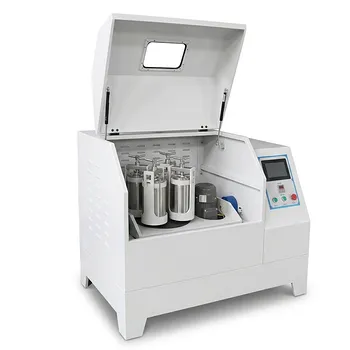
360° Rotating Omnidirectional Laboratory Planetary Ball Mill for Homogeneous Ultra-Fine Grinding and Mixing
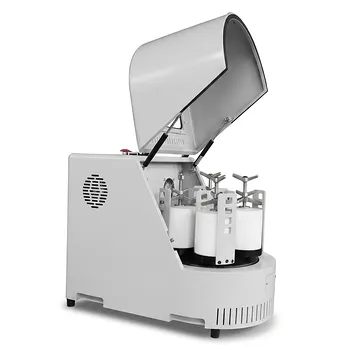
Vertical Semi Circular Planetary Ball Mill for Laboratory Precision Grinding
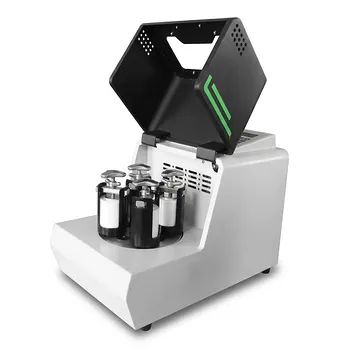
Miniature Planetary Ball Mill with Vacuum Grinding and High Efficiency for Laboratory Sample Preparation
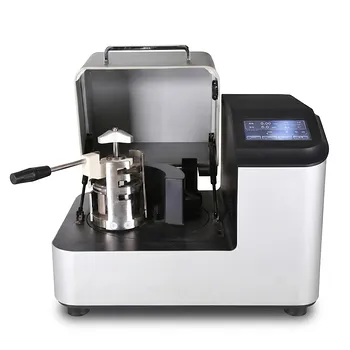
High Energy Laboratory Planetary Ball Mill for Nano Grinding and Material Science Sample Preparation