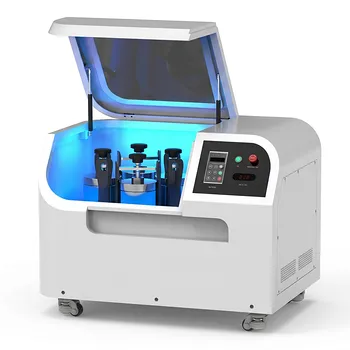
Why are hard stainless steel grinding balls and jars typically selected for the high-energy ball milling of Mg2FeH6?
Updated 4 months ago
Hard stainless steel is the preferred material for $Mg_2FeH_6$ synthesis because it offers a unique combination of mechanical durability, chemical stability under high-pressure hydrogen, and exceptional wear resistance. These properties ensure that the grinding media can withstand the intense impacts required for mechanochemical reactions while preventing metallic impurities from contaminating the sample and degrading its hydrogen storage capacity.
Core Takeaway: Selecting hard stainless steel ensures that the grinding environment remains chemically and physically stable during long-duration, high-energy milling, allowing for the high-purity synthesis of complex hydrides like $Mg_2FeH_6$.
Ensuring Material Purity and Integrity
Minimizing Metallic Contamination
The synthesis of $Mg_2FeH_6$ often requires milling for extended periods, sometimes exceeding 12 to 48 hours. Hardened stainless steel resists peeling and wear during these long cycles, ensuring that the final powder remains close to its theoretical gravimetric hydrogen storage capacity.
Maintaining Chemical Stability
Stainless steel maintains its structural strength and chemical stability even when subjected to high-frequency mechanical impacts. This prevents the grinding media from reacting with the magnesium or iron powders, ensuring the purity of the mechanochemical reaction remains uncompromised.
Resistance to Surface Wear
High-hardness materials, such as AISI 420 stainless steel, are designed to withstand the severe friction inherent in high-energy ball milling. By minimizing the "self-consumption" of the grinding balls, researchers prevent the introduction of foreign metallic particles into the high-purity composite powders.
Efficiency of Energy Transfer
Maximizing Kinetic Energy
High-strength steel balls possess the density and mechanical strength required to serve as an effective medium for kinetic energy transfer. This allows the milling system to generate sufficient impact force during high-speed oscillations to crush and react the raw metal powders.
Facillitating Mechanical Activation
The intense collision energy provided by hard steel is necessary to facilitate mechanical activation. This process breaks down the metal lattice of the Mg-Fe mixture, allowing hydrogen atoms to effectively penetrate and transform the mixture into a hydride.
Managing Thermal Loads
Steel’s specific heat capacity and thermal conductivity allow the grinding balls to effectively manage the instantaneous high temperatures produced during impacts. This thermal stability is critical for studying collision heating effects and ensuring energy conversion efficiency within the mill.
Performance Under High-Pressure Hydrogen
Withstanding Internal Pressure
The synthesis of $Mg_2FeH_6$ typically occurs in an in-situ reactive environment under hydrogen pressures of approximately 3 MPa. Stainless steel jars are engineered to maintain a stable internal atmosphere and airtight seal despite constant high-frequency mechanical stress.
Combating Hydrogen Embrittlement
Standard materials can become brittle and fail when exposed to high-pressure hydrogen environments. High-strength special alloy steels are selected specifically for their resistance to hydrogen embrittlement, ensuring the jars do not leak or rupture during the synthesis process.
Understanding the Trade-offs
While hard stainless steel is the standard, it is not without limitations. Over extremely long milling durations, even the hardest steel will eventually contribute trace amounts of iron or chromium to the sample, which may subtly alter the thermodynamic properties of the hydride.
Furthermore, the high density of steel is beneficial for impact energy but can lead to excessive heat generation if the mill is not properly cooled. This heat can sometimes trigger the premature decomposition of the $Mg_2FeH_6$ being formed if temperatures exceed the material's stability threshold.
Making the Right Choice for Your Goal
How to Apply This to Your Project
When selecting hardware for reactive ball milling, your choice should align with the specific requirements of your hydride synthesis.
- If your primary focus is Maximum Purity: Utilize hardened AISI 420 or higher grade stainless steel to minimize wear-related metallic contamination over long milling cycles.
- If your primary focus is Rapid Reaction Kinetics: Prioritize high-density steel balls to maximize the impact velocity and mechanical activation of the magnesium-iron lattice.
- If your primary focus is Safety and Pressure Stability: Ensure the milling jars are specifically rated for 3 MPa+ hydrogen environments and constructed from alloys resistant to hydrogen embrittlement.
Choosing the correct grade of hardened stainless steel is the most reliable way to ensure a successful, high-purity transformation from metal mixtures to complex hydrides.
Summary Table:
| Key Feature | Benefit for $Mg_2FeH_6$ Synthesis | Technical Significance |
|---|---|---|
| High Hardness | Minimizes metallic wear/peeling | Prevents sample contamination during long cycles |
| Chemical Stability | Resists reaction with Mg/Fe | Ensures high-purity mechanochemical reactions |
| Pressure Resistance | Withstands 3 MPa+ $H_2$ pressure | Ensures safety and airtight sealing during milling |
| High Density | Maximizes kinetic energy transfer | Facilitates efficient mechanical lattice activation |
| Alloy Integrity | Combats hydrogen embrittlement | Prevents jar failure or rupture under stress |
Elevate Your Material Synthesis with Precision Equipment
Are you looking to optimize your hydrogen storage research or advanced powder processing? At our laboratory equipment division, we provide complete laboratory sample preparation solutions for material science, specializing in high-performance powder processing and compaction equipment.
From high-energy planetary ball mills, jet mills, and disc mills to specialized grinding media like hardened stainless steel, we ensure your mechanochemical reactions achieve maximum purity. Complement your milling with our full spectrum of Cold/Warm Isostatic Presses (CIP/WIP), vacuum hot presses, and XRF pellet presses for superior sample density.
Ready to enhance your lab's efficiency and results? Contact us today to find the perfect equipment configuration for your specific research needs!
References
- Alexandre Augusto Cesário Asselli, Jacques Huot. Investigation of Effect of Milling Atmosphere and Starting Composition on Mg2FeH6 Formation. DOI: 10.3390/met4030388
Mentioned Products
- High Energy Planetary Ball Mill for Nano Scale Grinding and Mechanical Alloying
- High Energy Omnidirectional Planetary Ball Mill 16L
- Ultra-Low Temperature Cryogenic High-Energy Vibratory Ball Mill
- High Energy Hybrid Vibratory Ball Mill for Grinding Mixing and Cell Disruption
- Nano High Energy Vibratory Ball Mill with Heating and Temperature Control
People Also Ask
- Why is a high-energy planetary ball mill used for nano-milling As4Se3? Achieve Expert Structural Transformation
- What role do high-energy planetary ball mills play in FDM composite filament preparation? Optimize Material Performance
- What is the role of a high-energy planetary ball mill in the exfoliation of modified WSe2? Achieve Nano-Precision
- What is the function of a planetary ball mill in glass-ceramic sintering? Optimize Reactivity and Uniformity
- What is the role of a high-energy planetary ball mill in the preparation of high-performance nano-ceramics? Key Guide

Tech Team · PowderPreparation
Last updated on Jun 03, 2026
Related Products
High Energy Planetary Ball Mill for Nano Scale Grinding and Mechanical Alloying
High Energy Omnidirectional Planetary Ball Mill 16L
Ultra-Low Temperature Cryogenic High-Energy Vibratory Ball Mill
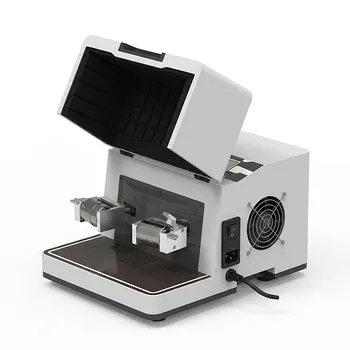
High Energy Hybrid Vibratory Ball Mill for Grinding Mixing and Cell Disruption

Nano High Energy Vibratory Ball Mill with Heating and Temperature Control
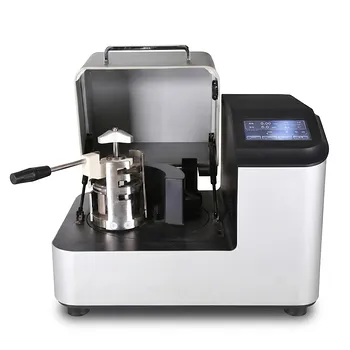
High Energy Laboratory Planetary Ball Mill for Nano Grinding and Material Science Sample Preparation
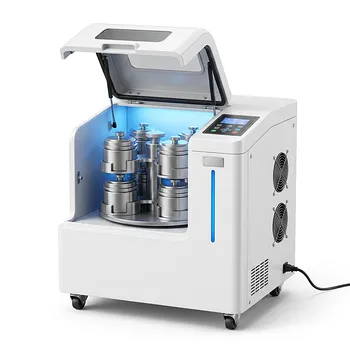
High Energy Omnidirectional Planetary Ball Mill 20L
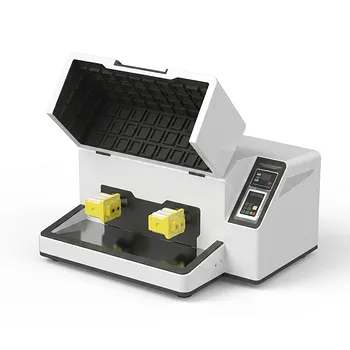
Multi-Platform Nanoscale High-Energy Vibratory Ball Mill
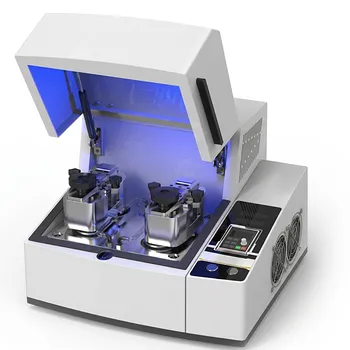
Laboratory Nano High Energy Ball Mill Ultrafine Grinding Mechanical Alloying
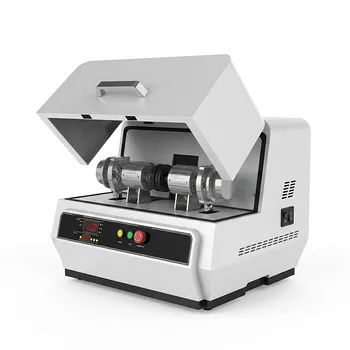
Dual Jar High Energy Vibratory Ball Mill
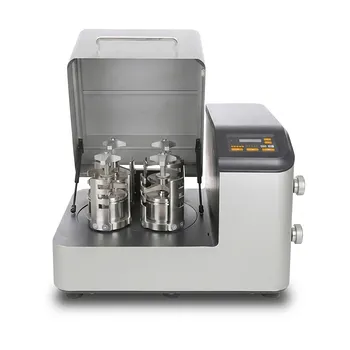
High Energy Planetary Ball Mill for Nano Scale Grinding and Colloidal Mixing in Material Science Research
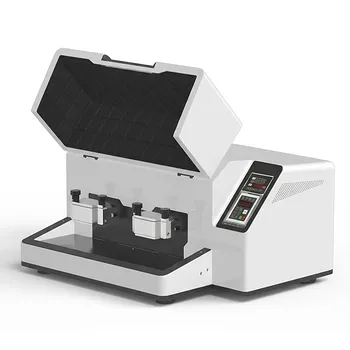
Nanoscale High-Energy Vibratory Ball Mill for Laboratory Sample Preparation, Mechanochemistry, and Mechanical Alloying
High Energy Laboratory Planetary Ball Mill for Nano Grinding and Colloidal Mixing of Hard and Brittle Materials
Single Tank High Energy Vibratory Ball Mill for Laboratory Grinding and Mixing
Heating Temperature Controlled High Energy Vibratory Ball Mill

Nano High Energy Vibratory Ball Mill for Laboratory Sample Preparation
Nanoscale High Energy Vibratory Ball Mill Low Temperature

8L Planetary Ball Mill for Laboratory Grinding and Sample Preparation
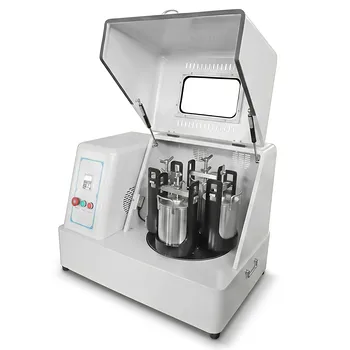
Vertical Square Planetary Ball Mill for Laboratory Sample Preparation and Nanoscale Grinding