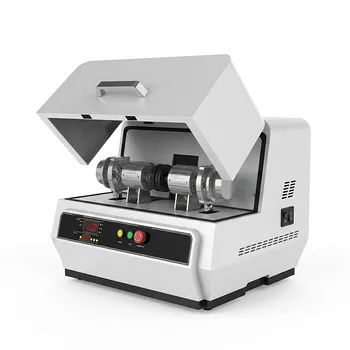
What role does a high-energy planetary ball mill play in processing quenched bioactive glass? Achieve Nano-Scale Precision
Updated 5 months ago
The high-energy planetary ball mill serves as the critical bridge between raw melt-quenched glass and functional biomaterials. It utilizes high-hardness grinding media to transform coarse, millimeter-scale glass fragments into ultra-fine powders ranging from the micron to the nanometer scale.
By applying intense mechanical forces, the planetary ball mill reduces particle size to enhance the material’s specific surface area. This process is essential for accelerating ion release and ensuring the uniform integration of bioactive glass into various medical delivery systems.
The Mechanics of High-Energy Pulverization
Impact and Centrifugal Forces
The mill operates by rotating grinding jars in a planetary motion, generating powerful centrifugal forces. These forces drive high-hardness grinding balls to collide with the quenched glass fragments with extreme intensity.
The resulting high-frequency impacts shatter the brittle glass blocks. This rapidly reduces the material from the millimeter scale down to a median particle size often less than 32 µm.
Shear and Attrition Dynamics
Beyond simple impact, the differential speeds between the jars and the sun wheel create significant shear and friction. This attrition further refines the powder, smoothing out irregularities and breaking down aggregates.
This dual-action approach—impact and shear—allows for the production of sub-micron (100–1,000 nm) or even nano-scale particles. Such precision is necessary for advanced applications like high-resolution lithography.
Enhancing Bioactivity and Processing
Maximizing Specific Surface Area
Reducing the particle size significantly increases the specific surface area of the bioactive glass. This larger interface allows for faster chemical activity and more rapid ion release when the powder is exposed to a wound environment.
Enhanced surface area also promotes biomimetic mineralization. This process is vital for the material's ability to integrate with biological tissues and support bone or skin regeneration.
Ensuring Dispersion and Uniformity
Ultra-fine powders exhibit superior dispersion uniformity when incorporated into hydrogel matrices or photocurable resins. This prevents the "clumping" that can compromise the structural integrity of a medical implant.
In 3D printing applications, this uniformity ensures a consistent paste rheology. It allows for the creation of precise, micro-nano hierarchical structures that mimic the natural architecture of human bone.
Understanding the Trade-offs and Limitations
Thermal Management and Heat Generation
High-energy grinding generates substantial frictional heat over extended periods (typically 30 to 60 minutes). If not managed, this heat can potentially alter the amorphous structure of the glass or cause the powder to fuse.
Media Contamination Risks
The use of high-hardness grinding balls, such as zirconia or alumina, carries a risk of material contamination. Small amounts of the grinding media can wear down and enter the glass powder, potentially affecting its biocompatibility or chemical purity.
Sedimentation and Handling Challenges
While ultra-fine powders reduce sedimentation in resins, very small particles are prone to agglomeration due to van der Waals forces. This requires careful storage and potentially the use of surfactants to maintain a stable suspension for manufacturing.
Optimizing Milling for Your Application
How to Apply This to Your Project
- If your primary focus is rapid ion release and bioactivity: Prioritize achieving sub-micron particle sizes to maximize specific surface area and chemical reactivity.
- If your primary focus is 3D printing or scaffold fabrication: Focus on achieving a narrow, uniform particle size distribution (e.g., < 32 µm) to ensure consistent flow and structural integrity.
- If your primary focus is high-resolution lithography: Utilize extended dry-milling durations to reach nano-scale levels, which minimizes the sedimentation rate in photocurable resins.
The high-energy planetary ball mill is the indispensable tool for unlocking the full biological potential of quenched bioactive glass through precise mechanical refinement.
Summary Table:
| Feature | Processing Mechanism | Key Benefit for Bioactive Glass |
|---|---|---|
| Particle Size | High-impact & Centrifugal forces | Reduces fragments to sub-micron or nano-scale (<32 µm) |
| Surface Area | Intense mechanical pulverization | Maximizes specific surface area for rapid ion release |
| Dispersion | Shear and attrition dynamics | Ensures uniform integration into hydrogels or resins |
| Bioactivity | Mechanical refinement | Promotes faster biomimetic mineralization and regeneration |
| Versatility | Adjustable milling parameters | Optimizes powder for 3D printing or high-res lithography |
Elevate Your Material Research with Precision Sample Preparation
Are you looking to achieve superior bioactivity and uniformity in your material samples? We provide complete laboratory sample preparation solutions tailored for material science. Our expertise lies in high-performance powder processing and compaction equipment designed to meet the most rigorous research standards.
Our extensive product range includes:
- Advanced Milling: High-energy planetary ball mills, jet mills, cryogenic grinders, and rotor mills for achieving ultra-fine particle sizes.
- Size Classification: Vibratory and air-jet sieve shakers with a wide range of test sieves.
- Compaction Solutions: A full spectrum of hydraulic presses, including Cold/Warm Isostatic Presses (CIP/WIP), vacuum hot presses, and XRF pellet presses.
- Mixing Equipment: Powder mixers and vacuum defoaming mixers for consistent material blending.
Whether you are refining bioactive glass or developing complex composites, our equipment ensures the precision and reliability your project demands. Contact us today to discuss your specific application and discover how our solutions can optimize your laboratory workflow.
References
- Sofia Pacheco, Sílvia Gavinho. Impact of CeO2-Doped Bioactive Glass on the Properties of CMC/PEG Hydrogels Intended for Wound Treatment. DOI: 10.3390/gels11121010
Mentioned Products
- High Energy Planetary Ball Mill for Nano Scale Grinding and Mechanical Alloying
- High Energy Omnidirectional Planetary Ball Mill 16L
- High Energy Laboratory Planetary Ball Mill for Nano Grinding and Colloidal Mixing of Hard and Brittle Materials
- High Energy Planetary Ball Mill for Nano Scale Grinding and Colloidal Mixing in Material Science Research
- High Energy Omnidirectional Planetary Ball Mill 20L
People Also Ask
- Why is a high-energy planetary ball mill used for nano-milling As4Se3? Achieve Expert Structural Transformation
- What role do high-energy planetary ball mills play in FDM composite filament preparation? Optimize Material Performance
- What is the role of a high-energy planetary ball mill in the exfoliation of modified WSe2? Achieve Nano-Precision
- What is the function of a planetary ball mill in glass-ceramic sintering? Optimize Reactivity and Uniformity
- What is the role of a high-energy planetary ball mill in the preparation of high-performance nano-ceramics? Key Guide

Tech Team · PowderPreparation
Last updated on May 14, 2026
Related Products
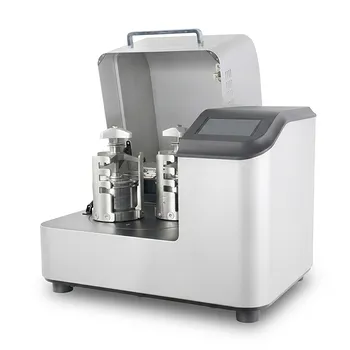
High Energy Planetary Ball Mill for Nano Scale Grinding and Mechanical Alloying
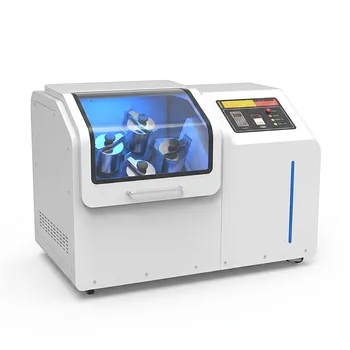
High Energy Omnidirectional Planetary Ball Mill 16L
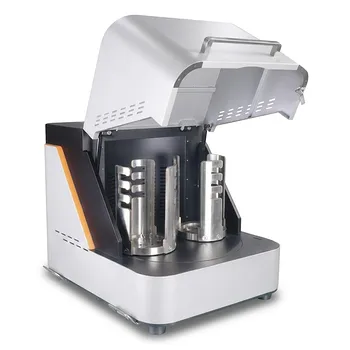
High Energy Laboratory Planetary Ball Mill for Nano Grinding and Colloidal Mixing of Hard and Brittle Materials
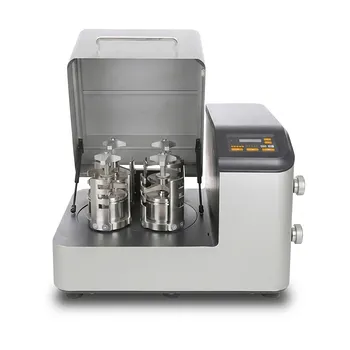
High Energy Planetary Ball Mill for Nano Scale Grinding and Colloidal Mixing in Material Science Research
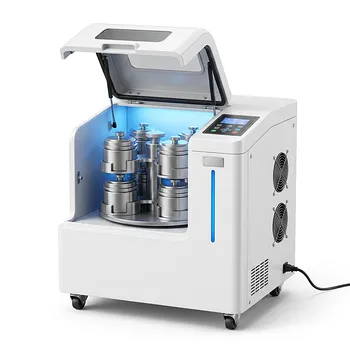
High Energy Omnidirectional Planetary Ball Mill 20L
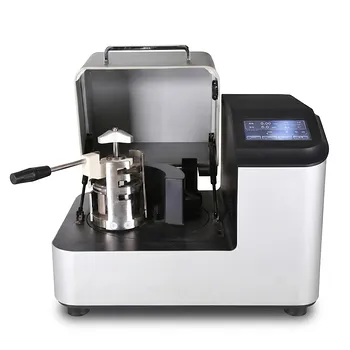
High Energy Laboratory Planetary Ball Mill for Nano Grinding and Material Science Sample Preparation
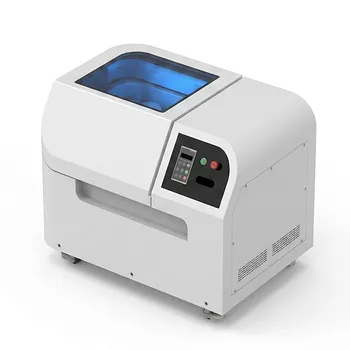
8L Planetary Ball Mill for Laboratory Grinding and Sample Preparation
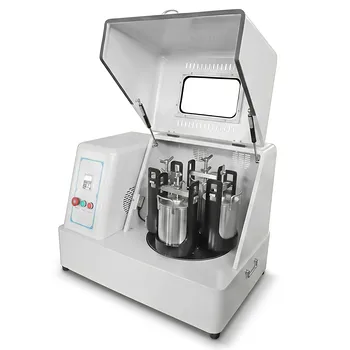
Vertical Square Planetary Ball Mill for Laboratory Sample Preparation and Nanoscale Grinding
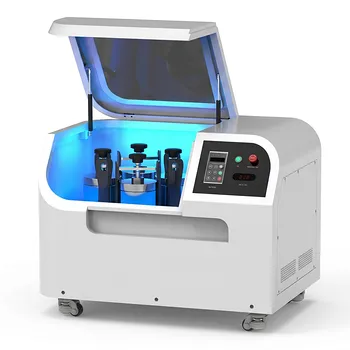
Planetary Ball Mill 12L
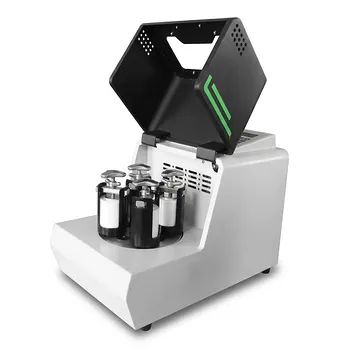
Miniature Planetary Ball Mill with Vacuum Grinding and High Efficiency for Laboratory Sample Preparation
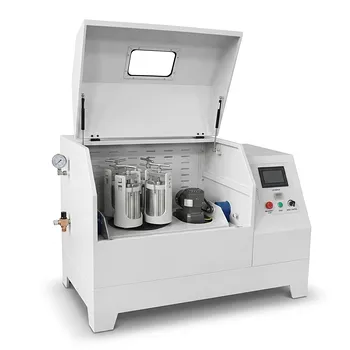
Vertical Production Planetary Ball Mill for High Throughput Powder Processing
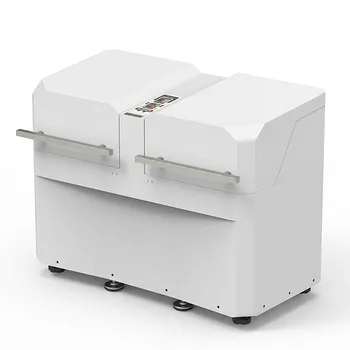
Dual Station Planetary Ball Mill 24L
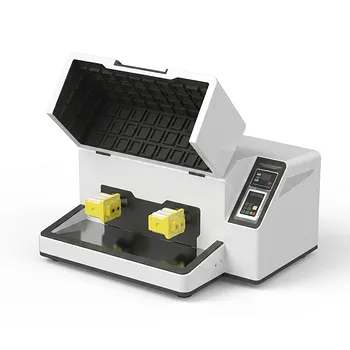
Multi-Platform Nanoscale High-Energy Vibratory Ball Mill
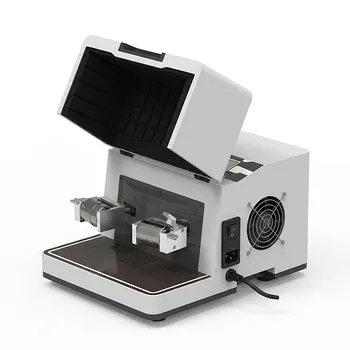
High Energy Hybrid Vibratory Ball Mill for Grinding Mixing and Cell Disruption
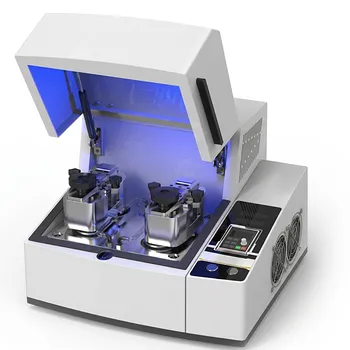
Laboratory Nano High Energy Ball Mill Ultrafine Grinding Mechanical Alloying

Nano High Energy Vibratory Ball Mill with Heating and Temperature Control
Heavy Duty Horizontal Planetary Ball Mill for Efficient Industrial Grinding and Sample Preparation
Nanoscale High-Energy Vibratory Ball Mill for Laboratory Sample Preparation, Mechanochemistry, and Mechanical Alloying

Nano High Energy Vibratory Ball Mill for Laboratory Sample Preparation