What is the role of mechanical ball milling in HEA powder preparation? Master Solid-State Alloying & Nano-Refinement
Updated 3 months ago
Mechanical ball milling equipment acts as the primary catalyst for solid-state alloying in the production of High-Entropy Alloy (HEA) powders. By applying high-energy impacts and intense shear forces, this equipment continuously breaks and welds metallic particles together. This mechanical energy drives atomic diffusion at relatively low temperatures, allowing five or more elements to blend into a uniform, single-phase or multi-phase solid solution that would be difficult to achieve through traditional melting.
Core Takeaway: Mechanical ball milling utilizes high-energy collisions to bypass traditional thermodynamic limits, enabling the atomic-level mixing of diverse elements into nanocrystalline powders. This process is essential for creating the homogeneous, high-defect structures required for advanced HEA applications like catalysis and electromagnetic shielding.
The Mechanics of Solid-State Alloying
High-Energy Impact and Shear Forces
High-energy ball mills, particularly planetary ball mills, utilize high-speed rotation to impart massive kinetic energy to grinding media. These balls collide with the elemental powders, creating intense impact and friction that drive the alloying process.
The Cycle of Cold Welding and Fracturing
During milling, powder particles undergo repeated cycles of cold welding, fracturing, and re-welding. This continuous mechanical deformation reduces particle size and increases the contact area between different metallic atoms.
Non-Equilibrium Processing
This equipment enables non-equilibrium processing, where mechanical force replaces thermal energy to initiate reactions. This allows for the successful mixing of thermodynamically immiscible elements that would naturally segregate if processed using conventional liquid-state methods.
Achieving Atomic Homogeneity
Driving Atomic Diffusion
The high-energy environment facilitates solid-state atomic diffusion at temperatures far below the melting points of the constituent metals. This ensures that the multi-principal elements are distributed uniformly throughout the powder matrix.
Overcoming Solid Solution Limits
By forcing atoms together mechanically, ball milling can overcome the natural solid solution limits of individual elements. This results in the formation of stable solid solutions, intermetallic compounds, or even amorphous structures that possess unique physical properties.
Precursor Preparation for Downstream Processes
In some workflows, the equipment is used to create a compositional foundation for subsequent treatments. This ensures a homogeneous mixture is ready for processes like laser cladding or sintering, where uniformity is critical for the final coating's integrity.
Structural and Morphological Refinement
Nanocrystalline Grain Refinement
The intense mechanical action significantly refines the grain size of the alloy, often reaching the micro-nano scale. This refinement increases the specific surface area, which is a vital characteristic for high-performance catalyst powders.
Lattice Distortion and Strain Fields
Extended milling induces unique lattice distortions and high defect densities within the powder structure. These internal strains can enhance microwave scattering and improve the magnetic permeability of the resulting material.
Morphology Control
Through controlled milling cycles, the equipment can shape powders into a flaky morphology. This specific shape is often sought after to surpass the Snoek limit and improve electromagnetic wave absorption in high-frequency applications.
Understanding the Trade-offs and Limitations
Process Contamination
The most significant risk in high-energy milling is contamination from the milling media (balls and vials) or the atmosphere. Wear debris from the equipment can introduce impurities, while reactive powders may oxidize if not handled in an inert environment.
Heat Management Challenges
The high-energy impacts generate substantial internal heat, which can lead to unwanted phase transformations or powder caking. Maintaining a balance between milling energy and temperature often requires specialized cooling systems or intermittent milling cycles.
Time and Energy Intensity
Achieving true atomic-level homogeneity is a time-consuming process that requires significant energy input. Optimization is necessary to prevent "over-milling," which can lead to excessive grain growth or structural degradation.
Applying Ball Milling to Your Project Goals
Recommendations Based on Performance Requirements
- If your primary focus is catalytic activity: Prioritize high-energy settings and extended cycles to maximize specific surface area and create high defect densities.
- If your primary focus is electromagnetic shielding: Optimize the milling duration to achieve a flaky morphology and specific lattice distortions that enhance microwave scattering.
- If your primary focus is structural coatings (Laser Cladding): Focus on achieving compositional uniformity and high-speed mixing rather than extreme grain refinement to ensure stable melt pools.
By precisely controlling the mechanical energy of the ball milling process, researchers can tailor the microstructural foundation of high-entropy alloys to meet specific industrial demands.
Summary Table:
| Feature | Role in HEA Preparation | Key Benefit |
|---|---|---|
| High-Energy Impact | Drives repeated cold welding and fracturing | Ensures atomic-level mixing of diverse elements |
| Non-Equilibrium Processing | Replaces thermal energy with mechanical force | Bypasses thermodynamic limits for immiscible metals |
| Grain Refinement | Continuous mechanical deformation | Produces nanocrystalline structures with high defect density |
| Morphology Control | Adjustable milling cycles and media | Tailors powder shape (e.g., flaky) for specific applications |
| Atomic Diffusion | Facilitates solid-state reaction at low temps | Creates uniform single-phase or multi-phase solutions |
Elevate Your Material Science Research with Precision Equipment
Achieving the perfect High-Entropy Alloy requires more than just mixing; it demands precision-engineered mechanical energy. We provide complete laboratory sample preparation solutions tailored for advanced material research.
Our specialized equipment lineup includes:
- High-Energy Mills: Planetary ball mills, jet mills, and cryogenic grinders designed for superior grain refinement and homogeneity.
- Advanced Compaction: A full spectrum of hydraulic presses, including Cold/Warm Isostatic Presses (CIP/WIP), hot presses, and vacuum hot presses for high-density pelletizing.
- Processing Essentials: Jaw/roll crushers, sieve shakers, and high-performance powder mixers.
Whether you are focusing on catalytic activity or electromagnetic shielding, our tools ensure your HEA powders meet the highest structural standards. Contact our experts today to find the ideal solution for your laboratory workflow!
References
- Nirmal Kumar Katiyar, Saurav Goel. Emergence of machine learning in the development of high entropy alloy and their prospects in advanced engineering applications. DOI: 10.1007/s42247-021-00249-8
Mentioned Products
- High Energy Planetary Ball Mill for Nano Scale Grinding and Mechanical Alloying
- Laboratory Nano High Energy Ball Mill Ultrafine Grinding Mechanical Alloying
- Nanoscale High-Energy Vibratory Ball Mill for Laboratory Sample Preparation, Mechanochemistry, and Mechanical Alloying
- Vertical Semi Circular Planetary Ball Mill for Laboratory Precision Grinding
- Heavy Duty Horizontal Planetary Ball Mill for Efficient Industrial Grinding and Sample Preparation
People Also Ask
- Why is a high-energy planetary ball mill used for nano-milling As4Se3? Achieve Expert Structural Transformation
- What role do high-energy planetary ball mills play in FDM composite filament preparation? Optimize Material Performance
- What is the role of a high-energy planetary ball mill in the exfoliation of modified WSe2? Achieve Nano-Precision
- What is the function of a planetary ball mill in glass-ceramic sintering? Optimize Reactivity and Uniformity
- What is the role of a high-energy planetary ball mill in the preparation of high-performance nano-ceramics? Key Guide

Tech Team · PowderPreparation
Last updated on Jun 03, 2026
Related Products

High Energy Planetary Ball Mill for Nano Scale Grinding and Mechanical Alloying
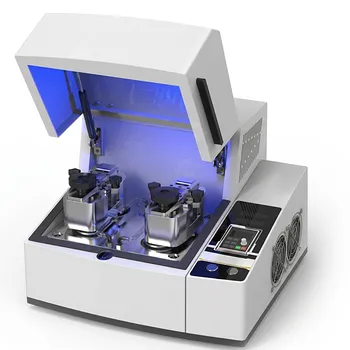
Laboratory Nano High Energy Ball Mill Ultrafine Grinding Mechanical Alloying

Nanoscale High-Energy Vibratory Ball Mill for Laboratory Sample Preparation, Mechanochemistry, and Mechanical Alloying

Vertical Semi Circular Planetary Ball Mill for Laboratory Precision Grinding

Heavy Duty Horizontal Planetary Ball Mill for Efficient Industrial Grinding and Sample Preparation

Vertical Square Planetary Ball Mill for Laboratory Sample Preparation and Nanoscale Grinding
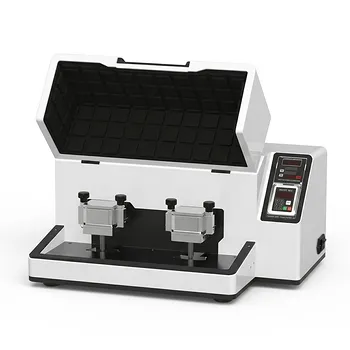
Nanoscale High Energy Vibratory Ball Mill Low Temperature

Dual Station Planetary Ball Mill 24L
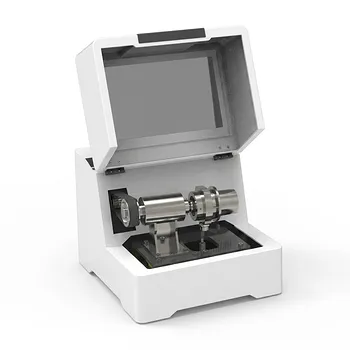
Single Tank High Energy Vibratory Ball Mill for Laboratory Grinding and Mixing

High Energy Omnidirectional Planetary Ball Mill 16L

Vertical Production Planetary Ball Mill for High Throughput Powder Processing

High Energy Omnidirectional Planetary Ball Mill 20L

Multi-Platform Nanoscale High-Energy Vibratory Ball Mill

360° Rotating Omnidirectional Laboratory Planetary Ball Mill for Homogeneous Ultra-Fine Grinding and Mixing

High Energy Hybrid Vibratory Ball Mill for Grinding Mixing and Cell Disruption

Heating Temperature Controlled High Energy Vibratory Ball Mill
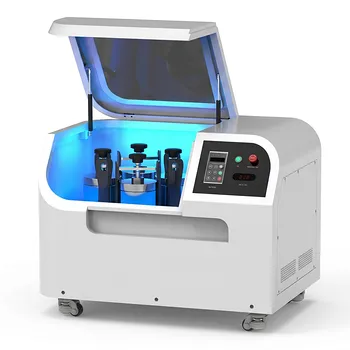
Planetary Ball Mill 12L
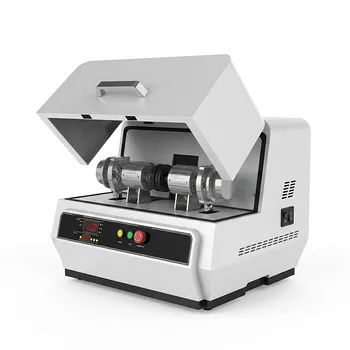
Dual Jar High Energy Vibratory Ball Mill

Miniature Planetary Ball Mill with Vacuum Grinding and High Efficiency for Laboratory Sample Preparation
