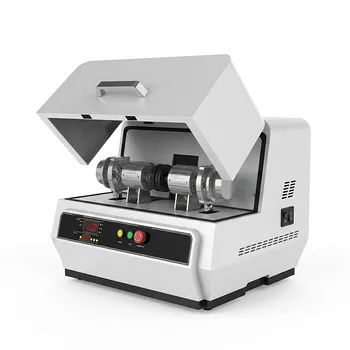
What role does a planetary ball mill play in nano-mineral filler prep? Achieve Sub-100nm Precision & Performance
Updated 4 months ago
A high-energy planetary ball mill serves as the primary mechanical engine for the "top-down" synthesis of nano-sized mineral fillers. It utilizes high-speed rotation to generate intense impact and shear forces, reducing micron-sized raw ores—such as rutile, ilmenite, and leucoxene—into particles typically smaller than 100 nm. This process is essential for achieving the high surface area and microstructural changes required for advanced polymer reinforcement and photothermal shielding.
The high-energy planetary ball mill is a critical tool for transforming bulk natural minerals into functional nanomaterials through purely mechanical means. It provides the kinetic energy necessary to refine particle size, increase chemical reactivity, and ensure a uniform distribution of components at the atomic level.
The Mechanism of Physical Refinement
High-Speed Impact and Shear Forces
The equipment operates through a complex combined motion of revolution and rotation. This dual-axis movement forces grinding balls to collide with the raw mineral powder at extreme velocities.
These high-frequency collisions generate the kinetic energy required to crush bulk materials. The resulting shear and friction forces strip layers from the minerals, facilitating rapid size reduction.
Achieving the Sub-100nm Threshold
Unlike conventional milling, high-energy planetary mills can reach the nanoscale (under 100 nm). This is achieved without the necessity of chemical additives that might otherwise contaminate the filler.
By grinding raw mineral ores down to this level, the equipment significantly increases the specific surface area. This expansion is vital for improving how the filler interacts with a surrounding polymer matrix.
Optimizing Material Functionality
Inducing Microstructural Changes
The milling process does more than just break particles; it introduces lattice strain and structural defects. In metal oxides, this can create oxygen vacancies that regulate electrical and optical properties.
In minerals like hydroilmenite, these microstructural changes are intentionally induced to optimize photothermal shielding. The mechanical energy alters the crystal structure to enhance the filler's performance in its final application.
Increasing Reactivity and Energy State
The intense mechanical action raises the configurational entropy and overall reactivity of the powder. This makes the nano-sized fillers more effective as starting materials for subsequent sintering or chemical synthesis.
High-energy milling also facilitates atomic-level mechanical alloying. This ensures that multiple mineral components are mixed with a level of uniformity that is impossible to achieve through standard blending.
Enhancing Dispersion and Stability
Improving Interfacial Activity
When nano-fillers are incorporated into polymers, their interfacial activity determines the strength of the composite. The high surface area generated by the mill allows for better bonding between the filler and the polymer chains.
The process also enhances the dispersibility of the particles. This prevents the "clumping" or agglomeration that often plagues nanomaterials, ensuring a high-quality, homogenous final product.
Uniform Particle Size Distribution
The planetary motion ensures that every particle is subjected to consistent forces, leading to a narrow size distribution. This uniformity is critical for applications like heat-conducting nanofluids.
Consistent particle sizes improve the stability of fluids during circulation. Without this uniformity, larger particles would settle out of the mixture, causing system failures or reduced efficiency.
Understanding the Trade-offs
Thermal Management and Energy Costs
The immense kinetic energy used during milling is partially converted into heat. If not managed correctly, this heat can cause unwanted phase changes or even the re-welding of particles.
Additionally, achieving sub-100nm sizes is energy-intensive. Manufacturers must balance the duration of the milling process against the diminishing returns of further size reduction and increased energy consumption.
Media Wear and Contamination
Because the process relies on high-speed collisions, the grinding media (balls and vials) will inevitably experience wear. This can introduce small amounts of impurities from the grinding tools into the high-purity mineral fillers.
To mitigate this, the material of the grinding media must be carefully selected to be compatible with the mineral being processed. For example, using ceramic media for ceramic powders helps maintain chemical purity.
Making the Right Choice for Your Goal
To maximize the effectiveness of a high-energy planetary ball mill in your preparation process, consider the following strategic focuses:
- If your primary focus is photothermal or optical performance: Prioritize longer milling durations to induce the specific lattice strains and structural defects required to tune electromagnetic responses.
- If your primary focus is mechanical reinforcement in polymers: Focus on achieving the smallest possible particle size and highest surface area to maximize the interfacial bonding between the filler and the matrix.
- If your primary focus is industrial scalability and cost: Utilize mechanical exfoliation techniques within the mill, which offer a more viable path to mass production compared to chemical exfoliation methods.
The high-energy planetary ball mill remains the definitive solution for engineers seeking to unlock the advanced potential of natural minerals through precise, mechanical nano-refinement.
Summary Table:
| Aspect | Mechanism/Action | Impact on Mineral Filler |
|---|---|---|
| Particle Size | High-speed impact & shear | Reduces particles to sub-100nm scale |
| Microstructure | Induces lattice strain & defects | Regulates electrical and optical properties |
| Surface Energy | Increases specific surface area | Enhances interfacial bonding with polymers |
| Consistency | Dual-axis planetary motion | Ensures narrow, uniform size distribution |
| Reactivity | Atomic-level mechanical alloying | Increases configurational entropy and stability |
Elevate your material synthesis with [Brand Name]’s complete laboratory sample preparation solutions. We specialize in high-precision powder processing and compaction equipment tailored for material science. Our extensive line includes high-energy planetary ball mills, jet mills, and cryogenic grinders designed to reach the sub-100nm threshold with ease.
Beyond milling, we provide a full spectrum of manufacturing tools—from Cold/Warm Isostatic Presses (CIP/WIP) and XRF pellet presses to advanced Vacuum Hot Presses—ensuring your nano-sized fillers are perfectly processed and compacted. Contact our experts today to optimize your laboratory workflow and achieve superior material performance!
References
- Akepawit Thanachokchaiwat, Weerachon Phoohinkong. Nanosized Natural Minerals as Sustainable Fillers for Near-Infrared Shielding Coatings: Comparative Study of Rutile, Leucoxene, Ilmenite, and Hydroilmenite. DOI: 10.55003/tjnn10120259
Mentioned Products
- High Energy Planetary Ball Mill for Nano Scale Grinding and Mechanical Alloying
- High Energy Omnidirectional Planetary Ball Mill 16L
- High Energy Laboratory Planetary Ball Mill for Nano Grinding and Colloidal Mixing of Hard and Brittle Materials
- High Energy Planetary Ball Mill for Nano Scale Grinding and Colloidal Mixing in Material Science Research
- High Energy Omnidirectional Planetary Ball Mill 20L
People Also Ask
- Why is a high-energy planetary ball mill used for nano-milling As4Se3? Achieve Expert Structural Transformation
- What role do high-energy planetary ball mills play in FDM composite filament preparation? Optimize Material Performance
- What is the role of a high-energy planetary ball mill in the exfoliation of modified WSe2? Achieve Nano-Precision
- What is the function of a planetary ball mill in glass-ceramic sintering? Optimize Reactivity and Uniformity
- What is the role of a high-energy planetary ball mill in the preparation of high-performance nano-ceramics? Key Guide

Tech Team · PowderPreparation
Last updated on Jun 03, 2026
Related Products

High Energy Planetary Ball Mill for Nano Scale Grinding and Mechanical Alloying

High Energy Omnidirectional Planetary Ball Mill 16L

High Energy Laboratory Planetary Ball Mill for Nano Grinding and Colloidal Mixing of Hard and Brittle Materials
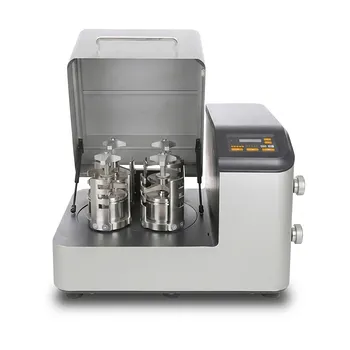
High Energy Planetary Ball Mill for Nano Scale Grinding and Colloidal Mixing in Material Science Research

High Energy Omnidirectional Planetary Ball Mill 20L

High Energy Laboratory Planetary Ball Mill for Nano Grinding and Material Science Sample Preparation

8L Planetary Ball Mill for Laboratory Grinding and Sample Preparation

Vertical Square Planetary Ball Mill for Laboratory Sample Preparation and Nanoscale Grinding

Miniature Planetary Ball Mill with Vacuum Grinding and High Efficiency for Laboratory Sample Preparation
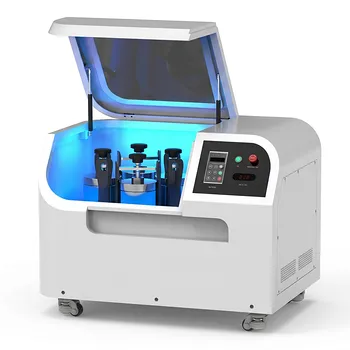
Planetary Ball Mill 12L

Vertical Production Planetary Ball Mill for High Throughput Powder Processing
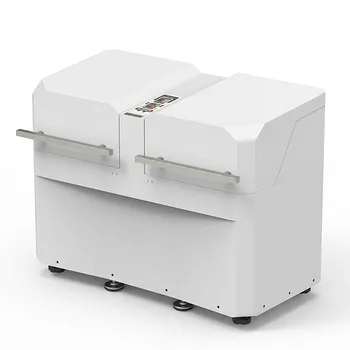
Dual Station Planetary Ball Mill 24L

Multi-Platform Nanoscale High-Energy Vibratory Ball Mill

High Energy Hybrid Vibratory Ball Mill for Grinding Mixing and Cell Disruption
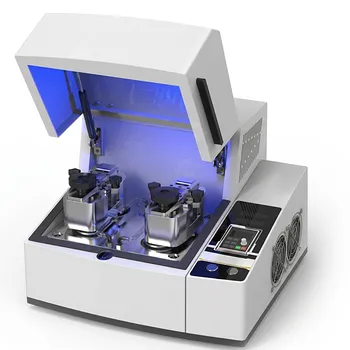
Laboratory Nano High Energy Ball Mill Ultrafine Grinding Mechanical Alloying

Nano High Energy Vibratory Ball Mill with Heating and Temperature Control
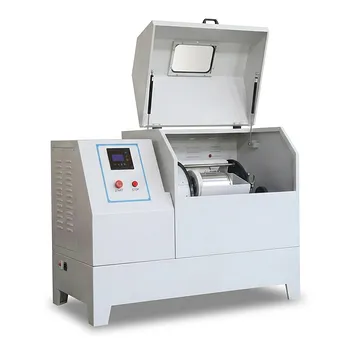
Heavy Duty Horizontal Planetary Ball Mill for Efficient Industrial Grinding and Sample Preparation

Nanoscale High-Energy Vibratory Ball Mill for Laboratory Sample Preparation, Mechanochemistry, and Mechanical Alloying

Nano High Energy Vibratory Ball Mill for Laboratory Sample Preparation