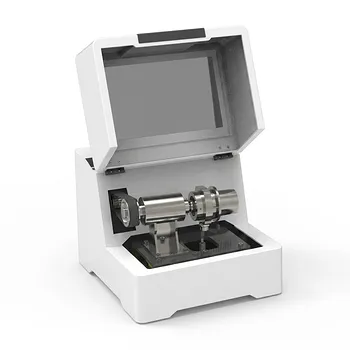
What is the primary function of a planetary ball mill for TiO2–CeO2? Enhancing Reactivity via Mechanochemistry
Updated 4 months ago
Mechanical energy injection is the fundamental role of the planetary ball mill. During the modification of $\text{TiO}_2\text{–CeO}_2$ mixed oxides, the mill utilizes high-speed rotation to generate intense collision, shear, and friction forces. These forces induce physical mixing, reduce grain size to the nanometer scale, and create critical structural changes like lattice distortions and oxygen vacancies that significantly enhance the material's chemical reactivity.
The high-energy planetary ball mill acts as a mechanochemical reactor that transforms $\text{TiO}_2\text{–CeO}_2$ through intensive mechanical force. By forcing structural defects and grain refinement, it bridges the gap between simple physical mixing and advanced chemical modification, directly improving the material's oxygen-sensing capabilities.
The Mechanics of Energy Transfer
The primary function of the equipment is to act as a catalyst for solid-state change without requiring external heat.
Injection of Mechanical Energy
The mill converts rotational kinetic energy into mechanical work through the grinding media. High-speed impacts and shear forces are applied directly to the $\text{TiO}_2$ and $\text{CeO}_2$ particles. This energy injection is what drives the subsequent chemical and physical transformations.
Homogenization and Dispersion
The equipment ensures a high degree of spatial homogeneity between the two oxides. By breaking down agglomerates, it creates a uniform multi-component mixture at the microscopic scale. This level of dispersion is essential for ensuring that the $\text{TiO}_2$ and $\text{CeO}_2$ interact effectively during the modification process.
Structural and Chemical Modifications
Beyond simple mixing, the mill fundamentally alters the crystal structure of the oxides.
Grain Refinement and Surface Area
The intense impact and shear forces refine raw powders down to the nanometer scale. This reduction in grain size exponentially increases the contact surface area between the components. A higher surface area provides more active sites for reactions and improves the overall reactivity of the powder.
Induction of Lattice Distortions
The mechanical stress causes atoms within the crystal lattice to shift from their equilibrium positions. These lattice distortions increase the internal energy of the material, making it more prone to chemical interaction. This structural strain is a key driver for the integration of different oxide phases.
Creation of Oxygen Vacancies
Specifically within the $\text{CeO}_2$ lattice, the milling process introduces oxygen vacancies. These vacancies are "holes" in the crystal structure where oxygen atoms are missing, which are critical for enhancing the oxygen-sensing performance of the final material. They facilitate faster ion transport and better surface reactivity.
Understanding the Trade-offs
While high-energy milling is highly effective, it introduces specific technical challenges that must be managed.
Thermal Management and Agglomeration
The process generates significant heat, which can lead to unwanted powder agglomeration or even premature phase changes. Engineers often use alternating forward and reverse rotation modes or static cooling stages to mitigate these thermal effects.
Media Contamination
The high-energy nature of the impacts can lead to wear and tear on the grinding jars and balls. This can introduce small amounts of impurities from the grinding media (such as alumina or zirconia) into the $\text{TiO}_2\text{–CeO}_2$ mixture, potentially altering its final electronic properties.
Applying These Insights to Your Project
The effectiveness of a planetary ball mill depends on aligning the milling parameters with your specific material goals.
- If your primary focus is maximizing sensing sensitivity: Prioritize longer milling durations at moderate speeds to maximize the creation of oxygen vacancies and lattice defects.
- If your primary focus is achieving high phase purity: Use shorter, high-intensity intervals with frequent cooling cycles to prevent thermal degradation and contamination.
- If your primary focus is scalable production: Focus on optimizing the ball-to-powder ratio to ensure uniform energy distribution across larger batches.
By strategically leveraging mechanical energy, the planetary ball mill transforms inert oxide mixtures into highly reactive, functionally advanced materials.
Summary Table:
| Key Function | Mechanical Mechanism | Impact on TiO2–CeO2 |
|---|---|---|
| Energy Injection | High-speed rotation & collision | Drives mechanochemical reactions without external heat |
| Grain Refinement | Intense shear forces | Reduces particles to nanoscale, increasing surface area |
| Lattice Distortion | Mechanical stress | Shifts atoms to increase internal energy & reactivity |
| Defect Creation | Structural shifting | Induces oxygen vacancies critical for sensing performance |
| Homogenization | Breaking agglomerates | Ensures uniform dispersion at the microscopic level |
Optimize Your Material Synthesis with Precision Lab Solutions
Achieving the perfect balance of lattice distortion and grain refinement requires equipment that delivers consistent, high-energy performance. We provide complete laboratory sample preparation solutions specifically designed for advanced material science research.
Whether you are modifying mixed oxides or developing new composites, our specialized range includes:
- High-Energy Milling: Planetary ball mills, jet mills, liquid nitrogen cryogenic grinders, and disc/rotor mills.
- Powder Processing: Vibratory and air-jet sieve shakers, powder mixers, and defoaming mixers.
- Advanced Compaction: A full spectrum of hydraulic presses, including Cold/Warm Isostatic Presses (CIP/WIP), XRF pellet presses, and vacuum hot presses.
Ready to enhance your oxygen-sensing materials or powder reactivity? Contact our technical team today to find the ideal equipment configuration for your laboratory needs.
References
- Jelena N. Stevanović, Srdjan Petrović. Insight into the Oxygen-Sensing Mechanisms of TiO2–CeO2 Mixed Oxides Treated in a High-Energy Ball Mill: An XPS Analysis. DOI: 10.3390/inorganics13050159
Mentioned Products
- High Energy Planetary Ball Mill for Nano Scale Grinding and Mechanical Alloying
- High Energy Omnidirectional Planetary Ball Mill 16L
- High Energy Laboratory Planetary Ball Mill for Nano Grinding and Colloidal Mixing of Hard and Brittle Materials
- High Energy Omnidirectional Planetary Ball Mill 20L
- High Energy Planetary Ball Mill for Nano Scale Grinding and Colloidal Mixing in Material Science Research
People Also Ask
- Why is a high-energy planetary ball mill used for nano-milling As4Se3? Achieve Expert Structural Transformation
- What role do high-energy planetary ball mills play in FDM composite filament preparation? Optimize Material Performance
- What is the role of a high-energy planetary ball mill in the exfoliation of modified WSe2? Achieve Nano-Precision
- What is the function of a planetary ball mill in glass-ceramic sintering? Optimize Reactivity and Uniformity
- What is the role of a high-energy planetary ball mill in the preparation of high-performance nano-ceramics? Key Guide

Tech Team · PowderPreparation
Last updated on Jun 03, 2026
Related Products
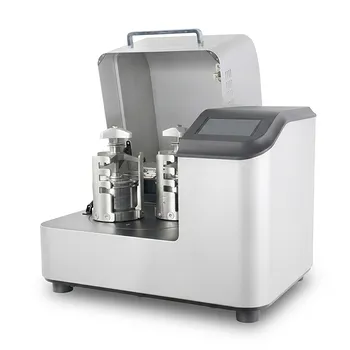
High Energy Planetary Ball Mill for Nano Scale Grinding and Mechanical Alloying
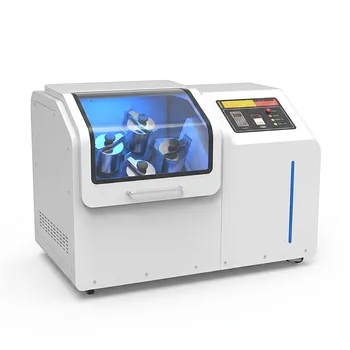
High Energy Omnidirectional Planetary Ball Mill 16L
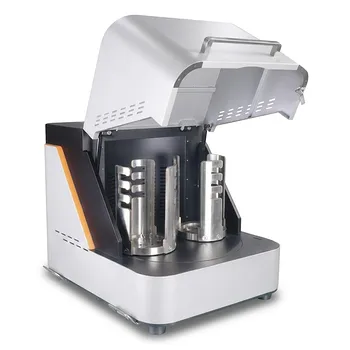
High Energy Laboratory Planetary Ball Mill for Nano Grinding and Colloidal Mixing of Hard and Brittle Materials
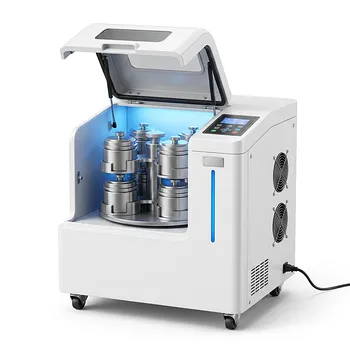
High Energy Omnidirectional Planetary Ball Mill 20L
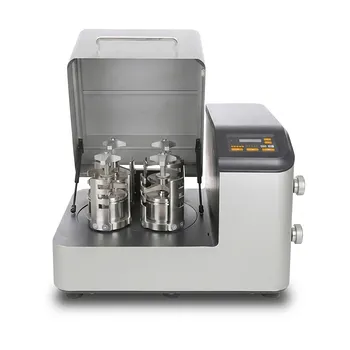
High Energy Planetary Ball Mill for Nano Scale Grinding and Colloidal Mixing in Material Science Research
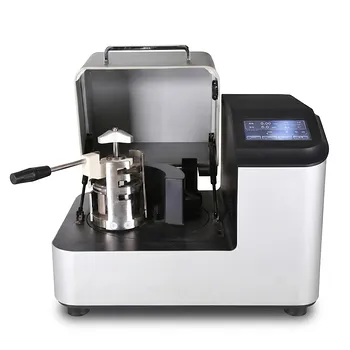
High Energy Laboratory Planetary Ball Mill for Nano Grinding and Material Science Sample Preparation

8L Planetary Ball Mill for Laboratory Grinding and Sample Preparation
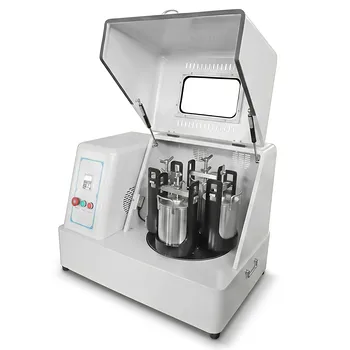
Vertical Square Planetary Ball Mill for Laboratory Sample Preparation and Nanoscale Grinding
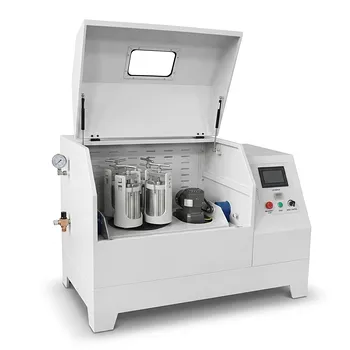
Vertical Production Planetary Ball Mill for High Throughput Powder Processing
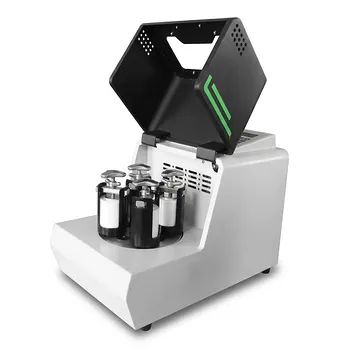
Miniature Planetary Ball Mill with Vacuum Grinding and High Efficiency for Laboratory Sample Preparation
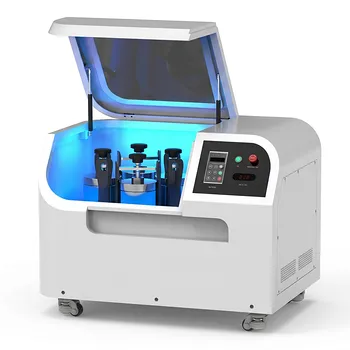
Planetary Ball Mill 12L
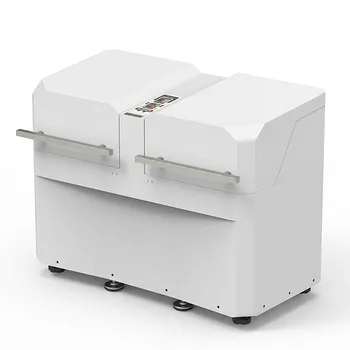
Dual Station Planetary Ball Mill 24L
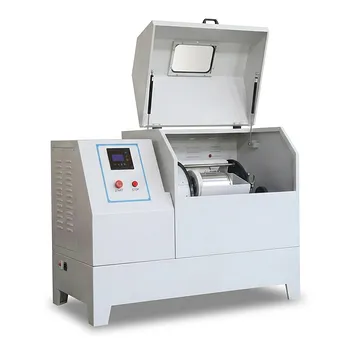
Heavy Duty Horizontal Planetary Ball Mill for Efficient Industrial Grinding and Sample Preparation

Multi-Platform Nanoscale High-Energy Vibratory Ball Mill
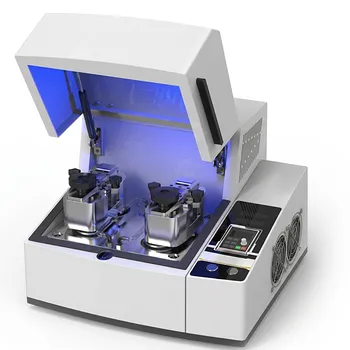
Laboratory Nano High Energy Ball Mill Ultrafine Grinding Mechanical Alloying

High Energy Hybrid Vibratory Ball Mill for Grinding Mixing and Cell Disruption

Nano High Energy Vibratory Ball Mill with Heating and Temperature Control
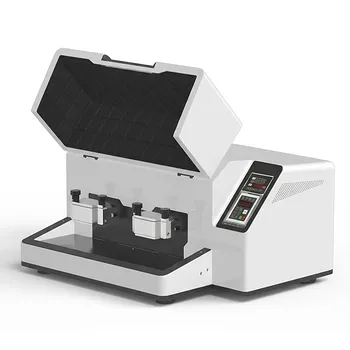
Nanoscale High-Energy Vibratory Ball Mill for Laboratory Sample Preparation, Mechanochemistry, and Mechanical Alloying

Nano High Energy Vibratory Ball Mill for Laboratory Sample Preparation