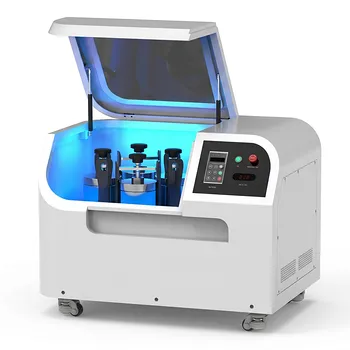
What is the role of high-energy ball milling in antibacterial ceramic powders? Boost Reactivity & Homogeneity
Updated 4 months ago
High-energy ball milling acts as the critical mechanochemical catalyst in the synthesis of antibacterial ceramic glazes. By applying intense physical impact and shear forces, this process refines antibacterial agents—such as silver compounds or anatase titanium dioxide—down to the micron or nanometer scale. This drastic reduction in size maximizes the specific surface area and chemical reactivity of the powder, ensuring the antibacterial components are uniformly distributed and ready for high-activity performance on the final ceramic surface.
High-energy ball milling utilizes mechanochemical action to transform raw materials into ultra-fine, highly reactive powders with atomic-level uniformity. This process is essential for creating stable active centers and enhancing the sintering driving force required for high-performance antibacterial glazes.
Enhancing Reactivity through Particle Refinement
The Power of Mechanochemical Refinement
High-energy ball milling uses high-frequency impact and friction to break down raw materials from hundreds of micrometers to the nanometer scale. This process does not just change the size; it utilizes mechanochemical action to alter the physical and chemical state of the agents. This refinement is the physical foundation for ensuring that antibacterial components remain active during the harsh conditions of ceramic firing.
Maximizing Specific Surface Area
As particles are crushed into ultra-fine powders, their specific surface area (SSA) increases exponentially. A higher SSA directly translates to increased chemical reactivity and surface energy. This elevated energy state allows the antibacterial agents to interact more effectively with the surrounding glaze environment and the targeted microbes.
Achieving Homogeneity and Dispersion
Atomic-Level Uniform Distribution
One of the most significant roles of high-energy milling is ensuring that antibacterial agents are not clumped together. The process achieves a highly uniform distribution of metal oxides or silver salts throughout the glaze base. This microscopic mixing is critical for maintaining chemical stability and ensuring that every part of the finished ceramic surface possesses consistent antibacterial properties.
Creation of Stable Active Centers
By thoroughly dispersing the refined agents, the mill creates stable active centers within the powder. These centers act as the primary sites for antibacterial activity once the glaze is melted or coated onto a substrate. Without this level of dispersion, the glaze would suffer from "dead zones" where no antibacterial protection exists.
Impact on Sintering and Fabrication
Increasing the Sintering Driving Force
The high energy stored in the refined powders increases the chemical potential difference, also known as the sintering driving force. This allows for grain rearrangement and densification to occur at significantly lower temperatures than traditional powders. This efficiency is vital for maintaining the integrity of sensitive antibacterial agents that might otherwise degrade at extreme heat.
Ensuring Suspension Stability
In the production of glaze slurries, particle size control is essential for suspension stability. Ultra-fine powders produced by planetary or stirred mills prevent the heavy antibacterial agents from settling at the bottom of the slurry. This results in a uniform and continuous coating when the glaze is applied to the ceramic body.
Understanding the Trade-offs
The Risk of Media Contamination
While high-energy milling is effective, the intense friction can cause wear and tear on the grinding media (the balls and the mill lining). Small fragments of the milling media can contaminate the antibacterial powder, potentially altering its color or chemical purity. Selecting the correct media, such as zirconia, is often necessary to mitigate this risk.
Managing Energy Consumption and Heat
The process is energy-intensive and generates significant heat, which can sometimes lead to unwanted phase transformations in sensitive materials. If the temperature is not controlled, the highly reactive powders may begin to agglomerate (clump back together), reversing the benefits of the refinement process. Careful monitoring of milling time and cooling cycles is required to maintain the desired powder quality.
How to Apply This to Your Production
Optimizing Milling for Your Specific Goals
The success of an antibacterial glaze depends on balancing particle refinement with process efficiency. Your milling strategy should align with the specific chemical requirements of your antibacterial agent.
- If your primary focus is Maximum Antibacterial Potency: Utilize longer milling times in planetary ball mills to reach the nanometer scale, maximizing surface reactivity and active center density.
- If your primary focus is Manufacturing Efficiency and Cost: Prioritize high-energy stirred mills to achieve micro-scale refinement quickly, focusing on uniform distribution rather than extreme nano-scale reduction.
- If your primary focus is Surface Finish and Coating Consistency: Focus on achieving a tight particle size distribution (less than 32 µm) to ensure a stable slurry and a smooth, continuous glaze application.
By mastering the mechanochemical forces of high-energy ball milling, manufacturers can produce antibacterial ceramics that are both chemically stable and highly effective against microbial growth.
Summary Table:
| Key Role | Physical/Chemical Impact | Benefit for Ceramic Glaze |
|---|---|---|
| Particle Refinement | Reduces particles to nano-scale | Maximizes specific surface area and reactivity |
| Mechanochemical Action | Alters physical/chemical states | Ensures antibacterial agents survive firing |
| Homogenization | Atomic-level uniform distribution | Eliminates "dead zones" for consistent protection |
| Sintering Optimization | Increases sintering driving force | Enables densification at lower temperatures |
| Suspension Control | Precise particle size distribution | Prevents settling for smooth, stable coatings |
Elevate Your Material Research with Precision Engineering
At [Brand Name], we provide complete laboratory sample preparation solutions tailored for material science. Whether you are developing high-activity antibacterial powders or advanced ceramics, our equipment is designed to ensure maximum chemical reactivity and uniformity.
Our extensive product line includes:
- Advanced Milling: Planetary ball mills, jet mills, disc mills, and rotor mills for achieving nanometer-scale refinement.
- Powder Processing: High-performance crushers (jaw/roll), sieve shakers, and specialized powder mixers.
- Compaction & Sintering: A full spectrum of hydraulic presses, including Cold/Warm Isostatic Presses (CIP/WIP), vacuum hot presses, and standard lab presses.
Ready to optimize your production efficiency and material performance? Contact us today to discuss how our powder processing and compaction expertise can support your next innovation!
References
- Оксана Саввова, Y. Afanasenko. DEVELOPMENT OF A METHODOLOGICAL APPROACH TO THE DEVELOPMENT OF BACTERICIDAL GLAZES FOR CERAMIC TILES. DOI: 10.33042/2522-1809-2020-1-154-71-76
Mentioned Products
- High Energy Planetary Ball Mill for Nano Scale Grinding and Mechanical Alloying
- Ultra-Low Temperature Cryogenic High-Energy Vibratory Ball Mill
- High Energy Hybrid Vibratory Ball Mill for Grinding Mixing and Cell Disruption
- High Energy Omnidirectional Planetary Ball Mill 16L
- Multi-Platform Nanoscale High-Energy Vibratory Ball Mill
People Also Ask
- Why is a high-energy planetary ball mill used for nano-milling As4Se3? Achieve Expert Structural Transformation
- What role do high-energy planetary ball mills play in FDM composite filament preparation? Optimize Material Performance
- What is the role of a high-energy planetary ball mill in the exfoliation of modified WSe2? Achieve Nano-Precision
- What is the function of a planetary ball mill in glass-ceramic sintering? Optimize Reactivity and Uniformity
- What is the role of a high-energy planetary ball mill in the preparation of high-performance nano-ceramics? Key Guide

Tech Team · PowderPreparation
Last updated on Jun 03, 2026
Related Products
High Energy Planetary Ball Mill for Nano Scale Grinding and Mechanical Alloying
Ultra-Low Temperature Cryogenic High-Energy Vibratory Ball Mill

High Energy Hybrid Vibratory Ball Mill for Grinding Mixing and Cell Disruption
High Energy Omnidirectional Planetary Ball Mill 16L

Multi-Platform Nanoscale High-Energy Vibratory Ball Mill
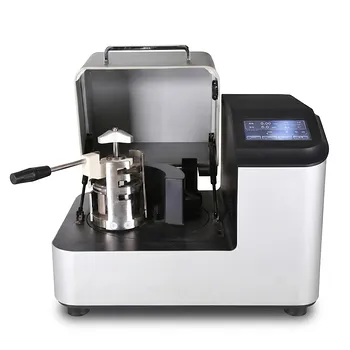
High Energy Laboratory Planetary Ball Mill for Nano Grinding and Material Science Sample Preparation

Nano High Energy Vibratory Ball Mill with Heating and Temperature Control
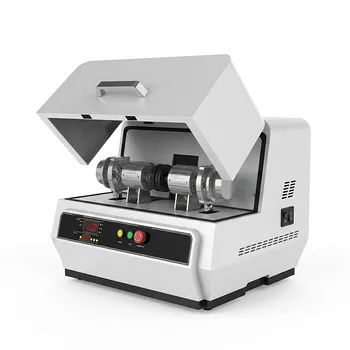
Dual Jar High Energy Vibratory Ball Mill
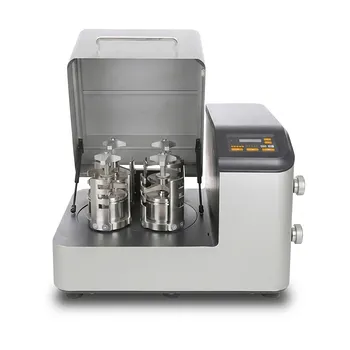
High Energy Planetary Ball Mill for Nano Scale Grinding and Colloidal Mixing in Material Science Research
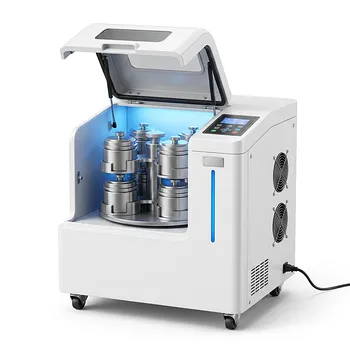
High Energy Omnidirectional Planetary Ball Mill 20L
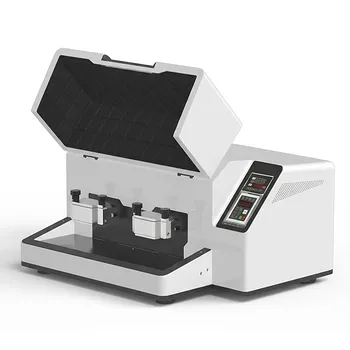
Nanoscale High-Energy Vibratory Ball Mill for Laboratory Sample Preparation, Mechanochemistry, and Mechanical Alloying
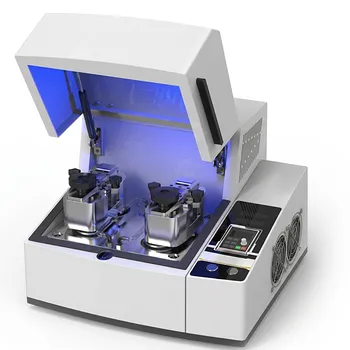
Laboratory Nano High Energy Ball Mill Ultrafine Grinding Mechanical Alloying
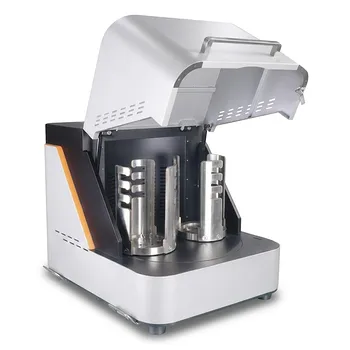
High Energy Laboratory Planetary Ball Mill for Nano Grinding and Colloidal Mixing of Hard and Brittle Materials
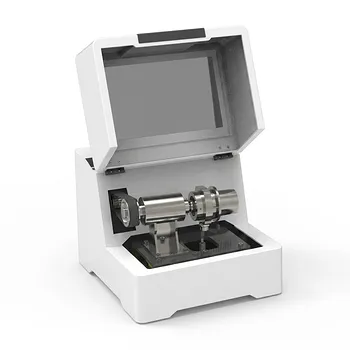
Single Tank High Energy Vibratory Ball Mill for Laboratory Grinding and Mixing
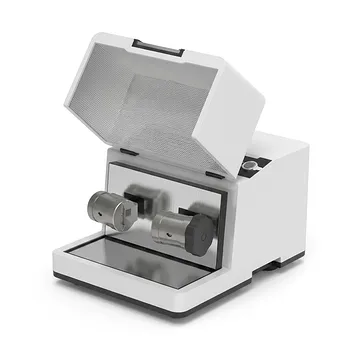
Heating Temperature Controlled High Energy Vibratory Ball Mill

Nano High Energy Vibratory Ball Mill for Laboratory Sample Preparation
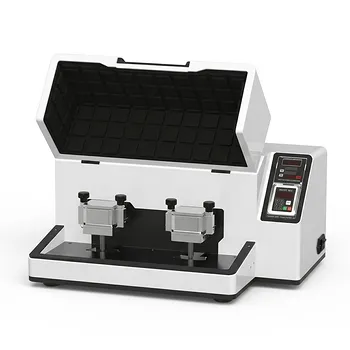
Nanoscale High Energy Vibratory Ball Mill Low Temperature

8L Planetary Ball Mill for Laboratory Grinding and Sample Preparation
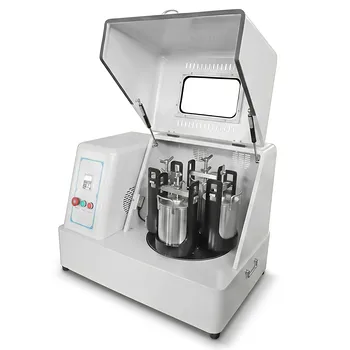
Vertical Square Planetary Ball Mill for Laboratory Sample Preparation and Nanoscale Grinding