Role of Ball Mills in SPS Feedstock Prep: Achieving Sub-Micron Refinement & Coating Stability
Updated 3 months ago
The mechanical ball mill is the essential engine for particle refinement and homogenization in SPS feedstock preparation. Its primary role is to reduce coarse commercial powders into the sub-micron or low-micrometer range while significantly increasing their specific surface area. This physical transformation is a non-negotiable prerequisite for creating the stable, pumpable suspensions required for the spraying process.
To achieve a successful Suspension Plasma Spraying (SPS) process, raw materials must be transformed from dry, coarse powders into a stable liquid feedstock. Mechanical ball milling provides the high-energy grinding necessary to reach the ultra-fine particle sizes that dictate suspension stability, atomization quality, and the final coating's microstructure.
Particle Size Refinement and Surface Area Optimization
Achieving Sub-Micron Dimensions
The ball mill uses high-energy impact and attrition to break down commercial powders, which are often too large for SPS. While primary references note refinement to a median size ($d_{v50}$) of 5 micrometers, advanced applications often require deep grinding to nanometer or sub-micron levels (typically below 1 micrometer).
Enhancing Chemical Reactivity
As the mill reduces particle size, it exponentially increases the specific surface area of the powder. This increased surface area raises the reaction activity of the material, which is vital for achieving high densification and proper phase formation during the high-temperature plasma process.
The Foundation of Suspension Stability
Improving Solvent Dispersibility
Refining particles to the micrometer or nanometer scale is critical for dispersibility in solvents. Smaller, uniform particles are less prone to sedimentation, allowing them to remain suspended in the carrier liquid for longer periods.
Ensuring Reliable Feedstock Delivery
A well-milled powder ensures the resulting suspension is pumpable and consistent. This stability prevents clogging in the delivery lines and ensures a steady mass flow rate into the plasma torch, which is essential for coating uniformity.
Impact on the Final Coating Microstructure
Influencing Atomization and Droplet Formation
The particle size distribution achieved during milling directly affects how the liquid feedstock is atomized into fine droplets. Smaller particles allow for the generation of extremely fine droplets, which evaporate and melt more efficiently within the plasma jet.
Enabling Specialized Microstructures
The precision of the ball milling process determines whether the final coating can develop unique features, such as columnar crystals or vertical crack microstructures. These structures are often required for high-performance applications like Thermal Barrier Coatings (TBCs).
Understanding the Trade-offs and Limitations
Risk of Material Contamination
High-energy milling involves constant contact between the powder, the grinding media (balls), and the mill vial. This can introduce impurities or "wear debris" into the raw material, which may negatively alter the chemical purity of the final coating.
Energy and Time Intensity
Achieving sub-micron particle sizes requires significant energy input and extended processing times. Over-milling can lead to excessive heat generation, potentially causing unwanted phase changes or oxidation in sensitive metallic or ceramic powders.
How to Optimize Your Milling Strategy
Applying These Principles to Your Project
To get the most out of the ball milling stage, you must align your milling parameters with the specific requirements of your final coating.
- If your primary focus is Thermal Barrier Coatings (TBCs): Use high-energy bead mills to reach sub-micron levels (< 1 $\mu m$) to ensure the formation of necessary vertical cracks or columnar structures.
- If your primary focus is Bio-active Coatings (e.g., Hydroxyapatite): Aim for a median particle size of approximately 5 micrometers to balance dispersibility with the preservation of the material's chemical integrity.
- If your primary focus is Multi-component Alloys: Utilize planetary ball milling to overcome density differences between powders, ensuring mechanical homogenization and reducing local compositional segregation.
By precisely controlling the mechanical milling process, you establish the physical foundation required for high-performance suspension plasma sprayed coatings.
Summary Table:
| Key Role | Physical Transformation | Impact on SPS Coating |
|---|---|---|
| Particle Refinement | Reduction to sub-micron/nanometer scale | Improved atomization and melting efficiency |
| Surface Optimization | Increased specific surface area | Enhanced chemical reactivity and densification |
| Suspension Stability | Improved solvent dispersibility | Uniform feedstock flow; prevents nozzle clogging |
| Microstructure Control | Homogenization of multi-component materials | Enables columnar crystals and vertical cracks |
Elevate Your Material Research with Precision Sample Preparation
To achieve high-performance Suspension Plasma Spraying (SPS), the quality of your feedstock is paramount. At Our Laboratory Solutions, we provide complete laboratory sample preparation solutions for material science, specializing in advanced powder processing and compaction equipment.
Whether you require high-energy planetary ball mills, jet mills, or cryogenic grinders to reach critical sub-micron particle sizes, or need a full spectrum of hydraulic presses (CIP/WIP, hot presses, and XRF pellet presses) for downstream processing, our equipment is engineered for reliability and precision. We empower researchers and distributors with the tools needed for superior coating uniformity and specialized microstructures.
Ready to optimize your milling strategy and coating results? Contact our experts today to find the perfect equipment for your laboratory needs!
References
- Rolando T. Candidato, Alain Denoirjean. Plasma spraying of hydroxyapatite coatings using powder, suspension and solution feedstocks. DOI: 10.26628/ps.v87i10.491
Mentioned Products
- High Energy Planetary Ball Mill for Nano Scale Grinding and Mechanical Alloying
- Laboratory Nano High Energy Ball Mill Ultrafine Grinding Mechanical Alloying
- Nanoscale High-Energy Vibratory Ball Mill for Laboratory Sample Preparation, Mechanochemistry, and Mechanical Alloying
- Nanoscale High Energy Vibratory Ball Mill Low Temperature
- Heavy Duty Horizontal Planetary Ball Mill for Efficient Industrial Grinding and Sample Preparation
People Also Ask
- Why is a high-energy planetary ball mill used for nano-milling As4Se3? Achieve Expert Structural Transformation
- What role do high-energy planetary ball mills play in FDM composite filament preparation? Optimize Material Performance
- What is the role of a high-energy planetary ball mill in the exfoliation of modified WSe2? Achieve Nano-Precision
- What is the function of a planetary ball mill in glass-ceramic sintering? Optimize Reactivity and Uniformity
- What is the role of a high-energy planetary ball mill in the preparation of high-performance nano-ceramics? Key Guide

Tech Team · PowderPreparation
Last updated on Jun 03, 2026
Related Products

High Energy Planetary Ball Mill for Nano Scale Grinding and Mechanical Alloying
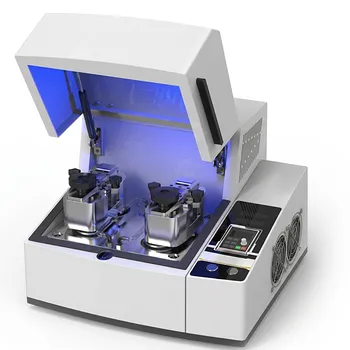
Laboratory Nano High Energy Ball Mill Ultrafine Grinding Mechanical Alloying

Nanoscale High-Energy Vibratory Ball Mill for Laboratory Sample Preparation, Mechanochemistry, and Mechanical Alloying
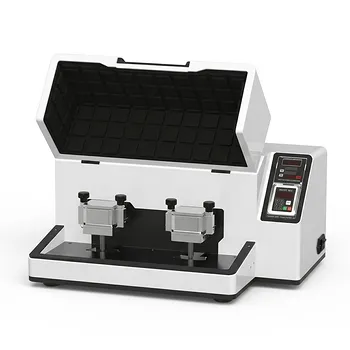
Nanoscale High Energy Vibratory Ball Mill Low Temperature
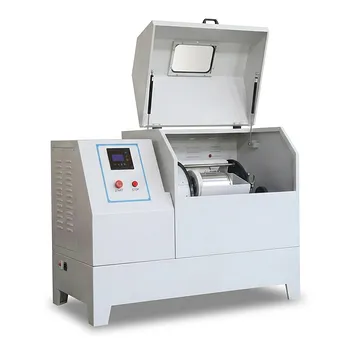
Heavy Duty Horizontal Planetary Ball Mill for Efficient Industrial Grinding and Sample Preparation
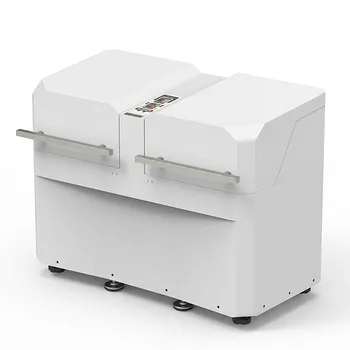
Dual Station Planetary Ball Mill 24L

Vertical Semi Circular Planetary Ball Mill for Laboratory Precision Grinding
Vertical Production Planetary Ball Mill for High Throughput Powder Processing
Single Tank High Energy Vibratory Ball Mill for Laboratory Grinding and Mixing

Vertical Square Planetary Ball Mill for Laboratory Sample Preparation and Nanoscale Grinding
High Energy Omnidirectional Planetary Ball Mill 16L

Multi-Platform Nanoscale High-Energy Vibratory Ball Mill
High Energy Omnidirectional Planetary Ball Mill 20L

Nano High Energy Vibratory Ball Mill with Heating and Temperature Control

High Energy Hybrid Vibratory Ball Mill for Grinding Mixing and Cell Disruption
High Energy Planetary Ball Mill for Nano Scale Grinding and Colloidal Mixing in Material Science Research

High Energy Laboratory Planetary Ball Mill for Nano Grinding and Colloidal Mixing of Hard and Brittle Materials
Planetary Ball Mill 12L

Dual Jar High Energy Vibratory Ball Mill