What is the function of a mechanical ball mill in S/C composite preparation? Optimize Li-S Battery Performance
Updated 5 months ago
The mechanical ball mill is the primary tool for high-precision mixing and particle size reduction in S/C composite preparation. It utilizes high-energy impact and shear forces to break down sulfur and carbon powders, significantly increasing their contact area. This process establishes the essential foundation for subsequent heat treatment, ensuring sulfur can uniformly penetrate carbon pores for optimal electrochemical performance.
The central role of a ball mill is to transform heterogeneous raw materials into a highly homogeneous precursor by maximizing interfacial contact and reducing particle size. This micro-level compounding is critical for ensuring sulfur loading, improving conductivity, and facilitating efficient ion transport in lithium-sulfur batteries.
Enhancing Microscopic Homogeneity
Particle Size Refinement and Agglomerate Breakup
The ball mill uses high-frequency vibrations or high-speed rotation to exert high-energy impact forces on raw materials. This action reduces sulfur and carbon particles from the micrometer level to a much finer micron or sub-micron scale. By effectively breaking down particle agglomerates, the mill ensures that the carbon framework is fully accessible for sulfur loading.
Maximizing Interfacial Contact
Achieving a high degree of mixing uniformity at the microscopic scale is a prerequisite for high-performance batteries. The mechanical force distributes elemental sulfur evenly across the surface of the carbon or biochar framework. This intimate contact is vital because it allows sulfur to successfully penetrate microporous structures during later thermal infiltration steps.
Engineering the Electrode Architecture
Constructing the Triple-Phase Boundary
In solid-state battery configurations, the mill is used to create a triple-phase boundary between the active sulfur, conductive carbon, and the solid electrolyte. High-energy milling ensures these three components are in tight contact, which is the core requirement for high ionic and electronic conductivity. This deep micro-level compounding significantly simplifies the fabrication of complex solid-state cathodes.
Activation of Insulating Materials
For cathodes utilizing lithium sulfide (Li2S), ball milling achieves molecular-level uniform mixtures with conductive carbon black. This process is essential for activating the inherently insulating active material, which reduces reaction overpotential. By refining Li2S particles, the mill improves the utilization rate of the cathode, enabling higher energy density and better cycling stability.
Understanding the Trade-offs
Structural Integrity vs. Homogeneity
While high-energy milling improves mixing, excessive force can damage the porous structure of the carbon host. If the carbon framework is crushed, its ability to accommodate the volume expansion of sulfur during discharge is severely compromised. Balancing milling duration and energy intensity is critical to maintaining the structural benefits of the carbon host.
Thermal Management and Contamination
The high-energy nature of the process generates significant internal heat, which can cause sulfur to sublimate or undergo unwanted phase changes. Additionally, prolonged milling increases the risk of impurities from the milling media entering the composite. These contaminants can trigger side reactions or degrade the electrochemical stability of the battery cell.
How to Optimize Ball Milling for Your Goals
The following recommendations help tailor the milling process to specific performance requirements:
- If your primary focus is high sulfur loading: Use moderate-energy milling to ensure uniform surface coverage while preserving the internal micropore volume of the carbon host.
- If your primary focus is solid-state battery performance: Utilize high-energy planetary milling to drive in-situ mechanochemical reactions and establish a robust triple-phase boundary between the electrolyte and active material.
- If your primary focus is activating insulating Li2S: Employ high-speed milling to achieve sub-micron particle refinement and molecular-level contact with conductive agents to lower internal resistance.
Properly executed ball milling is the critical bridge between raw chemical powders and a high-performance, electrochemically active cathode architecture.
Summary Table:
| Key Function | Mechanism & Action | Impact on Battery Performance |
|---|---|---|
| Particle Refinement | High-energy impact & shear forces | Reduces sulfur/carbon to sub-micron scale; increases contact area. |
| Homogeneity | Micro-level compounding | Ensures uniform sulfur loading and facilitates efficient ion transport. |
| Interface Engineering | Constructing triple-phase boundaries | Enhances ionic and electronic conductivity in solid-state configurations. |
| Material Activation | Molecular-level mixing of Li2S | Reduces reaction overpotential and improves active material utilization. |
Elevate Your Material Research with Precision Powder Solutions
Achieving the perfect sulfur/carbon composite requires more than just mixing—it requires precise control over particle size and structural integrity. At [Your Brand Name], we provide complete laboratory sample preparation solutions tailored for material science.
Our extensive equipment line specializes in high-performance powder processing and compaction, including:
- Advanced Milling: Planetary ball mills, jet mills, and cryogenic grinders for sub-micron refinement.
- Precision Mixing: Powder and defoaming mixers to ensure molecular-level homogeneity.
- Advanced Compaction: A full spectrum of hydraulic presses, including Cold/Warm Isostatic Presses (CIP/WIP), vacuum hot presses, and XRF pellet presses.
- Preparation Tools: Jaw/roll crushers, sieve shakers, and high-quality test sieves.
Whether you are refining insulating Li2S or engineering complex triple-phase boundaries, our specialized equipment is designed to help you achieve superior electrochemical results.
Ready to optimize your laboratory workflow? Contact our technical experts today for a customized equipment consultation!
References
- Faiz Ahmed, Gao Liu. Lithium–Sulfur Batteries with Micelle-Structured Electrolytes and Imide-Based Salts. DOI: 10.1021/acsaem.3c00916
Mentioned Products
- High Energy Planetary Ball Mill for Nano Scale Grinding and Mechanical Alloying
- Laboratory Nano High Energy Ball Mill Ultrafine Grinding Mechanical Alloying
- Nanoscale High-Energy Vibratory Ball Mill for Laboratory Sample Preparation, Mechanochemistry, and Mechanical Alloying
- Nanoscale High Energy Vibratory Ball Mill Low Temperature
- Heavy Duty Horizontal Planetary Ball Mill for Efficient Industrial Grinding and Sample Preparation
People Also Ask
- Why is a high-energy planetary ball mill used for nano-milling As4Se3? Achieve Expert Structural Transformation
- What role do high-energy planetary ball mills play in FDM composite filament preparation? Optimize Material Performance
- What is the role of a high-energy planetary ball mill in the exfoliation of modified WSe2? Achieve Nano-Precision
- What is the function of a planetary ball mill in glass-ceramic sintering? Optimize Reactivity and Uniformity
- What is the role of a high-energy planetary ball mill in the preparation of high-performance nano-ceramics? Key Guide

Tech Team · PowderPreparation
Last updated on May 14, 2026
Related Products

High Energy Planetary Ball Mill for Nano Scale Grinding and Mechanical Alloying
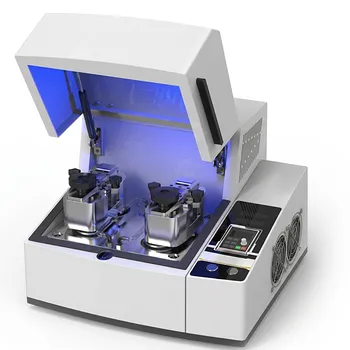
Laboratory Nano High Energy Ball Mill Ultrafine Grinding Mechanical Alloying

Nanoscale High-Energy Vibratory Ball Mill for Laboratory Sample Preparation, Mechanochemistry, and Mechanical Alloying
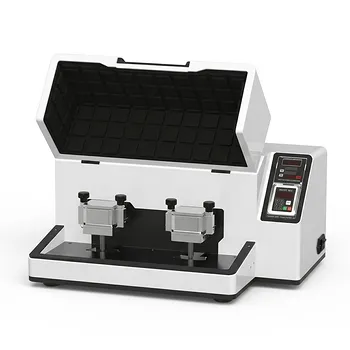
Nanoscale High Energy Vibratory Ball Mill Low Temperature
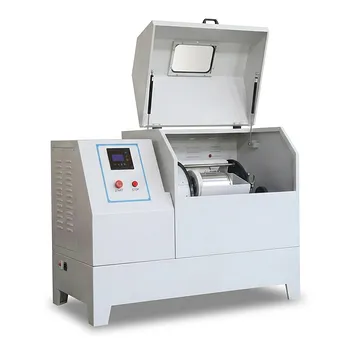
Heavy Duty Horizontal Planetary Ball Mill for Efficient Industrial Grinding and Sample Preparation

Dual Station Planetary Ball Mill 24L
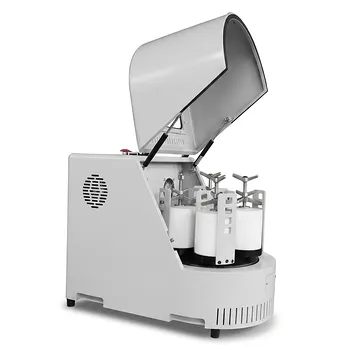
Vertical Semi Circular Planetary Ball Mill for Laboratory Precision Grinding

Vertical Production Planetary Ball Mill for High Throughput Powder Processing
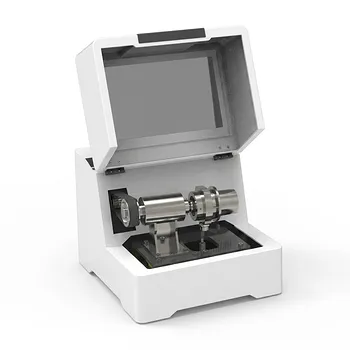
Single Tank High Energy Vibratory Ball Mill for Laboratory Grinding and Mixing
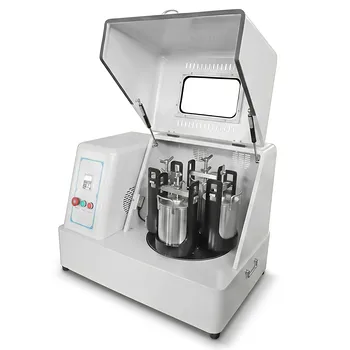
Vertical Square Planetary Ball Mill for Laboratory Sample Preparation and Nanoscale Grinding

High Energy Omnidirectional Planetary Ball Mill 16L

Multi-Platform Nanoscale High-Energy Vibratory Ball Mill
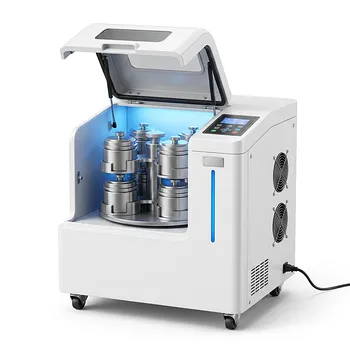
High Energy Omnidirectional Planetary Ball Mill 20L

Nano High Energy Vibratory Ball Mill with Heating and Temperature Control

High Energy Laboratory Planetary Ball Mill for Nano Grinding and Colloidal Mixing of Hard and Brittle Materials

High Energy Hybrid Vibratory Ball Mill for Grinding Mixing and Cell Disruption
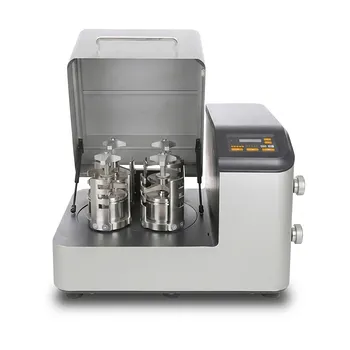
High Energy Planetary Ball Mill for Nano Scale Grinding and Colloidal Mixing in Material Science Research
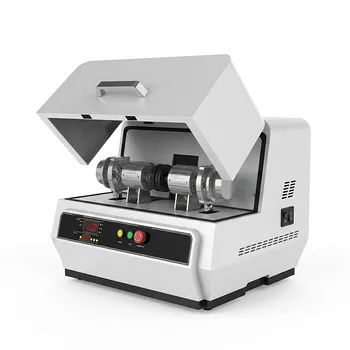
Dual Jar High Energy Vibratory Ball Mill
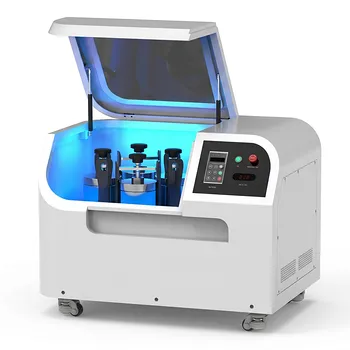
Planetary Ball Mill 12L