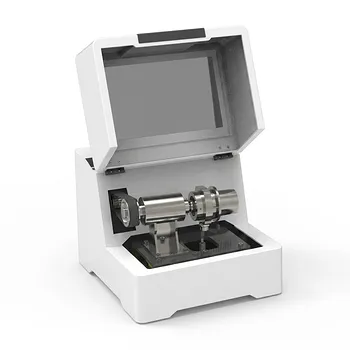
What is the primary working mechanism of a High-Energy Planetary Ball Mill? Explore attrition for nanomaterials.
Updated 4 months ago
The primary working mechanism of a High-Energy Planetary Ball Mill is the simultaneous revolution and rotation of grinding jars to generate intense impact, friction, and shear forces. This dual-motion system subjects the material and grinding balls to complex centrifugal forces, facilitating the "top-down" breakdown of bulk materials into nanoscale powders. This high-energy environment not only reduces particle size but also induces physical and chemical changes through continuous, high-frequency energy input.
A High-Energy Planetary Ball Mill achieves nanomaterial synthesis by converting mechanical energy into particle refinement and chemical activation. The synergy of impact and shear forces allows for uniform mixing, mechanical alloying, and the creation of ultra-fine structures that are often difficult to produce through traditional chemical means.
The Mechanics of Dual-Rotation Motion
The Sun Wheel and Jar Interaction
Grinding jars are mounted on a "sun wheel" that revolves in one direction, while the jars themselves rotate rapidly around their own axes, typically in the opposite direction. This creates a powerful and constantly shifting centrifugal field that dictates the trajectory of the grinding media inside the jars.
Kinematics of Grinding Media
Inside the jars, the grinding balls are launched across the chamber by centrifugal forces, striking the material and the opposite jar wall with extreme velocity. These high-speed collisions provide the impact energy necessary to fracture hard materials, while the rolling motion of the balls creates frictional shear for fine refinement.
Energy Control via Speed Ratios
Operators can precisely control the energy input by adjusting the speed ratio between the sun wheel revolution and the jar rotation. This allows for a tailored balance between high-impact energy for crushing and high-shear energy for delicate exfoliation or mixing.
Transforming Materials Through Mechanical Attrition
Physical Refinement and Exfoliation
The repetitive stress from impacts causes plastic deformation and fracturing in bulk materials, eventually reaching the nanoscale, often with diameters below 100 nm. In materials like microcrystalline cellulose, these forces are used to exfoliate structures into nanofibrils by overcoming internal bonding forces.
Mechanochemical Activation
Beyond mere grinding, the high energy input facilitates mechanical activation, which can trigger chemical reactions between components at room temperature. This enables a single-step synthesis where production and surface functionalization (such as making a material hydrophobic) occur simultaneously.
Molecular-Level Mixing
The intense motion ensures that different chemical components are mixed with extreme uniformity at the atomic level. This is particularly critical for producing high-density ceramic powders, where molecular-level homogeneity is required for successful sintering.
Understanding the Trade-offs
Heat Generation and Grain Growth
The high-energy collisions inherently generate localized heat, which can be detrimental to certain materials. If the temperature is not managed, it can cause unwanted grain growth, effectively reversing the refinement process or altering the material’s phase.
Contamination and Media Wear
The very forces required for refinement also cause the grinding jars and balls to wear down over time. This wear can introduce impurities into the sample, necessitating the use of high-purity media materials like zirconia or tungsten carbide that are chemically compatible with the target material.
Strategies for Nanomaterial Preparation
To achieve the best results with a planetary ball mill, the process parameters must align with the specific material properties and the desired end-product.
- If your primary focus is maximum particle refinement: Use a higher speed ratio and smaller grinding media to increase the frequency of impact and shear events per minute.
- If your primary focus is preventing thermal degradation: Utilize interval milling with programmed "cool-down" periods to prevent the accumulation of localized heat.
- If your primary focus is mechanochemical synthesis: Select grinding jars and balls with high hardness to ensure the mechanical activation energy is high enough to break chemical bonds.
- If your primary focus is high-purity fillers: Perform "dry" grinding without additives or select media material that matches the chemical composition of your raw material to eliminate foreign contamination.
By mastering the balance of centrifugal forces and mechanical energy, you can transform almost any bulk material into a high-performance nanomaterial with tailored properties.
Summary Table:
| Feature | Mechanism | Benefit for Nanomaterials |
|---|---|---|
| Dual-Rotation | Sun wheel revolution + Jar rotation | Generates intense, multidirectional centrifugal fields |
| Impact Force | High-velocity media collisions | Fractures bulk materials into nanoscale particles |
| Shear Force | Grinding media rolling motion | Facilitates delicate exfoliation and fine refinement |
| Activation | High-frequency energy input | Triggers mechanochemical reactions at room temperature |
Elevate Your Research with Precision Sample Preparation
Achieving the perfect nanoscale structure requires more than just high energy—it requires the right equipment. We provide complete laboratory sample preparation solutions for material science, specializing in high-performance powder processing and compaction equipment designed for accuracy and durability.
Our extensive product lines include:
- Advanced Milling: Planetary ball mills, jet mills, liquid nitrogen cryogenic grinders, and rotor mills.
- Hydraulic Presses: A full spectrum including Cold/Warm Isostatic Presses (CIP/WIP), hot presses, and XRF pellet presses.
- Sizing & Mixing: Jaw/roll crushers, vibratory/air-jet sieve shakers, and specialized powder or defoaming mixers.
Whether you are refining microcrystalline cellulose or developing high-density ceramics, our tools are engineered to deliver molecular-level homogeneity. Contact us today to find your perfect solution!
References
- Sandip C. Atram, Atharv Sandip Jawanjal. Nanoparticles: Classification, Synthesis, Characterization, and Applications. DOI: 10.51244/ijrsi.2025.1208004120
Mentioned Products
- High Energy Planetary Ball Mill for Nano Scale Grinding and Mechanical Alloying
- High Energy Laboratory Planetary Ball Mill for Nano Grinding and Colloidal Mixing of Hard and Brittle Materials
- High Energy Planetary Ball Mill for Nano Scale Grinding and Colloidal Mixing in Material Science Research
- High Energy Omnidirectional Planetary Ball Mill 16L
- High Energy Laboratory Planetary Ball Mill for Nano Grinding and Material Science Sample Preparation
People Also Ask
- Why is a high-energy planetary ball mill used for nano-milling As4Se3? Achieve Expert Structural Transformation
- What role do high-energy planetary ball mills play in FDM composite filament preparation? Optimize Material Performance
- What is the role of a high-energy planetary ball mill in the exfoliation of modified WSe2? Achieve Nano-Precision
- What is the function of a planetary ball mill in glass-ceramic sintering? Optimize Reactivity and Uniformity
- What is the role of a high-energy planetary ball mill in the preparation of high-performance nano-ceramics? Key Guide

Tech Team · PowderPreparation
Last updated on Jun 03, 2026
Related Products
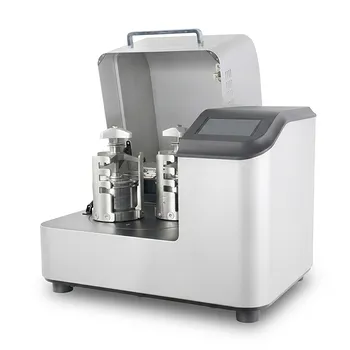
High Energy Planetary Ball Mill for Nano Scale Grinding and Mechanical Alloying
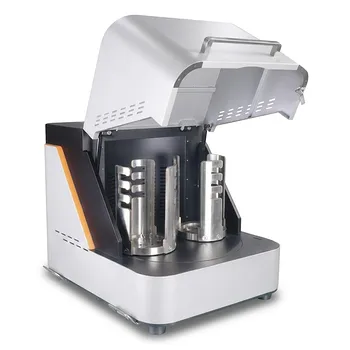
High Energy Laboratory Planetary Ball Mill for Nano Grinding and Colloidal Mixing of Hard and Brittle Materials
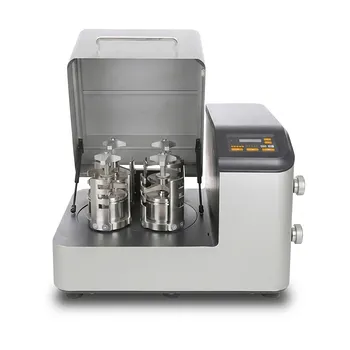
High Energy Planetary Ball Mill for Nano Scale Grinding and Colloidal Mixing in Material Science Research
High Energy Omnidirectional Planetary Ball Mill 16L
High Energy Laboratory Planetary Ball Mill for Nano Grinding and Material Science Sample Preparation
High Energy Omnidirectional Planetary Ball Mill 20L
Vertical Square Planetary Ball Mill for Laboratory Sample Preparation and Nanoscale Grinding

8L Planetary Ball Mill for Laboratory Grinding and Sample Preparation
Miniature Planetary Ball Mill with Vacuum Grinding and High Efficiency for Laboratory Sample Preparation
Vertical Production Planetary Ball Mill for High Throughput Powder Processing
Planetary Ball Mill 12L
Dual Station Planetary Ball Mill 24L
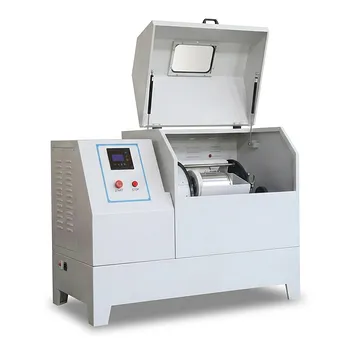
Heavy Duty Horizontal Planetary Ball Mill for Efficient Industrial Grinding and Sample Preparation

High Energy Hybrid Vibratory Ball Mill for Grinding Mixing and Cell Disruption

Multi-Platform Nanoscale High-Energy Vibratory Ball Mill

Ultra-Low Temperature Cryogenic High-Energy Vibratory Ball Mill

Nano High Energy Vibratory Ball Mill with Heating and Temperature Control
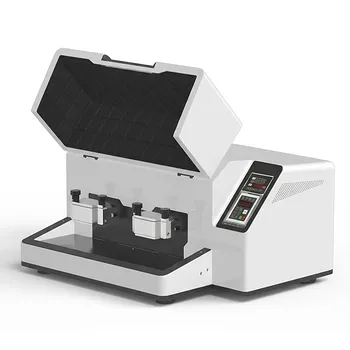
Nanoscale High-Energy Vibratory Ball Mill for Laboratory Sample Preparation, Mechanochemistry, and Mechanical Alloying
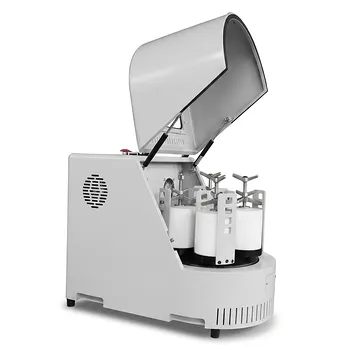
Vertical Semi Circular Planetary Ball Mill for Laboratory Precision Grinding