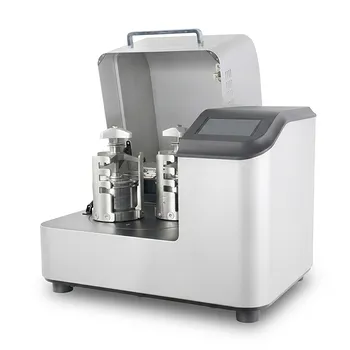
What are the technical advantages of a centrifugal wet ball mill? Achieve High-Energy Nano-Co-Crystal Stability
Updated 5 months ago
The centrifugal wet ball mill represents a significant leap in nano-crystallization technology. It surpasses traditional milling by leveraging intense centrifugal forces to deliver high-energy input with integrated thermal management. This combination ensures the production of stable nano-co-crystals with narrow size distributions while preventing the chemical or structural degradation common in conventional high-impact mills.
Centrifugal wet ball milling solves the dual challenge of achieving nanoscale particle sizes and maintaining the structural integrity of sensitive co-crystals through synchronized high-energy density and precision temperature regulation.
Superior Energy Transfer Dynamics
High Centrifugal Force vs. Gravity-Driven Impact
Centrifugal mills utilize high-speed rotation to generate forces far exceeding gravity. This enables extremely high energy input within a small sample volume, driving grinding beads with more intensity than the falling media used in traditional drum mills.
Accelerated Reduction to the Nanoscale
The concentrated mechanical energy significantly shortens processing cycles. Processes that once required dozens of hours in low-speed equipment can often be completed in just a few hours, greatly enhancing production efficiency for nano-scale dimensions.
High-Concentration Reaction Environments
Unlike traditional solution-based methods that result in low-concentration suspensions, these mills support high-concentration environments. This improves repeatability and simplifies post-processing by reducing the need for extensive centrifugal concentration or purification.
Thermal and Structural Preservation
Integrated Cooling Systems
Mechanical milling inherently generates significant frictional heat. Centrifugal wet mills are frequently equipped with specialized cooling systems that effectively dissipate this heat, maintaining a stable temperature throughout the grinding process.
Inhibition of Phase Transitions
Precise temperature control is critical for co-crystals, which are sensitive to mechanical stress. By preventing localized overheating, these mills avoid unnecessary phase transitions or chemical degradation that can compromise the drug’s efficacy.
Suppression of Recrystallization
The controlled environment inhibits dynamic recovery and recrystallization of materials. This prevents grain coarsening, ensuring that the nanocrystalline grains remain fine and thermally stable during and after processing.
Enhanced Physical Stability and Dispersion
Reduction of Interfacial Tension
The use of liquid media (wet milling) incorporates solvents or surfactants that lower interfacial tension between particles. This is a critical technical advantage over dry milling, where high surface energy often leads to particle "clumping."
Suppression of Agglomeration
By operating in a wet environment, the mill effectively inhibits the agglomeration of ultra-fine powders. This leads to a nano-co-crystal suspension with a narrow particle size distribution and superior physical stability.
Improved Chemical Homogeneity
The high degree of uniform dispersion achieved in these mills ensures that the final product has greater densification and homogeneity. This is particularly important for multi-component systems like co-crystals where the ratio of constituents must remain precise.
Understanding the Trade-offs
Equipment Complexity and Cost
Centrifugal wet mills are more mechanically complex than traditional gravity-fed ball mills. This complexity results in higher initial capital costs and a requirement for specialized technical knowledge to operate and maintain the cooling and rotation systems.
Media Wear and Contamination
The high-energy environment that enables fast grinding can also lead to increased wear on the grinding beads. If the beads and the milling chamber are not made of highly wear-resistant materials, there is a risk of introducing trace contaminants into the nano-co-crystal sample.
Scale-up Limitations
While highly effective for research and small-batch production, the intense centrifugal forces can be challenging to scale to massive industrial volumes. Achieving the same energy density in very large chambers requires significant engineering considerations regarding structural integrity and heat dissipation.
Applying This Technology to Your Project
Centrifugal wet ball milling is a powerful tool for developing advanced pharmaceutical and material formulations. Choosing this technology depends on your specific requirements for purity, size, and thermal sensitivity.
- If your primary focus is sensitive co-crystal integrity: Utilize a centrifugal mill with an integrated cooling system to prevent phase transitions and chemical degradation.
- If your primary focus is maximum throughput and efficiency: Leverage the high energy density of centrifugal forces to reduce processing times from days to hours.
- If your primary focus is long-term suspension stability: Choose wet milling with surfactants to lower interfacial tension and prevent particle agglomeration.
- If your primary focus is product purity: Use high-concentration, solvent-free, or low-solvent environments to simplify post-processing and minimize contamination risks.
By integrating high-energy dynamics with precise thermal control, centrifugal wet ball milling provides a definitive technical path for achieving stable, high-purity nano-co-crystals.
Summary Table:
| Feature | Centrifugal Wet Ball Mill | Traditional Ball Mill |
|---|---|---|
| Energy Source | High centrifugal force (multi-G) | Gravity-driven impact |
| Processing Speed | Hours (Fast) | Days (Slow) |
| Temperature Control | Integrated cooling systems | Limited/Ambient only |
| Particle Size | Narrow nano-scale distribution | Broad size distribution |
| Material Stability | High (inhibits phase transitions) | Risk of thermal degradation |
| Agglomeration | Low (wet milling surfactants) | High (especially in dry milling) |
Elevate Your Material Research with Precision Engineering
Are you struggling with thermal degradation or inconsistent particle sizes in your nano-crystallization process? At [Brand Name], we provide complete laboratory sample preparation solutions for material science, specializing in advanced powder processing and compaction equipment.
Our extensive product lines are designed to meet the rigorous demands of modern research, including:
- Advanced Milling: Planetary ball mills, jet mills, sand/bead mills, and liquid nitrogen cryogenic grinders for ultrafine results.
- Sample Processing: Jaw/roll crushers, rotor mills, and vibratory/air-jet sieve shakers.
- Advanced Compaction: A full spectrum of hydraulic presses, including Cold/Warm Isostatic Presses (CIP/WIP), vacuum hot presses, and XRF pellet presses.
- Mixing Solutions: Specialized powder mixers and defoaming mixers for perfect homogeneity.
Let us help you achieve superior densification and chemical homogeneity in your samples. Contact our technical experts today to find the perfect equipment solution for your laboratory!
References
- Zun Huang, Roland Bodmeier. Combination of co-crystal and nanocrystal techniques to improve the solubility and dissolution rate of poorly soluble drugs. DOI: 10.1007/s11095-022-03243-9
Mentioned Products
- Ultra Centrifugal Mill for Rapid Laboratory Sample Preparation and Fine Powder Grinding
- Vertical Square Planetary Ball Mill for Laboratory Sample Preparation and Nanoscale Grinding
- Ultra Centrifugal Mill High Speed Laboratory Grinder for Fibrous and Brittle Sample Preparation
- Single Tank High Energy Vibratory Ball Mill for Laboratory Grinding and Mixing
- Miniature Planetary Ball Mill with Vacuum Grinding and High Efficiency for Laboratory Sample Preparation
People Also Ask
- What is the role of an ultra-centrifugal mill in cork research? Achieve uniform powder for high-precision analysis.
- How Does Sieve Ring Aperture Affect Microplastic Powder Prep? Ensure Precise Particle Size & Reproducibility
- What is the function of a centrifugal mill in dietary fiber processing? Ensure precise size & preserve fiber integrity
- What is the role of a high-speed centrifugal mill in the preparation of microplastic reference materials? Precision Guide
- What is the function of an ultra-centrifugal mill and ring sieve? Optimize Wood Powder for Better Wet Extrusion

Tech Team · PowderPreparation
Last updated on May 14, 2026
Related Products
Ultra Centrifugal Mill for Rapid Laboratory Sample Preparation and Fine Powder Grinding
Vertical Square Planetary Ball Mill for Laboratory Sample Preparation and Nanoscale Grinding
Ultra Centrifugal Mill High Speed Laboratory Grinder for Fibrous and Brittle Sample Preparation
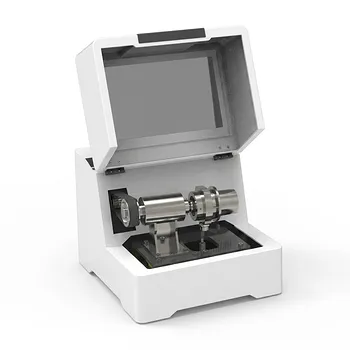
Single Tank High Energy Vibratory Ball Mill for Laboratory Grinding and Mixing
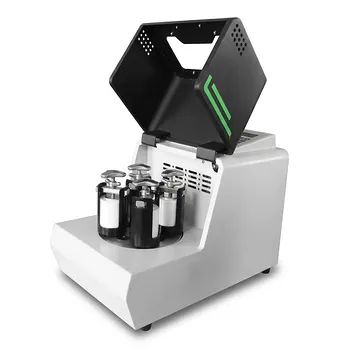
Miniature Planetary Ball Mill with Vacuum Grinding and High Efficiency for Laboratory Sample Preparation
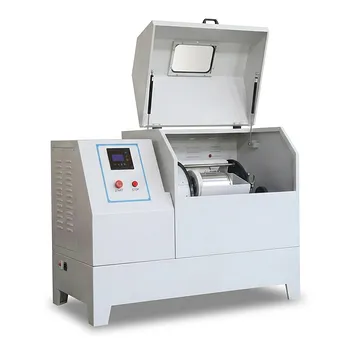
Heavy Duty Horizontal Planetary Ball Mill for Efficient Industrial Grinding and Sample Preparation
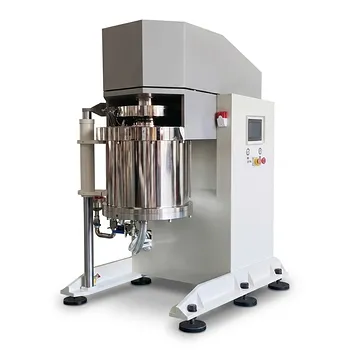
Vertical Nano Bead Mill for Ceramic Materials with Permanent Magnet Motor and High Efficiency Grinding
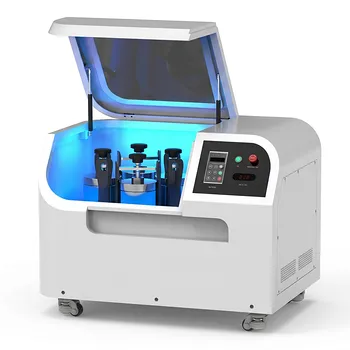
Planetary Ball Mill 12L
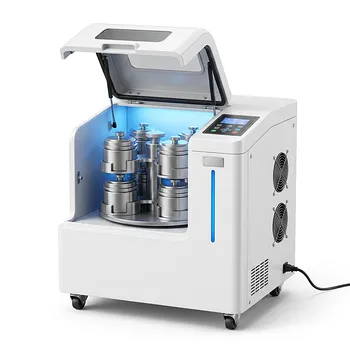
High Energy Omnidirectional Planetary Ball Mill 20L
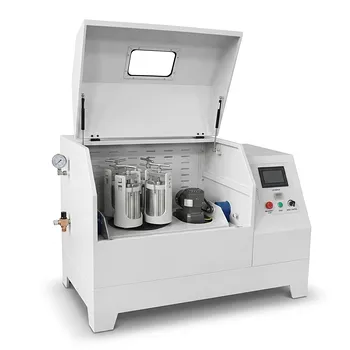
Vertical Production Planetary Ball Mill for High Throughput Powder Processing
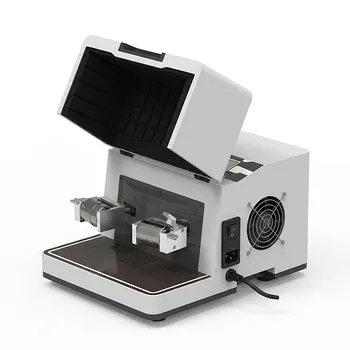
High Energy Hybrid Vibratory Ball Mill for Grinding Mixing and Cell Disruption
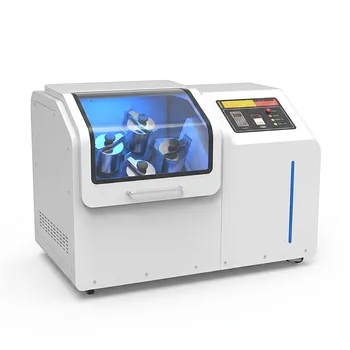
High Energy Omnidirectional Planetary Ball Mill 16L
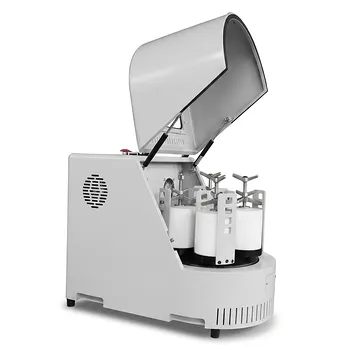
Vertical Semi Circular Planetary Ball Mill for Laboratory Precision Grinding
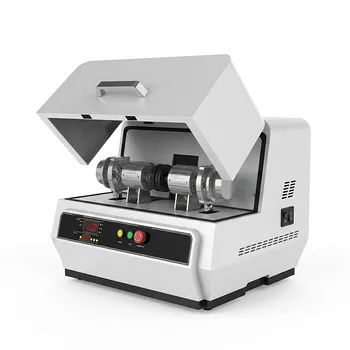
Dual Jar High Energy Vibratory Ball Mill

High Throughput Micro Ball Mill for Cryogenic Grinding and Laboratory Cell Disruption
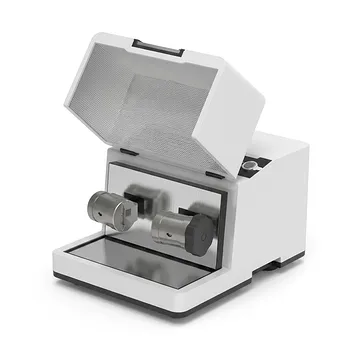
Heating Temperature Controlled High Energy Vibratory Ball Mill
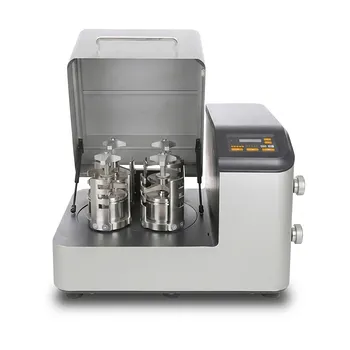
High Energy Planetary Ball Mill for Nano Scale Grinding and Colloidal Mixing in Material Science Research
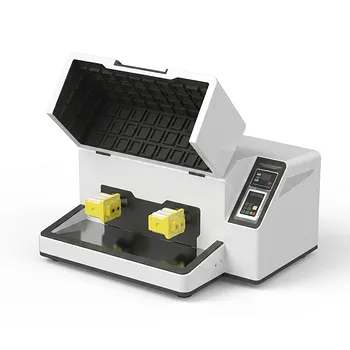
Multi-Platform Nanoscale High-Energy Vibratory Ball Mill
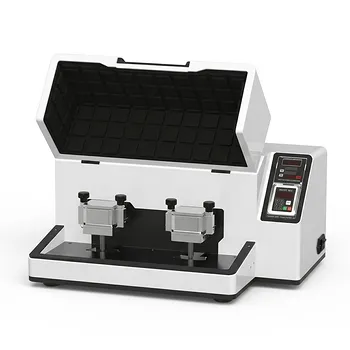
Nanoscale High Energy Vibratory Ball Mill Low Temperature