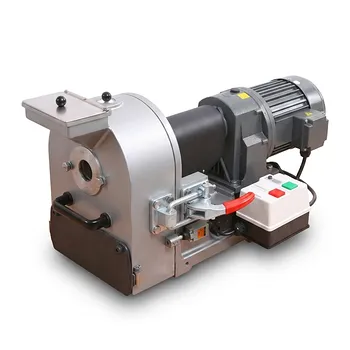
What is the function of a centrifugal mill in dietary fiber processing? Ensure precise size & preserve fiber integrity
Updated 5 months ago
The centrifugal mill acts as the primary de-agglomeration and size-control engine during the dry grinding of dietary fiber. Its specific function is to rapidly convert irregular, freeze-dried clumps into a fine, discrete powder with a highly uniform particle size distribution. By using precision mesh screens, the mill achieves this refinement while carefully preserving the microscopic structural modifications essential to the fiber's functional properties.
Core Takeaway: The centrifugal mill bridges the gap between raw freeze-dried material and finished functional powder by utilizing high-speed mechanical force and calibrated screening to ensure particle uniformity without damaging the fiber's internal structure.
De-agglomeration and Particle Refinement
Breaking Down Freeze-Dried Clumps
After the freeze-drying process, dietary fibers often emerge as large, porous agglomerates or clumps. The centrifugal mill uses high-speed rotation to generate mechanical forces that strike these clumps, breaking them apart into individual particles.
Achieving Uniform Size Distribution
The mill’s performance is defined by its ability to produce a uniform particle distribution. This consistency is vital for ensuring that the final product behaves predictably during food formulation or clinical testing.
The Role of Precision Mesh Screens
The mesh screen (often as fine as 0.5 mm) acts as a definitive gatekeeper within the milling chamber. Only particles that have been reduced to the specified dimensions can exit the mill, ensuring that no oversized clumps bypass the grinding stage.
Preservation of Structural Integrity
Protecting Microscopic Modifications
Dietary fibers are often processed to have specific microscopic modifications that enhance their health benefits or physical properties. The centrifugal mill is designed to grind material rapidly enough to prevent excessive heat buildup or mechanical stress that could "smear" or destroy these delicate structures.
Preparing for Final Classification
By producing discrete, non-aggregated particles, the mill prepares the material for the final stage of particle size classification. This ensures that subsequent sorting processes—such as air classification or sieving—can operate with high efficiency and accuracy.
Optimizing Downstream Testing
A consistent particle size is a prerequisite for accurate laboratory testing and analysis. Whether measuring water-binding capacity or viscosity, the uniform output from a centrifugal mill ensures that test results reflect the material's true properties rather than inconsistencies in the grind.
Understanding the Trade-offs
Mechanical Stress vs. Heat Sensitivity
While centrifugal mills are fast, the high-speed impact can generate localized heat if the material is processed for too long. If the dietary fiber is extremely heat-sensitive, the duration of the milling must be strictly controlled to avoid thermal degradation.
Screen Blinding and Throughput
Using very fine mesh screens increases precision but also increases the risk of screen blinding (clogging). Fibers with high residual moisture or oily components can block the precision mesh, leading to a drop in throughput and potential equipment strain.
Energy Consumption and Maintenance
The high rotational speeds required for effective centrifugal milling demand more energy and regular maintenance compared to simpler crushing methods. Precision screens are also susceptible to wear and tear, requiring frequent inspection to ensure the integrity of the 0.5 mm (or specific) aperture.
Applying This to Your Processing Goal
Recommendations for Implementation
- If your primary focus is functional preservation: Ensure the mill is operated in short bursts or with cooling intervals to protect the microscopic modifications of the fiber.
- If your primary focus is high-volume consistency: Select a high-durability precision screen and implement a routine cleaning cycle to prevent material buildup and ensure a uniform 0.5 mm output.
- If your primary focus is accurate analytical testing: Use the centrifugal mill as a standardized preparation step to eliminate "clump bias" in your fiber samples.
Through the calibrated use of centrifugal force and precision screening, processors can transform raw fiber into a high-value, functional ingredient ready for the most demanding applications.
Summary Table:
| Key Feature | Primary Function | Impact on Fiber Quality |
|---|---|---|
| De-agglomeration | Breaks down large, porous freeze-dried clumps | Converts raw material into discrete, fine powder |
| Precision Screens | Acts as a gatekeeper for 0.5 mm (or specific) sizing | Guarantees a highly uniform particle size distribution |
| Structural Preservation | Rapid processing with minimal heat buildup | Protects delicate microscopic structural modifications |
| Downstream Prep | Creates non-aggregated particles | Enhances efficiency of air classification and lab testing |
Elevate Your Material Research with Precision Processing
Are you looking to achieve superior uniformity and preserve the functional properties of your dietary fibers? At [Brand Name], we provide complete laboratory sample preparation solutions for material science, specializing in high-performance powder processing and compaction equipment.
From rotor and centrifugal mills designed for rapid de-agglomeration to vibratory sieve shakers for precise classification, our equipment ensures your samples meet the most rigorous standards. Our extensive product line also includes:
- Size Reduction: Jaw/roll crushers, jet mills, planetary ball mills, and cryogenic grinders.
- Mixing: Powder mixers and vacuum defoaming mixers.
- Compaction: A full spectrum of hydraulic presses, including Cold/Warm Isostatic Presses (CIP/WIP), XRF pellet presses, and vacuum hot presses.
Ready to optimize your lab's workflow? Contact our experts today to find the perfect equipment configuration for your specific material needs!
References
- Isis Von Ulardt, Rafael Valbuena. Structural characteristics and functional properties of fiber-rich by-products of white cabbage modified by high-energy wet media milling. DOI: 10.30721/fsab2020.v3.i1.89
Mentioned Products
- Ultra Centrifugal Mill for Rapid Laboratory Sample Preparation and Fine Powder Grinding
- Ultra Centrifugal Mill High Speed Laboratory Grinder for Fibrous and Brittle Sample Preparation
- Vertical Nano Bead Mill for Ceramic Materials with Permanent Magnet Motor and High Efficiency Grinding
- Dual Cup Vacuum Centrifugal Mixer Planetary Paste Defoaming Machine Industrial Material Processor
- Industrial Planetary Centrifugal Vacuum Defoaming Mixer for High Viscosity Paste and Powder Homogenization
People Also Ask
- What is the role of an ultra-centrifugal mill in cork research? Achieve uniform powder for high-precision analysis.
- How Does Sieve Ring Aperture Affect Microplastic Powder Prep? Ensure Precise Particle Size & Reproducibility
- What is the role of a high-speed centrifugal mill in the preparation of microplastic reference materials? Precision Guide
- What is the function of an ultra-centrifugal mill and ring sieve? Optimize Wood Powder for Better Wet Extrusion
- What are the mechanical protection benefits of using a V-belt drive in a centrifugal mixer? Ensure Equipment Longevity

Tech Team · PowderPreparation
Last updated on May 14, 2026
Related Products
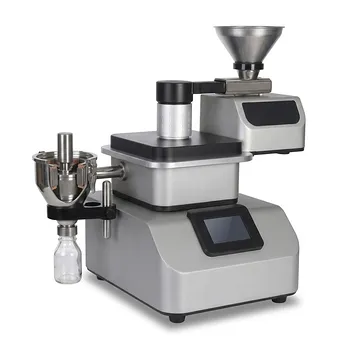
Ultra Centrifugal Mill for Rapid Laboratory Sample Preparation and Fine Powder Grinding
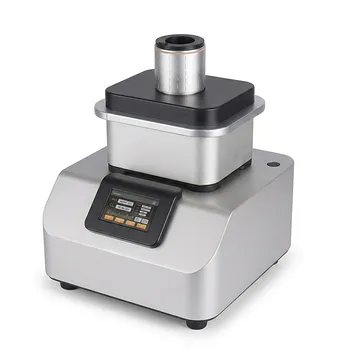
Ultra Centrifugal Mill High Speed Laboratory Grinder for Fibrous and Brittle Sample Preparation
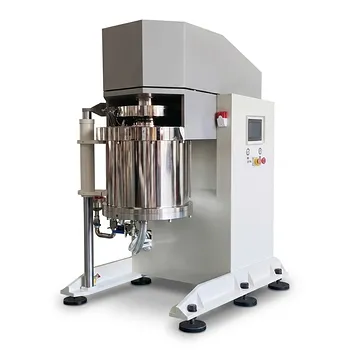
Vertical Nano Bead Mill for Ceramic Materials with Permanent Magnet Motor and High Efficiency Grinding
Dual Cup Vacuum Centrifugal Mixer Planetary Paste Defoaming Machine Industrial Material Processor
Industrial Planetary Centrifugal Vacuum Defoaming Mixer for High Viscosity Paste and Powder Homogenization
Industrial Planetary Centrifugal Vacuum Defoaming Mixer for High Viscosity Paste and Advanced Material Science
High Viscosity Planetary Centrifugal Vacuum Mixer for Material Defoaming and Uniform Mixing
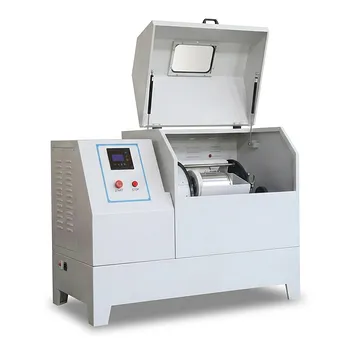
Heavy Duty Horizontal Planetary Ball Mill for Efficient Industrial Grinding and Sample Preparation
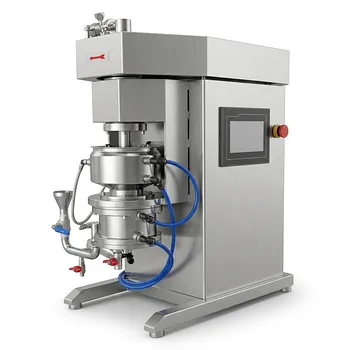
Small Ceramic Structure Laboratory Sand Mill Nanoscale Grinding Dispersion Equipment Seal-less Screen-less Design
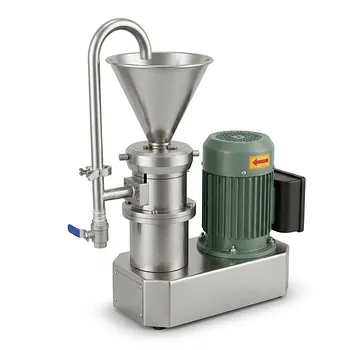
Small Laboratory Colloid Mill for Ultra-Fine Wet Grinding and Emulsification
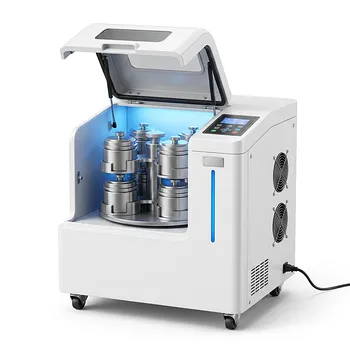
High Energy Omnidirectional Planetary Ball Mill 20L
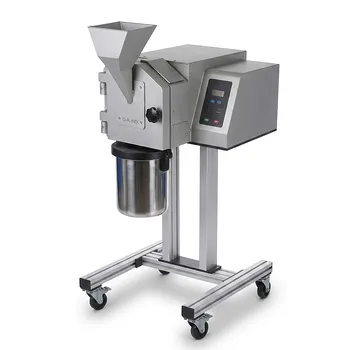
Industrial Rotor Beater Mill for High Speed Impact and Shear Grinding in Laboratory Sample Preparation
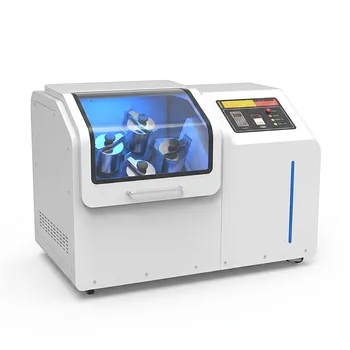
High Energy Omnidirectional Planetary Ball Mill 16L
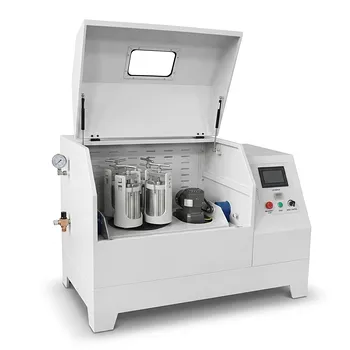
Vertical Production Planetary Ball Mill for High Throughput Powder Processing
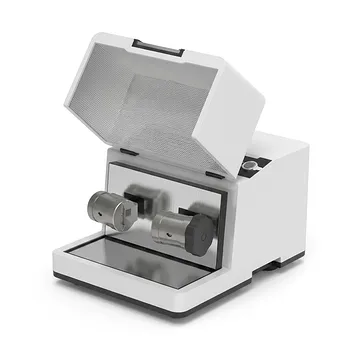
Heating Temperature Controlled High Energy Vibratory Ball Mill
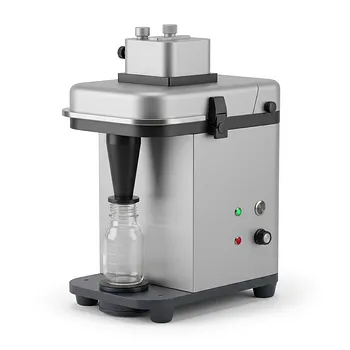
Cyclonic Laboratory Mill for NIR Spectroscopy Sample Preparation Food and Feed Grinding
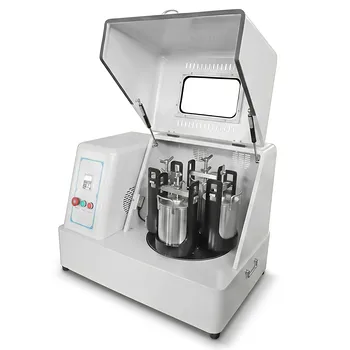
Vertical Square Planetary Ball Mill for Laboratory Sample Preparation and Nanoscale Grinding
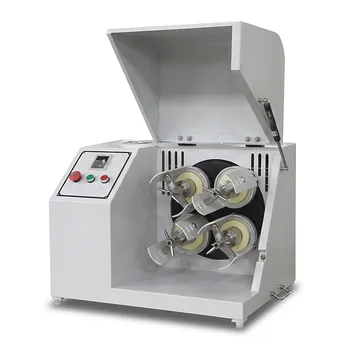
Horizontal Light Duty Planetary Ball Mill for Laboratory Sample Preparation
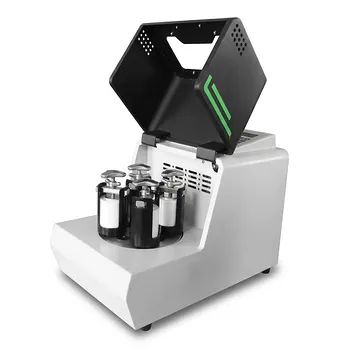
Miniature Planetary Ball Mill with Vacuum Grinding and High Efficiency for Laboratory Sample Preparation