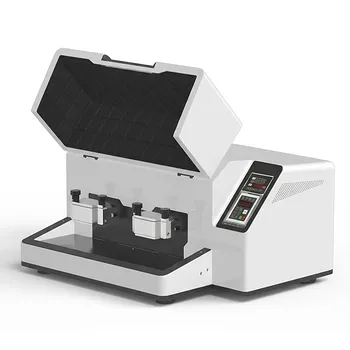
What are the primary functions of a high-energy ball mill in ZrC powder prep? Boost Sintering & Material Homogeneity
Updated 3 months ago
High-energy ball milling is a dual-purpose process in the production of Zirconium Carbide (ZrC), acting as both a catalyst for chemical uniformity and a mechanical activator for sintering. During the initial phase, it grinds raw materials like Zirconium Dioxide ($ZrO_2$) and carbon black to a sub-micron level to maximize the efficiency of the carbothermal reduction reaction. Following synthesis, the mill refines the resulting Zirconium Oxycarbide ($ZrC_xO_y$) or carbide powders to a $d_{50}$ of approximately 1.0 $\mu$m, significantly increasing the specific surface area and surface energy required for high-density sintering.
Core Takeaway: The high-energy ball mill ensures Zirconium Carbide powders reach the molecular-level homogeneity and ultrafine particle size necessary to lower reaction temperatures and achieve superior mechanical properties in the final ceramic.
Enhancing the Carbothermal Reduction Reaction
Achieving Sub-Micron Homogeneity
In the raw material preparation stage, the ball mill is used to mix Zirconium Dioxide ($ZrO_2$) and carbon black for extended durations, often up to 6 hours. This process achieves a highly uniform distribution at the sub-micron level, which is critical for the subsequent chemical reaction.
This level of mixing ensures that the carbon source and the metal oxide are in intimate contact. Such proximity significantly improves the efficiency and completeness of the carbothermal reduction reaction.
Increasing Reaction Contact Area
By utilizing powerful centrifugal, impact, and shear forces, high-energy mills deeply refine the raw materials. This mechanical action increases the reaction contact area between the precursor components.
A higher contact area effectively lowers the starting temperature required for the reduction process. This energy efficiency is vital for maintaining the economic viability of ZrC synthesis.
Post-Synthesis Refinement and Activation
Breaking Down Hard Agglomerates
After the synthesis of Zirconium Oxycarbide ($ZrC_xO_y$) or ZrC, the powder often contains hard agglomerates formed during high-temperature treatment. High-energy milling utilizes intense impact energy to pulverize these clusters.
This step is essential to ensure a uniform particle size distribution. Without this refinement, the resulting ceramic would suffer from structural inconsistencies and reduced strength.
Reducing Particle Size for Sintering
The mill is specifically tasked with reducing the particle size ($d_{50}$) from approximately 2.7 $\mu$m to 1.0 $\mu$m. This transition creates an ultrafine powder that is highly active.
Smaller particles possess higher specific surface area and surface energy. These characteristics are the primary drivers for effective compaction and the diffusion processes required during sintering.
Understanding the Trade-offs
Media Wear and Contamination
The high-intensity impact required for ZrC refinement can lead to the wear of grinding media. If the balls and liner are not made of compatible materials, such as high-purity zirconia, metallic or silica impurities can be introduced.
These impurities can compromise the phase purity of the final Zirconium Carbide. Selecting high-hardness, chemically stable grinding media is a mandatory requirement to mitigate this risk.
Heat Generation and Material Stability
High-energy milling generates significant thermal energy within the milling vial. Excessive heat can lead to unintended phase changes or the oxidation of the carbide powder.
To prevent this, milling is often performed in an ethanol medium or under an inert atmosphere. Managing the temperature is critical for maintaining the chemical integrity of the reactive ultrafine powders.
How to Apply This to Your Project
Making the Right Choice for Your Goal
Success in ZrC preparation depends on aligning your milling parameters with your specific production stage.
- If your primary focus is reaction efficiency: Prioritize longer milling times during the precursor stage to achieve molecular-level mixing of $ZrO_2$ and carbon.
- If your primary focus is high-density sintering: Concentrate on the post-synthesis refinement stage to achieve a $d_{50}$ of 1.0 $\mu$m while using high-purity media to prevent contamination.
- If your primary focus is lowering production costs: Utilize planetary or vibratory high-energy mills to reduce the particle size quickly and lower the subsequent reaction temperatures.
By mastering the mechanical activation of these powders, you can produce Zirconium Carbide ceramics with exceptional thermal and structural performance.
Summary Table:
| Stage | Primary Function | Key Benefit |
|---|---|---|
| Pre-Synthesis | Sub-micron mixing of $ZrO_2$ & Carbon | Lowers reaction temperature & improves efficiency |
| Post-Synthesis | Breaking hard agglomerates | Ensures structural consistency & material strength |
| Sintering Prep | Reducing $d_{50}$ (2.7 μm to 1.0 μm) | Increases surface energy for high-density sintering |
| Process Control | Mechanical activation | Enhances diffusion and phase purity in final ceramics |
Optimize Your Ceramic Synthesis with Expert Solutions
Are you looking to achieve molecular-level homogeneity and superior mechanical properties in your material research? [Brand Name] provides complete laboratory sample preparation solutions tailored for material science. We specialize in high-performance powder processing and compaction equipment designed to meet the rigorous demands of advanced ceramic production.
Our extensive product line includes:
- Grinding & Milling: Planetary ball mills, jet mills, liquid nitrogen cryogenic grinders, and rotor mills.
- Sieving & Mixing: Vibratory/air-jet sieve shakers, powder mixers, and defoaming mixers.
- Compaction & Pressing: A full spectrum of hydraulic presses, including Cold/Warm Isostatic Presses (CIP/WIP), vacuum hot presses, and XRF pellet presses.
Whether you are refining Zirconium Carbide or developing next-generation composites, our equipment ensures precision and reliability at every step.
Ready to upgrade your lab's efficiency? Contact our technical team today for a custom solution!
References
- Katrin Schönfeld, A. Michaelis. Pressureless sintering of ZrC with variable stoichiometry. DOI: 10.1007/s40145-017-0229-1
Mentioned Products
- Single Tank High Energy Vibratory Ball Mill for Laboratory Grinding and Mixing
- High Energy Omnidirectional Planetary Ball Mill 20L
- 8L Planetary Ball Mill for Laboratory Grinding and Sample Preparation
- Laboratory Nano High Energy Ball Mill Ultrafine Grinding Mechanical Alloying
- High Energy Omnidirectional Planetary Ball Mill 16L
People Also Ask
- What is the primary purpose of using a vibratory ball mill in the preparation of respirable carbon fiber fragments?
- What is the purpose of using a vibratory ball mill for Al-Ni-Fe alloy ribbons? Achieve High Catalytic Activity
- Why is a vibratory ball mill preferred over a planetary ball mill for rapid powder particle refinement? High-Speed Impact
- What role do high-energy ball mills play in the preparation of reinforcements for hybrid metal matrix composites?
- What role does a laboratory ball mill serve in the Berry and Bruce modified Bond method? Standardizing Ore Analysis

Tech Team · PowderPreparation
Last updated on May 14, 2026
Related Products
Single Tank High Energy Vibratory Ball Mill for Laboratory Grinding and Mixing
High Energy Omnidirectional Planetary Ball Mill 20L
8L Planetary Ball Mill for Laboratory Grinding and Sample Preparation
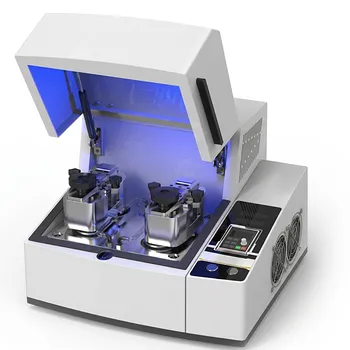
Laboratory Nano High Energy Ball Mill Ultrafine Grinding Mechanical Alloying

High Energy Omnidirectional Planetary Ball Mill 16L

High Energy Planetary Ball Mill for Nano Scale Grinding and Mechanical Alloying

Vertical Production Planetary Ball Mill for High Throughput Powder Processing

High Energy Hybrid Vibratory Ball Mill for Grinding Mixing and Cell Disruption
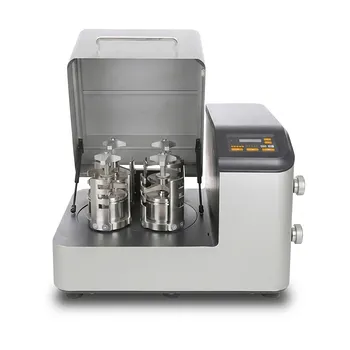
High Energy Planetary Ball Mill for Nano Scale Grinding and Colloidal Mixing in Material Science Research
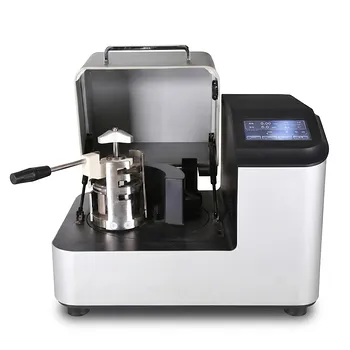
High Energy Laboratory Planetary Ball Mill for Nano Grinding and Material Science Sample Preparation
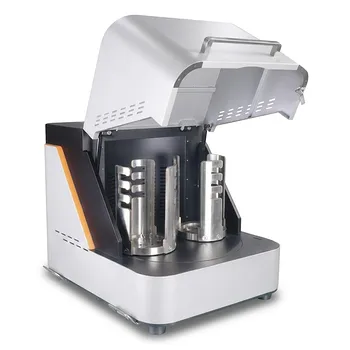
High Energy Laboratory Planetary Ball Mill for Nano Grinding and Colloidal Mixing of Hard and Brittle Materials
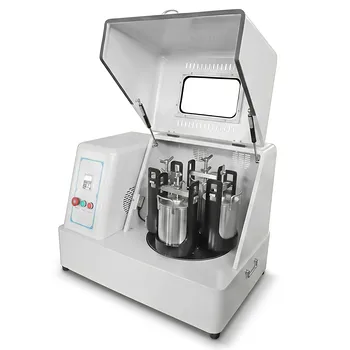
Vertical Square Planetary Ball Mill for Laboratory Sample Preparation and Nanoscale Grinding
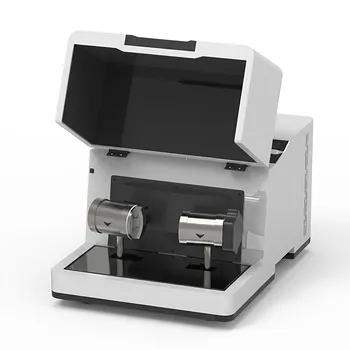
Ultra-Low Temperature Cryogenic High-Energy Vibratory Ball Mill

Nano High Energy Vibratory Ball Mill for Laboratory Sample Preparation

Nano High Energy Vibratory Ball Mill with Heating and Temperature Control
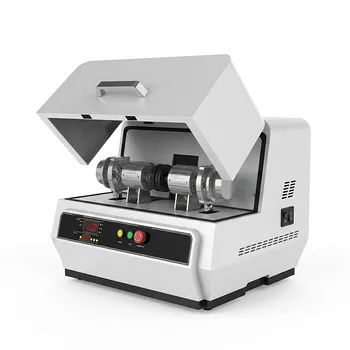
Dual Jar High Energy Vibratory Ball Mill
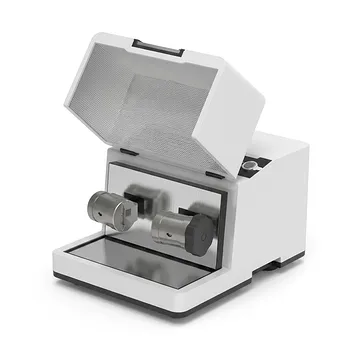
Heating Temperature Controlled High Energy Vibratory Ball Mill
Multi-Platform Nanoscale High-Energy Vibratory Ball Mill
Nanoscale High Energy Vibratory Ball Mill Low Temperature