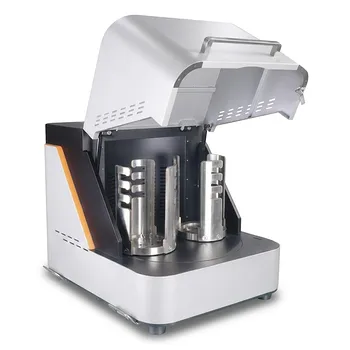
Why is a vibratory ball mill preferred over a planetary ball mill for rapid powder particle refinement? High-Speed Impact
Updated 4 months ago
Vibratory ball mills are preferred for rapid powder refinement because they utilize high-frequency, small-amplitude vibrations to generate extremely high grinding ball velocities. This mechanism results in significantly higher kinetic energy ($K.E. = \frac{1}{2}mv^2$) and more frequent mechanical impact forces than a planetary ball mill can provide within the same timeframe, drastically accelerating particle size reduction and phase transitions.
While planetary ball mills excel at achieving sub-micron uniformity through centrifugal shear, vibratory ball mills prioritize high-intensity impact frequency. This makes them the superior choice for projects where the speed of refinement and high-energy mechanical activation are the primary requirements.
The Mechanics of High-Frequency Impact
Frequency Overcomes Rotational Limits
Unlike planetary mills that rely on the centrifugal forces generated by rotation and revolution, vibratory mills use high-frequency oscillation.
This allows the grinding media to achieve accelerations significantly higher than the acceleration of gravity without being restricted by the "critical speed" that limits conventional rotating mills.
Maximizing Kinetic Energy
The kinetic energy of the grinding media is tied directly to the square of its velocity.
Because the vibration frequency is so high, the media attains extremely high velocities over very short distances, delivering intense impact energy into the material at every cycle.
Increased Impact Density
Because the vibrations occur at such a high rate, the number of individual impacts per second is far greater than in a planetary system.
This high "impact density" ensures that the material is subjected to constant stress, leading to rapid fracture and refinement of even the hardest powder particles.
Overcoming Material Resistance
Breaking Through the "Self-Repairing" Effect
As particles become finer, they often exhibit a "self-repairing" effect where they resist further fracture due to increased surface energy and strength.
The high-energy impact and attrition of a vibratory mill provide the fracture efficiency necessary to overcome this resistance and continue the refinement process where other mills might stall.
Preventing Agglomeration
In applications like cement research, short grinding cycles in vibratory mills help prevent ultra-fine powders from adhering to tools.
Periodic cleaning combined with the intense mechanical energy input allows researchers to reach target fineness quickly while maintaining the reactivity and activation of the powder.
Understanding the Trade-offs
Limitations in Scaling and Uniformity
While vibratory mills are faster for refinement, they may generate significant heat due to the high-frequency energy input, which can affect heat-sensitive materials.
Planetary ball mills, while slower, often provide a more homogeneous mix of metallic elements and are frequently better suited for producing particles at the deep nanoscale (below 100nm).
Wear and Tear
The extreme mechanical forces in a vibratory mill can lead to faster degradation of grinding media and jars if the materials are not carefully matched.
Using high-hardness components, such as tungsten carbide, is often necessary to prevent contamination of the sample during high-intensity vibratory processing.
Making the Right Choice for Your Goal
Strategic Recommendations
- If your primary focus is rapid particle refinement: Utilize a vibratory ball mill to leverage high-frequency impacts for the fastest possible reduction in particle size.
- If your primary focus is producing sub-micron or nanoscale particles: Choose a planetary ball mill, as its centrifugal and shear forces are optimized for reaching the finest size distributions over longer periods.
- If your primary focus is mechanical activation of minerals (like cement): Opt for a vibratory disc or roller mill to achieve high specific surface area and reactivity in short timeframes.
- If your primary focus is homogeneous alloying of different metals: Use a planetary ball mill to ensure the multi-directional forces achieve a consistent microscopic blend.
By prioritizing high-frequency kinetic energy over rotational centrifugal force, the vibratory ball mill remains the most efficient tool for rapid mechanical refinement of solid powders.
Summary Table:
| Feature | Vibratory Ball Mill | Planetary Ball Mill |
|---|---|---|
| Primary Mechanism | High-frequency oscillation/impact | Centrifugal force and shear |
| Refinement Speed | Extremely fast (Rapid) | Moderate to Slow |
| Energy Source | High kinetic energy ($v^2$) | Rotational centrifugal force |
| Best Application | Mechanical activation & rapid size reduction | Sub-micron/Nanoscale & homogeneous mixing |
| Uniformity | High, but focused on speed | Superior for deep nanoscale uniformity |
Elevate Your Material Research with Expert Sample Prep Solutions
Are you looking to accelerate your powder refinement or optimize your material compaction process? We provide complete laboratory sample preparation solutions tailored for material science and industrial R&D.
Our specialized equipment range includes:
- High-Efficiency Mills: Vibratory, planetary, jet, sand/bead, disc, and rotor mills, plus liquid nitrogen cryogenic grinders.
- Crushing & Sizing: Heavy-duty jaw/roll crushers and precision sieve shakers (vibratory/air-jet).
- Advanced Compaction: A full spectrum of hydraulic presses, including Cold/Warm Isostatic Presses (CIP/WIP), XRF pellet presses, and vacuum hot presses.
- Mixing Technology: Specialized powder mixers and high-performance defoaming mixers.
Contact us today to discuss your specific application. Our experts are ready to help you select the ideal tools to ensure consistent, high-quality results for your laboratory.
References
- Josny Joy, Sesha S. Srinivasan. Recent Developments on the Synthesis of Nanocomposite Materials via Ball Milling Approach for Energy Storage Applications. DOI: 10.3390/app12189312
Mentioned Products
- Single Tank High Energy Vibratory Ball Mill for Laboratory Grinding and Mixing
- Nano High Energy Vibratory Ball Mill for Laboratory Sample Preparation
- Nano High Energy Vibratory Ball Mill with Heating and Temperature Control
- Heating Temperature Controlled High Energy Vibratory Ball Mill
- High Energy Hybrid Vibratory Ball Mill for Grinding Mixing and Cell Disruption
People Also Ask
- What is the primary purpose of using a vibratory ball mill in the preparation of respirable carbon fiber fragments?
- What is the purpose of using a vibratory ball mill for Al-Ni-Fe alloy ribbons? Achieve High Catalytic Activity
- How does a high-energy vibratory ball mill improve the performance of MgH2? Optimize Hydrogen Storage Kinetics
- What role do high-energy ball mills play in the preparation of reinforcements for hybrid metal matrix composites?
- What role does a laboratory ball mill serve in the Berry and Bruce modified Bond method? Standardizing Ore Analysis

Tech Team · PowderPreparation
Last updated on Jun 03, 2026
Related Products
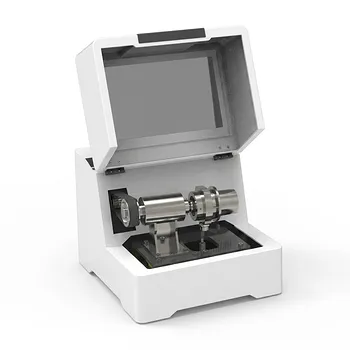
Single Tank High Energy Vibratory Ball Mill for Laboratory Grinding and Mixing

Nano High Energy Vibratory Ball Mill for Laboratory Sample Preparation

Nano High Energy Vibratory Ball Mill with Heating and Temperature Control
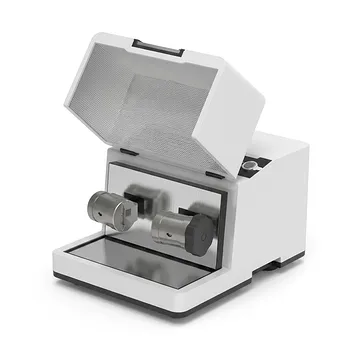
Heating Temperature Controlled High Energy Vibratory Ball Mill
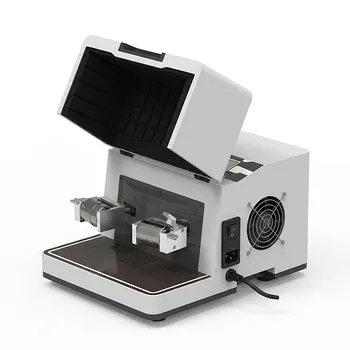
High Energy Hybrid Vibratory Ball Mill for Grinding Mixing and Cell Disruption
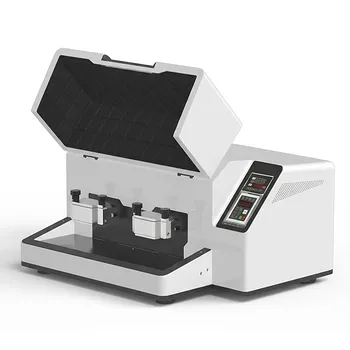
Nanoscale High-Energy Vibratory Ball Mill for Laboratory Sample Preparation, Mechanochemistry, and Mechanical Alloying
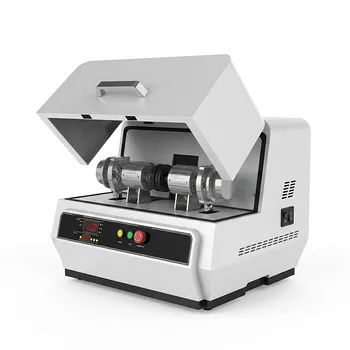
Dual Jar High Energy Vibratory Ball Mill
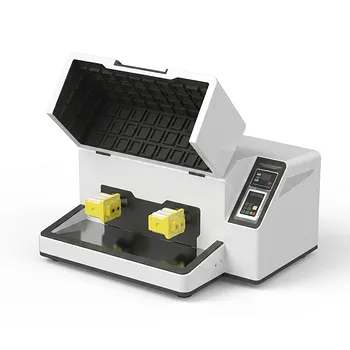
Multi-Platform Nanoscale High-Energy Vibratory Ball Mill
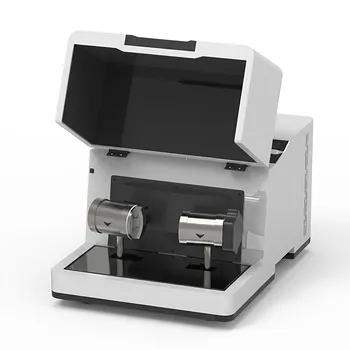
Ultra-Low Temperature Cryogenic High-Energy Vibratory Ball Mill
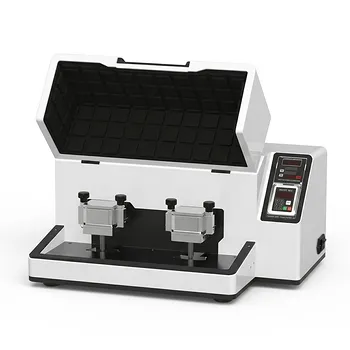
Nanoscale High Energy Vibratory Ball Mill Low Temperature
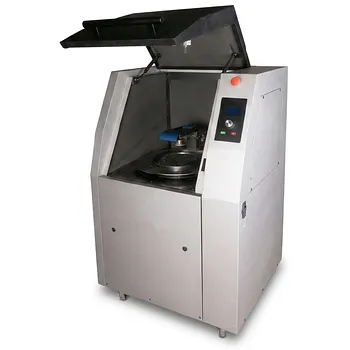
High Speed Vibratory Disc Mill for Spectral Analysis Sample Preparation and Rapid Powder Grinding
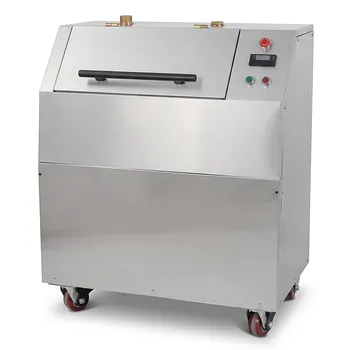
Vibratory Disc Mill for Rapid Fine Grinding and High Throughput Sample Preparation of Hard and Brittle Materials
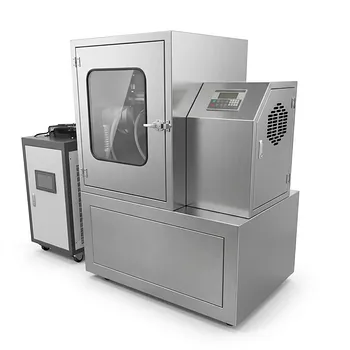
Vibratory Superfine Grinder for Ultra Fine Laboratory Powder Milling
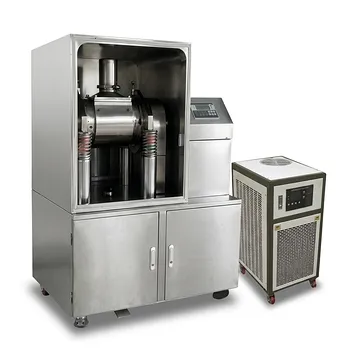
Small Vibrating Ultrafine Grinder for Traditional Chinese Medicine
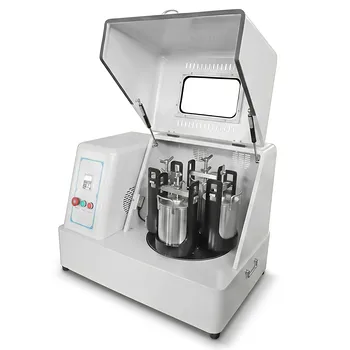
Vertical Square Planetary Ball Mill for Laboratory Sample Preparation and Nanoscale Grinding
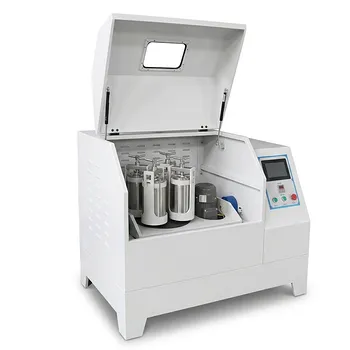
360° Rotating Omnidirectional Laboratory Planetary Ball Mill for Homogeneous Ultra-Fine Grinding and Mixing
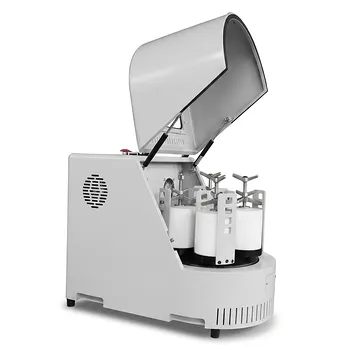
Vertical Semi Circular Planetary Ball Mill for Laboratory Precision Grinding
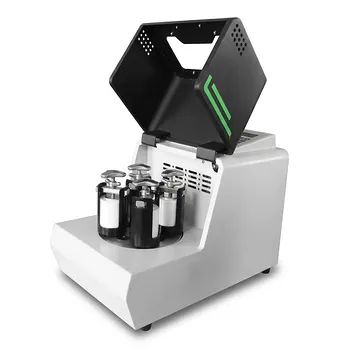
Miniature Planetary Ball Mill with Vacuum Grinding and High Efficiency for Laboratory Sample Preparation
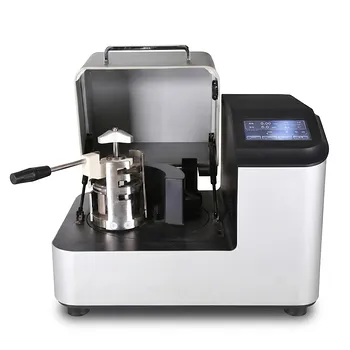
High Energy Laboratory Planetary Ball Mill for Nano Grinding and Material Science Sample Preparation