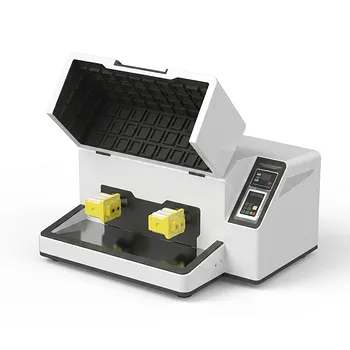
What role does a laboratory ball mill serve in the Berry and Bruce modified Bond method? Standardizing Ore Analysis
Updated 5 months ago
In the Berry and Bruce modified Bond method, the laboratory ball mill functions as the standardized mechanical environment required to perform a direct comparative analysis between a reference ore and a target gold ore. By subjecting both materials to identical grinding conditions—including rotation speed, media loading, and duration—the mill allows researchers to measure the relative energy consumption and size reduction necessary to determine the ore's grindability.
The laboratory ball mill acts as a controlled engine for comminution, converting consistent mechanical work into measurable increases in particle surface area. This process enables the calculation of the energy required for industrial-scale grinding by benchmarking the unknown gold ore against a known reference mineral.
Creating a Standardized Comparative Environment
Providing Identical Mechanical Work
The primary role of the mill is to eliminate variables in the grinding process. It ensures that both the reference ore (typically granite or marble) and the gold ore sample are exposed to the same impact and attrition forces.
Benchmarking Against Reference Minerals
In the Berry and Bruce modification, the mill is not just a grinder but a comparative tool. By maintaining constant rotation speeds and loading volumes, researchers can isolate the material properties of the gold ore as the only variable in the test.
Consistency in Energy Input
The mill typically operates at a fixed percentage of its critical speed (often 80% or 60-70 RPM). This standardization ensures that the mechanical energy transferred to the ore is predictable and repeatable across different test cycles.
Quantifying Grindability and Energy Consumption
Measuring Resistance to Comminution
The ball mill exposes the gold ore’s internal resistance to crushing and grinding. The resulting change in particle size distribution under fixed conditions provides the raw data needed to calculate the material's specific resistance.
Calculating the Work Index (Wi)
The laboratory ball mill is the core equipment used to derive the Bond Work Index. This index quantifies the kilowatt-hours per ton required to reduce the ore from a theoretically infinite size to a specific target fineness.
Simulating Industrial Power Requirements
By measuring the energy used to refine the ore in a laboratory setting, the mill provides the technical parameters needed for scale-up. Engineers use this data to select the specifications and power requirements for industrial-scale grinding circuits.
Simulating Industrial-Scale Processes
Establishing Circulating Loads
The mill is often used in closed-circuit grinding simulations. It operates through multiple cycles until a constant circulating load (typically 250%) is established, mimicking the equilibrium found in a functional processing plant.
Replicating Impact and Attrition
Using a specific distribution of steel ball media, the laboratory mill replicates the physical forces found in large-scale mills. This ensures that the laboratory results are a scientifically valid representation of how the ore will behave in a production environment.
Precise Control of Product Fineness
The closed environment of the mill allows for precise control over the grinding time. This allows researchers to target a specific product size (P80), which is essential for optimizing downstream gold recovery processes like cyanidation or flotation.
Understanding the Trade-offs and Limitations
Laboratory vs. Industrial Discrepancies
While the laboratory ball mill provides a standard environment, it cannot perfectly replicate the slurry rheology or the continuous flow dynamics of a full-scale plant. Scale-up factors must be applied to account for these differences in efficiency.
Media Wear and Contamination
The use of steel balls introduces the potential for iron contamination in the sample. While this is usually negligible for grindability tests, it must be considered if the ground ore is intended for sensitive chemical analysis.
Batch Testing Constraints
The Berry and Bruce method typically relies on batch grinding, which may not capture the steady-state fluctuations of a continuous industrial circuit. This requires rigorous adherence to standardized procedures to ensure the data remains reliable.
How to Apply This to Your Project
Making the Right Choice for Your Goal
- If your primary focus is equipment sizing: Use the laboratory ball mill to establish a precise Work Index (Wi) to ensure you do not under-size your industrial mill motors.
- If your primary focus is operational benchmarking: Run frequent comparative tests against a stable reference ore to identify changes in ore hardness as you move through different sections of the ore body.
- If your primary focus is process optimization: Utilize the mill to test different target grind sizes (P80) to find the "sweet spot" between energy costs and gold liberation rates.
By serving as a standardized proxy for industrial energy consumption, the laboratory ball mill transforms qualitative ore observations into the quantitative data required for successful metallurgical design.
Summary Table:
| Feature | Role in Berry & Bruce Method | Key Benefit |
|---|---|---|
| Mechanical Work | Provides identical impact and attrition forces | Ensures valid comparison between ores |
| Energy Input | Operates at 60-80% of critical speed | Predictable and repeatable test cycles |
| Work Index (Wi) | Measures kWh/ton for particle size reduction | Essential for industrial equipment sizing |
| Circulating Load | Replicates closed-circuit grinding (e.g., 250%) | Simulates steady-state plant dynamics |
| P80 Control | Targets specific product fineness | Optimizes downstream gold recovery |
Elevate Your Metallurgical Analysis with [Your Brand Name]
Precision in gold ore analysis starts with reliable equipment. [Your Brand Name] provides complete laboratory sample preparation solutions for material science, specializing in high-performance powder processing and compaction equipment.
Our extensive product line includes:
- Grinding & Milling: Planetary ball mills, jet mills, and jaw crushers for superior comminution.
- Sieving & Mixing: Vibratory sieve shakers and defoaming mixers for precise particle distribution.
- Compaction Solutions: A full spectrum of hydraulic presses, including Cold/Warm Isostatic Presses (CIP/WIP), standard lab presses, and vacuum hot presses.
Whether you are optimizing industrial scale-up or conducting sensitive laboratory research, we offer the technical expertise and robust machinery to ensure your success.
Ready to enhance your lab’s efficiency and accuracy? Contact us today to find the perfect equipment for your material testing needs!
References
- E. O. Oji, Y. H. Onymisi. Ddetermination of bond work index of Bagega gold mineral deposit of Zamfara State, Nigeria. DOI: 10.4314/njt.v42i2.12
Mentioned Products
- 360° Rotating Omnidirectional Laboratory Planetary Ball Mill for Homogeneous Ultra-Fine Grinding and Mixing
- High Energy Laboratory Planetary Ball Mill for Nano Grinding and Material Science Sample Preparation
- Laboratory Nano High Energy Ball Mill Ultrafine Grinding Mechanical Alloying
- Vertical Semi Circular Planetary Ball Mill for Laboratory Precision Grinding
- Vertical Square Planetary Ball Mill for Laboratory Sample Preparation and Nanoscale Grinding
People Also Ask
- What role does an omni-directional planetary ball mill play in brass/cobalt antimonide pretreatment? Achieve Nano-Scale Homogeneity.
- What is the function of an omni-directional planetary ball mill? Achieve Streak-Free Glass Homogenization
- Why is an intermittent grinding process required for perovskites in a planetary ball mill? Ensure Stability & Purity
- Why is a planetary ball mill essential for SiBCN-rGO wet-spinning? Achieve Superior Dispersion and Spinnability
- What role does a planetary ball mill play in the synthesis of Li6PS5Cl (LPSCl)? Unlock High Ionic Conductivity

Tech Team · PowderPreparation
Last updated on May 14, 2026
Related Products
360° Rotating Omnidirectional Laboratory Planetary Ball Mill for Homogeneous Ultra-Fine Grinding and Mixing

High Energy Laboratory Planetary Ball Mill for Nano Grinding and Material Science Sample Preparation
Laboratory Nano High Energy Ball Mill Ultrafine Grinding Mechanical Alloying
Vertical Semi Circular Planetary Ball Mill for Laboratory Precision Grinding

Vertical Square Planetary Ball Mill for Laboratory Sample Preparation and Nanoscale Grinding
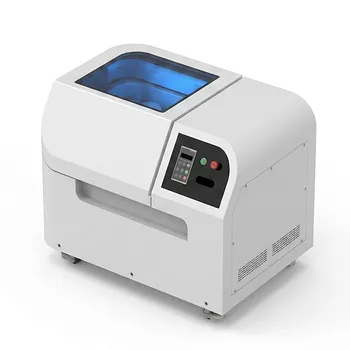
8L Planetary Ball Mill for Laboratory Grinding and Sample Preparation
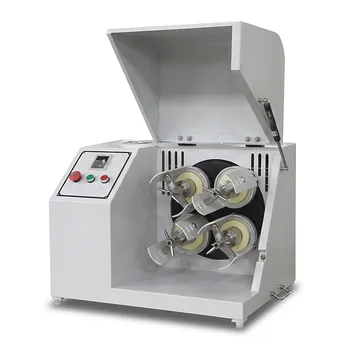
Horizontal Light Duty Planetary Ball Mill for Laboratory Sample Preparation

Miniature Planetary Ball Mill with Vacuum Grinding and High Efficiency for Laboratory Sample Preparation

Nano High Energy Vibratory Ball Mill for Laboratory Sample Preparation
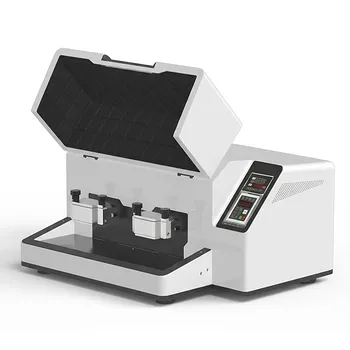
Nanoscale High-Energy Vibratory Ball Mill for Laboratory Sample Preparation, Mechanochemistry, and Mechanical Alloying
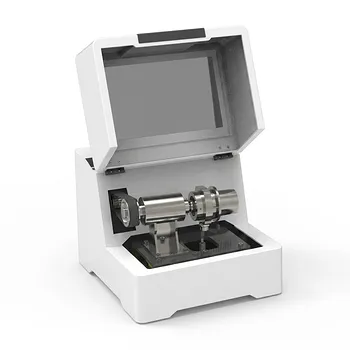
Single Tank High Energy Vibratory Ball Mill for Laboratory Grinding and Mixing
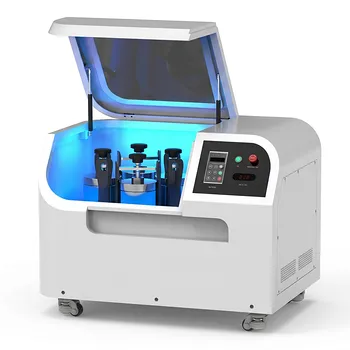
Planetary Ball Mill 12L
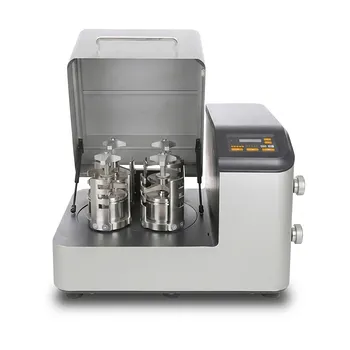
High Energy Planetary Ball Mill for Nano Scale Grinding and Colloidal Mixing in Material Science Research
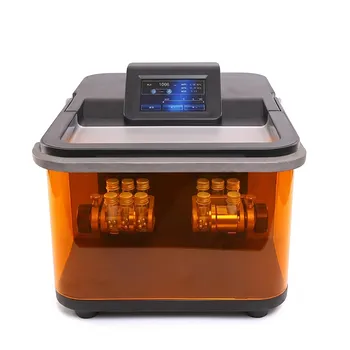
High Throughput Micro Ball Mill for Cryogenic Grinding and Laboratory Cell Disruption
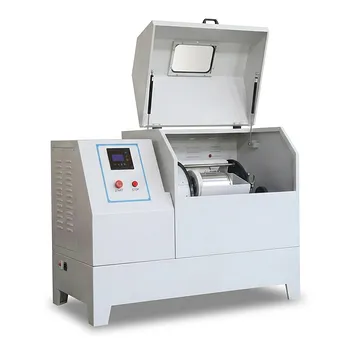
Heavy Duty Horizontal Planetary Ball Mill for Efficient Industrial Grinding and Sample Preparation
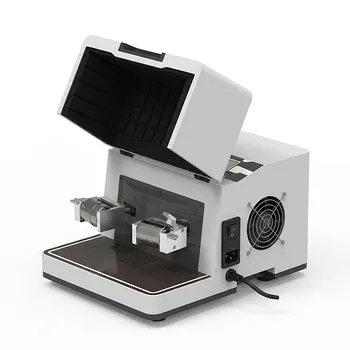
High Energy Hybrid Vibratory Ball Mill for Grinding Mixing and Cell Disruption
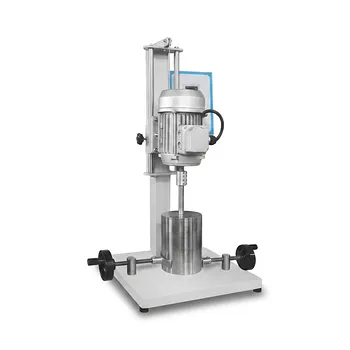
Laboratory Basket Sand Mill for Wet Grinding and Dispersion of Viscous Slurries
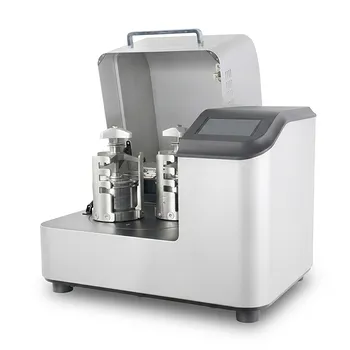
High Energy Planetary Ball Mill for Nano Scale Grinding and Mechanical Alloying

Vertical Production Planetary Ball Mill for High Throughput Powder Processing