How does vibration mixing address low-ratio uniformity? Achieve 0.5% Trace Precision & Fluidization.
Updated 4 months ago
Vibration mixing equipment achieves high uniformity at low inclusion levels by inducing a fluid-like state through high-frequency mechanical energy. By disrupting the internal friction of the bulk material, the system allows trace ingredients—even those at 0.5% concentration—to permeate the entire mixture rapidly without the risk of segregation. This method transforms a static powder bed into a dynamic environment where minute particles can distribute evenly in approximately 20 to 25 minutes.
Vibration mixing eliminates the "dead zones" and friction barriers found in traditional blenders by fluidizing the powder bed. This enables trace components to penetrate the bulk material at a granular level, ensuring homogeneity even when working with ratios as low as 0.5%.
The Mechanism of High-Frequency Fluidization
Overcoming Internal Friction
In traditional mixing, the physical friction between particles often traps smaller components, preventing them from moving freely through the bulk. High-frequency vibration neutralizes these frictional forces, effectively "unlocking" the powder bed.
This process allows the material to behave like a fluid rather than a solid mass. In this state, gravity and vibration work together to facilitate the movement of particles that would otherwise remain clumped or localized.
Creating a Dynamic State for Trace Ingredients
For components like enzymes or antioxidants added at 0.5% to 5%, the challenge is ensuring they don't get lost in the volume of the carrier. The fluid-like state ensures that these minute additions can rapidly penetrate the gaps between larger particles.
Because the entire bed is in motion, the probability of a trace particle encountering every other part of the mixture increases significantly. This leads to a level of distribution that is difficult to achieve with mechanical paddles or ribbons alone.
Solving the Segregation Dilemma
Why Conventional Blenders Fail at Low Ratios
Traditional mechanical mixers often rely on shear or tumbling, which can actually encourage segregation if particle sizes or densities vary. In low-ratio premixes, trace ingredients can settle at the bottom or migrate to the top during extended mixing cycles.
Vibration mixing addresses this by maintaining a consistent energy input across the entire vessel. This prevents the "Brazil Nut Effect," where larger or smaller particles migrate to specific zones based on their physical properties.
Achieving Rapid Uniformity
The efficiency of this method is reflected in its processing speed. Most high-uniformity premixes can reach a state of total homogeneity within a 20 to 25-minute window.
This timeframe is critical for maintaining high throughput in industrial environments. It ensures that even the most sensitive micro-ingredients are fully integrated without over-processing the carrier material.
Understanding the Trade-offs
Material Sensitivity and Heat
While vibration mixing is effective, users must consider the sensitivity of their ingredients to mechanical energy. Although generally cooler than high-shear mixing, prolonged high-frequency vibration can generate frictional heat in certain dense materials.
Equipment Fatigue and Maintenance
The very nature of vibration equipment means that the structural components are under constant stress. Regular maintenance schedules and robust damping systems are required to prevent mechanical failure over long-term operation.
Cohesive vs. Free-Flowing Materials
Vibration is exceptionally effective for free-flowing or slightly cohesive powders. However, extremely "sticky" or highly cohesive materials may require auxiliary agitation to prevent the material from vibrating as a single, solid mass.
How to Apply This to Your Premix Production
When integrating vibration mixing into your workflow, your choice should depend on the specific physical properties of your trace ingredients and the desired throughput.
- If your primary focus is maximizing homogeneity for trace enzymes: Utilize high-frequency settings to ensure the powder bed is fully fluidized, allowing for deep penetration of micro-ingredients.
- If your primary focus is preventing the segregation of different-sized particles: Leverage the consistent dynamic state of the vibration bed to keep disparate particle sizes locked in a uniform distribution.
- If your primary focus is reducing processing time for sensitive antioxidants: Set a strict 20–25 minute cycle to achieve uniformity before any potential degradation from environmental exposure occurs.
By understanding the physics of fluidization, you can transform a challenging low-ratio mixing task into a consistent, high-quality production process.
Summary Table:
| Key Feature | Impact on Mixing | Operational Benefit |
|---|---|---|
| Trace Ratios | Handles 0.5% – 5% concentrations | Precision for micro-ingredients |
| Fluidization | Neutralizes internal particle friction | Eliminates dead zones & clumping |
| Processing Time | 20 – 25 minute cycle duration | High throughput efficiency |
| Stability | Prevents "Brazil Nut Effect" | Consistent, anti-segregation results |
Optimize Your Material Consistency with [Your Brand Name]
Achieving perfect homogeneity at trace levels requires specialized equipment that masters the physics of fluidization. At [Your Brand Name], we provide complete laboratory sample preparation solutions for material science, specializing in high-performance powder processing and compaction equipment.
Our extensive product lines are designed to meet the rigorous demands of research and production:
- Advanced Mixing: Specialized powder mixers and defoaming mixers to solve low-ratio distribution challenges.
- Size Reduction: High-efficiency crushers (jaw/roll), liquid nitrogen cryogenic grinders, and diverse mills (planetary ball, jet, sand, disc, rotor).
- Classification: Precision vibratory and air-jet sieve shakers with a full range of test sieves.
- Compaction Solutions: A complete spectrum of hydraulic presses, including Cold/Warm Isostatic Presses (CIP/WIP), standard lab presses, XRF pellet presses, and vacuum hot presses.
Empower your lab with equipment that ensures 0.5% uniformity every time. Contact us today to discuss your application and let our experts help you select the ideal solution for your workflow.
References
- Igor Palamarchuk, Nataliya Slobodyanyuk. Evaluation of the energy efficiency of the process of vibratory mixing of multicomponent bulk raw material of food industries. DOI: 10.24263/edsd-2023-5-39
Mentioned Products
- Single Tank High Energy Vibratory Ball Mill for Laboratory Grinding and Mixing
- High Energy Hybrid Vibratory Ball Mill for Grinding Mixing and Cell Disruption
- High Speed Vibratory Disc Mill for Spectral Analysis Sample Preparation and Rapid Powder Grinding
- Small Laboratory Vibratory Sieve Shaker for Powder Gradation and Particle Size Analysis
- Stainless Steel Rotary Vibrating Sieve High Precision Circular Vibratory Separator Industrial Powder Grading Machine Multi Layer Sifting Equipment
People Also Ask
- What is the primary purpose of using a vibratory ball mill in the preparation of respirable carbon fiber fragments?
- What is the purpose of using a vibratory ball mill for Al-Ni-Fe alloy ribbons? Achieve High Catalytic Activity
- Why is a vibratory ball mill preferred over a planetary ball mill for rapid powder particle refinement? High-Speed Impact
- How does a high-energy vibratory ball mill improve the performance of MgH2? Optimize Hydrogen Storage Kinetics
- What role do high-energy ball mills play in the preparation of reinforcements for hybrid metal matrix composites?

Tech Team · PowderPreparation
Last updated on Jun 03, 2026
Related Products
Single Tank High Energy Vibratory Ball Mill for Laboratory Grinding and Mixing
High Energy Hybrid Vibratory Ball Mill for Grinding Mixing and Cell Disruption
High Speed Vibratory Disc Mill for Spectral Analysis Sample Preparation and Rapid Powder Grinding
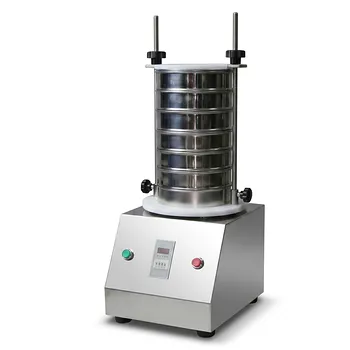
Small Laboratory Vibratory Sieve Shaker for Powder Gradation and Particle Size Analysis
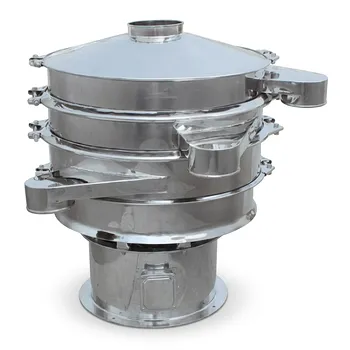
Stainless Steel Rotary Vibrating Sieve High Precision Circular Vibratory Separator Industrial Powder Grading Machine Multi Layer Sifting Equipment
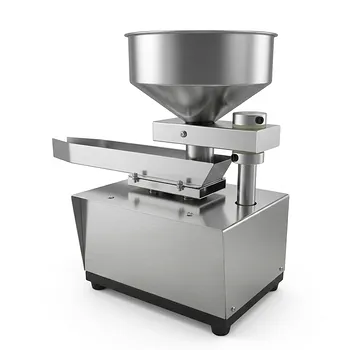
Automatic Vibrating Powder Feeder for Laboratory Material Processing Precision Vibratory Hopper Feeder for Granular and Powder Material Handling Industrial Grade Vibrating Tray Feeder for Consistent Material Sample Preparation
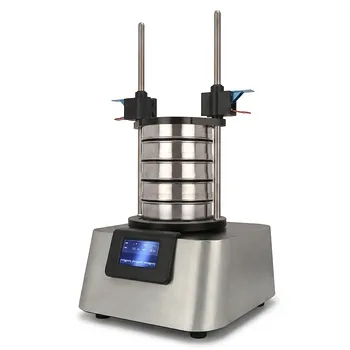
Vibratory Sieve Shaker Electromagnetic 3D Motion Powder Particle Size Analyzer for Dry and Wet Sieving
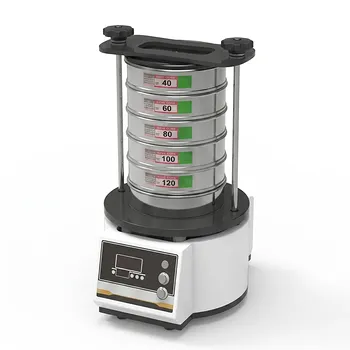
Dry Three Dimensional Vibratory Sieve Shaker
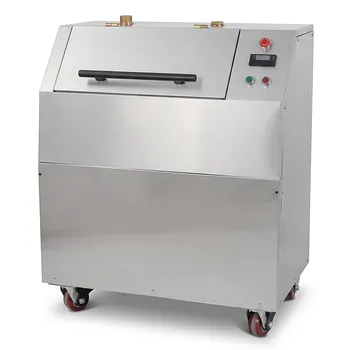
Vibratory Disc Mill for Rapid Fine Grinding and High Throughput Sample Preparation of Hard and Brittle Materials
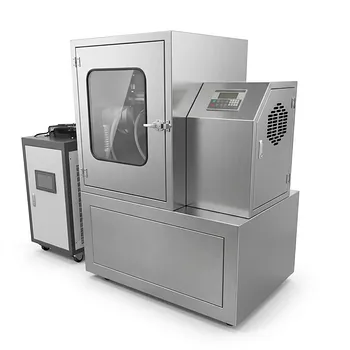
Vibratory Superfine Grinder for Ultra Fine Laboratory Powder Milling
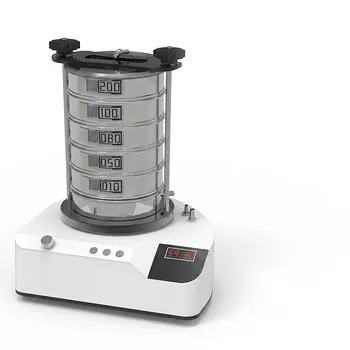
Heavy Duty Dry Three Dimensional Vibratory Sieve Shaker for Particle Separation
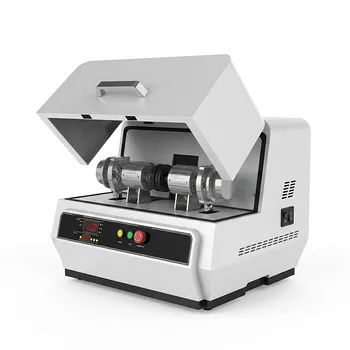
Dual Jar High Energy Vibratory Ball Mill
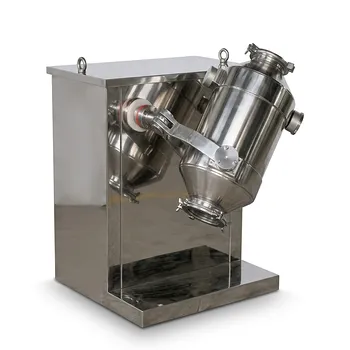
Three-Dimensional Motion Mixer for Laboratory Powder and Granule Blending
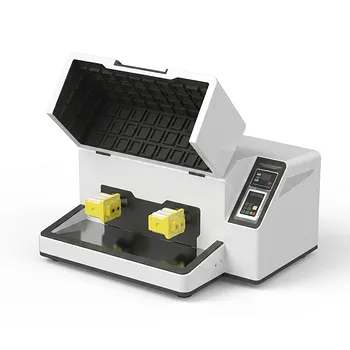
Multi-Platform Nanoscale High-Energy Vibratory Ball Mill
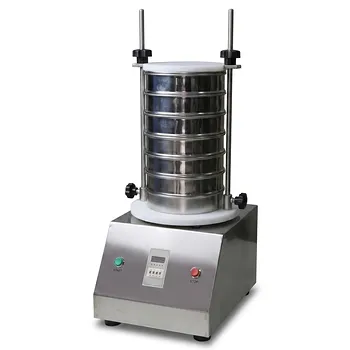
Laboratory Vibratory Test Sieve Shaker for Precision Particle Size Analysis and Powder Grading
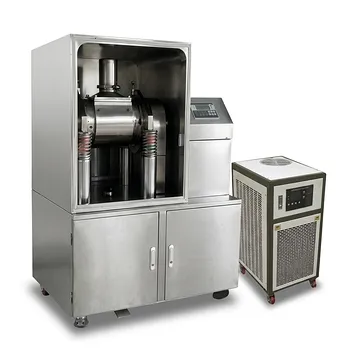
Small Vibrating Ultrafine Grinder for Traditional Chinese Medicine
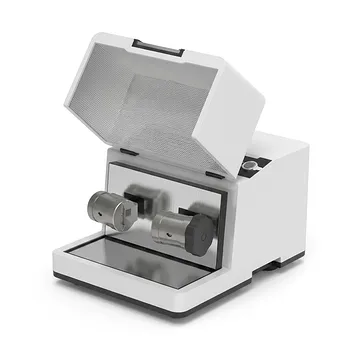
Heating Temperature Controlled High Energy Vibratory Ball Mill
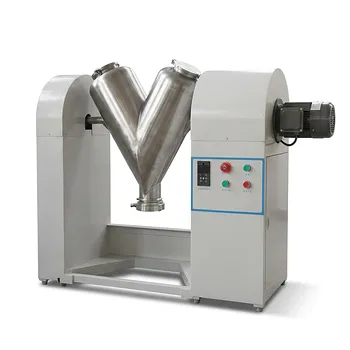
V-Type Powder Mixer for Uniform Blending of Dry Powders and Granules
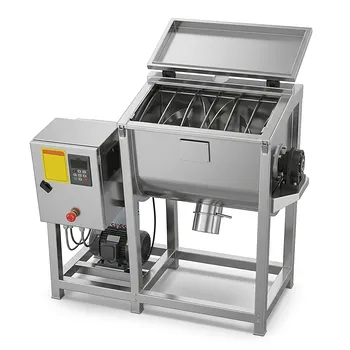
Horizontal Ribbon Mixer for Uniform Powder and Slurry Mixing