How does a high-energy vibratory ball mill improve the performance of MgH2? Optimize Hydrogen Storage Kinetics
Updated 3 months ago
High-energy vibratory ball milling (HEVM) improves MgH2 performance by utilizing high-frequency impacts to fundamentally re-engineer the material’s microstructure. This process reduces grain sizes to the nanometer scale and introduces a high density of lattice defects, which significantly lowers the temperatures required for hydrogen absorption and desorption. By integrating catalysts and carbon nanotubes (CNTs) at an atomic level, the milling process accelerates reaction kinetics and enhances the overall efficiency of the hydrogen storage composite.
Core Takeaway: High-energy milling transforms MgH2 from a stable, slow-reacting bulk solid into a highly active nanocrystalline composite. It achieves this by physically breaking down particles to create rapid diffusion channels and lowering the energy barriers for hydrogen movement.
The Mechanics of Microstructural Refinement
Achieving Nanoscale Grain Reduction
The primary function of high-energy milling is the continuous fracturing and cold-welding of MgH2 particles. This mechanical action refines the grain size to the nanometer scale, which drastically shortens the distance hydrogen atoms must travel within the solid.
Increasing Reactive Specific Surface Area
As particles are pulverized, the total specific surface area increases exponentially. This provides a greater number of active sites on the surface where hydrogen molecules can dissociate and enter the metal matrix.
Creating Fast Diffusion Channels
The intense mechanical energy creates a high concentration of grain boundaries. These boundaries act as high-speed "highways" for hydrogen diffusion, allowing the material to charge and discharge hydrogen much faster than bulk magnesium hydride.
Kinetic and Thermodynamic Modification
Introducing Lattice Defects and Strain
High-frequency impacts induce significant mechanical strain and structural defects, such as dislocations and vacancies, within the crystal lattice. These defects destabilize the hydride phase and lower the nucleation barriers, making it easier for the material to release hydrogen at lower temperatures.
Homogeneous Catalyst Dispersion
The mill facilitates the atomic-level uniform distribution of catalysts like LaH3, NbH, or Ni/MnOx throughout the MgH2 matrix. This intimate contact ensures that the catalyst is present exactly where the chemical reactions occur, rather than being clumped in ineffective pockets.
Forming "Hydrogen Pump" Hetero-interfaces
Extended milling creates tight hetero-interfaces between the MgH2 and the added catalysts or carbon nanotubes. These interfaces can facilitate the in-situ generation of intermediate phases (like Mg2Ni) that act as a "hydrogen pump," further accelerating the transition of hydrogen between the gas and solid phases.
Understanding the Trade-offs and Limitations
Potential for Material Contamination
The high-energy nature of the process can lead to abrasion of the milling media (balls and jars). This often introduces impurities like iron or chromium into the MgH2 composite, which may negatively impact the total hydrogen storage capacity.
Energy Intensity and Scalability
High-energy vibratory milling is highly effective but energy-intensive. For large-scale industrial applications, the cost of the energy required to reach the desired nanocrystalline state must be balanced against the performance gains of the material.
Risk of Particle Agglomeration
While milling breaks particles down, prolonged processing can sometimes lead to agglomeration or "cold welding" where particles stick back together. If not carefully controlled, this can reduce the effective surface area and negate some of the benefits of the milling process.
How to Apply Milling Strategies to Your Project
Recommendations for Optimization
Depending on your specific performance requirements, the milling parameters should be adjusted to balance grain refinement with material integrity.
- If your primary focus is lowering desorption temperature: Maximize milling energy to introduce the highest possible density of lattice defects and mechanical strain.
- If your primary focus is rapid charging speeds: Focus on the uniform loading of transition metal catalysts to optimize the catalytic "hydrogen pump" effect.
- If your primary focus is long-term cyclic stability: Limit milling time to the minimum required for nanocrystallization to prevent excessive particle coarsening and surface oxidation over repeated cycles.
By precisely controlling the mechanical energy of the vibratory mill, you can engineer an MgH2 composite that overcomes the inherent kinetic and thermodynamic limitations of bulk magnesium.
Summary Table:
| Improvement Mechanism | Physical Action | Performance Benefit |
|---|---|---|
| Grain Refinement | Nanoscale reduction | Shortens hydrogen diffusion distances |
| Surface Activation | Increased specific surface area | More active sites for H2 dissociation |
| Lattice Engineering | High-density defects & strain | Lowers desorption temperatures |
| Catalytic Integration | Atomic-level dispersion | Accelerates reaction kinetics |
| Interface Formation | Hetero-interface generation | Creates "hydrogen pumps" for faster flow |
Elevate Your Material Research with Precision Powder Processing
At [Brand Name], we provide complete laboratory sample preparation solutions tailored for material science. Whether you are optimizing MgH2 hydrogen storage or developing advanced composites, our high-performance equipment ensures the microstructural control your project demands.
Our Specialized Product Lines Include:
- Advanced Milling: High-energy planetary ball mills, jet mills, and vibratory mills for superior grain refinement.
- Sample Preparation: Precision crushers (jaw/roll), cryogenic grinders, and sieve shakers.
- Powder Compaction: A full spectrum of hydraulic presses, including Cold/Warm Isostatic Presses (CIP/WIP), vacuum hot presses, and XRF pellet presses.
- Mixing Solutions: High-efficiency powder and defoaming mixers for homogeneous catalyst dispersion.
Ready to achieve nanoscale precision in your lab? Contact our technical experts today to find the perfect equipment configuration for your research goals.
References
- Atikah Kadri, Xiangdong Yao. Catalytically Enhanced Hydrogen Sorption in Mg-MgH2 by Coupling Vanadium-Based Catalyst and Carbon Nanotubes. DOI: 10.3390/ma8063491
Mentioned Products
- Ultra-Low Temperature Cryogenic High-Energy Vibratory Ball Mill
- High Energy Hybrid Vibratory Ball Mill for Grinding Mixing and Cell Disruption
- Nano High Energy Vibratory Ball Mill with Heating and Temperature Control
- Multi-Platform Nanoscale High-Energy Vibratory Ball Mill
- Nanoscale High-Energy Vibratory Ball Mill for Laboratory Sample Preparation, Mechanochemistry, and Mechanical Alloying
People Also Ask
- What is the function of a high-energy vibratory ball mill in Cu-Ta alloys? Achieve Precision Mechanical Alloying
- What is the function of high-energy ball milling in ZnO membrane slurry prep? Optimize Homogenization & Dispersion
- What is the Role of HEBM in High-Entropy H-SOFC Cathode Prep? Achieving Atomic-Level Homogenization
- What is the importance of using a high-purity argon atmosphere during the high-energy ball milling of ceramic particles?
- What is the purpose of adding alcohol as a PCA during titanium ball milling? Prevent Cold Welding & Enhance Refinement

Tech Team · PowderPreparation
Last updated on Jun 03, 2026
Related Products

Ultra-Low Temperature Cryogenic High-Energy Vibratory Ball Mill

High Energy Hybrid Vibratory Ball Mill for Grinding Mixing and Cell Disruption

Nano High Energy Vibratory Ball Mill with Heating and Temperature Control

Multi-Platform Nanoscale High-Energy Vibratory Ball Mill
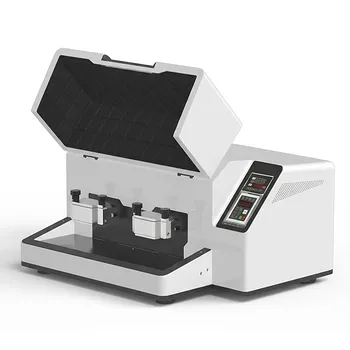
Nanoscale High-Energy Vibratory Ball Mill for Laboratory Sample Preparation, Mechanochemistry, and Mechanical Alloying

Heating Temperature Controlled High Energy Vibratory Ball Mill
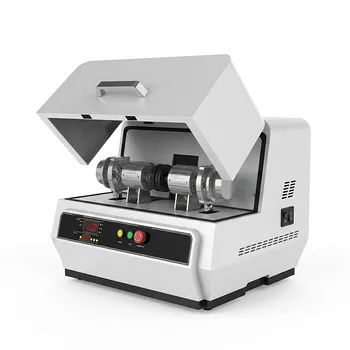
Dual Jar High Energy Vibratory Ball Mill
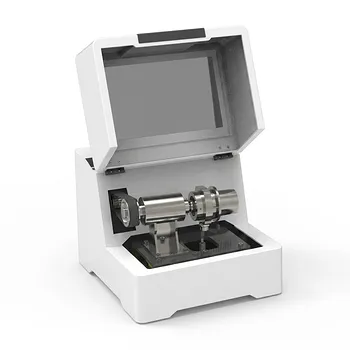
Single Tank High Energy Vibratory Ball Mill for Laboratory Grinding and Mixing
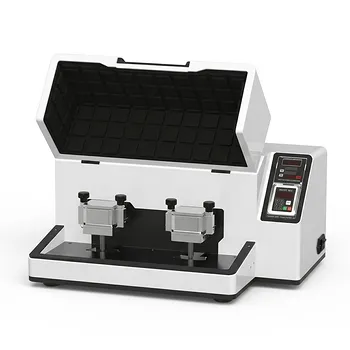
Nanoscale High Energy Vibratory Ball Mill Low Temperature

Nano High Energy Vibratory Ball Mill for Laboratory Sample Preparation

High Energy Planetary Ball Mill for Nano Scale Grinding and Mechanical Alloying
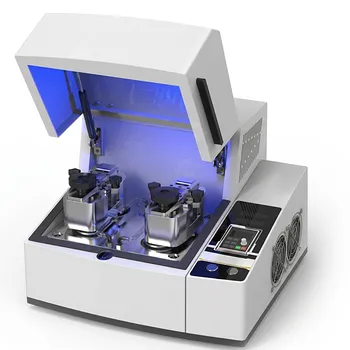
Laboratory Nano High Energy Ball Mill Ultrafine Grinding Mechanical Alloying
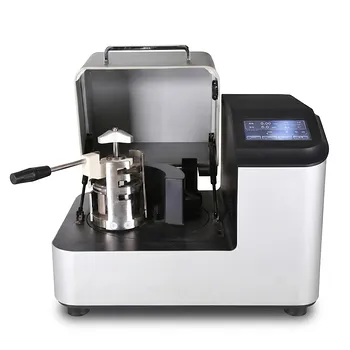
High Energy Laboratory Planetary Ball Mill for Nano Grinding and Material Science Sample Preparation

High Energy Laboratory Planetary Ball Mill for Nano Grinding and Colloidal Mixing of Hard and Brittle Materials
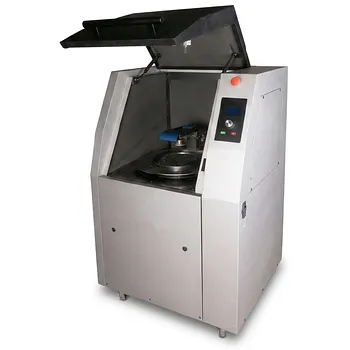
High Speed Vibratory Disc Mill for Spectral Analysis Sample Preparation and Rapid Powder Grinding

High Energy Omnidirectional Planetary Ball Mill 16L
High Energy Omnidirectional Planetary Ball Mill 20L
Vertical Square Planetary Ball Mill for Laboratory Sample Preparation and Nanoscale Grinding

8L Planetary Ball Mill for Laboratory Grinding and Sample Preparation