The Sledgehammer Before the Scalpel: Why Pre-Pulverization Decides the Fate of Your Advanced Ceramic
Oct 18, 2026
A Scene from the Lab Floor
The furnace has just finished its violent, beautiful work. Self-propagating High-temperature Synthesis (SHS) has done what it does best: a wave of exothermic reaction has swept through the raw powders, leaving behind a porous, ugly, magnificent block of beta-SiAlON.
It looks more like a piece of volcanic crust than an engineered ceramic.
The temptation is immediate. You want to rush this trophy directly into the fine grinding stage—planetary ball mill, jet mill, the machines that whisper of nanometers and surface-area magic. That’s where the real science happens, we tell ourselves.
But the block just sits there. Too big. Too stubborn. The fine mill will choke on it. The real bottleneck isn’t the nano-dance. It’s the sledgehammer. It’s the vibration mill.
Why the Furnace Hates Us
SHS doesn’t respect our downstream plans. It delivers its product as a macroscopic, loosely sintered block, not a powder. The internal bonds—though porous—are strong enough to defeat any high-precision grinder.
This is the first systemic lesson: synthesis and particle-size reduction operate on completely different energy scales. What the furnace fuses together, the vibration mill must tear apart. And it must do so without contaminating the material, overheating the surface, or consuming a full day’s budget of electricity.
The vibration mill is not a finisher. It’s a translator. It speaks the aggressive language of high-frequency impact and converts it into something the downstream world can understand: a coarse, uniform powder.
The High-Frequency Assault
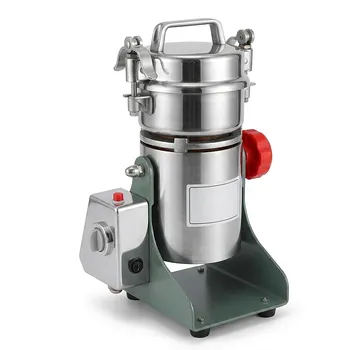
If you’ve never watched a vibration mill work, it feels almost violent. The entire grinding chamber oscillates at high frequency, hurling the media against the beta-SiAlON blocks thousands of times per minute.
That’s the genius. Low-energy rotation mills would grind for an eternity. The vibration mill’s intense, repetitive impact forces exploit the brittle nature of ceramics. It shatters aggregate after aggregate, reducing the bulk nightmare into a manageable feed.
But here’s the psychology trap: because it looks rough, we undervalue it. The Morgan Housel in the room reminds us that the most powerful tools often look the least glamorous. Compounding doesn’t wear a tuxedo. Neither does pre-pulverization.
What We Get Wrong About Workflows
We love the final step because it’s where the numbers look best. A sub-micron particle size distribution is a certificate of sophistication. So we optimise the end, while silently accepting the mess at the beginning.
This isn’t just an engineering mistake. It’s a human bias. Three invisible costs accumulate when you treat the vibration mill as an afterthought:
- Feed Incompatibility – Fine mills demand a consistent, small-diameter input. Without proper pre-pulverization, oversized particles jam the equipment and distort the final particle size distribution.
- Energy Waste – Making a jet mill do the heavy lifting of primary crushing burns money and time. The vibration mill is the energetic sweet spot for volume reduction.
- Mixing Injustice – Sintering aids and dopants can’t distribute homogeneously if the starting material is a pile of irregular blocks. Coarse powder, by contrast, offers a far fairer starting point.
The vibration mill doesn’t compete with the fine mill. It enables it. That’s a partnership, not a rivalry.
The Trade-Offs We Must Manage
No tool is innocent. The same high-frequency violence that saves your throughput can also betray you.
- Purity drifting away: The impact of grinding media against the crude ceramic erodes the mill’s internals. Iron, tungsten, or alumina contamination can creep in. If your final component must survive a 1400°C environment with zero flux impurities, this matters enormously.
- Heat building silently: Friction in a sealed, oscillating chamber generates localized hot spots. Beta-SiAlON laughs at most temperatures, but the surface chemistry of the coarse powder—its moisture, its activity—can shift in ways that haunt the sintering curve later.
- Coarseness vs uniformity: A vibration mill rarely delivers molecular-level homogeneity. Expecting it to replace a stirred mill leads to poor densification and frustrated engineers.
Owning these limitations is what separates a smart process from an blamed process.
Where the Real Leverage Lives
If you accept that the vibration mill sets the ceiling for every subsequent stage, three tactical decisions suddenly become strategic.
1. Match the Media to the Mission
For beta-SiAlON and similar advanced ceramics, choose grinding media and chamber liners that match the material’s hardness and chemical tolerance. Silicon nitride or sialon-based media can keep contamination transparent to the final application.
2. Control the Energy, Don’t Just Maximize It
High frequency is not always high wisdom. Adjust oscillation parameters to find the point where block fracture is efficient but heat generation is minimal. The goal is rapid de-agglomeration, not a pre-mature sintering of the coarse powder.
3. Design the Entire Chain
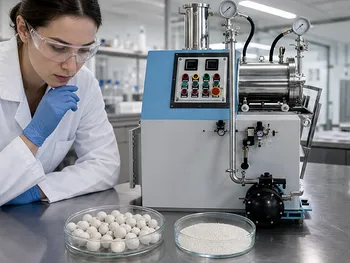
The vibration mill must never be specified in isolation. Its output defines the feedstock for the fine mill, the mixer, and ultimately the press. A complete laboratory line—crushers for the raw ore, cryogenic grinders for temperature-sensitive tweaks, vibration mills for the SHS blocks, jet mills for sub-micron finishing, and isostatic presses for the final compaction—acts as a single system, not a collection of machines.
Process Stages and Their True Purposes
| Stage | What It Actually Does | The Hidden Demand |
|---|---|---|
| Post‑SHS Vibration Milling | Shatters macroscopic blocks into manageable coarse powder | Demands high-frequency impact with minimal contamination |
| Fine Grinding (Jet/Ball) | Achieves target particle size and surface area | Demands a consistent, small feed that only pre-pulverization can provide |
| Mixing & Homogenization | Distributes dopants and sintering aids uniformly | Demands a particulate state, not a blocky solid |
| Compaction (CIP/WIP) | Builds a green body with uniform density | Demands powder with well-defined flow and packing—rooted in earlier steps |
Every “demand” in the third column traces back to that first, unglamorous swing of the sledgehammer.
The Equipment That Closes the Loop
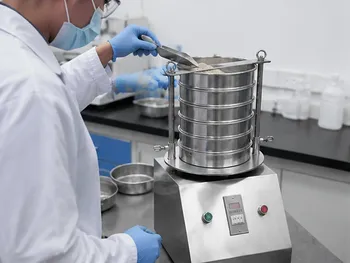
This is exactly the engineering philosophy that defines a complete powder processing platform. The right partner delivers not just a vibration mill, but the entire chain of custody for your material. From jaw crushers for raw minerals and liquid nitrogen cryogenic grinders for temperature-sensitive compounds, through planetary ball mills and jet mills, to vibratory and air-jet sieve shakers for precise classification. And, crucially, the compaction side: cold and warm isostatic presses, vacuum hot presses, and XRF pellet presses that translate that carefully crafted powder into a dense, testable solid.
When the complete workflow speaks one language, the final ceramic part becomes less of a hope and more of a calculation.
The Engineer’s Romance
There’s a quiet beauty in understanding that the most transformative part of your process might be the one that looks like a blunt instrument. The vibration mill never gets the glossy brochure cover. It doesn’t produce the SEM image that makes a journal reviewer smile.
But it holds the whole enterprise together. It takes the chaos from the furnace and imposes the first layer of order. Before the nanometres, before the perfect crystal boundaries, there is a coarse powder. And whoever controls that coarse powder controls the economics, the purity, and the final performance.
If you’re scaling from SHS-derived beta-SiAlON to production, or wrestling with any advanced ceramic that begins as a stubborn block, the conversation has to start here—with the sledgehammer, the high-frequency impact, and the wisdom to design the chain, not just the finish line.
Quick Links
Suggested Products
Vibratory Disc Mill for Rapid Fine Grinding and High Throughput Sample Preparation of Hard and Brittle Materials High Speed Vibratory Disc Mill for Spectral Analysis Sample Preparation and Rapid Powder Grinding Single Tank High Energy Vibratory Ball Mill for Laboratory Grinding and Mixing Small Vibrating Ultrafine Grinder for Traditional Chinese Medicine Dual Jar High Energy Vibratory Ball MillFurther Reading
The Particle Paradox: Why the Secret to a Perfect Effervescent Tablet Lives in the Grinding Room The Brittle Truth: Why Your Catalyst's Potential Is Trapped in the Ribbon, and the One Violent Step to Set It Free The Particle Size Orchestra: Engineering Precision Powders for Nutrient Enrichment Research The Sieve Never Lies: How a Simple Stack of Mesh Became the Lab’s Ultimate Truth-Teller The Paradox of Small Things: Why Tinier Beads Unlock the Nano World, and Sometimes Fail
PowderPreparation
Last updated on May 14, 2026
Related Products
Vibratory Disc Mill for Rapid Fine Grinding and High Throughput Sample Preparation of Hard and Brittle Materials
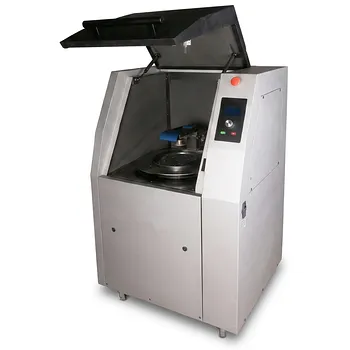
High Speed Vibratory Disc Mill for Spectral Analysis Sample Preparation and Rapid Powder Grinding
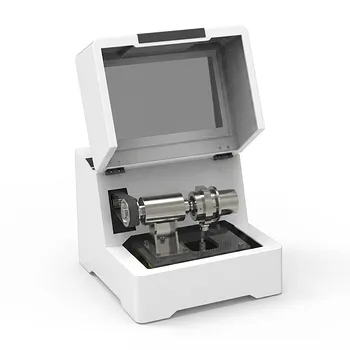
Single Tank High Energy Vibratory Ball Mill for Laboratory Grinding and Mixing
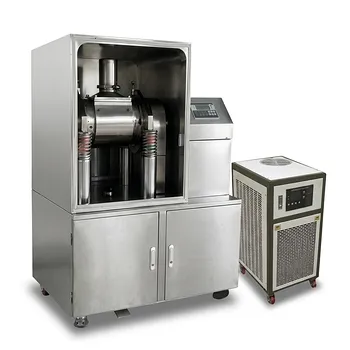
Small Vibrating Ultrafine Grinder for Traditional Chinese Medicine
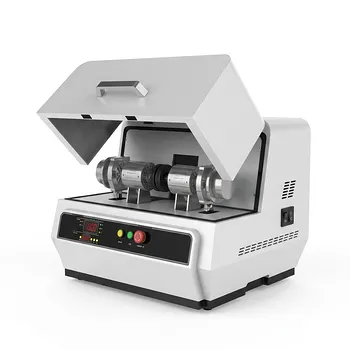
Dual Jar High Energy Vibratory Ball Mill
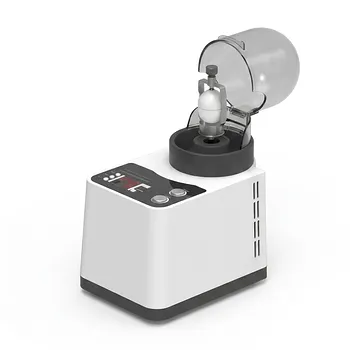
Laboratory Micro Vibration Grinding Mill for Trace Sample Preparation
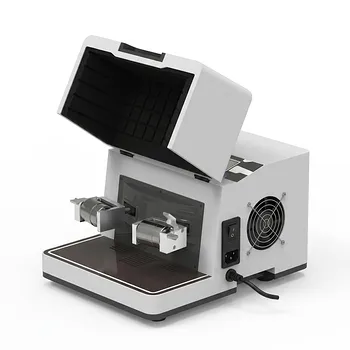
High Energy Hybrid Vibratory Ball Mill for Grinding Mixing and Cell Disruption
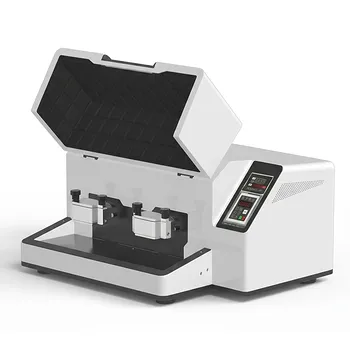
Nanoscale High-Energy Vibratory Ball Mill for Laboratory Sample Preparation, Mechanochemistry, and Mechanical Alloying
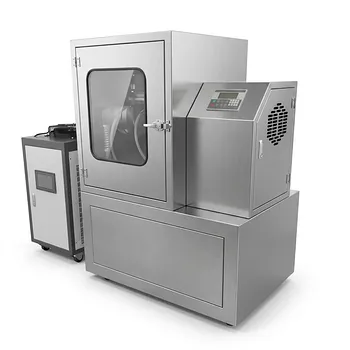
Vibratory Superfine Grinder for Ultra Fine Laboratory Powder Milling
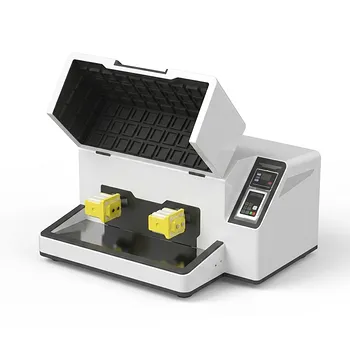
Multi-Platform Nanoscale High-Energy Vibratory Ball Mill
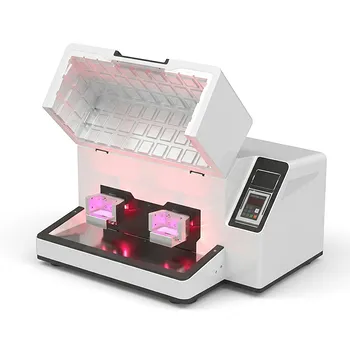
Nano High Energy Vibratory Ball Mill with Heating and Temperature Control
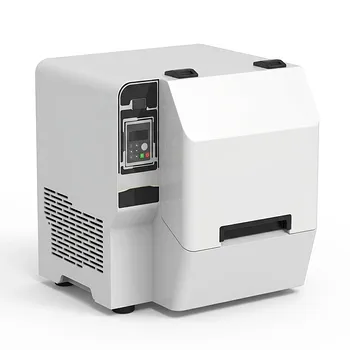
Nano High Energy Vibratory Ball Mill for Laboratory Sample Preparation
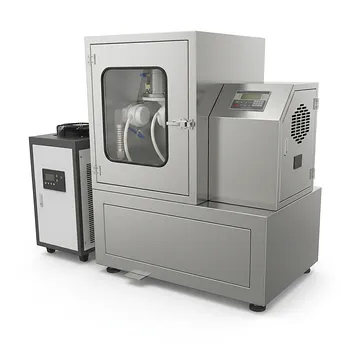
Vibratory Ultra-Low Temperature Ultrafine Grinder for Cryogenic Powder Processing
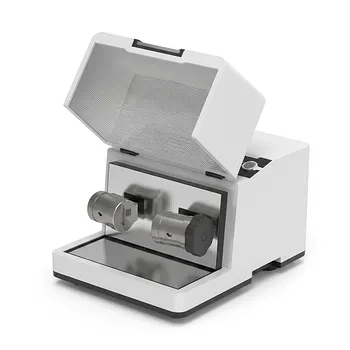
Heating Temperature Controlled High Energy Vibratory Ball Mill
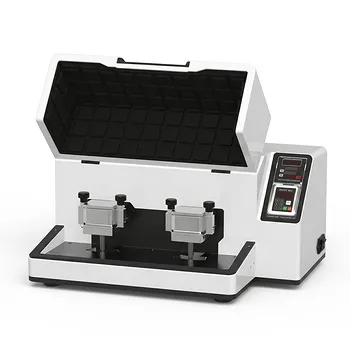
Nanoscale High Energy Vibratory Ball Mill Low Temperature
Stainless Steel Rotary Vibrating Sieve High Precision Circular Vibratory Separator Industrial Powder Grading Machine Multi Layer Sifting Equipment
Automatic Vibrating Powder Feeder for Laboratory Material Processing Precision Vibratory Hopper Feeder for Granular and Powder Material Handling Industrial Grade Vibrating Tray Feeder for Consistent Material Sample Preparation
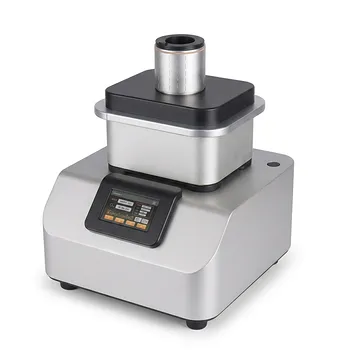
Ultra Centrifugal Mill High Speed Laboratory Grinder for Fibrous and Brittle Sample Preparation
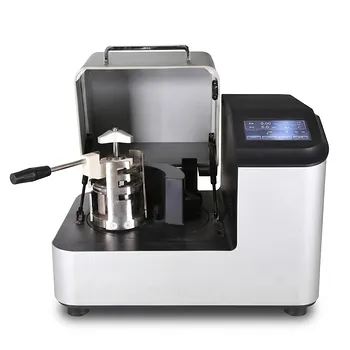
High Energy Laboratory Planetary Ball Mill for Nano Grinding and Material Science Sample Preparation