The Particle Size Orchestra: Engineering Precision Powders for Nutrient Enrichment Research
Aug 16, 2026
The Smallest Thing That Changes Everything
You’re staring at a pile of amaranth seeds. Hard, tiny, stubborn. Inside them is exactly what you need for your nutrient-enrichment study: high-quality protein, valuable lipids, and a starch matrix that separates beautifully—if only you can break them open without ruining the chemistry.
This is the quiet anxiety of every researcher who works with powdered seeds. You can’t afford to overshoot. Too coarse, and the valuable fractions won’t separate. Too fine, and heat and clumping destroy the very nutrients you’re trying to concentrate.
The laboratory mill, in the right hands, doesn’t just pulverize. It acts as a precision instrument for particle size orchestration—and that orchestration determines everything that follows.
The Hidden Architecture of a Seed
Amaranth seeds aren’t homogenous lumps of organic matter. They are structured little fortresses.
A Multi-Component Matrix
Inside each seed, the protein-rich germ sits next to the starchy perisperm, wrapped in a fibrous coat. These parts have different densities, different fracture behaviors, and different target nutrient profiles.
When mechanical force hits the seed, it doesn’t shatter uniformly. Instead, it creates a particle size gradient—a deliberate distribution of fragments that can be sorted later.
This gradient is the real product of an intelligent milling process.
Why Brute Force Fails
If you simply crush the seeds with aggressive, uncontrolled force, you get:
- Uneven particle sizes
- Overheated regions where proteins denature
- Lipid smearing that causes sticky agglomerates
The result isn’t a research-grade powder. It’s a compromised sample that will quietly undermine your enrichment data.
The Engineering Romance: Shear, Extrusion, and Control
A well-designed laboratory mill applies shear and extrusion forces in a precisely managed gap. The seeds aren’t smashed; they are pulled apart, layer by layer.
Shear Tells a Different Story
Shear forces slide one part of the seed relative to another, exploiting the natural weaknesses between botanical components. The protein-rich germ detaches cleanly from the starch body. The lipid-rich germ fragments don’t rupture excessively, so oils stay locked in discrete particles rather than coating everything.
This is what engineers would call “phase-selective disintegration.” In plain language, it means the mill helps you separate nutrients mechanically before you ever touch a chemical reagent.
The Gap That Decides the Outcome
Adjusting the gap in a disc mill or the rotational speed in a rotor mill changes the particle size distribution with a few microns of sensitivity.
A smaller gap:
- Increases fine fraction
- Boosts surface area for extraction
- Raises risk of thermal damage
A wider gap:
- Preserves larger, purer protein bodies
- Reduces heat buildup
- May require more downstream classification
The researcher who treats the mill not as a black box but as a tunable instrument gains an almost unfair advantage in enrichment studies.
The Particle Size Gradient as a Separation Blueprint
Once you’ve created the powder, the real magic of nutrient enrichment begins.
Sieving and Air Classification
Different nutrients concentrate in different size bands. Typically:
- Fine fractions (<100 µm): Starch-rich, lower protein
- Medium fractions (100–250 µm): Protein enrichment, germ fragments
- Coarse fractions (>250 µm): Fiber and hull residues
By running the milled powder through a sieve shaker or air-jet sieving system, you can extract cuts with two to three times the protein content of the original seed.
The Psychological Payoff
There’s a deep satisfaction in watching a stack of sieves sort your powder into distinct bands. Each tray tells part of the seed’s story. The method feels predictable, repeatable, and finally under your control.
This isn’t just lab work—it’s the confidence that your next publication’s data rests on reproducible physical principles, not on arbitrary kitchen-blender efforts.
The Heat Problem: What Over-Milling Really Means
It’s tempting to chase ultimate fineness. After all, “micronized” sounds scientifically impressive.
But friction-induced heat is the hidden tax of over-milling.
Denaturation Without Visible Signs
Proteins begin to denature at temperatures that don’t even feel hot to the touch. Lipids start oxidizing. The damage is invisible at first—until your chemical assays come back with puzzlingly low amino acid values or off-flavor notes in subsequent food formulations.
The Yield Cliff
Over-milled particles become too fine for standard air classifiers. They behave like dust, refusing to separate cleanly. You lose material to filters and waste bins, and your fractionation efficiency plummets.
A good milling strategy sets an optimal duration and, more importantly, monitors or controls the thermal load. Some mills offer cryogenic options—liquid nitrogen cooling—to keep everything brittle and cold, sidestepping the heat problem entirely.
A Table for the Analytical Mind
| Milling Parameter | Mechanism Affected | Nutrient Study Impact |
|---|---|---|
| Shear force | Separation of germ from perisperm | Enables cleaner protein concentration |
| Extrusion pressure | Oil release and particle cohesion | Prevents lipid clumping, preserves flowability |
| Gap / speed setting | Particle size distribution shape | Determines fractionation efficiency |
| Milling duration | Heat accumulation and over-milling | Avoids nutrient denaturation and yield loss |
Beyond the Mill: The Complete Powder Processing Vision
Amaranth seeds teach us something broader: precision powder processing is a chain of unit operations, each amplifying the last.
After milling, you classify. After classification, you might mix defatted fractions with starch fractions to design a custom nutrient profile. And if you’re preparing samples for X-ray fluorescence or further compaction studies, you need a pellet press that doesn’t disturb your carefully curated particle size landscape.
This is where a complete solution changes everything.
Instead of piecing together equipment from different suppliers—risking incompatible particle feeds and inconsistent results—you can build a workflow where the mill, the sieve shaker, the laboratory mixer, and the hydraulic press speak the same engineering language.
Equipment That Supports the Entire Journey
Size reduction: Jaw crushers for pre-breaking tough materials, cryogenic grinders for heat-sensitive seeds, planetary ball mills for ultra-fine applications, and rotor/disc mills for the shear-based approach described above.
Classification and mixing: Vibratory and air-jet sieve shakers with precision test sieves to validate your particle size gradient; powder mixers and defoaming mixers to homogenize enriched fractions without introducing air bubbles or segregation.
Compaction: Cold and warm isostatic presses for high-uniformity billets, standard lab presses for routine pellet preparation, XRF pellet presses for analytical consistency, and vacuum hot presses when you need fully dense specimens without oxidation.
When your amaranth enrichment study succeeds and you want to press a stable pellet for XRF nutrient mapping, you’ll be glad the press was designed with the same attention to particle integrity as your mill was.
The Psychology of a Reliable Protocol
The best research equipment removes variables, not adds them. When a mill generates a consistent particle size distribution every time—no thermal drift, no mechanical wandering—it becomes as trustworthy as a well-calibrated pipette.
That trust is rare and precious in a materials lab. It means you can spend your mental energy on the science, not on compensating for machinery quirks. It means your enrichment protocols become portable: written, shared, replicated across different labs because the equipment behaves predictably.
This is the quiet, psychological layer beneath every technical specification.
From Ancient Seeds to Engineered Nutrition
Amaranth has nourished civilizations for thousands of years. But turning it into a modern, science-backed ingredient demands a level of control that ancient grindstones could never offer.
Today’s laboratory mills don’t just crush. They orchestrate particle size. They let you decide which fraction will carry the protein legacy of the seed, which will showcase its lipid richness, and which will provide the starchy base for targeted fortification.
And when the mill is just one part of a complete sample preparation ecosystem—from coarse crushing to high-pressure compaction—your research isn’t limited to one seed or one nutrient. It becomes a platform for exploring the physical architecture of almost any material.
If you’re designing a nutrient enrichment study, don’t start with the assay. Start with the powder. Get the particle size orchestra right, and everything that follows sounds better.
Quick Links
Suggested Products
Laboratory Ultrafine Impact and Airflow Grinder for Precise Particle Size Control Laboratory Disc Mill for Fine Sample Preparation of Hard and Brittle Materials Laboratory Hammer Mill for Coal Quality Analysis and Brittle Mineral Grinding Vibratory Superfine Grinder for Ultra Fine Laboratory Powder Milling High Speed Laboratory Knife Mill for Oily Fibrous and Wet Sample HomogenizationFurther Reading
The Hidden Architecture of Waste: How Precision Grinding Unleashes the Adsorbent Inside an Eggshell The Grain, the Grinder, and the Hidden Poison: Why Mycotoxin Testing Depends on a Perfectly Boring Pulverization The Energy Window: Why Better Silica Nanoparticles Aren't About Grinding Longer, But Smarter The Hidden Variable in Green Chemistry: Why Your Banana Leaf Ash Fails (And How Precision Grinding Fixes It) The Sand Paradox: Why Smart Money Chooses Mechanical Force Over Chemical Finesse for Silica Nanoparticles
PowderPreparation
Last updated on May 14, 2026
Related Products
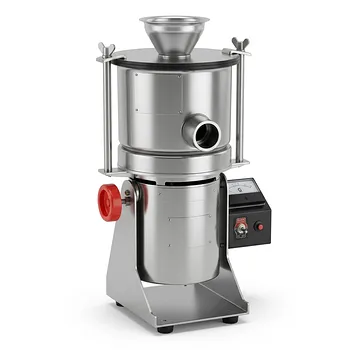
Laboratory Ultrafine Impact and Airflow Grinder for Precise Particle Size Control
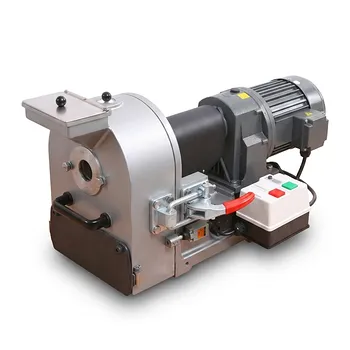
Laboratory Disc Mill for Fine Sample Preparation of Hard and Brittle Materials
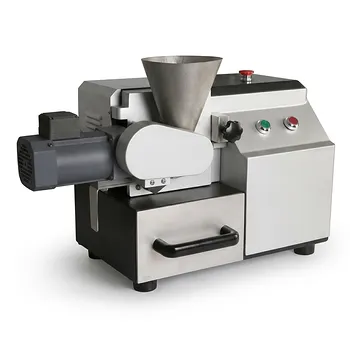
Laboratory Hammer Mill for Coal Quality Analysis and Brittle Mineral Grinding
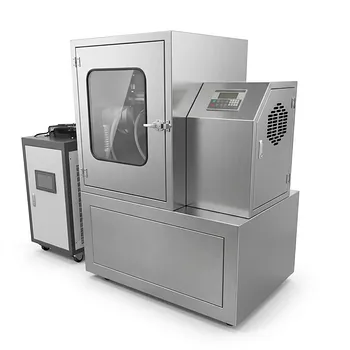
Vibratory Superfine Grinder for Ultra Fine Laboratory Powder Milling
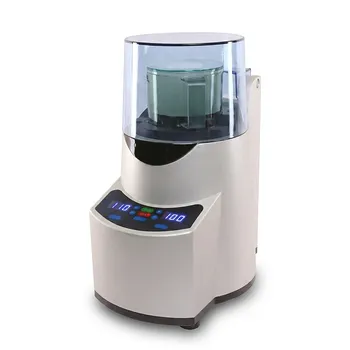
High Speed Laboratory Knife Mill for Oily Fibrous and Wet Sample Homogenization
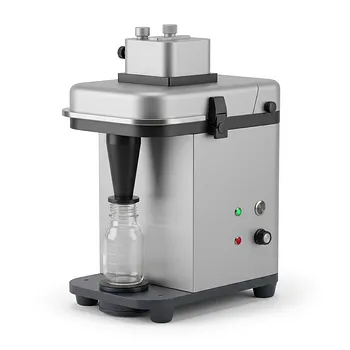
Cyclonic Laboratory Mill for NIR Spectroscopy Sample Preparation Food and Feed Grinding
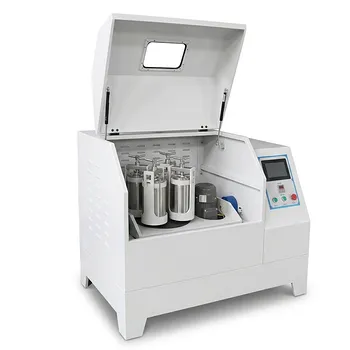
360° Rotating Omnidirectional Laboratory Planetary Ball Mill for Homogeneous Ultra-Fine Grinding and Mixing
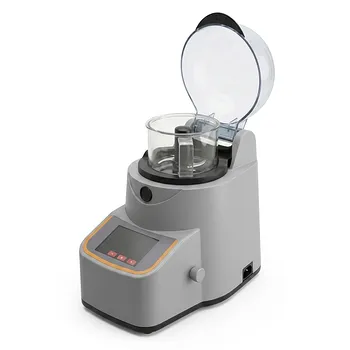
Industrial Knife Mill for Food and Biological Sample Preparation High Speed Laboratory Homogenizer
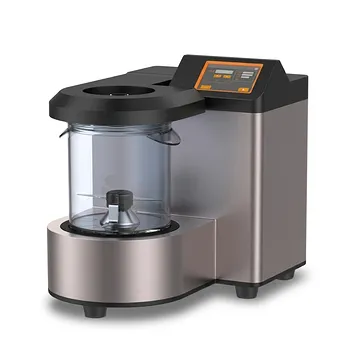
Laboratory Knife Mill for Large Volume Sample Homogenization and Food Preparation
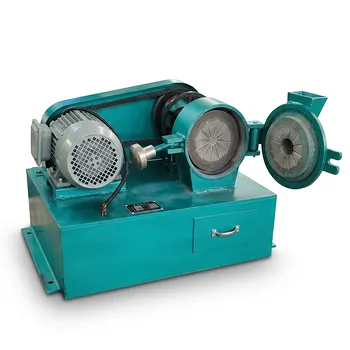
Laboratory Disc Mill Medium Hard Material Grinding Coal Coke Ore Pulverizer
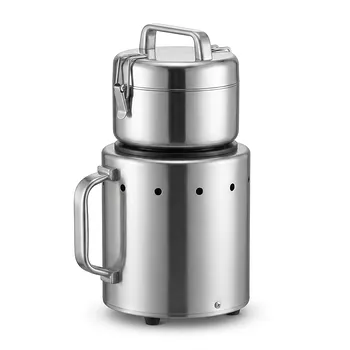
Small High Speed Grinder for Laboratory Sample Preparation
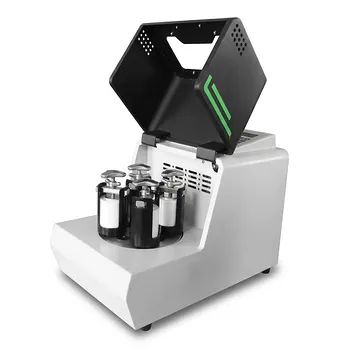
Miniature Planetary Ball Mill with Vacuum Grinding and High Efficiency for Laboratory Sample Preparation
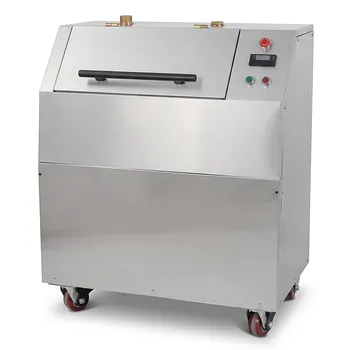
Vibratory Disc Mill for Rapid Fine Grinding and High Throughput Sample Preparation of Hard and Brittle Materials
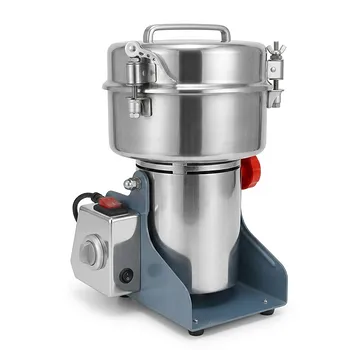
Small High-Speed Grinder for Efficient Laboratory Sample Preparation
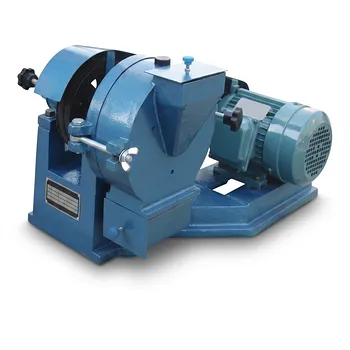
Laboratory Disc Mill for Ore and Mineral Sample Preparation
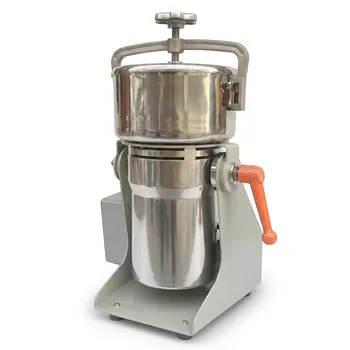
High Speed Laboratory Grinder Efficient Stainless Steel Powder Pulverizer Universal Material Science Mill for Sample Preparation
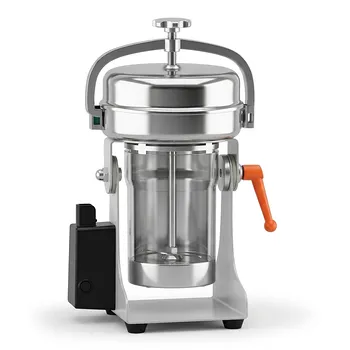
High Efficiency High Speed Grinder 2200W 25000 RPM Laboratory Sample Preparation
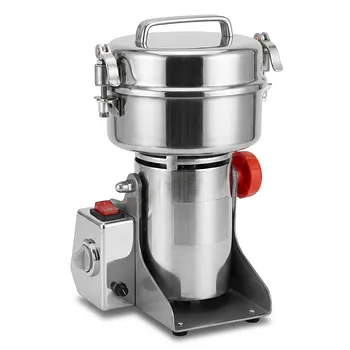
High Speed Laboratory Powder Grinder Small Batch Sample Preparation Mill
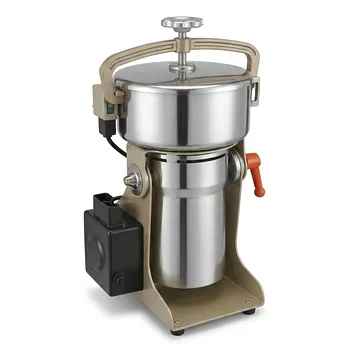
Multifunctional High Efficiency High Speed Laboratory Grinder