The Particle Paradox: Why the Secret to a Perfect Effervescent Tablet Lives in the Grinding Room
Sep 17, 2026
The First Three Seconds in the Glass
You drop the tablet into water. It spins, hisses, and dissolves into a fog of bubbles before you can blink. That immediate, satisfying reaction is not just chemistry—it is a triumph of particle engineering. And it starts long before the tablet press, in a room full of humming mills and the quiet discipline of making things small.
The question sounds simple: why grind the active ingredient so aggressively?
The answer lives in a paradox every formulation scientist knows. To make the tablet disappear completely, you must first make its core materials as present as possible to the water. You must expose every hidden surface, every locked reaction site. That is the real purpose of high-performance grinding. It does not merely reduce size; it rewrites the physical destiny of the material.
The Hidden Geometry of Fast Dissolution
Surface Area Is Not a Number. It Is a Strategy.
Effervescent delivery depends on an acid-base reaction. Sodium bicarbonate meets citric acid. Water is the trigger. But speed is not dictated by the chemistry alone—it is governed by a simple physical principle: the solvent can only attack what it can touch.
When you break a salt crystal or an active molecule into finer fragments, you amplify its specific surface area dramatically. A powder with half the mean particle size can offer four times the reactive surface. This is the geometry of dissolution. And the mill is the tool that shapes it.
- Coarse particles: Slow, uneven fizz. Some material stays suspended, unreacted.
- Finely milled particles: Instant contact with water. Total reaction. Almost no residue.
The difference is not subtle. It is the difference between a tablet that floats inertly and one that delivers the active payload in seconds.
Intimacy in the Mix
An effervescent tablet is a community of dissimilar ingredients—acids, bases, binders, active salts. Without uniform fineness, these communities segregate. Heavier crystals sink. Lighter flakes float. The reaction becomes a lottery.
High-performance grinding forces all components into a common scale. It creates what a materials scientist would call an intimate mix—a blend where every grain of acid sits within striking distance of a grain of base, and the active ingredient is distributed like a neural network across the whole mass.
The result: Not just a fast fizz, but a consistent one. Batch after batch, tablet after tablet.
The Reactivity That Mills Unlock
Bioavailability Begins in the Crusher
The human body is lazy in its wisdom. It absorbs small things more easily. A large particle of a mineral salt might pass through the gut partially intact, its core never reaching the bloodstream. But when that same salt is milled to a respirable or near-colloidal fineness, the body’s own digestive machinery finds an open door.
This is bioavailability—the proportion of an active that actually enters circulation. Grinding multiplies the active reaction sites. It turns a dense, defensive crystal into a cooperative, high-contact powder. The effect on an effervescent product is profound: faster onset of action, lower dose requirements, and a sensory experience that tells the patient “this is working.”
Breaking the Natural Fortress
Many natural active ingredients, like sea salts or botanical extracts, hide their functional groups inside crystalline fortresses. Hydroxyl groups and other reactive moieties are locked behind mineral walls. Simple stirring cannot reach them.
Mechanical milling is the battering ram. It disrupts the compact structure, introducing fractures and amorphous regions. The material becomes chemically “open.” In one study of a model effervescent salt, cryogenic grinding exposed a nearly 40% increase in accessible reactive surface compared to simple sieving. The mill had performed a kind of structural surgery.
The Two-Headed Challenge: Heat and Moisture
When Energy Turns Against You
Grinding is violent. Friction generates heat. A mill running at speed can push powder temperatures high enough to degrade heat-sensitive actives or even initiate premature effervescence inside the machine. A formulator might be gaining surface area and losing potency in the same mechanical breath.
This is where engineering romance meets cold reality. The best preparation strategy does not worship fineness alone; it worships control.
The Hygroscopic Trap
There is a second danger. Extremely fine powders behave like sponges for atmospheric moisture. In an effervescent system, moisture is the enemy. It starts the acid-base reaction before the tablet ever reaches the water. You might open a storage bin days later and find not powder, but a hardened brick of pre-reacted waste.
The finer you grind, the fiercer your humidity control must become. This is not a problem to cure later—it is a challenge that demands an integrated milling solution.
An Engineer’s Framework for Pretreatment
The milling step is not a checkbox. It is a strategic decision with at least three distinct paths, depending on what you value most.
Choose Your Objective
| Primary Goal | Grinding Approach | Equipment Strategy |
|---|---|---|
| Rapid onset | Maximize surface area. Target the micron range. | High-energy planetary ball mills, jet mills. |
| Stability of sensitive actives | Achieve fineness without thermal damage. | Cryogenic grinders with liquid nitrogen cooling. |
| Chemical reactivity | Disrupt internal structure, expose functional groups. | Impact mills or disc mills under controlled atmosphere. |
Each goal demands a different conversation with the material. And each conversation requires the right kind of machine listening.
The Machine Arsenal: From Pretreatment to Final Form
This is where the laboratory becomes a precision workshop. At the front end, you need crushers—jaw crushers and roll crushers—to break bulk raw materials into manageable granules. Next, the real artistry begins: milling.
The Mill That Matches the Mission
- Planetary ball mills deliver extreme fineness and the high energy needed to disrupt stubborn crystal structures. They are the workhorses of bioavailability enhancement.
- Jet mills use high-velocity particle collisions without grinding media, producing ultra-fine powders with minimal contamination—ideal for pure actives.
- Liquid nitrogen cryogenic grinders are the answer to heat-sensitive ingredients. They freeze the material into a brittle state, shattering it without the thermal penalty. Stability and fineness are no longer a trade-off.
But powder is only half the story. An effervescent tablet needs compaction, and compaction physics is its own discipline.
The Press That Seals the Promise
Once your high-surface-area powder leaves the mill, it must be pressed into a tablet that holds together yet disintegrates instantly. This demands hydraulic presses that offer both force and finesse.
- Standard lab presses serve routine tablet development.
- For advanced formulations, Cold and Warm Isostatic Presses (CIP/WIP) apply uniform pressure from all directions, eliminating density gradients that cause inconsistent fizz.
- Hot presses and vacuum hot presses come into play when binders or complex excipients require thermal activation during compaction.
And throughout the workflow, sieve shakers and powder mixers ensure that no agglomerate escapes and no segregation corrupts your carefully engineered intimacy.
The Integrated Logic
Pretreatment is not a single step. It is a chain of transformations—crush, mill, sieve, mix, press—each amplifying the work of the last. A weak link anywhere, and the three-second fizz becomes a 20-second disappointment. But when the chain is built with precision equipment, the result feels like magic. It is not magic. It is materials science, dressed in bubbles.
The Psychophysics of Patient Trust
There is a reason effervescent products dominate certain therapeutic categories. The experienced sensory drama—the sight, the sound, the rapid transformation—builds an immediate psychological contract with the patient. “This is working,” they think. And they are right.
But that trust is borrowed from engineering. It exists because someone in a lab chose the right mill, set the right parameters, and refused to accept a powder that only looked fine under the naked eye. The patient never knows the particle size distribution chart. They only know the tablet dissolved before they could stir. That is the silent signature of a well-specified grinding pretreatment.
Where the Grinding Room Meets the Compaction Lab
When you own the complete vertical chain—from the jaw crusher that first bites into the raw salt crystal, through the cryogenic mill that freeze-fractures the olive-derived active, to the isostatic press that forms the perfect unblemished tablet—you stop solving isolated problems. You start engineering outcomes.
High-performance grinding is the front door to that outcome. It determines contact, reactivity, stability, and the first impression a patient will ever have of your formulation. Choose your mills and presses not as hardware, but as partners in a conversation with the material. Then listen well. The fizz will tell you if you were right.
Quick Links
Suggested Products
Small Ceramic Structure Laboratory Sand Mill Nanoscale Grinding Dispersion Equipment Seal-less Screen-less Design Ultra Centrifugal Mill High Speed Laboratory Grinder for Fibrous and Brittle Sample Preparation Vibratory Disc Mill for Rapid Fine Grinding and High Throughput Sample Preparation of Hard and Brittle Materials High Energy Laboratory Planetary Ball Mill for Nano Grinding and Material Science Sample Preparation High Speed Vibratory Disc Mill for Spectral Analysis Sample Preparation and Rapid Powder GrindingFurther Reading
The Grain, the Grinder, and the Hidden Poison: Why Mycotoxin Testing Depends on a Perfectly Boring Pulverization The Tyranny of Tiny Impurities: How 10 mm Zirconia Balls Save Rare-Earth Doped Bismuth Ferrite The Energy Window: Why Better Silica Nanoparticles Aren't About Grinding Longer, But Smarter The 0.5mm Gateway: Why Bulk Density Is a Measure of Flow, Not Just Weight The Hidden Variable in Green Chemistry: Why Your Banana Leaf Ash Fails (And How Precision Grinding Fixes It)
PowderPreparation
Last updated on May 14, 2026
Related Products
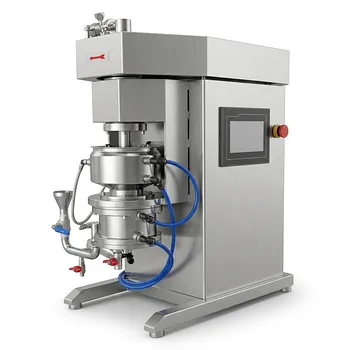
Small Ceramic Structure Laboratory Sand Mill Nanoscale Grinding Dispersion Equipment Seal-less Screen-less Design
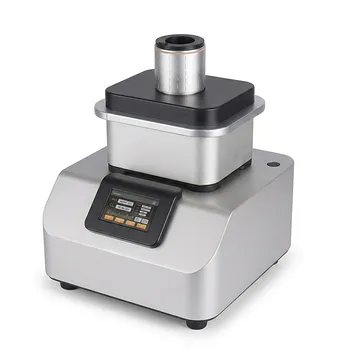
Ultra Centrifugal Mill High Speed Laboratory Grinder for Fibrous and Brittle Sample Preparation
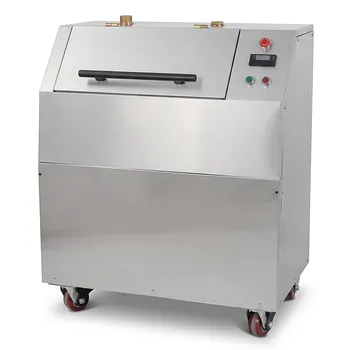
Vibratory Disc Mill for Rapid Fine Grinding and High Throughput Sample Preparation of Hard and Brittle Materials
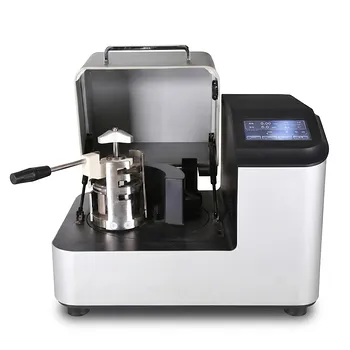
High Energy Laboratory Planetary Ball Mill for Nano Grinding and Material Science Sample Preparation
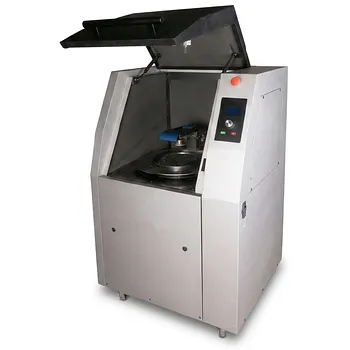
High Speed Vibratory Disc Mill for Spectral Analysis Sample Preparation and Rapid Powder Grinding
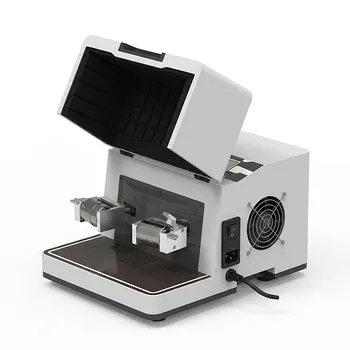
High Energy Hybrid Vibratory Ball Mill for Grinding Mixing and Cell Disruption
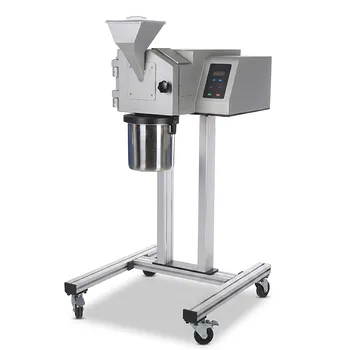
Cross Beater Mill for Brittle Material Grinding and Continuous Fine Crushing Industrial Sample Preparation
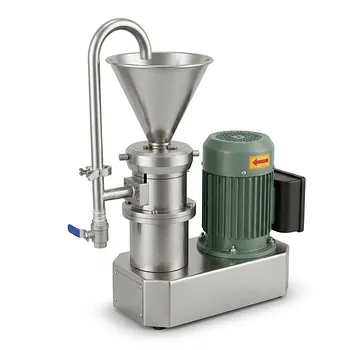
Small Laboratory Colloid Mill for Ultra-Fine Wet Grinding and Emulsification
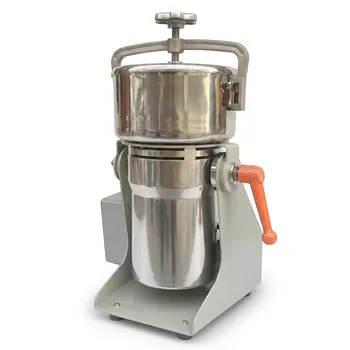
High Speed Laboratory Grinder Efficient Stainless Steel Powder Pulverizer Universal Material Science Mill for Sample Preparation
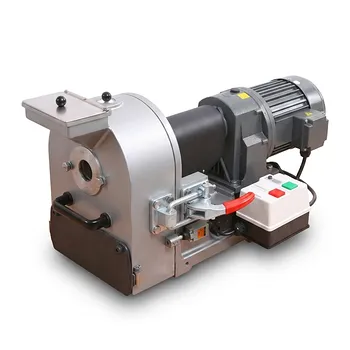
Laboratory Disc Mill for Fine Sample Preparation of Hard and Brittle Materials
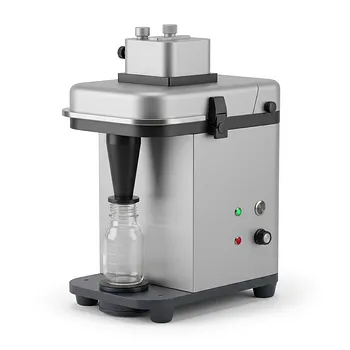
Cyclonic Laboratory Mill for NIR Spectroscopy Sample Preparation Food and Feed Grinding
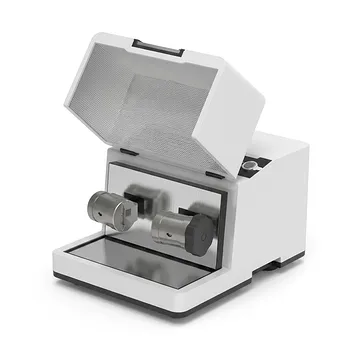
Heating Temperature Controlled High Energy Vibratory Ball Mill
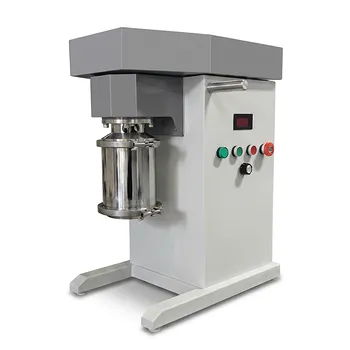
Nano Laboratory Bead Mill Desktop Sub Micron Sand Mill Screenless Seal Less Powder Grinder
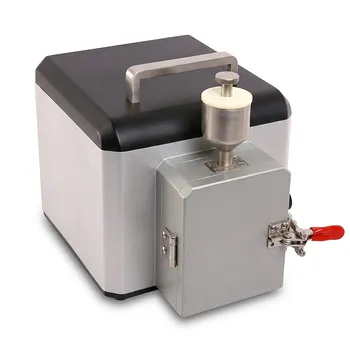
Portable Cutting Mill for Laboratory Sample Preparation and RoHS WEEE Compliance Testing
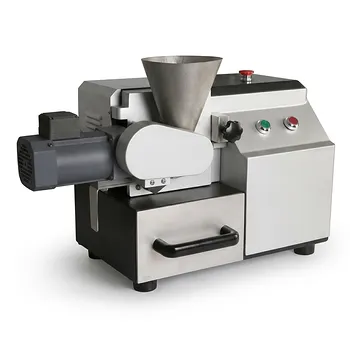
Laboratory Hammer Mill for Coal Quality Analysis and Brittle Mineral Grinding
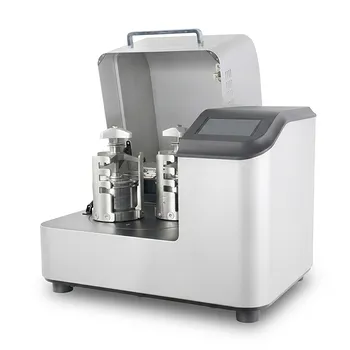
High Energy Planetary Ball Mill for Nano Scale Grinding and Mechanical Alloying
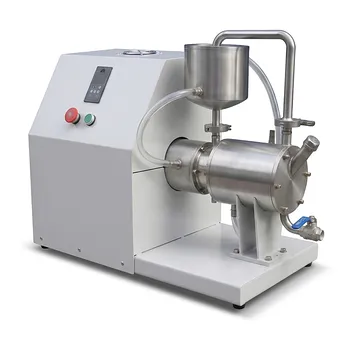
Laboratory Small Horizontal Sand Mill for Nano Materials Wet Grinding
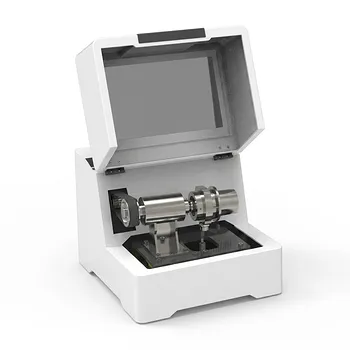
Single Tank High Energy Vibratory Ball Mill for Laboratory Grinding and Mixing
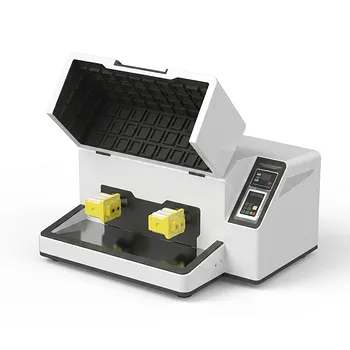
Multi-Platform Nanoscale High-Energy Vibratory Ball Mill