The Brittle Truth: Why Your Catalyst's Potential Is Trapped in the Ribbon, and the One Violent Step to Set It Free
Sep 07, 2026
The Beautiful Paradox of the Ribbon
You hold a length of melt-spun Al-Ni-Fe ribbon. It is a marvel of thermal engineering. The rapid solidification process has locked the metal’s atoms in a metastable state—a configuration nature never intended. It looks perfect. Shiny. Structurally pristine.
But there is a problem. A psychological one, almost.
The ribbon is hoarding its potential. From a catalytic standpoint, this sophisticated material is practically inert. It isn’t lazy; it’s just geometrically trapped.
Its potential is a story told on the surface, and you are holding a book with most of its pages glued shut.
Catalysis doesn’t happen inside a dense bulk material. It happens at the boundary—the frontier where the alloy meets the chemical environment. A ribbon has very little frontier. To unlock the value, you must systematically shatter that boundary. You must turn the book into a cloud of loose pages.
The Geometry Problem: Surface Starvation
We often obsess over chemistry—the precise atomic ratio of Al-Ni-Fe. But before chemistry can act, physics must give way.
A melt-spun ribbon has a remarkably low surface-area-to-volume ratio. Imagine a single, smooth boulder versus a pile of sharp gravel. The boulder actually contains more mass, but the gravel exposes infinitely more facets to the wind and rain.
In catalysis, reaction rate tracks surface area, not mass.
If you drop an unprocessed ribbon into a reactor, you are wasting 99% of it. The core never sees the reaction. It’s just structural dead weight, a passenger in a process it was designed to drive.
Your immediate goal isn't just to break the ribbon. It’s to explode the surface area into existence.
The Hidden Tax of Inactivity
This geometry problem creates a secondary economic pain point:
- Wasted Material: Over-consuming precursor alloy to hit performance targets.
- Slow Kinetics: Waiting for reactions that bottleneck the entire downstream workflow.
- Inconsistent Output: Bulk ribbons react erratically, degrading batch repeatability.
The Violent Solution: High-Frequency Liberation
To solve a structural problem trapped in the ribbon, you need a mechanical intervention that operates at a higher frequency than the atomic bonds holding it together.
Enter vibratory milling.
This isn't grinding in the traditional sense. A standard ball mill relies on gravity: the charge is lifted, it falls, it crushes. That’s blunt-force trauma. Vibratory milling is something else entirely—it’s a high-frequency panic attack for brittle solids.
The milling jar oscillates. The grinding media collides. The ribbon shatters.
The physics are brutal but precise. The energy is concentrated on the natural fracture points of the brittle ribbon. Because the Al-Ni-Fe alloy cools so rapidly during melt-spinning, its structure is riddled with internal stress pathways. A vibratory mill is the perfect predator for this specific prey. It exploits that brittleness, turning a macro-scale ribbon into a micron-scale powder with an almost surgical efficiency.
This isn't just size reduction. It’s surface creation.
The Deliberate Flaw: Creating Active Sites
But exposing surface area is only half the story. The true romance of the process lies in imperfection.
When you subject an alloy to high-frequency impacts, you aren’t just breaking it. You are wounding it.
Every collision introduces mechanical defects, dislocations, and lattice strain. In metallurgy, we often seek to remove these flaws. In catalysis, we create them. These irregularities are where the magic happens. An atom sitting in a perfect lattice is comfortable; it has low chemical energy. An atom sitting on the edge of a dislocation is uncomfortable, high-energy, and desperate to bond with something.
By pulverizing the ribbon, you are not just increasing the map area; you are populating that map with high-energy anchors.
The Hidden Danger: A Thermal Reckoning
But this violent liberation comes with a Faustian bargain.
The same impacts that dismantle the ribbon also generate heat. The law of entropy is unforgiving. If you push the mill too hard, trying to save time, the internal jar temperature spikes.
For a metastable alloy, this is identity theft.
The rapid solidification process locked in a specific atomic arrangement. Heat is the key that unlocks that state. If you exceed the crystallization temperature, the atoms relax back into boring, stable patterns. You end up with a perfectly milled powder that has lost the "rapidly solidified" soul it was born with.
You will have precisely ground the magic out of your material.
You must treat the mill as a cryogenic preservation tool, not just a crusher. Sometimes, this means embracing intermittent milling—a rhythm of shock and rest. You shatter the structure mechanically, then let the thermal energy bleed away before it undoes your chemical advantage.
The Precision Ecosystem: Beyond a Simple Mill
This is why isolating the vibratory mill as a standalone tool misses the point. It is a critical node in a larger, fragile workflow. A laboratory isn't just a collection of instruments; it’s a supply chain for powder evolution.
Before you mill, you need to get the material into the mill. If your source is a bulk alloy rather than a ribbon, you need high-efficiency crushers—jaw crushers to massacre the large chunks, maybe roll crushers to refine them into a uniform feed. You are staging the material for the vibrant finale.
And what about the contamination risk?
Remember, you are smashing a brittle alloy against grinding media. If your media is hardened steel and your catalyst is purity-sensitive, you are just iron-doping your powder. This requires chemically inert barriers. Zirconia linings. Ultra-hard media. The mill must be a fortress that contains the violence without participating in it chemically.
And after you’ve created the perfect, high-energy powder, you face a new terror: agglomeration. Fine particles are sticky. They cling together. You need powder mixers and defoaming mixers to homogenize the batch, breaking up soft agglomerates without crushing the primary particles further. You are dressing the wounds you just created.
Finally, often this powder isn't an endpoint. It’s an intermediary destined for a hot press or a vacuum hot press. The messy, complex powder from the mill must be locked into a functional shape under heat and pressure. The vibratory mill’s job was to give every particle a uniform starting energy, so the sintering process distributes heat evenly.
A Unified Workflow
The process is a delicate chain of custody:
- Crush (Jaw/Roll Crusher) for initial feed control.
- Mill (Vibratory Ball Mill) to create surface area and active sites.
- Classify (Sieve Shakers) to guarantee a uniform particle size distribution.
- Mix (Powder Blenders) to ensure homogeneity before compaction.
- Compress (Isostatic or Vacuum Hot Press) to lock in the functional geometry.
If any link in this chain is weak, the final catalyst betrays you. It fails either in density, purity, or, most treacherously, in the metastable phase it was supposed to preserve.
The Decision Protocol: What Are You Optimizing For?
The machine is agnostic. It will pulverize anything you put in it. The outcome depends entirely on the boundary conditions you set. You need to choose a dominant strategy:
- If you are maximizing catalytic activity: Go for the micron-scale kill. Maximize surface area, even if it means a tiny temperature trade-off. You are hunting active sites.
- If you are pre-processing for cryogenic nanostructuring: Precision is your god. Use the vibratory mill solely to standardize particle size. Let the cryo-stage do the heavy structural lifting.
- If you need to preserve metastable phases: Slow down. Mill in short, high-intensity bursts. Watch the temperature like a hawk. You are the curator of a fragile atomic state.
The purpose of the vibratory ball mill was never just to crush. It was to activate. To bring a material from a state of geometric imprisonment to a state of chemical readiness.
It bridges the gap between a rapidly solidified ribbon—a relic of thermal engineering—and a functional, high-performance powder that can breathe.
When the system is correctly selected—from the initial crushing rig to the final vacuum hot press—you aren't just manufacturing powder. You are engineering reaction outcomes.
Quick Links
Suggested Products
High Speed Vibratory Disc Mill for Spectral Analysis Sample Preparation and Rapid Powder Grinding Single Tank High Energy Vibratory Ball Mill for Laboratory Grinding and Mixing Nano High Energy Vibratory Ball Mill with Heating and Temperature Control Nano High Energy Vibratory Ball Mill for Laboratory Sample Preparation Dual Jar High Energy Vibratory Ball MillFurther Reading
The Sledgehammer Before the Scalpel: Why Pre-Pulverization Decides the Fate of Your Advanced Ceramic The Particle Paradox: Why the Secret to a Perfect Effervescent Tablet Lives in the Grinding Room The Sieve That Builds Homes: Why a Vibratory Shaker Separates Good Bricks from Rubble The Paradox of Small Things: Why Tinier Beads Unlock the Nano World, and Sometimes Fail The Clock Inside the Rock: Why Precision Timing Makes or Breaks Feldspar Processing
PowderPreparation
Last updated on May 14, 2026
Related Products
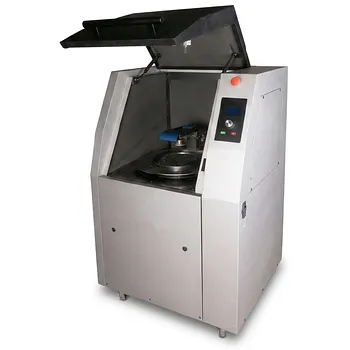
High Speed Vibratory Disc Mill for Spectral Analysis Sample Preparation and Rapid Powder Grinding

Single Tank High Energy Vibratory Ball Mill for Laboratory Grinding and Mixing

Nano High Energy Vibratory Ball Mill with Heating and Temperature Control
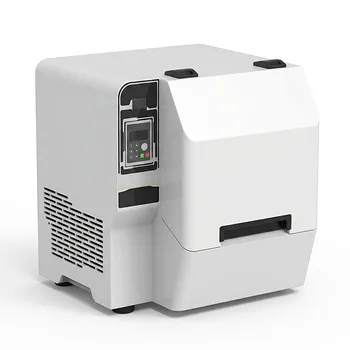
Nano High Energy Vibratory Ball Mill for Laboratory Sample Preparation
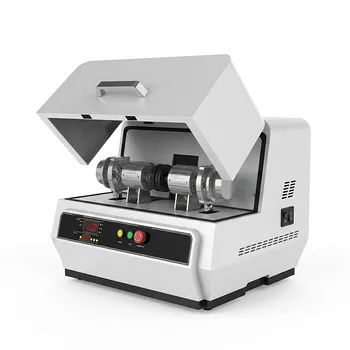
Dual Jar High Energy Vibratory Ball Mill
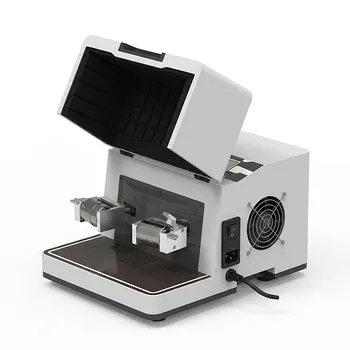
High Energy Hybrid Vibratory Ball Mill for Grinding Mixing and Cell Disruption
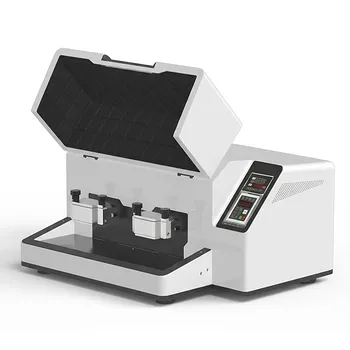
Nanoscale High-Energy Vibratory Ball Mill for Laboratory Sample Preparation, Mechanochemistry, and Mechanical Alloying
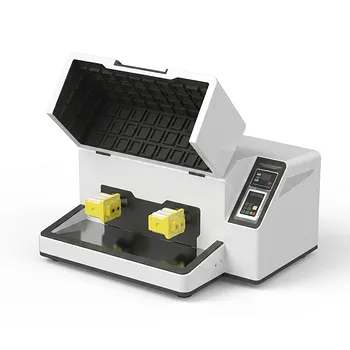
Multi-Platform Nanoscale High-Energy Vibratory Ball Mill
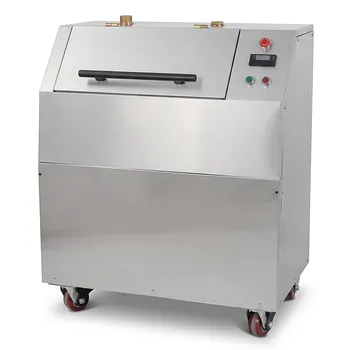
Vibratory Disc Mill for Rapid Fine Grinding and High Throughput Sample Preparation of Hard and Brittle Materials
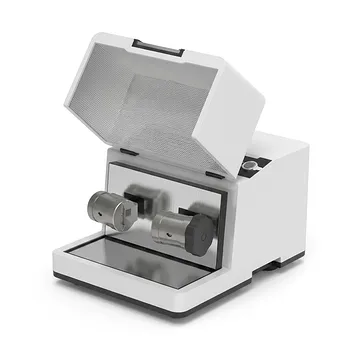
Heating Temperature Controlled High Energy Vibratory Ball Mill
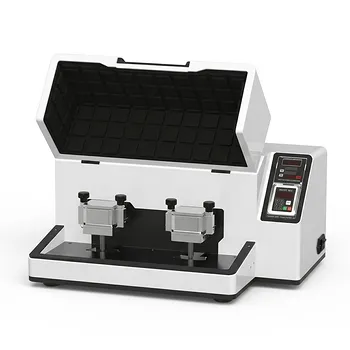
Nanoscale High Energy Vibratory Ball Mill Low Temperature
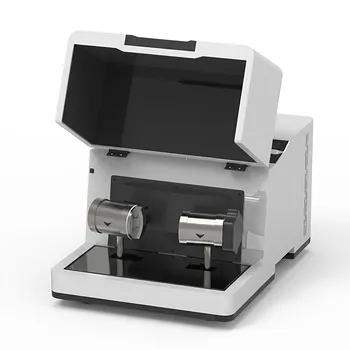
Ultra-Low Temperature Cryogenic High-Energy Vibratory Ball Mill
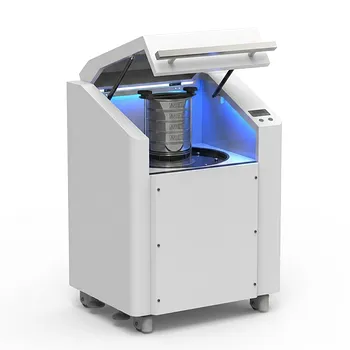
High Frequency Cabinet Type Three-Dimensional Rotary Vibrating Sieve Shaker for Dry Sieving and Particle Classification
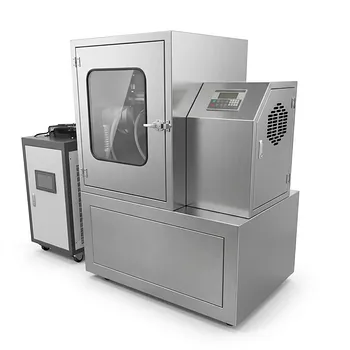
Vibratory Superfine Grinder for Ultra Fine Laboratory Powder Milling
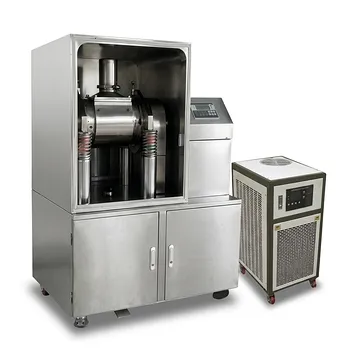
Small Vibrating Ultrafine Grinder for Traditional Chinese Medicine
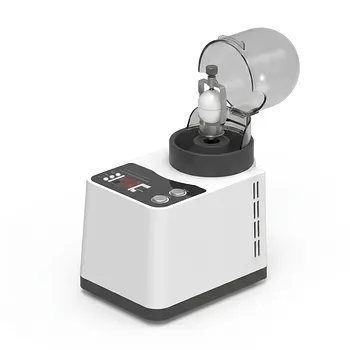
Laboratory Micro Vibration Grinding Mill for Trace Sample Preparation
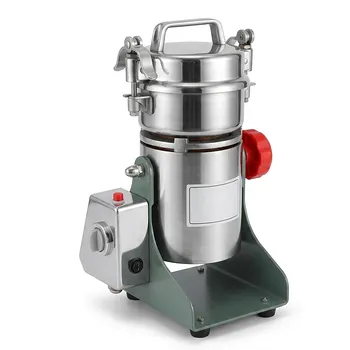
High Speed Swing Type Laboratory Pulverizer for Fine Powder Grinding and Sample Preparation
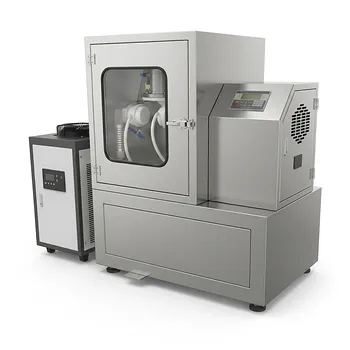
Vibratory Ultra-Low Temperature Ultrafine Grinder for Cryogenic Powder Processing
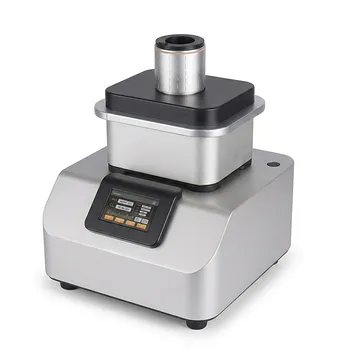
Ultra Centrifugal Mill High Speed Laboratory Grinder for Fibrous and Brittle Sample Preparation