The Paradox of Small Things: Why Tinier Beads Unlock the Nano World, and Sometimes Fail
Jun 23, 2026
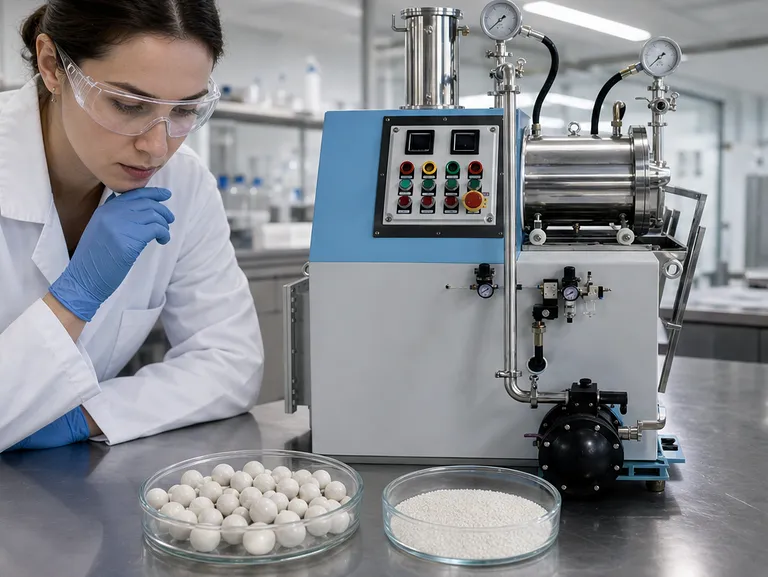
The Last Mile Problem in a Milling Jar
You have milled for hours. The laser diffraction report stares back at you: D90 of 250 nanometers. Not bad. But the specification demands 150 nanometers. You are stuck in the “last mile” of particle size reduction, a space where standard physics seems to break down.
It feels like a supply chain issue at the molecular level. You are adding energy, but the material refuses to break. The bottleneck isn’t your machine’s motor. It’s a question of geometry, probability, and the blunt fact that your grinding media might simply be too big to “see” the fine particles you are trying to crush.
The solution is counter-intuitive. To break something incredibly small, you need a tool that isn’t powerful, but overwhelmingly present.
The Contact Point Economy
We tend to romanticize brute force in engineering. The massive jaw crusher that shatters a rock with a single, catastrophic bite. But nanonization doesn’t work in the currency of single impacts. It works in the high-frequency economy of contact points.
The Probability of a Hit
Imagine a single 1.0 mm bead falling through a liquid suspension. It has mass. It has momentum. If it hits a large, fragile crystal, it shatters it instantly. Now, reduce the target particle to 50 nanometers.
The gap between two 1.0 mm beads is a vast canyon on the nanoscale. Most of the drug particles flow through these voids untouched. They dodge the impact. You are applying force, but the transmission of that force is statistically rare.
Density as Destiny
Swap the 1.0 mm beads for 0.1 mm beads. The math of packing changes instantly. In the same jar, you now have a thousand times more spheres. The contact point density doesn't just increase; it explodes.
- Larger beads: Sparse impact zones. A hit-or-miss lottery.
- Smaller beads: A dense mesh of shear planes. Continuous, unavoidable processing.
You’ve shifted from a game of intermittent bombardment to a process of high-probability grinding. The drug particles are trapped in a tight lattice where compression and shear are constant forces, not random events.
The Energy Cliff
There is a hidden trap here. If smaller is always better for frequency, why not use 0.05 mm beads and finish the job in minutes? The answer is the point where physics demands a down payment.
The Single Bullet Problem
A 0.1 mm bead is a terrible projectile. It lacks the kinetic energy to initiate a fracture on a large, tough feed stock. If you pour a coarse powder into a mill loaded with ultra-fine media, the beads won't crush the particles. They will simply flow around them like sand around pebbles.
This is the Energy Cliff. You can’t start a nanonization process in the nano realm. You must earn your way down.
The Viscosity Trap
At these tiny diameters, the mixture stops behaving like a slurry and starts behaving like a viscous paste. Fluid resistance spikes. The motor strains not to crush particles, but just to push the media.
The symptom is heat. An uncontrolled exotherm in the milling chamber that denatures proteins, degrades amorphous drugs, or triggers a phase transition in a polymorph. You are fighting a thermodynamic battle inside the grinding jar, and smaller beads always make the fire worse.
Engineering the Transitions
The master technician doesn’t choose a single bead size. They design a cascade. They understand that particle size reduction is a staged negotiation between energy and frequency.
Stage 1: The Initiator
You begin with a bead that ignores frequency in favor of force. A 0.5 mm or 0.8 mm yttria-stabilized zirconia bead acts like a hammer. Its job is not finesse; it is to destroy the crystal architecture of the raw material, rapidly taking the particle size down from micron scale to the doorstep of the nano-region.
Stage 2: The Refiner
Once the material is sufficiently fragile, you switch media. The 0.3 mm bead enters the process. It sacrifices brute force for uniformity. The specific surface area of the media charge increases, distributing shear forces across a wider plane. This is the stage where the D90 and D50 numbers converge, killing the tail end of the distribution curve.
Stage 3: The Finisher
This is the moment of truth. To breach the 100-nanometer barrier, you need the 0.1 mm bead. The individual impact energy is almost negligible. But the density is overwhelming. The drug particles are no longer being “broken” in a traditional sense; they are being ground by the collective weight of a thousand simultaneous micro-frictions. You aren't smashing a rock; you are eroding a stone with a relentless tide.
The Hidden Cost of Nano-Drift
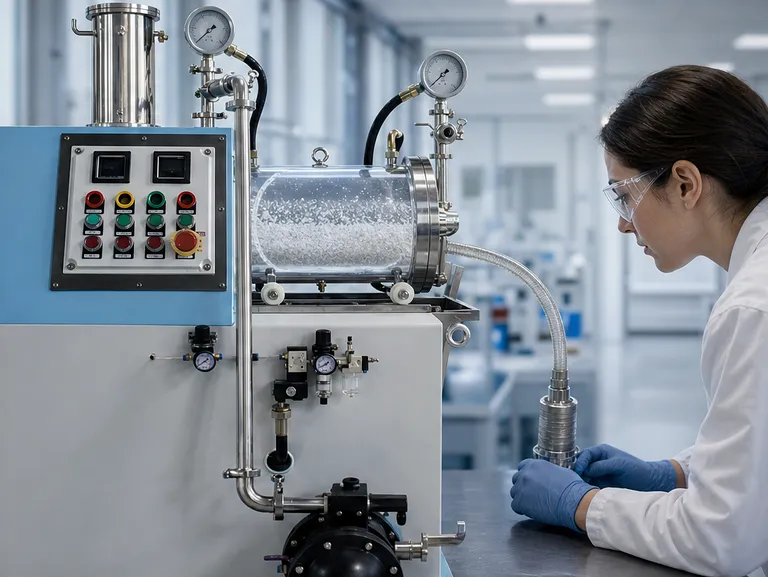
An experienced pharmaceutical engineer looks for a different failure mode entirely: media loss. Using 0.1 mm beads in a mill not designed for them is a recipe for separator screen clogging.
If the gap in the mill’s separator is too wide, the beads escape into the product stream. You don't just lose your expensive media; you contaminate a batch of intravenous drug meant for a patient. If the gap is too tight, the high fluid resistance causes a pressure differential that blocks the screen instantly.
The art of achieving 100 nanometers is less about the beads themselves and more about the system’s ability to contain and cool them.
A Guide to the Sub-Micron Roadmap
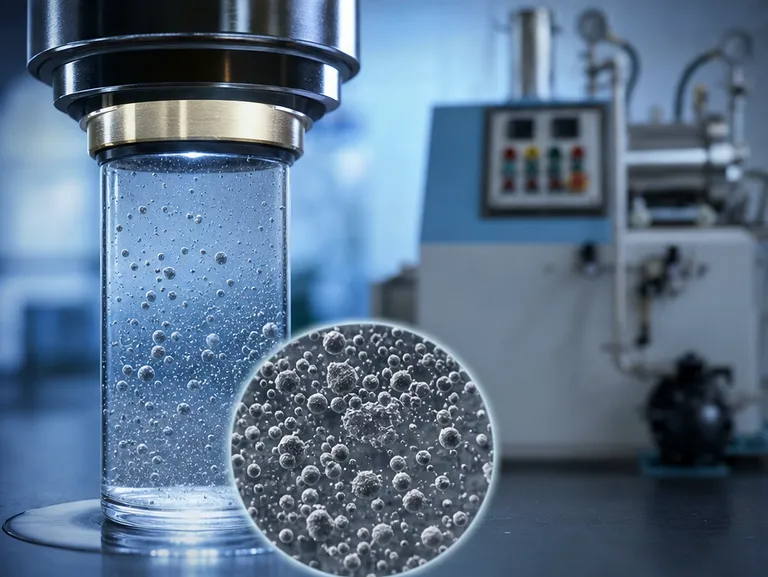
The decision tree is simple, but the thresholds are absolute.
| Goal | Bead Diameter | Mechanism | The Watch-out |
|---|---|---|---|
| Rapid de-agglomeration of hard APIs | 0.5 – 1.0 mm | High-energy fracture of large domains | Cannot achieve true nano-size; high contamination risk from bead wear. |
| Narrow distribution of standard nano-suspensions | 0.3 mm | Balanced shear forces and uniform energy transfer | Requires pre-milled feed stock; struggles below 200 nm. |
| Achieving sub-100 nm (True Nanonization) | 0.1 – 0.2 mm | Maximum collision frequency and specific surface area | High heat generation; requires precision chiller and expert separator handling. |
The Romance of the Invisible
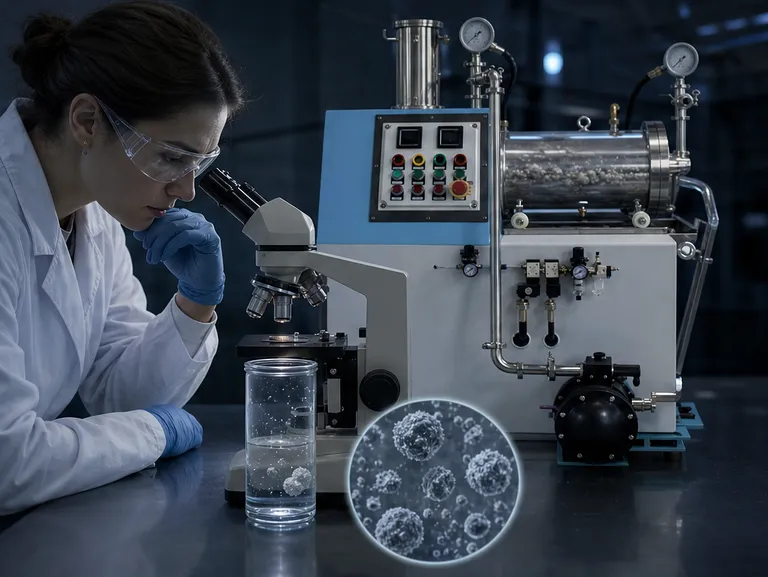
There is a quiet magic in setting up a bead mill correctly. It looks static from the outside—a sealed chamber, a turning motor. But inside, a storm of miniature physics is raging. You have designed a statistical environment where failure is mathematically impossible for a particle. It cannot hide. It cannot survive.
The final particle size is not a function of time or power. It is a function of your choice in media. You just have to choose the right size of “small” to get the job done.
When scaling up a wet grinding process for a new API or refining a lab-scale formulation, the interface between the media diameter and the milling hardware is the difference between a successful nano-suspension and a burnt-out motor. It requires a range of planetary ball mills, bead mills, and high-pressure homogenizers that can manage the heat and separator demands of sub-100-nanometer processing. Contact Our Experts to find a complete sample preparation solution calibrated for the specific energy density your target particle size demands.
Quick Links
Suggested Products
Horizontal Bead Mill for Nanoscale Grinding and Advanced Material Powder Processing Vertical Nano Bead Mill for Ceramic Materials with Permanent Magnet Motor and High Efficiency Grinding Laboratory Horizontal Bead Mill for Nanomaterial Wet Grinding and Material Science Research High Efficiency Laboratory Bead Mill Nano Powder Dispersion Sand Mill for Material Science Research Nano Laboratory Bead Mill Desktop Sub Micron Sand Mill Screenless Seal Less Powder Grinder
PowderPreparation
Last updated on May 15, 2026
Related Products
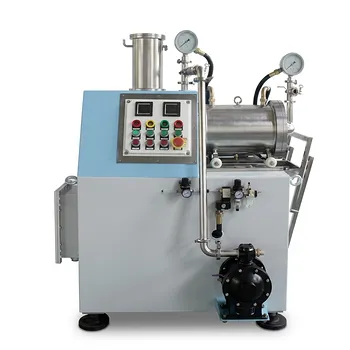
Horizontal Bead Mill for Nanoscale Grinding and Advanced Material Powder Processing
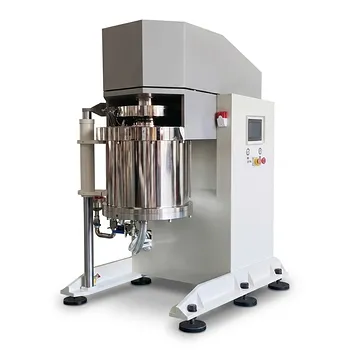
Vertical Nano Bead Mill for Ceramic Materials with Permanent Magnet Motor and High Efficiency Grinding
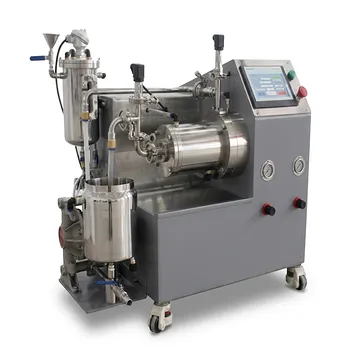
Laboratory Horizontal Bead Mill for Nanomaterial Wet Grinding and Material Science Research
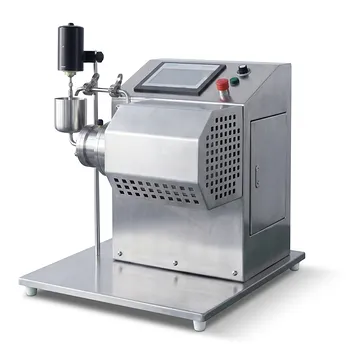
High Efficiency Laboratory Bead Mill Nano Powder Dispersion Sand Mill for Material Science Research
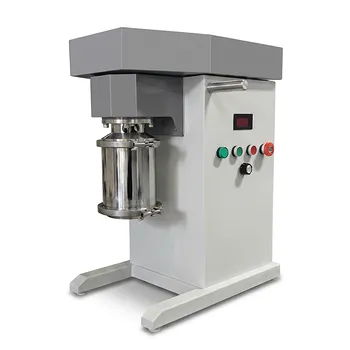
Nano Laboratory Bead Mill Desktop Sub Micron Sand Mill Screenless Seal Less Powder Grinder
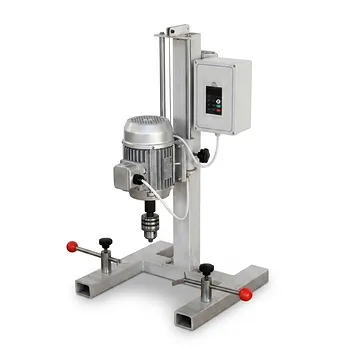
Laboratory Disperser and Sand Mill for Grinding Dispersing Emulsifying
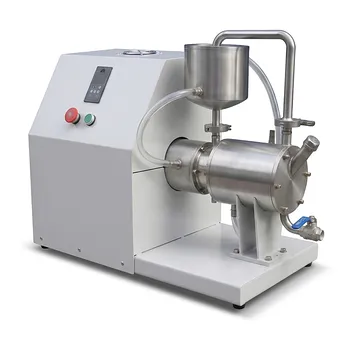
Laboratory Small Horizontal Sand Mill for Nano Materials Wet Grinding
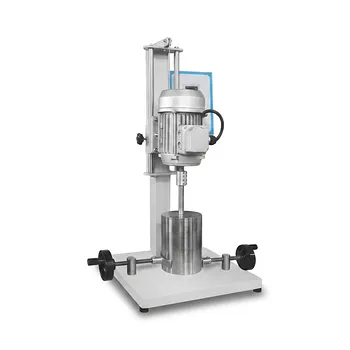
Laboratory Basket Sand Mill for Wet Grinding and Dispersion of Viscous Slurries
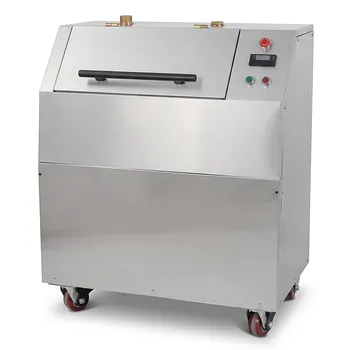
Vibratory Disc Mill for Rapid Fine Grinding and High Throughput Sample Preparation of Hard and Brittle Materials
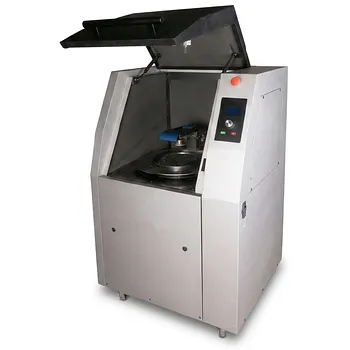
High Speed Vibratory Disc Mill for Spectral Analysis Sample Preparation and Rapid Powder Grinding
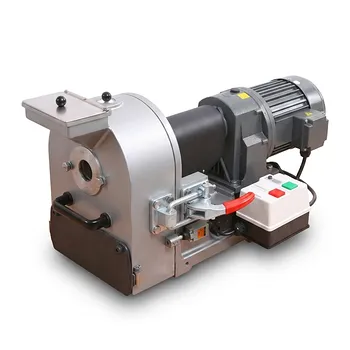
Laboratory Disc Mill for Fine Sample Preparation of Hard and Brittle Materials

Heavy Duty Horizontal Planetary Ball Mill for Efficient Industrial Grinding and Sample Preparation

Vertical Production Planetary Ball Mill for High Throughput Powder Processing
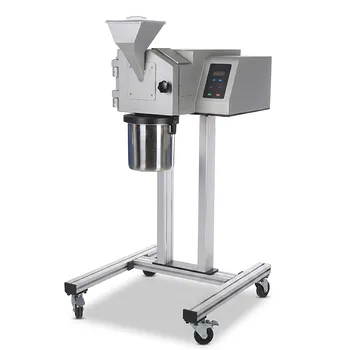
Cross Beater Mill for Brittle Material Grinding and Continuous Fine Crushing Industrial Sample Preparation
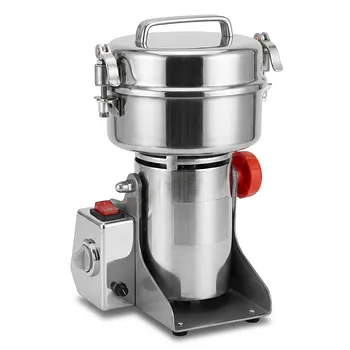
High Speed Laboratory Powder Grinder Small Batch Sample Preparation Mill
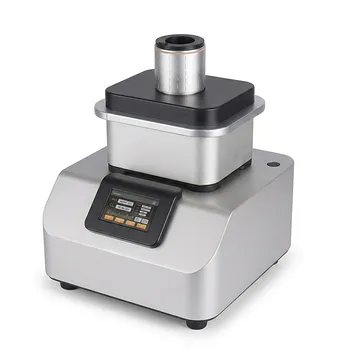
Ultra Centrifugal Mill High Speed Laboratory Grinder for Fibrous and Brittle Sample Preparation

High Energy Omnidirectional Planetary Ball Mill 16L
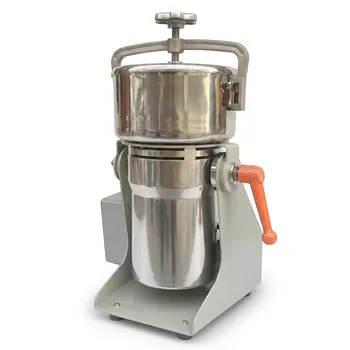
High Speed Laboratory Grinder Efficient Stainless Steel Powder Pulverizer Universal Material Science Mill for Sample Preparation
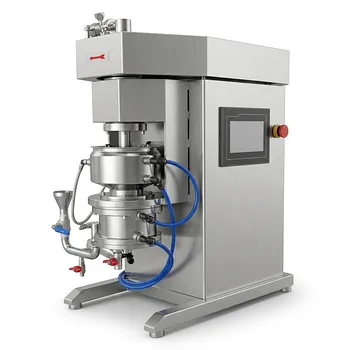
Small Ceramic Structure Laboratory Sand Mill Nanoscale Grinding Dispersion Equipment Seal-less Screen-less Design
