The Silence Inside the Jar: What a Ball Mill Really Does for Doped Bismuth Ferrite
Jul 19, 2026
The Day the XRD Pattern Broke Your Heart
You open the furnace after a 48-hour sintering run. The pellet looks intact. You grind it, scan it, and then—a forest of unwanted peaks. Secondary phases everywhere. The perovskite structure you chased is only a minor guest.
It’s easy to blame the temperature profile or the dopant levels. You tweak the calcination ramp, change the dwell times, maybe adjust the terbium ratio. The result? The same messy diffractogram greets you again.
Here’s the uncomfortable truth, the kind that hides in plain sight: your ceramic’s fate was sealed not in the oven, but inside a milling jar.
In complex oxides like terbium-modified bismuth ferrite (Bi₀.₈Tb₀.₁Pb₀.₁Fe₀.₉Ti₀.₁O₃), the bulk of the intellectual effort goes into the crystal chemistry. Yet the bulk of the failure often traces back to one mechanical step—the homely, overlooked ball mill.
Why Mixing Is Not Enough
The Scale of the Problem
When you weigh bismuth oxide, iron oxide, titanium dioxide, and rare-earth dopants onto a balance, you’re seeing grams. Your solid-state reaction, however, works at the nanometer scale. Without aggressive mechanical intervention, those colorful powders remain separate galaxies.
Even a 30-minute shaker mix leaves behind microscopic islands of pure Fe₂O₃ or unmixed PbO. During heating, each island follows its own reaction path. The result is a patchwork of phases, not the single-phase perovskite you designed.
The Job Only a Ball Mill Can Do
High-energy planetary ball mills impose a mechanical regime that chaotic hand mixing cannot replicate. Impact and shear forces tear apart agglomerates, deform crystallites, and—most importantly—force dissimilar particles into intimate contact. This is not blending. It is forced atomic proximity.
The jar becomes a high-pressure theater where brittle oxide particles fracture and cold-weld at fresh surfaces. The repeated welding-fracturing cycle distributes every element evenly, eliminating the spatial memory of the original powders.
Where the Energy Actually Goes
Creating Reactive Surfaces
A bismuth ferrite precursor milled in a planetary mill for 40 hours is a different chemical beast from the same composition mixed by hand. The particle size plunges from micrometers to 30–100 nanometers, and the specific surface area explodes by an order of magnitude.
That surface area is not just geometric nicety. It represents broken bonds and dangling atoms—high-energy sites that eagerly participate in solid-state diffusion. The reaction no longer needs to wait for sluggish bulk diffusion; it can proceed via short-circuit paths that dramatically lower the thermal budget.
Mechanical Activation as a Kinetic Doping Agent
Terbium and lead ions must substitute into the bismuth ferrite lattice. That requires both charge compensation and the physical relocation of ions. Milling before calcination creates a reservoir of surface energy that effectively pre-pays the activation cost of cation migration.
The payoff is real: a milled precursor can form the target perovskite phase at temperatures 50–100 °C lower than an unmilled control. In a system where bismuth volatility is a constant threat, every degree of lowered processing temperature protects your stoichiometry.
When the Jar Works Against You
The Hidden Cost of Wear
High energy comes with a shadow. Zirconia grinding balls and jar linings slowly erode, shedding particles that enter your ceramic. A few parts per million of yttrium-stabilized zirconia may not matter for structural oxides, but in an electroceramic—where grain-boundary phases dictate dielectric loss—contamination is catastrophe.
The fix is not to abandon milling but to match the media to the mission. YSZ balls offer toughness and minimal iron contamination. Tungsten carbide provides even higher density for ultrafine grinding. Alumina offers an economical route for less contamination-sensitive work. The choice must be deliberate, not default.
Temperature: The Invisible Variable
Inside a sealed milling jar spinning at 600 rpm, local temperatures can rise well above 100 °C. For a precursor containing volatile bismuth oxide or heat-sensitive organics, this is a recipe for compositional drift. Soft agglomeration sets in, pretending to be refinement while actually robbing you of reactivity.
Two strategies matter here:
- Wet milling: Ethanol or acetone acts as a heat sink while reducing surface van der Waals forces that cause agglomeration.
- Interrupted milling cycles: Pause-rotate sequences let heat dissipate without sacrificing total input energy.
For materials that demand sub-zero processing, liquid nitrogen cryogenic grinders remove heat so aggressively that even ductile or thermo-labile precursors become brittle and grindable. This opens the door to processing perovskite chemistries that would otherwise degrade under frictional heat.
The Full Picture: Milling Is Only Half the Story
A homogeneous, activated powder is magnificent—but it is still a powder. To become a functional ceramic, it must be consolidated without undoing the milling’s work.
When Density Becomes Destiny
Imagine you’ve achieved a single-phase perovskite precursor. You press a green pellet in a uniaxial die. Sinter it. The final ceramic shows warpage, density gradients, or microcracks. The culprit? Non-uniform compaction. A simple uniaxial press can leave density variations of 10–15 % across the pellet, which amplify during firing.
Cold Isostatic Pressing (CIP) applies hydrostatic pressure uniformly through a fluid medium, delivering green bodies with homogeneous density. For doped bismuth ferrite, where even slight microstructural inhomogeneity scrambles the dielectric and magnetic response, CIP is not a luxury—it’s a requirement.
The Process Spectrum
Modern laboratories need a connected chain of sample preparation tools, not isolated gadgets:
- Planetary ball mills, jet mills, and disc mills cover different purity and particle-size targets.
- Sieve shakers and air-jet sieves ensure that every granule entering the press meets your narrow size specification.
- Powder mixers and defoaming mixers homogenize binder–powder blends without reintroducing air.
- Hydraulic presses—from standard lab presses to XRF pellet presses, hot presses, and vacuum hot presses— bridge the gap from loose powder to test-ready solid.
When your research demands terbium-modified bismuth ferrite with a repeatable perovskite phase and a dense, crack-free microstructure, the answer lives in the integration of these steps.
The Mindset Shift
The psychology of materials research pulls us toward the spectacular—the exotic composition, the clever sintering schedule. Yet Morgan Housel’s insight that risk hides where attention is scarce applies perfectly here: the mundane jar on the lab bench controls more of your outcome than the furnace you obsess over.
The engineers who built the first reliable doped perovskites understood this. They treated the mill not as a crude grinder but as a precision tool that orchestrates atomic movement. Every revolution of the jar is a small act of architectural design—locating ions, storing energy, building the floorplan of a crystal.
Your ceramic will not rise above the quality of its precursor. And your precursor will not rise above the quiet, violent, elegant process that unfolds inside a sealed milling jar.
To align your entire powder-to-pellet workflow with that same level of control—from cryogenic grinding to isostatic pressing—Contact Our Experts.
Quick Links
Suggested Products
High Energy Planetary Ball Mill for Nano Scale Grinding and Mechanical Alloying Ultra-Low Temperature Cryogenic High-Energy Vibratory Ball Mill High Energy Hybrid Vibratory Ball Mill for Grinding Mixing and Cell Disruption High Energy Omnidirectional Planetary Ball Mill 16L Multi-Platform Nanoscale High-Energy Vibratory Ball MillFurther Reading
The Gentle Violence of a Planetary Mill: Why the Most Critical Moment in SiC–VC Composites Happens Before Any Heat The 65-Micron Gate: Unlocking the True Isotopic Fingerprint of Portland Cement The High-Energy Gamble: What SiBCN-rGO Fibers Teach Us About Perfect Homogenization The Energy Budget of a Single Impact: How the Ball-to-Powder Ratio Shapes Nanocrystalline Reality The Forge at 10,000 g: How a Planetary Ball Mill Designs Self-Lubricating Composites Atom by Atom
PowderPreparation
Last updated on May 14, 2026
Related Products
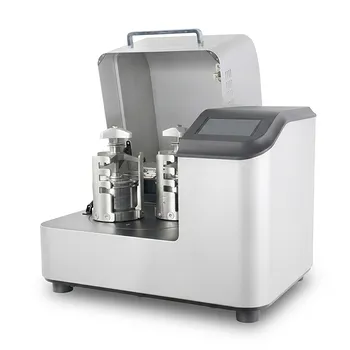
High Energy Planetary Ball Mill for Nano Scale Grinding and Mechanical Alloying
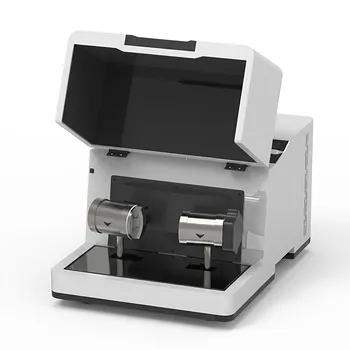
Ultra-Low Temperature Cryogenic High-Energy Vibratory Ball Mill
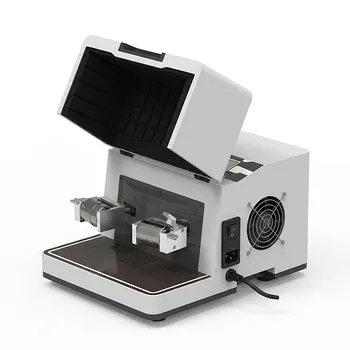
High Energy Hybrid Vibratory Ball Mill for Grinding Mixing and Cell Disruption
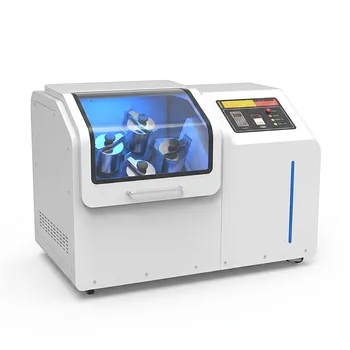
High Energy Omnidirectional Planetary Ball Mill 16L
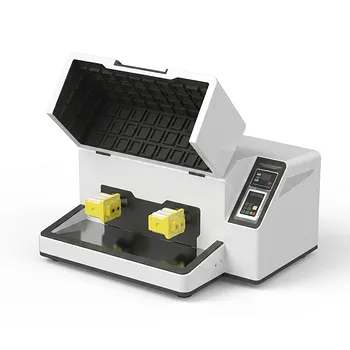
Multi-Platform Nanoscale High-Energy Vibratory Ball Mill
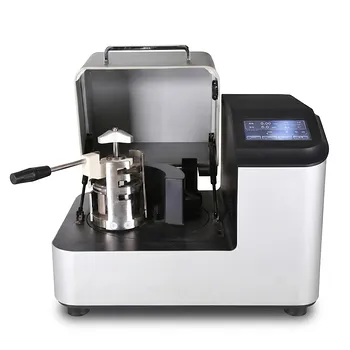
High Energy Laboratory Planetary Ball Mill for Nano Grinding and Material Science Sample Preparation

Nano High Energy Vibratory Ball Mill with Heating and Temperature Control
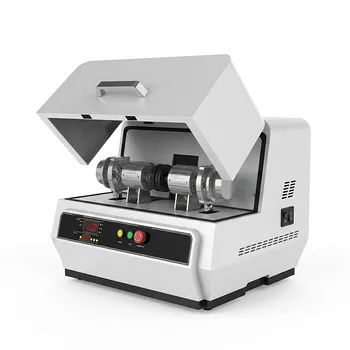
Dual Jar High Energy Vibratory Ball Mill
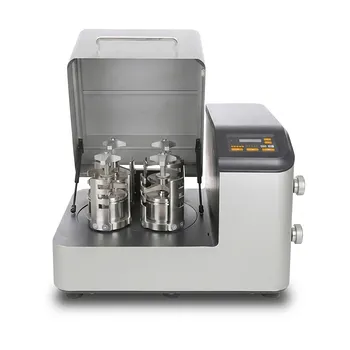
High Energy Planetary Ball Mill for Nano Scale Grinding and Colloidal Mixing in Material Science Research
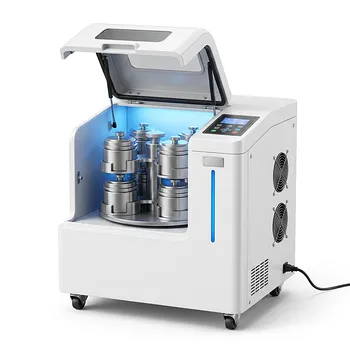
High Energy Omnidirectional Planetary Ball Mill 20L
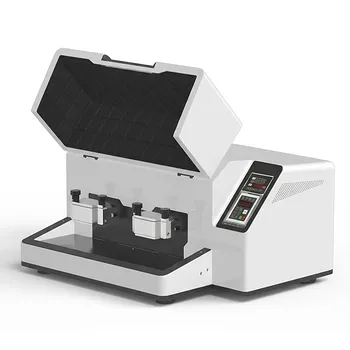
Nanoscale High-Energy Vibratory Ball Mill for Laboratory Sample Preparation, Mechanochemistry, and Mechanical Alloying
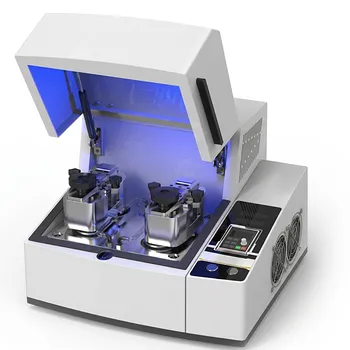
Laboratory Nano High Energy Ball Mill Ultrafine Grinding Mechanical Alloying
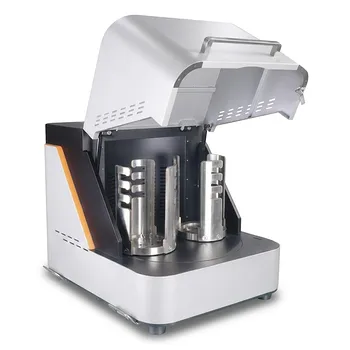
High Energy Laboratory Planetary Ball Mill for Nano Grinding and Colloidal Mixing of Hard and Brittle Materials
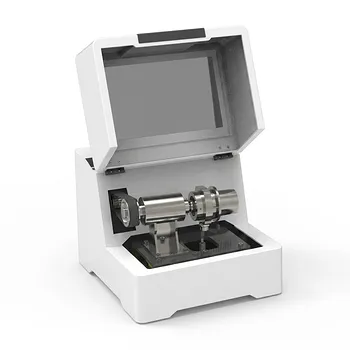
Single Tank High Energy Vibratory Ball Mill for Laboratory Grinding and Mixing
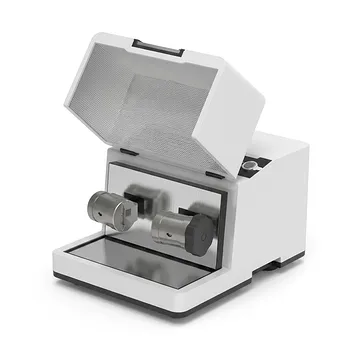
Heating Temperature Controlled High Energy Vibratory Ball Mill

Nano High Energy Vibratory Ball Mill for Laboratory Sample Preparation
Nanoscale High Energy Vibratory Ball Mill Low Temperature

8L Planetary Ball Mill for Laboratory Grinding and Sample Preparation
Vertical Square Planetary Ball Mill for Laboratory Sample Preparation and Nanoscale Grinding