The Energy Budget of a Single Impact: How the Ball-to-Powder Ratio Shapes Nanocrystalline Reality
Jun 07, 2026
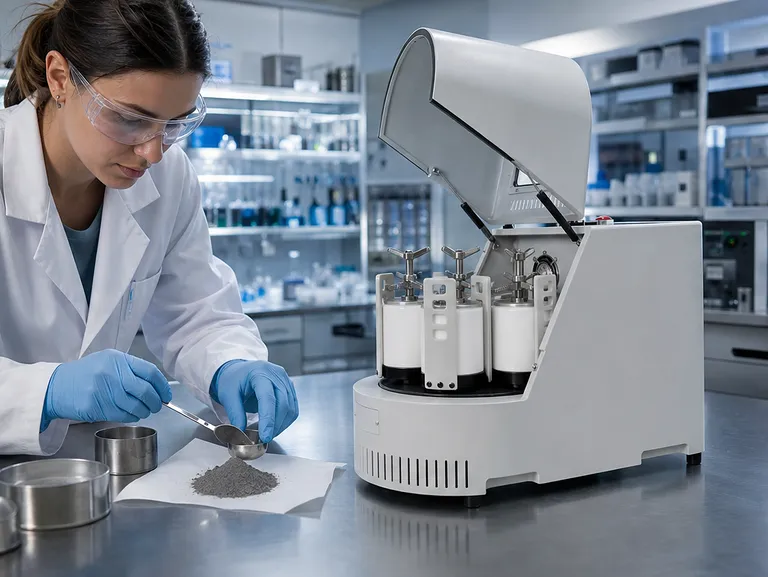
The 3 a.m. Contamination Crisis
The researcher stared at the XRD plot as if it had betrayed her. After 20 hours in the planetary ball mill, she expected a textbook nanocrystalline pattern—a broadened peak, a grain size below 30 nanometers, the kind of result that makes a PhD chapter.
Instead, the plot whispered two words: tungsten carbide. Contamination from the milling media had leached into her powder. Worse, the grain size had barely crossed the 100-nanometer threshold. She had used a ball-to-powder ratio of 30:1, assuming more balls meant more collisions, which meant faster refinement.
The logic felt irresistible. It was also wrong. The real story wasn’t just happening inside the jar; it was unfolding inside the decision-making psychology of the operator.
Ball-to-powder ratio isn’t a speed dial. It’s an energy ledger, one that demands you account for every impact as both a gift and a tax.
The Mechanical Heartbeat: What the Ratio Actually Controls
A planetary ball mill doesn’t just grind. It writes a mechanical signature onto every particle, one collision at a time. The BPR is the variable that decides what that signature says.
Collision Frequency Is a Language, Not a Number
When the jar rotates, the grinding balls dance in a very specific rhythm. The BPR defines how often each gram of powder hears that rhythmic beat.
- Too much powder (low BPR): The balls get muffled. Impacts become soft, cushioned by the material bed. Energy dissipates as heat, not as useful kinetic transfer. The powder stays micron-scale.
- Too many balls (high BPR): The powder gets pummeled relentlessly. Collision frequency skyrockets, but so does the probability of ball-on-ball and ball-on-wall strikes that erode the media and the jar.
The ratio isn’t just about more or less. It’s about the quality of the conversation between media and material.
Energy Density: The Currency of Grain Refinement
Every collision delivers a packet of mechanical energy. The BPR dictates how many joules arrive per gram of powder per unit time. This energy density must cross a threshold to trigger the cascade of dislocation accumulation, lattice distortion, and grain boundary formation that defines nanocrystalline creation.
Imagine trying to knock down a wall. A thousand light taps won’t do what ten sledgehammer swings will. The BPR selects whether you’re tapping or swinging. But swing too hard, and you’ll break the hammer itself—the media wears away.
Repeatability Lives in the Margins of Mass
In scientific work, a BPR of 10:1 means exactly that: 100 grams of balls for 10 grams of powder. If an operator eyeballs the loading or rounds the numbers, the energy environment shifts. One batch refines perfectly. The next batch stalls. The difference is invisible to the eye but absolute in the data. Fixed, weighed BPRs remove the ghost variable from your experiments.
When Energy Meets Matter: The Consequences for Your Powder
The particle doesn’t care about your intentions. It responds only to the mechanical circumstances you engineer.
Nanocrystalline Refinement and the Pursuit of Uniformity
A properly tuned BPR shatters grains through a process called severe plastic deformation. Dislocations multiply, tangle, and reorganize into high-angle grain boundaries. The result is a powder with a low polydispersity index (PDI)—a narrow, uniform size distribution. Everyone wants a PDI that whispers “monodisperse.” The wrong BPR guarantees a polydisperse chaos.
The Invisible Keeper of Phase Purity
When you’re doping titania with erbium or synthesizing a metastable alloy, the BPR doesn’t just shrink grains; it drives atomic mixing. Insufficient energy leaves dopants clustered. Excessive energy amorphizes your material or—worse—lets the carbon or cobalt from your steel balls diffuse into the lattice. The ratio is a phase engineer, whether you acknowledge it or not.
Magnetic and Electronic Fingerprints
For those crafting soft magnetic nanocomposites or battery electrode materials, saturation magnetization and coercivity don’t just depend on chemistry; they depend on the grain boundary volume fraction that only the BPR can sculpt. A shift of 5 in a 15:1 ratio can alter the exchange coupling enough to publish a contradictory paper.
The Psychic Toll of Trade-offs: Purity vs. Size
This is where the human mind plays tricks. Most scientists fear contamination more than they fear large grains, because contamination is visible on an EDS spectrum and can kill a dissertation. So they gravitate toward low BPRs, prioritizing chemical purity.
But when the grain size refuses to shrink, the same instinct flips. Suddenly, the operator craves more balls. More energy. Faster. The temptation to overcorrect is intoxicating.
Morgan Housel would recognize this pattern: the endowment effect applied to research time. You’ve already invested 20 hours, so you throw more energy at the problem to salvage the sunk cost, inadvertently sacrificing the very purity you were protecting. The BPR becomes an emotional battlefield.
There is no escape from the trade-off. There is only informed navigation.
Building a Rational Process: How to Pick Your Ratio Like an Engineer
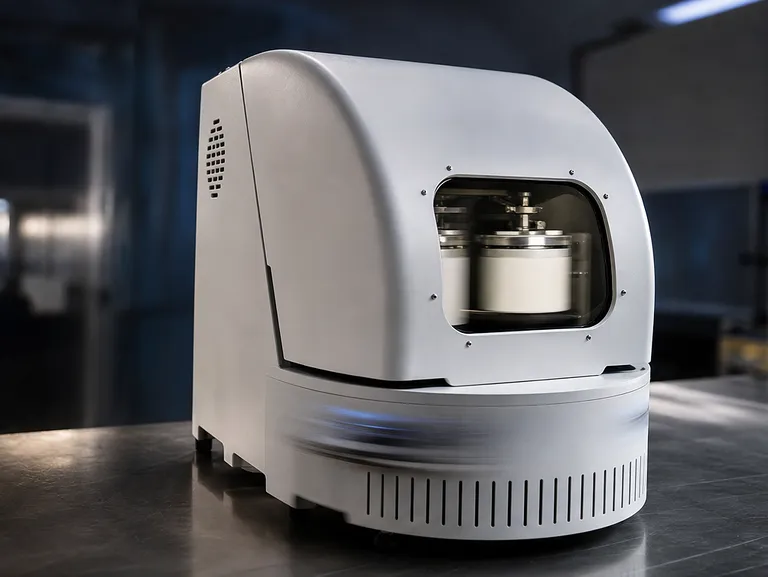
The solution is to remove emotional gambling from the equation. Define your non-negotiable outcome, then select the BPR that pays the appropriate price.
- If Maximum Chemical Purity Is Sacred: Use a lower BPR (around 5:1 to 10:1) and harder, more inert media like yttria-stabilized zirconia. Accept that milling time will extend, but elemental contamination will stay at trace levels. You’re paying in time to buy purity.
- If Minimum Grain Size Is the Benchmark: Climb to a higher BPR (15:1 to 30:1) with high-hardness media. Accept that some media wear will enter the powder. If your application can tolerate parts-per-million debris in exchange for sub‑20nm crystallites, this is your path.
- If Phase Uniformity Is Your Master: Balance in the middle (10:1 to 15:1). The goal is homogeneous energy distribution so that no pocket of powder escapes the collisions. You’re trading speed for spatial fairness.
- If You Need to Scale Beyond 10 Grams: Test the minimum BPR that achieves your target size. A lower ratio allows a larger powder load per batch, cutting total processing cycles. But you must verify at scale—what works for 10 grams can fail for 100 grams due to temperature gradients and dead zones.
The table below distills these dynamics into a snapshot:
| Impact Factor | High BPR (More Balls) | Low BPR (More Powder) |
|---|---|---|
| Refinement Speed | Rapid, nano-scale reachable | Slow, often stuck at micron level |
| Energy Density | High, multiple aggressive impacts | Low, cushioning effect absorbs energy |
| Chemical Purity | Higher contamination risk from media | Lower risk, powder cushions the media |
| Phase Uniformity | Excellent, low PDI | Risk of localized over/under-milling |
| Process Time & Wear | Shorter time but higher jar wear | Longer time, higher total energy consumption |
This matrix is not a judgment. It’s a map. Every choice extracts a cost; the engineer’s job is to pay the one that hurts the least.
From Single Variable to Full System: The Instrument Behind the Ratio
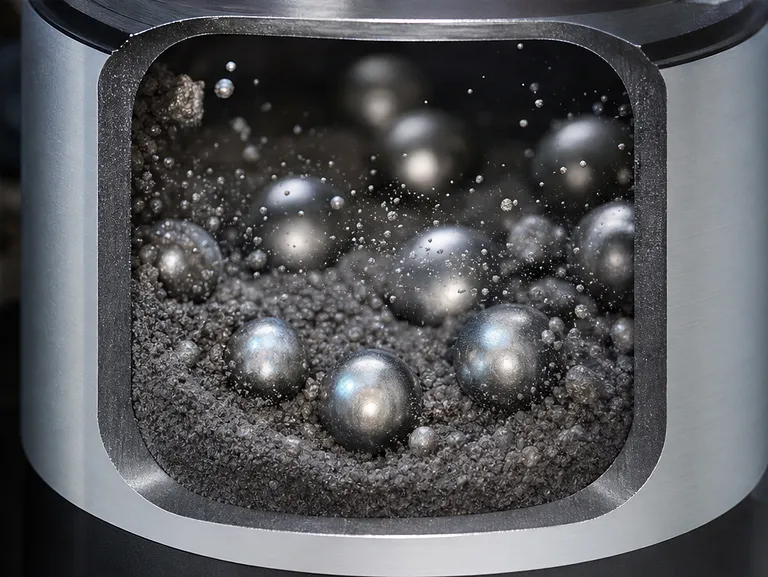
The most brilliant BPR strategy collapses if your planetary ball mill can’t hold a steady speed, if your jar leaks, or if your grinding media of choice isn’t available in multiple materials. Precision is not hoped for; it’s engineered through the equipment you trust.
High-energy planetary ball mills engineered for nanocrystalline synthesis allow you to weigh-in the exact powder mass, load the corresponding ball charge with sub-gram precision, and program multi-step milling cycles that alternate high-energy bursts with cooling pauses—preserving phase structure while you chase grain boundaries.
But the BPR story doesn’t end at milling. Once you’ve produced the perfect nanometer-sized powder, you must stabilize it. That’s where integrated sample-preparation workflows earn their place. Pre-crushing your brittle source material with a jaw crusher ensures uniform feed size before it ever sees a ball mill. Sieve shakers validate particle size distributions. And when your nanocrystalline powder needs to become a solid form, cold isostatic presses (CIP) or vacuum hot presses compact it without destroying the hard-won nanostructure.
A single instrument is a tool. A complete platform—crushers, planetary ball mills, jet mills, splitter/mixers, and a full spectrum of cold/warm isostatic presses, XRF pellet presses, and vacuum hot presses—is a language you can trust to speak consistently from batch one to batch one thousand.
The Precision You Can Design, Not Just Hope For
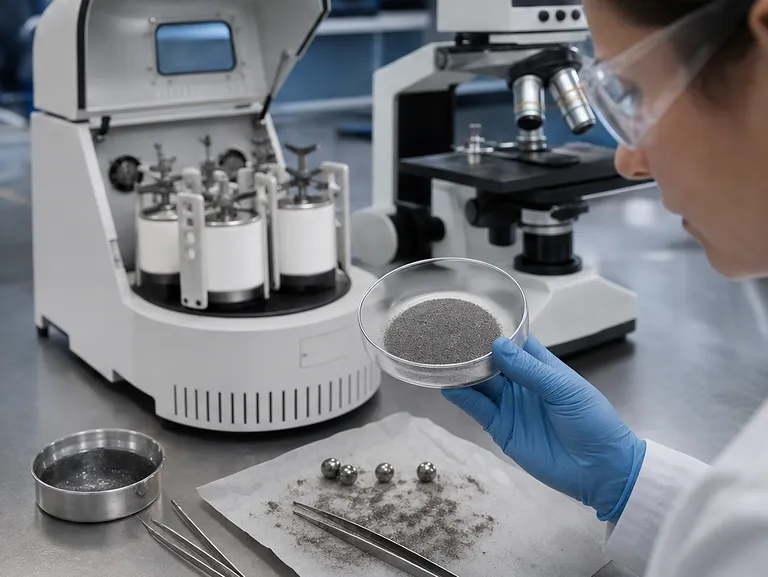
The ball-to-powder ratio is not just a parameter you set. It’s a decision that encodes your priorities into every gram of material. Want purity? Pay in time. Want size? Pay in a tolerable contamination ceiling. Want uniformity? Balance the energy budget with the exactness of a cost accountant.
The researchers who master this ratio don’t just operate mills. They design energy-shedding histories that transform coarse micro-structures into exquisite nanoscale architectures. And they do it with instruments that give them repeatable control over every gram, every ball, and every impact.
When your process demands that level of engineered certainty, having the right complete solution isn’t optional. It’s the difference between a lucky batch and a publishable, scalable platform.
Quick Links
Suggested Products
Vertical Semi Circular Planetary Ball Mill for Laboratory Precision Grinding High Energy Planetary Ball Mill for Nano Scale Grinding and Mechanical Alloying Heavy Duty Horizontal Planetary Ball Mill for Efficient Industrial Grinding and Sample Preparation Vertical Production Planetary Ball Mill for High Throughput Powder Processing 360° Rotating Omnidirectional Laboratory Planetary Ball Mill for Homogeneous Ultra-Fine Grinding and MixingFurther Reading
The 65-Micron Gate: Unlocking the True Isotopic Fingerprint of Portland Cement The High-Energy Gamble: What SiBCN-rGO Fibers Teach Us About Perfect Homogenization The Gentle Violence of a Planetary Mill: Why the Most Critical Moment in SiC–VC Composites Happens Before Any Heat The Forge at 10,000 g: How a Planetary Ball Mill Designs Self-Lubricating Composites Atom by Atom The Alchemist's Hammer: How a Planetary Ball Mill Solves the Diffusion Dilemma in Rare-Earth Doped Ceramics
PowderPreparation
Last updated on May 15, 2026
Related Products
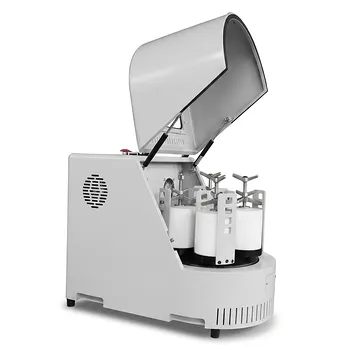
Vertical Semi Circular Planetary Ball Mill for Laboratory Precision Grinding
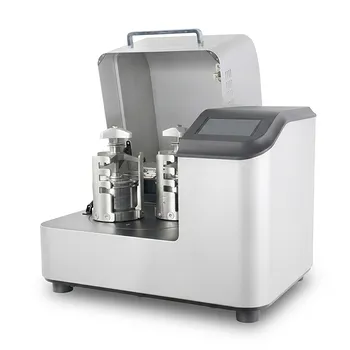
High Energy Planetary Ball Mill for Nano Scale Grinding and Mechanical Alloying
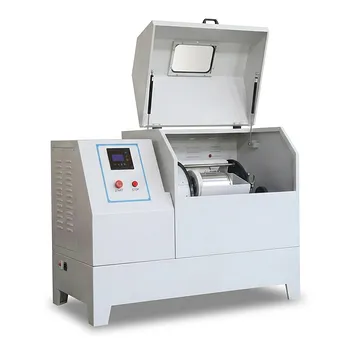
Heavy Duty Horizontal Planetary Ball Mill for Efficient Industrial Grinding and Sample Preparation

Vertical Production Planetary Ball Mill for High Throughput Powder Processing

360° Rotating Omnidirectional Laboratory Planetary Ball Mill for Homogeneous Ultra-Fine Grinding and Mixing

Vertical Square Planetary Ball Mill for Laboratory Sample Preparation and Nanoscale Grinding

Miniature Planetary Ball Mill with Vacuum Grinding and High Efficiency for Laboratory Sample Preparation

High Energy Omnidirectional Planetary Ball Mill 16L
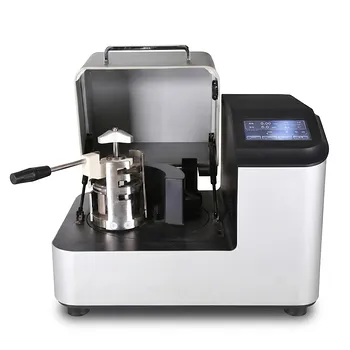
High Energy Laboratory Planetary Ball Mill for Nano Grinding and Material Science Sample Preparation
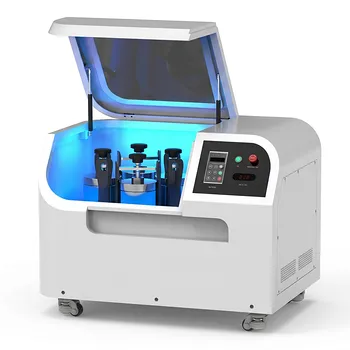
Planetary Ball Mill 12L
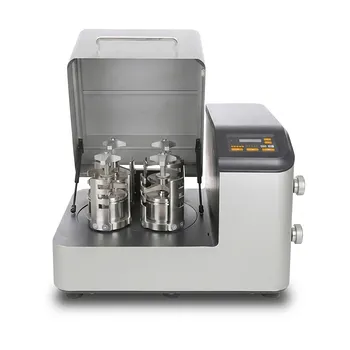
High Energy Planetary Ball Mill for Nano Scale Grinding and Colloidal Mixing in Material Science Research
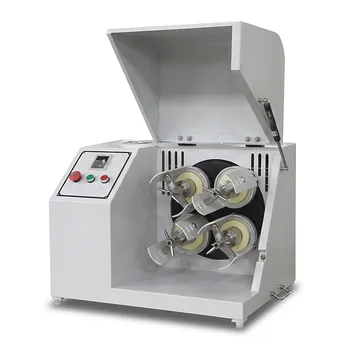
Horizontal Light Duty Planetary Ball Mill for Laboratory Sample Preparation
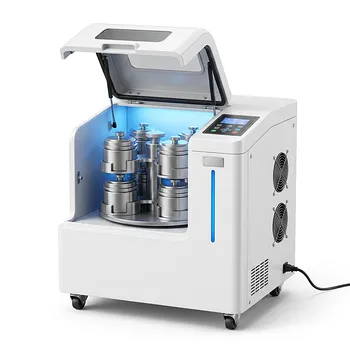
High Energy Omnidirectional Planetary Ball Mill 20L
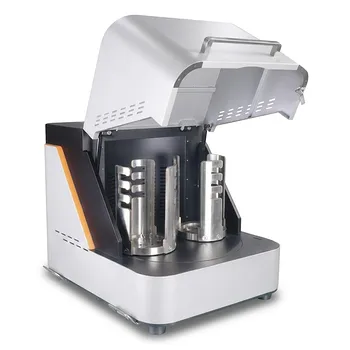
High Energy Laboratory Planetary Ball Mill for Nano Grinding and Colloidal Mixing of Hard and Brittle Materials
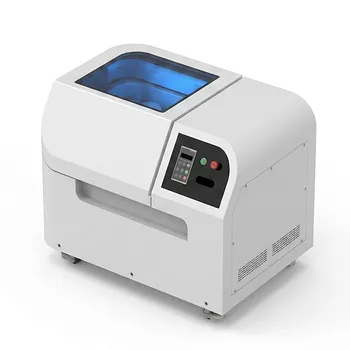
8L Planetary Ball Mill for Laboratory Grinding and Sample Preparation
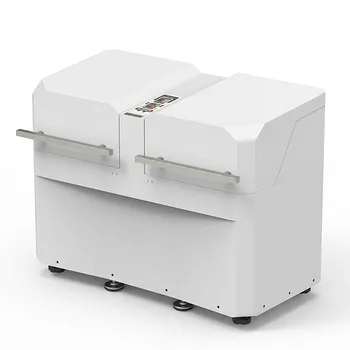
Dual Station Planetary Ball Mill 24L
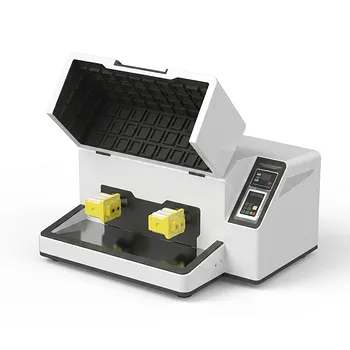
Multi-Platform Nanoscale High-Energy Vibratory Ball Mill
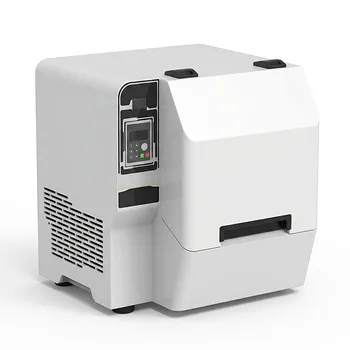
Nano High Energy Vibratory Ball Mill for Laboratory Sample Preparation
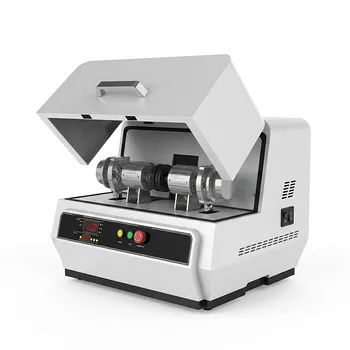
Dual Jar High Energy Vibratory Ball Mill