The High-Energy Gamble: What SiBCN-rGO Fibers Teach Us About Perfect Homogenization
Jul 13, 2026
The Lab Bench Moment Where Everything Goes Wrong
The first time a materials scientist tries to spin SiBCN-rGO ceramic fibers, the optimism lasts maybe three seconds. The dope, a thick slurry of modified ceramic powder and sodium alginate, hits the spinneret and immediately clogs. Or it dribbles out without forming a filament. Or it forms a fiber that snaps under its own weight during coagulation.
The gut response is to blame the chemistry. The ratio is off. The polymer is degraded. The powder is too coarse. Often, none of that is true. The real culprit is invisible: a lack of homogenization at the mechanical level.
This is not a mixing failure you can fix with a magnetic stir bar.
Why Conventional Mixing Leaves Ceramic Powders Defiant
Ceramic suspensions are not simple solutions. They are colloidal battles fought between surface charges, van der Waals forces, and particle morphology. Pour a fine SiBCN-rGO powder into a beaker of sodium alginate solution, stir it, and you get what looks like a uniform black liquid. But looks are deceiving.
Under SEM, you see the truth:
- Clusters of ceramic particles, untouched by shear, sitting like tiny islands.
- Alginate-rich zones that will later burn out during pyrolysis, leaving voids.
- A density gradient that causes sedimentation before the mold is even filled.
These inhomogeneities are not cosmetic. They become stress concentrators in the final ceramic fiber. A single 50-micron agglomerate can reduce tensile strength by an order of magnitude. In a material designed for extreme environments—rocket nozzles, hypersonic leading edges—that defect is a mission failure.
The science demands a different kind of energy input. Not just rotation. Not sonication. Something that forces every particle into intimate contact with every polymer chain.
The Planetary Ball Mill as a Systems Solution
This is where the planetary ball mill stops being just another piece of equipment and becomes the logical centre of the process. Its value lies in a confluence of simultaneous mechanical actions that no other mixing device can replicate.
The Geometry of Destruction
A planetary ball mill forces grinding jars to rotate around their own axes while also revolving around a central sun wheel. The outcome? A gravitational field inside the jar that reverses direction with each half-cycle. The grinding balls don't just fall—they fly, collide, slide, and crush in a chaotic high-energy cascade.
This is not a refinement process. It is a controlled demolition of agglomerates. The shear forces are so intense that even stubborn ceramic clusters are fractured down to sub-micron dimensions within hours. You are not persuading particles to mix; you are removing their ability to exist as separate phases.
Energy as a Processing Variable
There is a psychological hurdle here that many researchers face. We are taught to respect gentle handling of materials. We fear damaging crystal structures or degrading polymers. But what if the material wants that violence? The amorphous phase that forms during extended milling of SiBCN-rGO is not a degradation product—it is the precursor to a more homogeneous, more reactive powder.
By treating energy as a tunable parameter rather than a threat, the operator can engineer:
- Surface activation: Freshly fractured surfaces with dangling bonds that improve polymer adhesion.
- Intimate mixing: Atomic-scale contact between dissimilar powder components.
- Thermal pre-conditioning: A degree of solid-state reaction that lowers subsequent sintering temperatures.
The machine doesn't just save time. It creates a material that a gentler process literally cannot produce.
Controlling the Flow: Rheology Is Everything
The Spinneret Doesn't Forgive
If homogenization is the heart of the problem, rheology is the nervous system. A wet-spinning dope must flow through a capillary with a diameter sometimes smaller than a human hair. The shear rate at the wall can exceed 10,000 inverse seconds. Any fluctuation in viscosity creates a fluctuation in filament diameter. Any elastic instability creates a bead.
The planetary ball mill achieves rheological control by means of high-frequency impact and shear, which break polymer chains and ceramic agglomerates to a remarkably uniform length scale. The result is a slurry that behaves as a Newtonian fluid under process conditions—shear-thinning just enough to pass through the spinneret, but immediately recovering structure in the coagulation bath to maintain fiber integrity.
The Hidden Cost of Low Energy
Use a low-energy mixer and you might still achieve a visually acceptable slurry. But it will have a property called “long elastic memory.” The polymer chains remain entangled in ways that cause die swell and uneven relaxation after exiting the spinneret. The fiber surface becomes rough. The diameter fluctuates. Strength drops.
The planetary ball mill’s relentless mechanical work disrupts this elastic network just enough, creating a dope with the short relaxation times essential for precision spinning. It’s a surgical intervention into fluid dynamics, and it is repeatable.
The Delicate Balance: Heat and Contamination
When Friction Becomes a Liability
No story about high-energy ball milling is complete without the heat problem. The impact energy that breaks agglomerates also raises the temperature inside the jar. For a thermally sensitive binder like sodium alginate, this can mean premature crosslinking, degradation, or gelation that ruins the slurry.
The solution is not “mill less.” It is “mill smarter.” Intermittent milling, cryo-assisted cooling, or simply choosing a mill with lower jar loading can keep temperatures well below the binder’s danger zone. The best planetary ball mills offer pause intervals and cooling jackets that turn this liability into a controlled variable.
The Contamination Conundrum
Every grinding ball leaves a trace of itself. Zirconia media wear into your SiBCN-rGO slurry. Tungsten carbide media introduce heavy elements. Even agate can shed silica. For most ceramic applications, a few parts per million of contamination is irrelevant—but for ultra-high-purity applications, it becomes a design constraint.
The fix is to match media composition to the target ceramic where possible, or to embrace the contamination as a dopant if it improves sintering behaviour. Transparency about this trade-off is essential; it’s not a defect of the method, it’s a parameter you learn to manage.
From One Tool to an Integrated Workflow
The planetary ball mill is the fulcrum. But a ceramic fiber does not live by milling alone. After the slurry is perfected, it must be degassed, filtered, and sometimes pressed into a preform before sintering. That’s where the rest of the sample preparation ecosystem comes in.
The Value of a Unified Equipment Approach
When a single company provides the entire workflow—from initial crushing to final compaction—the material’s history becomes traceable. Contamination is controlled at every step. Process parameters can be transferred directly from R&D to small-scale production.
A complete laboratory solution might look like this:
| Step | Equipment | Outcome |
|---|---|---|
| Raw Material Prep | Jaw Crusher / Cryogenic Grinder | Coarse reduction of brittle ceramic precursors |
| Fine Milling | Planetary Ball Mill / Jet Mill | Sub-micron powder with controlled surface area |
| Particle Sizing | Vibratory Sieve Shaker / Air-Jet Siever | Verification of particle distribution |
| Dope Mixing | High-Speed Powder Mixer / Defoaming Mixer | Homogeneous slurry with no trapped air |
| Preform Compaction | Cold Isostatic Press (CIP) / Vacuum Hot Press | Dense green body or fiber preform for sintering |
This is not a wish list. It is the architecture of repeatable success when you’re working with materials that refuse to compromise.
Choosing the Right Parameter Set for Your Goal
Planetary milling is not a one-size-fits-all operation. The optimal settings depend on what you’re trying to maximize.
For Maximum Fiber Strength
Run longer durations (12 hours or more) at moderate speed. Accept the time penalty to ensure every last agglomerate is destroyed. This is the “quality at all costs” approach.
For High Throughput
Use higher rotational speeds with shorter cycles and cooling pauses. Particle size reduction happens faster, but you risk thermal damage. Monitor jar temperature as if it were a critical process parameter—because it is.
For Maximum Purity
Select grinding jars and media made from the same material as your target ceramic, or from inert materials like agate. Accept that milling efficiency may drop slightly, but contamination will be minimized.
The Certainty of Controlled Chaos
At its heart, a planetary ball mill is a chaos engine. It harnesses the same physical forces that destroy materials in the wrong context and channels them into a reproducible, precision process. That is the engineer’s romance: taking something inherently unpredictable and making it deterministic.
When you close the lid of the grinding jar and start the motor, you are no longer guessing whether your dope will spin. You are reconfiguring matter at the sub-micron level, building the foundations of a ceramic fiber that will survive where metals would melt and polymers would burn.
The machine doesn’t do everything. But without it, everything else is just hoping.
Ready to turn your ceramic powder into defect-free fibers? Contact Our Experts to discuss your application and build an integrated sample preparation workflow that delivers certainty at every step.
Quick Links
Suggested Products
Vertical Semi Circular Planetary Ball Mill for Laboratory Precision Grinding High Energy Planetary Ball Mill for Nano Scale Grinding and Mechanical Alloying Heavy Duty Horizontal Planetary Ball Mill for Efficient Industrial Grinding and Sample Preparation Vertical Production Planetary Ball Mill for High Throughput Powder Processing 360° Rotating Omnidirectional Laboratory Planetary Ball Mill for Homogeneous Ultra-Fine Grinding and MixingFurther Reading
The 65-Micron Gate: Unlocking the True Isotopic Fingerprint of Portland Cement The Energy Budget of a Single Impact: How the Ball-to-Powder Ratio Shapes Nanocrystalline Reality The Gentle Violence of a Planetary Mill: Why the Most Critical Moment in SiC–VC Composites Happens Before Any Heat The Forge at 10,000 g: How a Planetary Ball Mill Designs Self-Lubricating Composites Atom by Atom The Alchemist's Hammer: How a Planetary Ball Mill Solves the Diffusion Dilemma in Rare-Earth Doped Ceramics
PowderPreparation
Last updated on May 14, 2026
Related Products
Vertical Semi Circular Planetary Ball Mill for Laboratory Precision Grinding
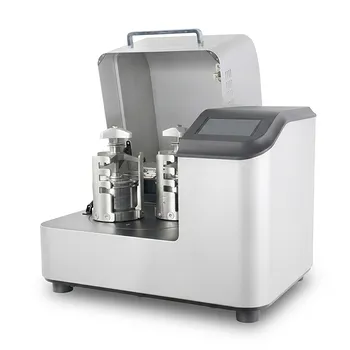
High Energy Planetary Ball Mill for Nano Scale Grinding and Mechanical Alloying
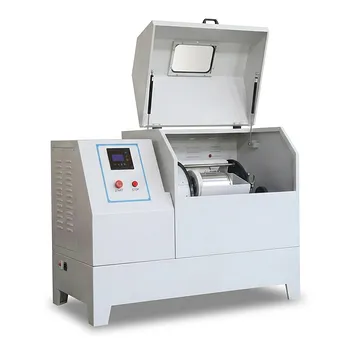
Heavy Duty Horizontal Planetary Ball Mill for Efficient Industrial Grinding and Sample Preparation
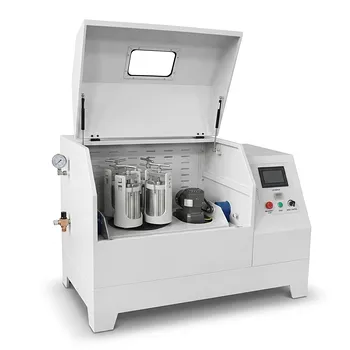
Vertical Production Planetary Ball Mill for High Throughput Powder Processing
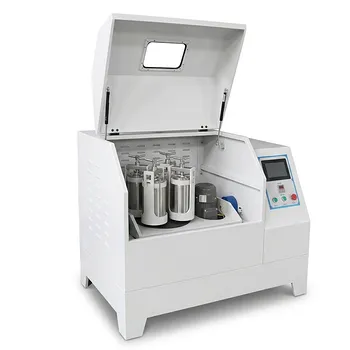
360° Rotating Omnidirectional Laboratory Planetary Ball Mill for Homogeneous Ultra-Fine Grinding and Mixing
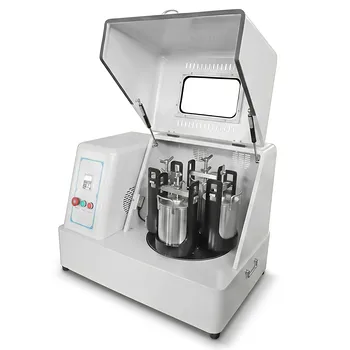
Vertical Square Planetary Ball Mill for Laboratory Sample Preparation and Nanoscale Grinding
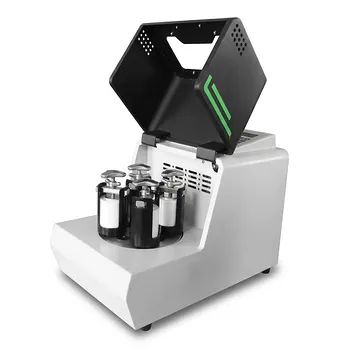
Miniature Planetary Ball Mill with Vacuum Grinding and High Efficiency for Laboratory Sample Preparation
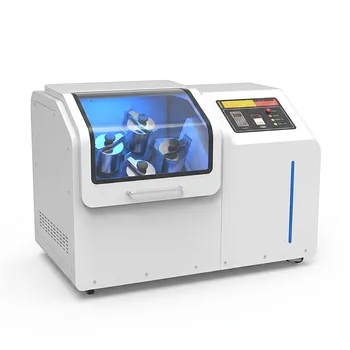
High Energy Omnidirectional Planetary Ball Mill 16L
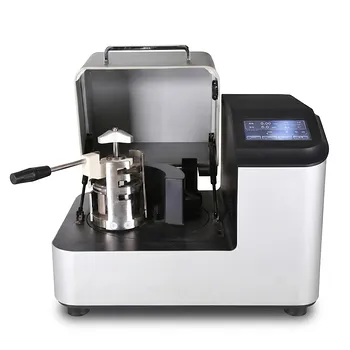
High Energy Laboratory Planetary Ball Mill for Nano Grinding and Material Science Sample Preparation
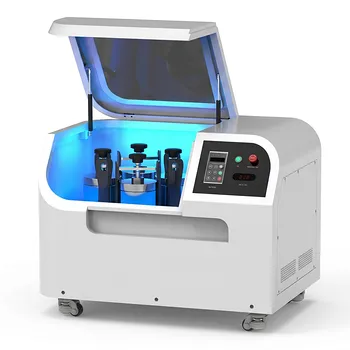
Planetary Ball Mill 12L
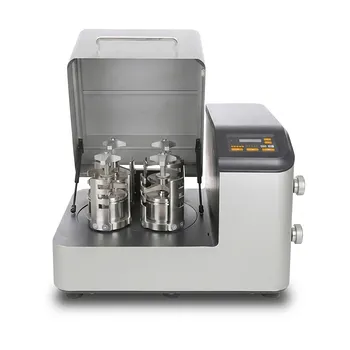
High Energy Planetary Ball Mill for Nano Scale Grinding and Colloidal Mixing in Material Science Research
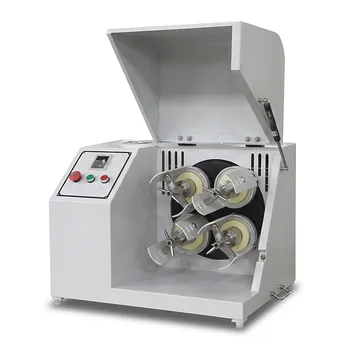
Horizontal Light Duty Planetary Ball Mill for Laboratory Sample Preparation
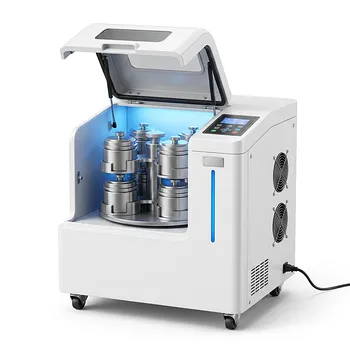
High Energy Omnidirectional Planetary Ball Mill 20L
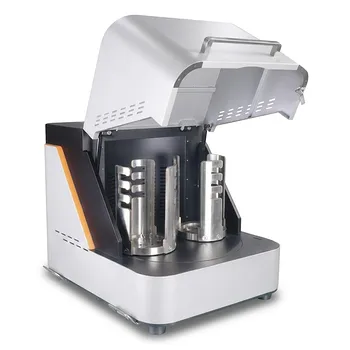
High Energy Laboratory Planetary Ball Mill for Nano Grinding and Colloidal Mixing of Hard and Brittle Materials

8L Planetary Ball Mill for Laboratory Grinding and Sample Preparation
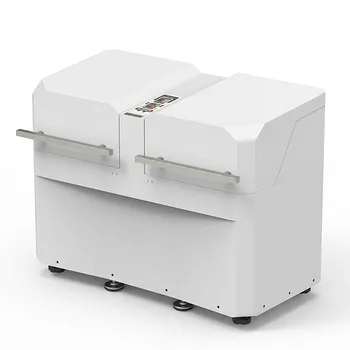
Dual Station Planetary Ball Mill 24L
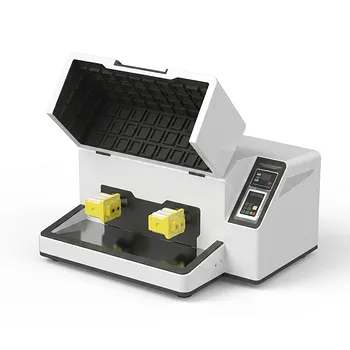
Multi-Platform Nanoscale High-Energy Vibratory Ball Mill

Nano High Energy Vibratory Ball Mill for Laboratory Sample Preparation
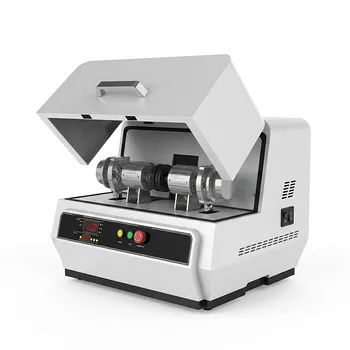
Dual Jar High Energy Vibratory Ball Mill