The Atomic Shuffle: How a Planetary Ball Mill Decides the Fate of Your Self-Reinforced Ceramic
Jun 22, 2026
The Microscope Doesn’t Lie
The SEM image showed a landscape of chaos. A forest of elongated beta-silicon nitride grains—what should have been a beautifully interlocking, self-reinforced microstructure—was instead a patchwork of dense knots and bare clearings. In one zone, stubby crystals huddled together. Millimeters away, a glassy void. The fracture toughness numbers came in wildly different from two slices of the same puck.
The researcher stared at the data, exhausted. The sintering curve was perfect. The thermal profile was textbook. The additive ratios were exact. But the material behaved as if it had been rolled by three different gods.
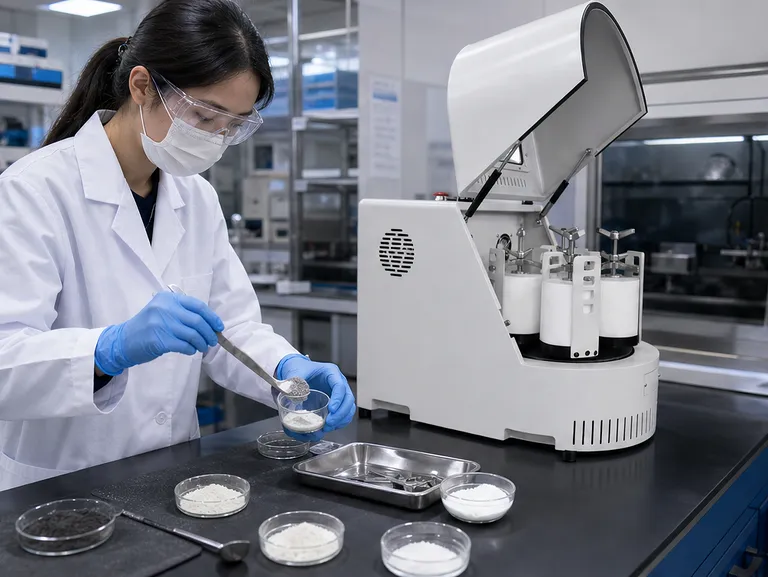
The culprit was invisible to the naked eye. It hid in the first, seemingly simplest step of the whole production chain: the mixing of the raw powders. High-energy planetary ball milling, it turns out, is not just a preparative chore. It is where the real architecture of toughness is signed—or compromised.
Engineering Is a Distribution Problem
We tend to imagine ceramics the way we think about baking bread: wet ingredients, dry ingredients, knead, bake. Get the ratios right, and the oven does the rest. But self-reinforced Beta-Si3N4 does not obey that metaphor.
Here’s what actually needs to happen. A trace amount of rare-earth oxide—Y₂O₃, Al₂O₃, or Lu₂O₃—must find its way onto nearly every single silicon nitride particle. Not “generally.” Not “on average.” But at a distribution so even that when the furnace climbs to 1750°C, a homogeneous liquid phase blooms everywhere at the same instant. That liquid phase dissolves alpha-Si₃N₄ and precipitates elongated beta-Si₃N₄ grains with a high aspect ratio. Those interlocking needles are what give the ceramic its legendary toughness and thermal shock resistance.
If the additives clump, you grow forests only in patches. You get localized grain coarsening and stoichiometric dead zones. The material fails at the grain boundaries because the boundaries weren't uniform from the beginning.
This is the lesson that cost my colleague six months. The planetary ball mill is not a blender. It is a distribution arbitrage tool. And the difference between success and failure is measured in micrometers.
Why High-Energy Planetary Milling Wins
It Solves the Mixing Problem at the Atomic Scale
Standard tumbling mixers move particles. Planetary ball mills move atoms.
- The grinding jars rotate on their own axis while orbiting the main wheel in the opposite direction.
- Centrifugal forces superimpose, generating accelerations up to 100 g.
- Grinding balls crash into powder with high-frequency impacts, pulverizing agglomerates and smearing additive particles onto the matrix surface.
The result is not just a blend. It is a mechanochemical coating of each host particle with the rare-earth oxides. No remote corner escapes. No micro-silo of pure Y₂O₃ waits to liquefy out of sequence.
It Turns Size Into Reactivity
Raw Si₃N₄ powder often arrives with a particle size of 1–3 µm. That is huge by the standards of diffusion-limited sintering.
The planetary ball mill reduces it:
- Sub-micron and nanometer regimes become accessible.
- Specific surface area increases by an order of magnitude.
- Surface energy skyrockets. The powder now wants to densify.
Lower sintering temperatures become possible because the activation barrier has already been lowered mechanically. You trade electrical kilowatt-hours in the mill for thermal kilowatt-hours in the furnace—a bargain in both cost and grain-growth control.
It Scripts the Phase Transition
Between alpha-Si₃N₄ and the final beta phase, a series of solid-state reactions produce intermediate silicates. Those intermediates act as the liquid-phase wetting agents that mediate dissolution and reprecipitation.
Inhomogeneous mix → patchy intermediates → chaotic grain nucleation.
Homogeneous mix → uniform intermediate film → synchronized grain elongation.
The mill writes the script. The furnace merely performs it.
The Hidden Physics Inside the Jar
Impact, Shear, and the “Smearing” Effect
A planetary ball mill applies two kinds of force in violent alternation:
| Force | Action | Role in Beta-Si₃N₄ Preparation |
|---|---|---|
| Impact | Ball-on-ball and ball-on-wall collision | Fractures brittle ceramic particles; refines size |
| Shear/Friction | Ball rolling and sliding against powder | Smears soft oxide additives across hard Si₃N₄ surfaces |
Shear is the unsung hero. It does not just mix; it deforms the additive clumps plastically and spreads them like butter on toast. You’re not stirring—you’re mechanically alloying a ceramic composite.
Precision Control Is the Real Intellectual Property
Speed, ball-to-powder ratio, filling volume, milling duration, and atmosphere all interact in a nonlinear way. Ten minutes too long, and you’ve amorphized the crystal structure. A few RPM too slow, and the additives land in pockets.
Mastering these dials is what separates a lab that publishes “average toughness” from one that publishes “reproducible, upwards of 10 MPa·m^{1/2}.”
Three Ways It Can Go Wrong
No process this energetic is without its dark side. And in materials science, risks ignored are failures prepaid.
Contamination: The Ghost in the Machine
Grinding balls and jar linings wear. That wear debris enters your powder. In Beta-Si₃N₄, even 0.1% of extraneous metal can weaken grain boundaries at high temperature.
Psychological insight: We obsess over the purity of the starting powder but forget that the mill itself is an ingredient. Operators who treat the mill as a passive container lose batches they cannot explain.
Mitigation: Match media to material—Si₃N₄ balls for Si₃N₄ powder, high-purity zirconia, or tungsten carbide when the chemistry permits.
Over-Milling: The Thin Line Between Activation and Destruction
More energy is not always better. Excessive milling destroys crystallinity, producing an amorphous layer that alters the liquid-phase composition unpredictably. The elongated beta grains may still nucleate, but their aspect ratios become stunted and erratic.
Psychological insight: The human mind likes a process that can be pushed to the limit. With planetary mills, the optimal point sits shy of the maximum. Finding it requires disciplined experimentation, not an “11 out of 10” mentality.
Heat and Oxidation
High-frequency impacts generate substantial heat. Without cooling, the local temperature inside the jar can rise enough to pre-oxidize the powder or trigger undesired reactions.
Mitigation: Wet milling with inert solvents or cryogenic/controlled-atmosphere accessories keeps the chemistry locked until you’re ready to fire.
Matching the Mill Strategy to Your Goal
| If your target is… | Prioritize… | Adjust the mill to… |
|---|---|---|
| Maximum fracture toughness | Additive homogeneity over extreme refinement | Moderate speeds, longer mixing cycles |
| Low-temperature sinterability | Nanometer particle size and high surface energy | Higher impact energies, finer media |
| High-temperature purity | Minimizing contamination | Same-material media, shorter cycles |
| Reproducible batch-to-batch quality | Precise, repeatable parameter control | Digitally governed mills with recipe memory |
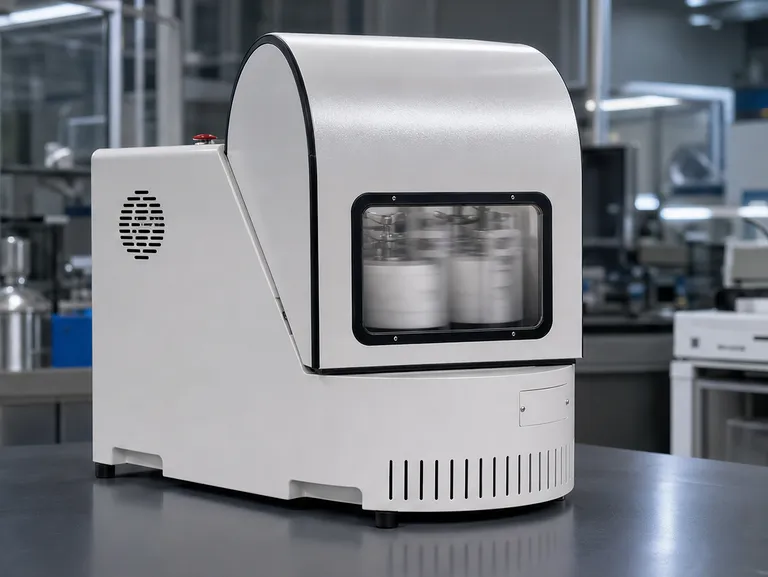
No single milling protocol fits every ceramic ambition. The intelligent choice is to treat the planetary ball mill as a design instrument, not a kitchen appliance.
The Complete Workflow: From Powder to Pressed Part in One Philosophy
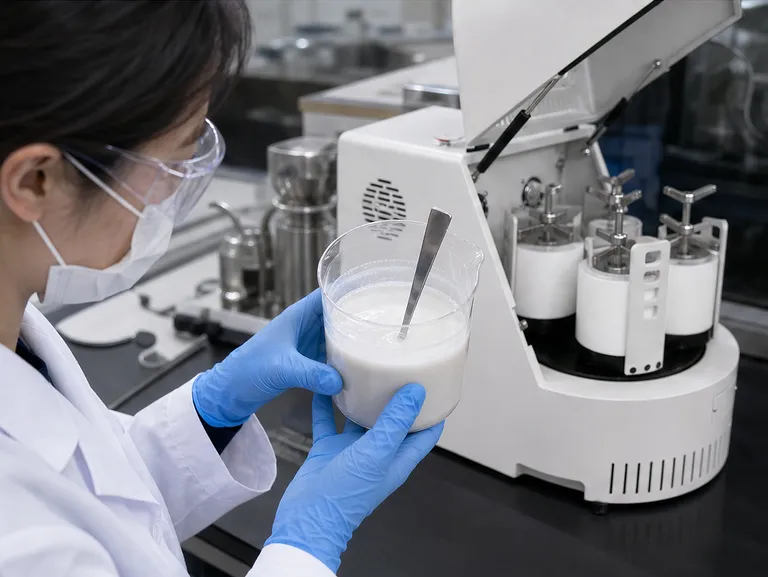
A planetary ball mill only shines when embedded in a coherent sample-preparation workflow. The powder that comes out of the mill still needs to be consolidated, shaped, and pressed—and every step can preserve or squander the homogeneity you’ve just created.
That’s where a seamless equipment chain changes the game. Think of it as a relay race for your material:
-
Powder Reduction & Mixing
Jaw crushers break down large chunks; planetary ball mills, jet mills, and cryogenic grinders refine to the target size and blend additives to molecular uniformity. Liquid nitrogen cryogenic grinders, for instance, keep temperature-sensitive powders brittle and mixable. -
Verification & Classification
Vibratory and air-jet sieve shakers confirm particle size distribution. You can’t control what you can’t measure—a rapid sieve analysis closes the learning loop. -
Compaction into Green Body
Hydraulic lab presses, cold/warm isostatic presses (CIP/WIP), or vacuum hot presses consolidate the homogeneous powder under precise pressure. Isostatic pressing delivers uniform density from surface to core, preserving the compositional uniformity the mill worked so hard to create. -
When the Application Demands Extreme Density
Vacuum hot presses simultaneously apply heat and pressure, squeezing the last voids out of the material and accelerating the phase transition that the planetary mill seeded.
In the context of self-reinforced Beta-Si₃N₄, this integrated approach transforms the planetary ball mill from a standalone machine into the founding member of a precision ecosystem.
The Romanticism of the Engineer
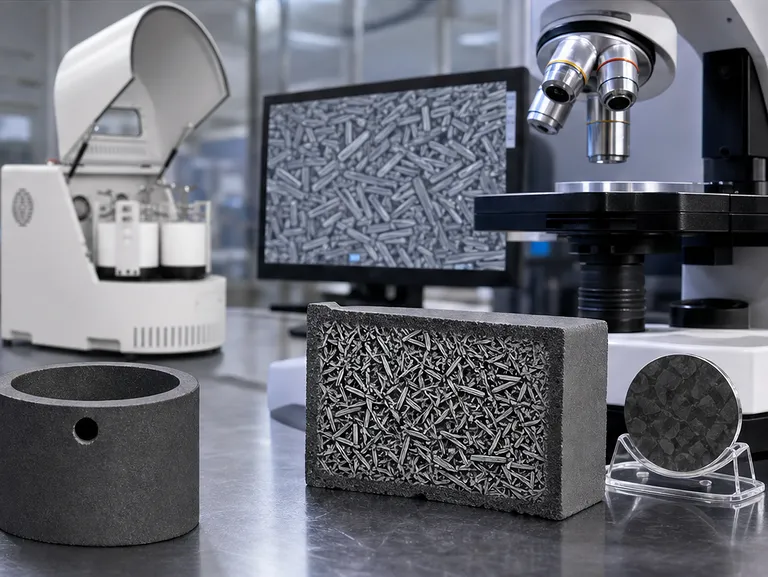
There is a quiet, stubborn romance in watching a ceramic part survive a thermal shock that fractures lesser materials. It’s not magic. It’s the thousand small decisions that started in the first minute of milling—the speed chosen, the jar material selected, the pause for cooling, the discipline to stop exactly when the distribution was perfect and not a second later.
High-energy planetary milling is a proxy for a deeper truth: the properties of advanced ceramics are decided long before the furnace door closes. They are decided in the invisible, high-speed shuffle of powder inside a sealed jar.
When the elongated beta grains finally interlock under the electron beam, they reveal not just a material but a methodology. Every hard-won megapascal of toughness is a monument to the engineer who refused to treat mixing as a trivial step.
Quick Links
Suggested Products
Vertical Semi Circular Planetary Ball Mill for Laboratory Precision Grinding High Energy Planetary Ball Mill for Nano Scale Grinding and Mechanical Alloying Vertical Production Planetary Ball Mill for High Throughput Powder Processing Heavy Duty Horizontal Planetary Ball Mill for Efficient Industrial Grinding and Sample Preparation 360° Rotating Omnidirectional Laboratory Planetary Ball Mill for Homogeneous Ultra-Fine Grinding and MixingFurther Reading
The 65-Micron Gate: Unlocking the True Isotopic Fingerprint of Portland Cement The Energy Budget of a Single Impact: How the Ball-to-Powder Ratio Shapes Nanocrystalline Reality The High-Energy Gamble: What SiBCN-rGO Fibers Teach Us About Perfect Homogenization The Gentle Violence of a Planetary Mill: Why the Most Critical Moment in SiC–VC Composites Happens Before Any Heat The Forge at 10,000 g: How a Planetary Ball Mill Designs Self-Lubricating Composites Atom by Atom
PowderPreparation
Last updated on May 15, 2026
Related Products

Vertical Semi Circular Planetary Ball Mill for Laboratory Precision Grinding

High Energy Planetary Ball Mill for Nano Scale Grinding and Mechanical Alloying

Vertical Production Planetary Ball Mill for High Throughput Powder Processing

Heavy Duty Horizontal Planetary Ball Mill for Efficient Industrial Grinding and Sample Preparation

360° Rotating Omnidirectional Laboratory Planetary Ball Mill for Homogeneous Ultra-Fine Grinding and Mixing

Vertical Square Planetary Ball Mill for Laboratory Sample Preparation and Nanoscale Grinding

Miniature Planetary Ball Mill with Vacuum Grinding and High Efficiency for Laboratory Sample Preparation

High Energy Laboratory Planetary Ball Mill for Nano Grinding and Material Science Sample Preparation

High Energy Planetary Ball Mill for Nano Scale Grinding and Colloidal Mixing in Material Science Research

High Energy Omnidirectional Planetary Ball Mill 16L

High Energy Laboratory Planetary Ball Mill for Nano Grinding and Colloidal Mixing of Hard and Brittle Materials

High Energy Omnidirectional Planetary Ball Mill 20L
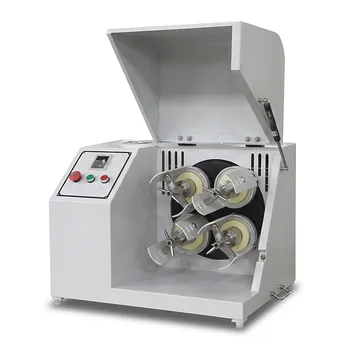
Horizontal Light Duty Planetary Ball Mill for Laboratory Sample Preparation

8L Planetary Ball Mill for Laboratory Grinding and Sample Preparation

Dual Station Planetary Ball Mill 24L
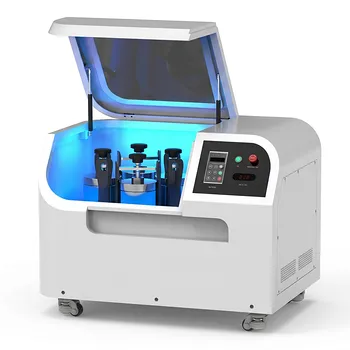
Planetary Ball Mill 12L

Nano High Energy Vibratory Ball Mill for Laboratory Sample Preparation

Multi-Platform Nanoscale High-Energy Vibratory Ball Mill
High Energy Hybrid Vibratory Ball Mill for Grinding Mixing and Cell Disruption