The Forge at 10,000 g: How a Planetary Ball Mill Designs Self-Lubricating Composites Atom by Atom
Aug 28, 2026
The Night the Bearing Failed
It was a clean, silent failure. No screech, no warning light flickering on the dashboard. A dry-running bearing in a vacuum satellite thruster just stopped spinning. The engineers had mixed graphite into the copper alloy exactly as the formula specified. On paper, it was a perfect self-lubricating composite. Under the microscope, the graphite had clustered into isolated islands. The metal-on-metal contact points had none of the lubricant they needed.
This is the gap between physical mixing and mechanical alloying. Most engineers approach a planetary ball mill the way they approach a kitchen blender: put ingredients in, run it longer for a finer mixture, pour it out. That mindset fails spectacularly when you need a nanostructured material that defies thermodynamic equilibrium. The planetary ball mill is not a mixer. It is a solid-state reactor. And if you treat it like one, you begin to see it as a forge operating at 10,000 g—an instrument that writes its own rules for how lubricity and strength can co-exist.
Mixing is Not Alloying
Traditional powder metallurgy too often relies on simple blending. You rotate a drum of metal powder and solid lubricant flakes for hours, hoping for a homogeneous distribution. What you get is a random dispersion, governed by particle size ratios and static charges. During sintering, the soft lubricating phase—graphite, MoS₂, h-BN—often segregates. It behaves like oil separating from water. The result is a composite that looks uniform to the naked eye but acts like a patchwork of friction under load.
A planetary ball mill erases this passivity. By putting the charge in a state of violent acceleration, it forces two metal powders that normally would never alloy to weld at room temperature. It traps the lubricating particles inside the metallic structure rather than leaving them to drift. If you are designing a self-lubricating composite, this distinction matters more than any other variable. Mixing arranges neighbors; alloying builds a shared architecture at the atomic scale.
Inside the Jar: Cold Welding, Fracturing, and Forced Intimacy
The counter-rotation of the milling jar and the sun disk creates a dynamic field where the grinding balls don’t just tumble—they fly across the jar and slam into the opposite wall. For a split second, the powder trapped between two colliding balls experiences a local stress so high that oxide layers crack, clean surfaces touch, and a metallurgical weld forms instantly. This is the cold welding phase.
Then, the same ball that united two particles tears them apart. The newly welded stack of ductile metal and brittle lubricant gets work-hardened, fractures, and exposes fresh surfaces. Repeat this cycle thousands of times, and the material undergoes a deliberate, controlled schizophrenia: joining and breaking, joining and breaking, until the soft lubricating phase is no longer a separate entity but a nanometer-thin film encased in a cage of metal.
Lattice Defects: The True Catalysts
Heat is not the driver here. The real work is done by lattice defects. Each impact injects dislocations, vacancies, and stacking faults into the crystal structure. These defects lower the thermodynamic stability of the metal matrix to such a degree that it becomes hungry to incorporate foreign atoms. The metal accepts the fracturing lubricant particles not because it is softer, but because its lattice has been beaten into a receptive state. This is why a planetary ball mill produces alloys that even a molten-state process cannot: the lack of heat prevents phase separation, and the accumulation of defects enables solubility outside the normal limits of the phase diagram.
The Nanometer Gamble
As the process continues, the grain size shrinks below 100 nanometers. Here, the material stops behaving like a bulk solid. Hardness shoots up through the Hall-Petch effect. The diffusion paths for the lubricant atoms shorten so drastically that a substance like graphite can be effectively “trapped” in the grain boundaries as an intergranular film. The mill becomes a device for spatially organizing atoms without ever melting them. The romance of this engineering is subtle: you aren’t just breaking things. You are creating a synthetic microstructure where friction-killing agents sit in every vulnerable capillary of the metal, waiting for a sliding surface to expose them.
The Engineer’s Emotional Trap: More Energy, More Problems
Here is where psychology enters the lab. When a planetary ball mill starts delivering nanometer-sized grains, a temptation arises: if 4 hours of milling gives good refinement, 8 hours must give perfection. Morgan Housel once wrote about the investing mistake of assuming that good sources of growth are always “more of the same.” The same cognitive bias appears at the milling console. The engineer begins to view the machine as a source of infinite linear improvement.
Reality punishes this. Over-milling destroys the exact traits you tried to create.
When Lubricant Disappears
Graphite and molybdenum disulfide have a mechanical tolerance limit. Beyond a certain energy dose, the soft lubricating phase is not just embedded; it is dissolved atomically into the metal matrix. That sounds like an achievement, but for a self-lubricating composite it is a catastrophe. A fully dissolved lubricant cannot exude to the wear surface. The material loses its ability to form a tribofilm. What you’ve built instead is a very hard, very clean, very un-lubricious metal alloy—one that will seize and fail exactly where the original blended composite would have seized. You traded lubricity for an invisible form of structural greed.
The Contamination Blind Spot
Long milling times also wear down the grinding media. Stainless steel jars and balls can donate iron and chromium to your carefully designed composite. Zirconia media, while tougher against abrasion, can shatter and embed ceramic fragments at grain boundaries. The contamination is rarely visible as sparkles; it manifests as a mysterious loss of ductility or erratic corrosion resistance. The scientist, focused on the glorious reduction in particle size, fails to notice that the sample is slowly turning into something else. A planetary ball mill operated without awareness becomes an expensive machine for adding noise to a perfect stoichiometry.
The Full Ecosystem: Beyond the Mill
This is where the distinction between a single device and a complete sample preparation ecosystem becomes critical. A planetary ball mill does not operate in a vacuum (unless specifically designed to do so). The path from raw powder to a functional self-lubricating component passes through several stations, each of which can rescue or ruin the microstructural design.
- Pre-processing: How clean and uniform are your starting powders? If the graphite flakes vary drastically in size, the mill must spend extra energy just to normalize the distribution—potentially pushing the metal phase into a work-hardened state before alloying even begins. Jaw crushers, roll crushers, and liquid nitrogen cryogenic grinders tame the raw materials, especially for ductile metals that would otherwise smear rather than fracture.
- Particle Size Verification: Air-jet or vibratory sieve shakers with micro-precision meshes let you check whether the milled powder has entered the agglomeration danger zone. An early warning from a sieve analysis costs minutes. A sintering failure that traces back to uncontrolled agglomerates costs weeks.
- Mixing and Defoaming: If you add a secondary lubricating phase after the initial milling step, a dedicated powder mixer ensures it coats the particles without destroying the nanostructure you just created. A defoaming mixer becomes essential if your subsequent slurry processing traps air that will leave voids in a hot-pressed part.
- Compaction into Geometry: The finest self-lubricating powder is useless if you cannot consolidate it. Cold and Warm Isostatic Presses (CIP/WIP) apply pressure from all directions, preserving the homogeneous distribution of lubricant phases while eliminating density gradients. For specialty applications, vacuum hot presses drive out trapped gases and lock the nanostructure into a dense, friction-optimized solid. XRF pellet presses provide the rapid sample validation loop that keeps a research project from drifting into irrelevance.
A planetary ball mill is the core reactor, but a material’s destiny is often decided by the crucible it never sees. Having an integrated line of powder processing and compaction equipment means the cold-welded, internally stressed powder you designed doesn’t get ruined by a generic downstream step.
Balancing the Trade-offs: A Decision Table
The psychological challenge is that no single parameter governs the outcome. You are managing a triangle of lubricity, strength, and purity. The right choice depends on what you refuse to sacrifice.
| Your Goal | Mill Parameter Strategy | Watch Out For | Companion Equipment |
|---|---|---|---|
| Maximum Lubricity | Lower ball-to-powder ratio, shorter cycles | If graphite is insufficiently embedded, it will segregate during sintering | Air-jet sieve shaker to check distribution; CIP to consolidate without shearing out the soft phase |
| Ultimate Structural Strength | High energy, longer duration | Lubricant phases may dissolve or form carbides; grain boundary contamination risk grows | Vacuum hot press to preserve nanocrystalline hardness; advanced jar and media materials to minimize media wear |
| Uncompromised Purity | Matched media material (same composition as matrix), optimized speed to reduce attrition | Even matched materials wear; process time must be balanced against the acceptable contamination threshold | Cryogenic grinder for clean pre-crushing; XRF pellet press for rapid chemical analysis at every interval |
The table reads like a set of compromises, but in practice it is a map of agency. It means that the “art” of mechanical alloying is actually a system of decisions, each reinforced by the right tool. The planetary ball mill is not an oracle. It’s an executive that carries out the precise destructive mandate you give it. If you ask it to destroy your lubricant phase, it will do so with terrifying fidelity.
Beyond the Recipe: The Real Function of the Mill
The primary function of a planetary ball mill in mechanical alloying is to make a composite that cannot exist in equilibrium. It forces a metal to accommodate an alien phase at its grain boundaries. It creates a reservoir of lubricant that waits, atomically distributed, until a friction event calls it to the surface. The mill does this not by melting or dissolving, but by generating so many lattice defects that the impossible becomes the only stable configuration.
The romance of it is real: inside a seemingly chaotic jar spinning at 10,000 g, a quiet evolution unfolds. One generation of particles cold-welds into a brittle stack; the next impact fractures it into smaller, more intimate shards; the cycle repeats until you have a powder where every grain is a microscopic capsule of lubricant inside a hardened shell. That’s not mixing. That’s architecture.
If you are investigating next-generation self-lubricating alloys—or any material where the microstructure must rebel against thermodynamic expectation—the question is rarely whether a planetary ball mill can do the job. The question is whether you are feeding it the right starting powders, catching the contamination it generates, verifying the particle size it produces, and compacting its output without erasing its work. Building that complete chain is what turns a milling experiment into a material that can bear a load silently, for thousands of cycles, without a single drop of oil.
Achieving the balance between lubricity and structural integrity requires more than a mill—it requires a complete sample preparation ecosystem that respects every step of the solid-state reaction. Contact Our Experts
Quick Links
Suggested Products
Vertical Semi Circular Planetary Ball Mill for Laboratory Precision Grinding High Energy Planetary Ball Mill for Nano Scale Grinding and Mechanical Alloying Vertical Production Planetary Ball Mill for High Throughput Powder Processing Heavy Duty Horizontal Planetary Ball Mill for Efficient Industrial Grinding and Sample Preparation 360° Rotating Omnidirectional Laboratory Planetary Ball Mill for Homogeneous Ultra-Fine Grinding and MixingFurther Reading
The 65-Micron Gate: Unlocking the True Isotopic Fingerprint of Portland Cement The Energy Budget of a Single Impact: How the Ball-to-Powder Ratio Shapes Nanocrystalline Reality The High-Energy Gamble: What SiBCN-rGO Fibers Teach Us About Perfect Homogenization The Gentle Violence of a Planetary Mill: Why the Most Critical Moment in SiC–VC Composites Happens Before Any Heat The Alchemist's Hammer: How a Planetary Ball Mill Solves the Diffusion Dilemma in Rare-Earth Doped Ceramics
PowderPreparation
Last updated on May 14, 2026
Related Products
Vertical Semi Circular Planetary Ball Mill for Laboratory Precision Grinding

High Energy Planetary Ball Mill for Nano Scale Grinding and Mechanical Alloying

Vertical Production Planetary Ball Mill for High Throughput Powder Processing
Heavy Duty Horizontal Planetary Ball Mill for Efficient Industrial Grinding and Sample Preparation

360° Rotating Omnidirectional Laboratory Planetary Ball Mill for Homogeneous Ultra-Fine Grinding and Mixing

Vertical Square Planetary Ball Mill for Laboratory Sample Preparation and Nanoscale Grinding

Miniature Planetary Ball Mill with Vacuum Grinding and High Efficiency for Laboratory Sample Preparation

High Energy Laboratory Planetary Ball Mill for Nano Grinding and Material Science Sample Preparation

High Energy Omnidirectional Planetary Ball Mill 16L
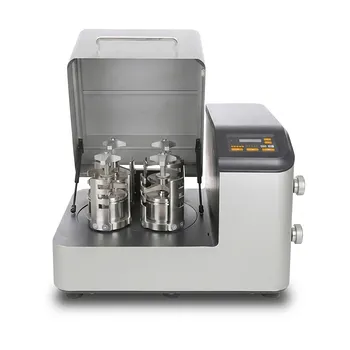
High Energy Planetary Ball Mill for Nano Scale Grinding and Colloidal Mixing in Material Science Research
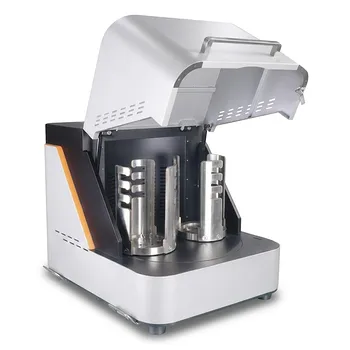
High Energy Laboratory Planetary Ball Mill for Nano Grinding and Colloidal Mixing of Hard and Brittle Materials
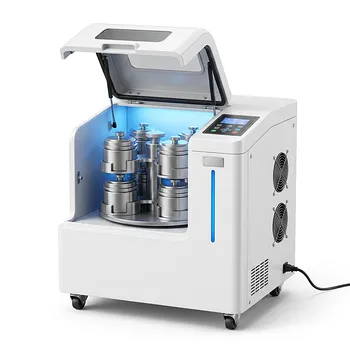
High Energy Omnidirectional Planetary Ball Mill 20L
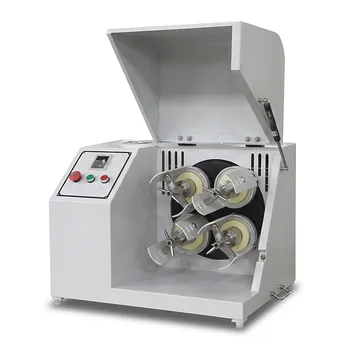
Horizontal Light Duty Planetary Ball Mill for Laboratory Sample Preparation

8L Planetary Ball Mill for Laboratory Grinding and Sample Preparation
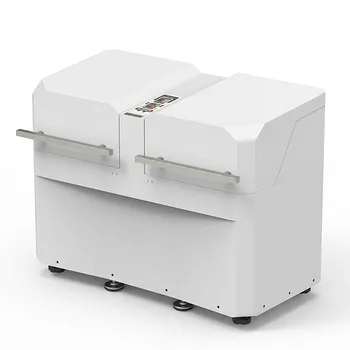
Dual Station Planetary Ball Mill 24L
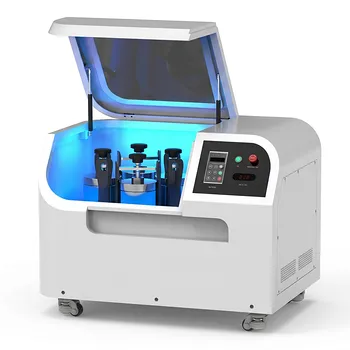
Planetary Ball Mill 12L

Nano High Energy Vibratory Ball Mill for Laboratory Sample Preparation

Multi-Platform Nanoscale High-Energy Vibratory Ball Mill
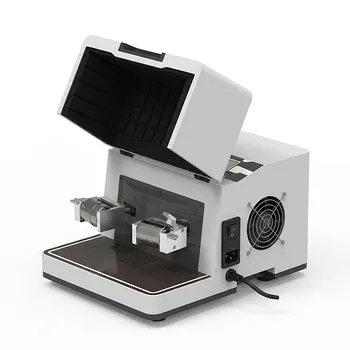
High Energy Hybrid Vibratory Ball Mill for Grinding Mixing and Cell Disruption