The Alchemist's Hammer: How a Planetary Ball Mill Solves the Diffusion Dilemma in Rare-Earth Doped Ceramics
Jun 10, 2026

The Unseen Battle in Your Crucible
A materials scientist places a carefully weighed mixture of bismuth oxide, iron oxide, and a rare-earth dopant into a furnace. The goal is ambitious: create a single-phase perovskite that will unlock a new generation of sensors or memory devices. Hours later, the door opens. Instead of a pristine black pellet, they find a grainy disk riddled with yellow specks—unreacted bismuth pockets, secondary phases, a failed dream.
This moment feels deeply personal, almost like a betrayal. You did everything right. The stoichiometry was perfect. The temperature curve was followed. Yet the atoms refused to cooperate.
The problem wasn’t in the furnace. It started much earlier.
Solid-state synthesis is often taught as a simple bake. But in practice, it’s a problem of intimacy. You are asking billions of microscopic particles—each a tiny fortress—to exchange ions across vast, empty spaces. In a multi-component system like rare-earth doped bismuth ferrite (BFO), the odds are stacked against you from the moment you blend the raw oxides.
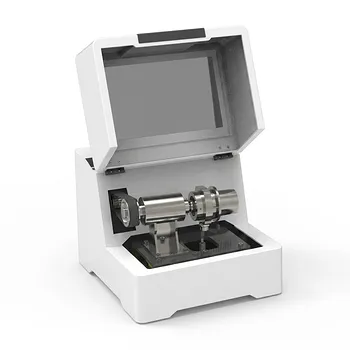
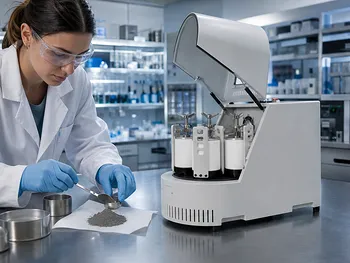
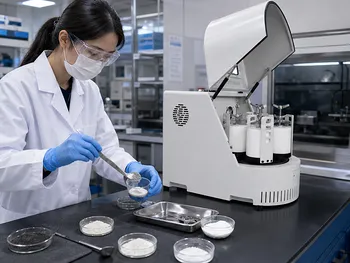
The true battlefield is the mixing jar. And the weapon that determines victory or impurity is the planetary ball mill.
More Than Mixing: The Physics of Forced Introduction
When Handshakes Aren’t Enough
Think of two different powders simply tumbled in a container. They touch only at their outermost surfaces, like two strangers shaking hands in a crowded room. The vast majority of each particle remains isolated, never meeting a partner it can react with. In a ternary system—bismuth, iron, and a dopant like holmium—the probability of all three meeting in precisely the right stoichiometric ratio at a grain boundary is depressingly low.
A planetary ball mill re-engineers this social dynamic. It doesn’t just shake the room; it forces every individual into an intimate conversation.
Inside the jar, a sun-wheel rotates one direction while the jar itself spins the opposite way. The resulting centrifugal and Coriolis forces hurl grinding balls against the powder with immense kinetic energy. This isn’t blending. It’s a controlled demolition.
- Shear forces tear particles apart, exposing fresh, reactive surfaces.
- Impact energy fractures crystalline grains, creating nanoscale fragments.
- Chaotic motion ensures every micron of bismuth oxide has a statistical certainty of colliding with a micron of iron oxide and a micron of the rare-earth dopant.
The result isn’t just a homogeneous mixture. It’s a reactive precursor where diffusion barriers have been physically crushed before the furnace ever turns on.
The Surface Area Gold Rush
There’s a simple law governing solid-state reactions: the smaller the particle, the shorter the ion’s commute to work.
Raw oxide powders often arrive with surface areas measured in a few square meters per gram. After high-energy planetary milling, that number can jump by an order of magnitude. This explosion in specific surface area does something profound to the reaction kinetics.
Imagine you need to transport a cargo from one city to another. With large particles, you have only a few massive ports through which all traffic must flow. Milling builds thousands of tiny airports spread across the landscape. Diffusion paths shorten dramatically. Ions can find each other and react at temperatures that would have left the unmilled powder chemically inert.
This is the first psychological shift the mill provides: it converts a slow, diffusion-limited process into a surface-area-driven one. You gain control over time.
The Alchemist’s Force: Mechanical Activation
Forcing Ions Where They Don’t Naturally Belong
Rare-earth ions are bulky gatecrashers in the BFO perovskite lattice. They want to sit on the A-site, displacing volatile bismuth, but the lattice resists. Simply calcining a mixed powder often results in the dopant hanging around the grain boundaries—a spectator rather than a participant.
The planetary ball mill provides mechanical activation, a term that sounds academic but describes something quite violent. The high local pressures and temperatures generated at impact points—even if only for microseconds—create transient defect structures. Dislocations form. Bonds stretch. The crystal lattice becomes temporarily disordered.
During these fleeting moments of chaos, a cerium or holmium ion can slip into a lattice position that would be energetically forbidden under static conditions. The mill provides the activation energy thermodynamically equivalent to hundreds of degrees of additional heat, but without volatilizing the bismuth.
Lowering the Temperature Ceiling
Bismuth oxide is a reluctant partner. It starts to volatilize well before many desirable reaction temperatures, escaping as a vapor and leaving behind bismuth vacancies that degrade ferroelectric performance. You are trapped: raise the temperature to drive the reaction, and you lose bismuth. Lower the temperature, and the reaction won’t complete.
The mill breaks this trade-off. By storing mechanical energy in the form of crystal defects and strained interfaces, the activated powder requires a lower thermal budget to reach completion. You can calcine at a temperature where bismuth stays put, preserving stoichiometry.
This is engineering as judo—using the mill’s force to redirect the material’s own tendencies rather than fighting them with brute thermal energy.
The Psychology of Over-Milling: When Too Good Becomes Bad
The Contamination Trap
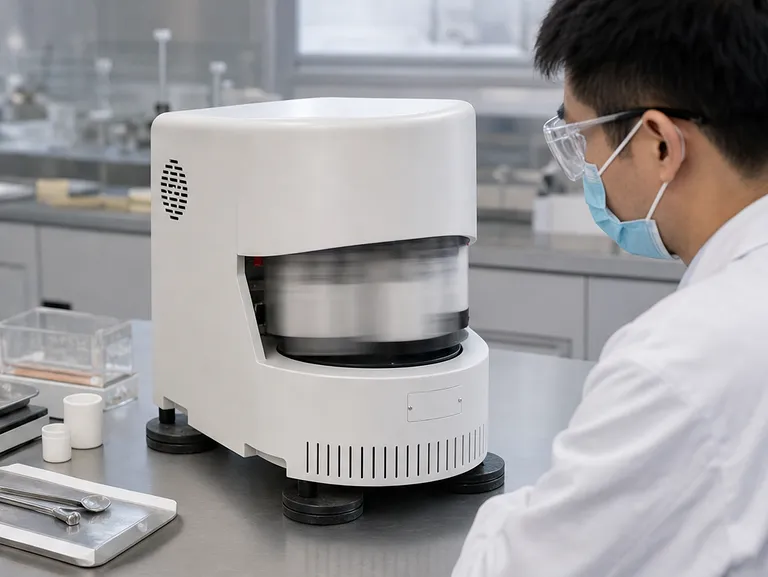
Every experienced operator develops a quiet fear of the grinding jar’s color. Zirconia balls, a common choice for their hardness, inevitably wear. A faint white tint in your once-cream-colored BFO precursor is the ghost of grinding media now embedded in your target.
A few parts per million of zirconium may not ruin every application. But for a ferroelectric material where domain wall pinning determines performance, that contamination creates a low ceiling on your final quality. The mill that enables purity also threatens it.
The solution isn’t to avoid milling. It’s to understand that milling time, ball-to-powder ratio, and media selection form a triangle of compromise. Shorter cycles with more frequent pauses. Coating the balls with a sacrificial layer of your own powder. Using wet milling with ethanol to cushion impacts. These are the tricks that separate a contaminated batch from a Nobel-worthy one.
The Amorphization Paradox
There’s another hidden cost. Crystalline powders, when pounded long enough, can lose their order entirely. They become amorphous—a state of maximal reactivity but minimal structure. If your goal is a dense, crystalline ceramic target, an over-milled amorphous precursor can backfire.
During sintering, amorphous regions crystallize with abrupt, uncontrolled grain growth. Pores become trapped inside giant grains. Density suffers. The beautiful stoichiometric mixing you achieved is now locked inside a microstructure that won’t perform.
The planetary ball mill is a tool that demands judgment. It rewards those who stop at the peak of reactive readiness, not those who grind indefinitely in pursuit of an unreachable perfection.
From Powder to Pellet: Completing the Journey
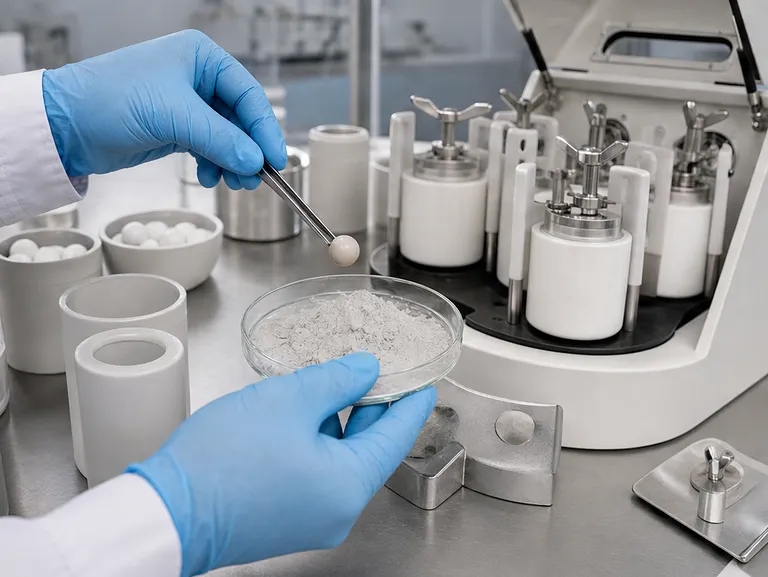
The Precursor is Only Half the Story
A perfectly milled BFO powder does not guarantee a functional ceramic target. The next act is compaction—transforming that delicate, high-energy powder into a dense, machinable disk without destroying its chemical advantages.
This is where the narrative often splits. Scientists focus on their mill, believing the job is done. But pressing is not a trivial postscript. It’s here that cracks form, density gradients appear, and the carefully crafted homogeneity can be undone by uneven pressure distribution.
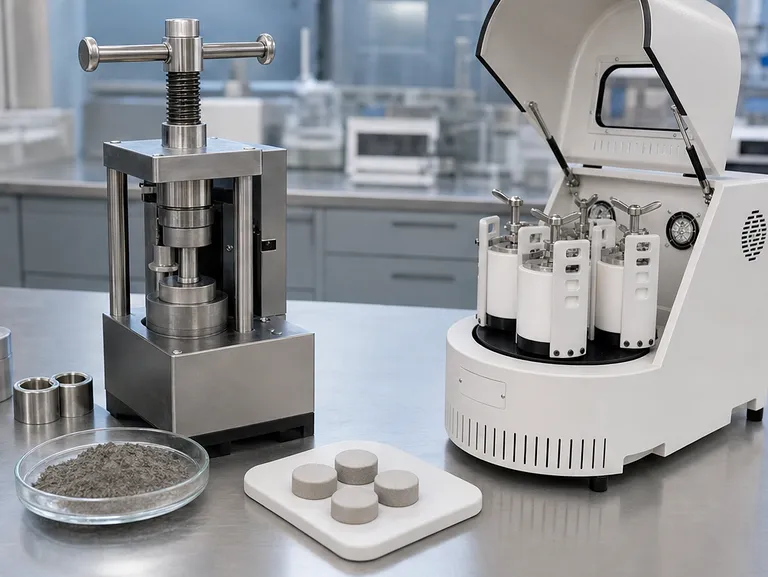
Cold Isostatic Pressing (CIP) envelopes the powder in a uniform, liquid-transmitted pressure from all sides. There are no die-wall friction effects, no density variations. Your milled precursor, with its reactive surfaces and homogeneous composition, is compacted into a green body that sinters uniformly.
Vacuum hot pressing goes further, applying simultaneous heat and pressure to collapse pores during sintering. For volatile bismuth systems, the reduced atmosphere environment prevents oxidation while driving densification to near-theoretical limits.
The mill and the press are two chapters of the same story. Mastering only one leaves the other to introduce failure.
The Complete Laboratory Solution
The researchers who consistently produce phase-pure, high-density rare-earth doped BFO targets don’t rely on a single instrument. They build a chain of custody from raw oxide to finished target, where each step compensates for the vulnerabilities of the last.
An integrated approach looks like this:
| Process Stage | Equipment Class | Role in BFO Target Quality |
|---|---|---|
| Particle Refinement | Planetary ball mill, jet mill | Homogenization, surface area maximization, mechanical activation |
| Contamination Control | Cryogenic grinder, wet milling | Preserve stoichiometry, minimize media wear |
| Mixing and Defoaming | Powder mixer, defoaming mixer | Ensure slurry uniformity before drying |
| Compaction | Cold/Warm Isostatic Press (CIP/WIP) | Uniform green density without flaws |
| Densification | Vacuum hot press, hot press | High-temperature consolidation with minimal bismuth loss |
| Sample Preparation | Jaw crusher, sieve shakers | Consistent feed for analytical verification |
A dedicated laboratory sample preparation solutions provider bridges these stages with compatible, research-grade equipment. When your planetary ball mill’s jar fits seamlessly into a range of presses and sieves designed by the same engineers, the workflow friction disappears. You focus on the science, not on adapting disparate instruments.
The Quiet Craft of Reproducibility
There’s a romantic notion that breakthrough materials emerge from a single flash of insight. The reality is more humble. Advances in BFO-based devices come from reducing batch-to-batch variability to a level where performance predictions hold true.
The planetary ball mill, used with respect for its limits, is a stability machine. It narrows the statistical distribution of mixing quality. The press narrows the distribution of density. Together, they convert alchemy into engineering—a repeatable process that produces a target with identical electromagnetic properties every cycle.
This reliability is psychologically liberating. When a batch fails, you don’t need to question your entire process. You can trace it, logically, to a variable you can control. That’s the true gift of well-designed sample preparation instruments: they make your materials intelligence actionable.
The journey from raw oxides to a functional BFO ceramic target is a gauntlet of diffusion barriers, volatile elements, and contamination risks. A planetary ball mill is your first decisive intervention—a mechanical hammer that forces uncooperative powders into reactive intimacy. Paired with precision mixing, controlled milling atmospheres, and advanced isostatic or vacuum pressing, it forms the backbone of a robust solid-state synthesis workflow. Whether you are fine-tuning rare-earth doping concentrations or scaling toward reproducible target density, the right equipment turns a finicky art into a dependable protocol. Contact Our Experts to design a complete powder-to-pellet solution that supports every stage of your advanced material research.
Quick Links
Suggested Products
Vertical Semi Circular Planetary Ball Mill for Laboratory Precision Grinding High Energy Planetary Ball Mill for Nano Scale Grinding and Mechanical Alloying Vertical Production Planetary Ball Mill for High Throughput Powder Processing Heavy Duty Horizontal Planetary Ball Mill for Efficient Industrial Grinding and Sample Preparation 360° Rotating Omnidirectional Laboratory Planetary Ball Mill for Homogeneous Ultra-Fine Grinding and MixingFurther Reading
The 65-Micron Gate: Unlocking the True Isotopic Fingerprint of Portland Cement The Energy Budget of a Single Impact: How the Ball-to-Powder Ratio Shapes Nanocrystalline Reality The High-Energy Gamble: What SiBCN-rGO Fibers Teach Us About Perfect Homogenization The Forge at 10,000 g: How a Planetary Ball Mill Designs Self-Lubricating Composites Atom by Atom The Atomic Shuffle: How a Planetary Ball Mill Decides the Fate of Your Self-Reinforced Ceramic
PowderPreparation
Last updated on May 15, 2026
Related Products
Vertical Semi Circular Planetary Ball Mill for Laboratory Precision Grinding

High Energy Planetary Ball Mill for Nano Scale Grinding and Mechanical Alloying
Vertical Production Planetary Ball Mill for High Throughput Powder Processing
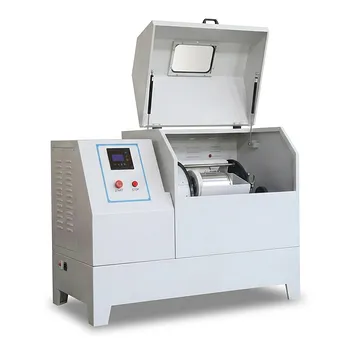
Heavy Duty Horizontal Planetary Ball Mill for Efficient Industrial Grinding and Sample Preparation
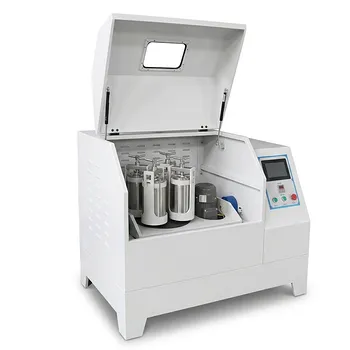
360° Rotating Omnidirectional Laboratory Planetary Ball Mill for Homogeneous Ultra-Fine Grinding and Mixing
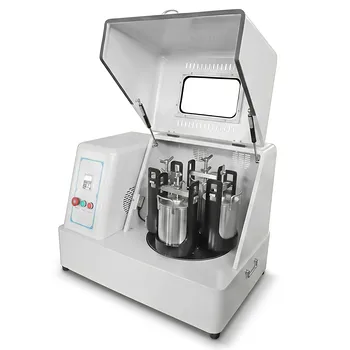
Vertical Square Planetary Ball Mill for Laboratory Sample Preparation and Nanoscale Grinding
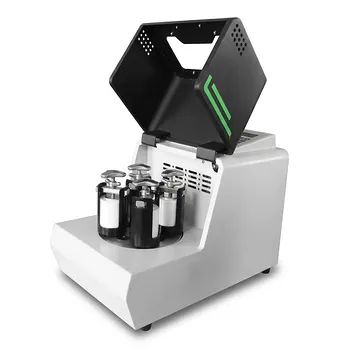
Miniature Planetary Ball Mill with Vacuum Grinding and High Efficiency for Laboratory Sample Preparation
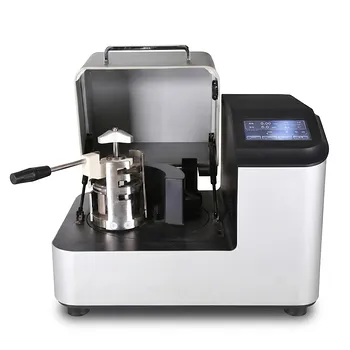
High Energy Laboratory Planetary Ball Mill for Nano Grinding and Material Science Sample Preparation
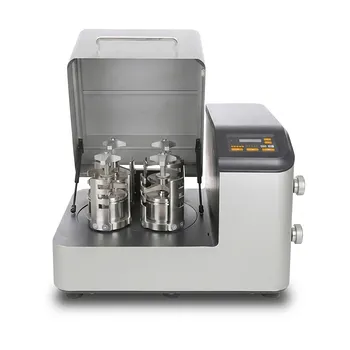
High Energy Planetary Ball Mill for Nano Scale Grinding and Colloidal Mixing in Material Science Research
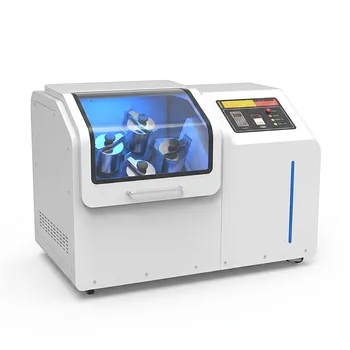
High Energy Omnidirectional Planetary Ball Mill 16L
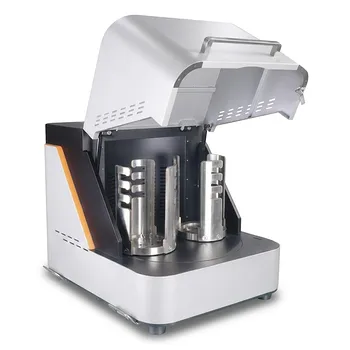
High Energy Laboratory Planetary Ball Mill for Nano Grinding and Colloidal Mixing of Hard and Brittle Materials
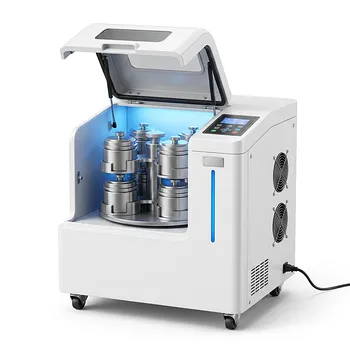
High Energy Omnidirectional Planetary Ball Mill 20L
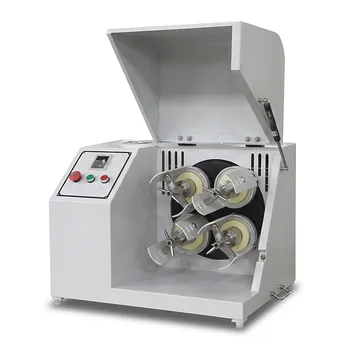
Horizontal Light Duty Planetary Ball Mill for Laboratory Sample Preparation

8L Planetary Ball Mill for Laboratory Grinding and Sample Preparation
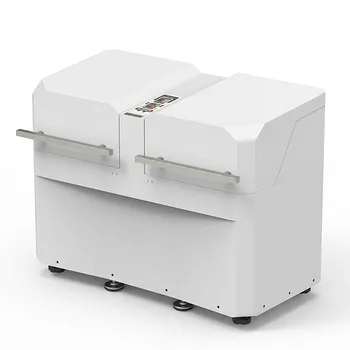
Dual Station Planetary Ball Mill 24L
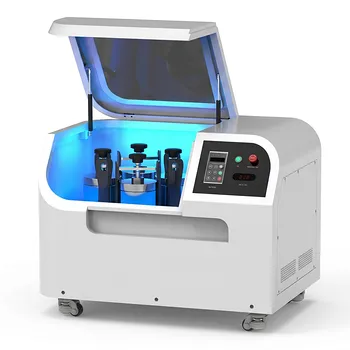
Planetary Ball Mill 12L

Nano High Energy Vibratory Ball Mill for Laboratory Sample Preparation
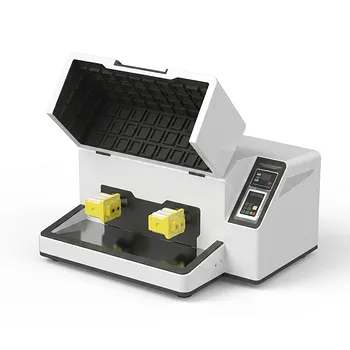
Multi-Platform Nanoscale High-Energy Vibratory Ball Mill
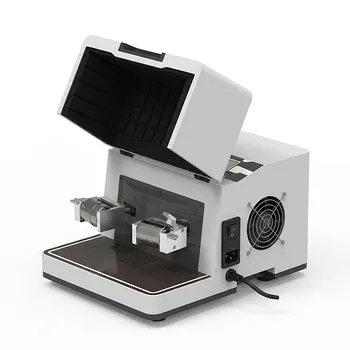
High Energy Hybrid Vibratory Ball Mill for Grinding Mixing and Cell Disruption