The Clock Inside the Rock: Why Precision Timing Makes or Breaks Feldspar Processing
Jul 29, 2026
You don’t hear the problem coming. You see it.
A lab report shows a slow drift upward in reagent consumption. Recovery rates slip by a point, then two. The pulp feels thicker, stickier—almost like it’s fighting the flotation cell.
Something changed, and it wasn’t the ore body.
It was the grinding time. A few extra minutes in the mill, likely meant to “play it safe,” have triggered a cascade of physico-chemical consequences that nobody wants.
The truth about feldspar milling is both mechanically simple and operationally brutal: every second of grinding is a trade-off between liberation and contamination. There is a sweet spot—a narrow temporal window where the value of the rock is maximized and the cost of processing is minimized.
Miss it, and you’re not just wasting energy. You’re actively destroying the material you’re trying to purify.
The Physics of Liberation
Breaking Bonds on Purpose
Feldspar doesn’t exist in geological isolation. It hosts impurities—primarily iron-bearing minerals—locked inside a crystalline matrix. The first job of the mill is to break those intergrowths.
Mechanical energy must be sufficient to crack the rock along grain boundaries. But here’s the tension: the energy doesn’t discriminate. It fragments everything it touches. Precise timing means applying just enough stress to separate valuable feldspar from its iron companions, then stopping.
The Particle Size Cascade
In the first moments of milling, particle size collapses dramatically—from millimeter-scale feed to micron-level powder. This isn’t linear. The reduction follows a rough exponential curve that flattens out as you approach the limit of your equipment.
Early on, every swing of a ball or pulse of a jet does real work. Later, that same energy input might only produce “fines”—particles so small they stop behaving like mineral grains and start behaving like a colloidal problem.
Internal Energy Density
Grinding time, combined with media filling rate, sets the energy density inside the chamber. Extend the duration and you build heat. Heat can alter crystal structures, soften surfaces, and—most dangerously—accelerate the wear of grinding media. A thermometer taped to the outside of a jar tells only a fraction of the story; inside, friction can drive local temperatures high enough to change the material itself.
The Hidden Costs of Over-Grinding
Mineral Slime: The Unwanted Byproduct
When grinding exceeds the sweet spot, you start manufacturing slime. This ultra-fine fraction coats everything—bubbles in flotation, reagent molecules, and even the surfaces of coarser, healthy particles.
Slime doesn’t just sit there. It changes the rheology of the pulp, making it harder to pump, harder to aerate, and harder to separate. A fluid that once flowed like water turns sluggish and unpredictable.
Reagent Consumption Spirals
Total surface area explodes as particle size plummets. Each square meter of new surface demands a share of the chemical reagents used in downstream separation. You end up adding more collector, more depressant, more frother—just to get back to the same performance you had before over-grinding.
Operational costs rise, but the real sting is the margin that quietly evaporates.
The Iron Contamination Paradox
This is the painful irony of purification. You grind longer to liberate more iron from the feldspar matrix. But in doing so, the grinding media itself—hardened steel balls, bowl liners, jar walls—begins to shed iron into your product.
You’re removing one source of iron while injecting another. Without disciplined timing control, the net purity can actually go down. The mill becomes a contamination engine disguised as a liberation tool.
Diminishing Returns on Throughput
Every extra minute in the mill costs energy, media wear, and opportunity. You’re not processing fresh feed; you’re re-milling material that already passed its optimal window. A study in diminishing returns, the curve soon flattens to a line that points only toward loss.
Finding the Sweet Spot: Psychology and Parameters
The “Just One More Minute” Trap
Morgan Housel once wrote that the hardest financial skill is getting the goalpost to stop moving. The same psychology applies to grinding.
An operator sees a slightly coarser fraction and thinks, “I’ll just give it another minute.” That impulse feels responsible. But in feldspar processing, the hero who extends the cycle often becomes the villain when reagent costs spike and recovery falls.
Engineers must define the stop line before the mill starts. The decision should be made in the calm of the lab, not in the noise of the production floor.
The Buffering Effect of Loading
The ball-to-powder ratio is not a dial you can adjust in isolation. Overload the jar, and the extra material acts like a cushion—absorbing impact energy and forcing you to grind longer just to hit the same fineness. That longer cycle then accelerates media wear, undoing the very purity you wanted.
The relationship is circular. Time amplifies every other variable.
A Practical Compass
- If your priority is chemical purity: Grind to minimum liberation time. Stop the moment phase boundaries break. Let downstream chemistry do the rest.
- If your priority is cost control: Avoid the fines generation zone. Track reagent usage by the shift—when you see an upward creep, pull back the duration.
- If your priority is tailored kinetics: Use short, controlled pulses rather than one long run. This preserves crystallinity and lets you dial in a release profile rather than a blunt distribution.
The Parameter at a Glance
| Milling Parameter | Under-Grinding | Optimal Timing | Over-Grinding |
|---|---|---|---|
| Mineral Liberation | Incomplete separation | Maximum impurity release | Mineral degradation |
| Particle Size | Coarse & non-uniform | Target micron/nano range | Excessive ultra-fines (slime) |
| Iron Contamination | High (residual iron) | Minimum | High (media wear iron) |
| Reagent Costs | Standard | Highly efficient | Extremely high |
| Recovery Rate | Low (poor liberation) | Maximum yield | Low (loss in fines) |
The Equipment Behind the Precision
Knowing where the sweet spot lives is one thing. Hitting it, batch after batch, demands instrumentation and mechanical design that respect the physics of the process.
A stopwatch and a on/off switch are not enough. You need mills that control energy input not just by duration, but by frequency, impact mode, and thermal management. You need size reduction that can be monitored and stopped at a specific energy target rather than a wall-clock guess.
And you need a preparation chain that delivers a consistent feed, because variability before the mill forces the operator into exactly the kind of improvisation that erodes profit.
A Complete Laboratory Ecosystem
Our approach integrates the full sample preparation workflow—from first crush to final pressed pellet—so that timing variables are fixed, not floating.
- Advanced Milling for Feldspar and Beyond: Planetary ball mills and jet mills offer the energy density needed for liberation while allowing precise cycle control. Disk mills and rotor mills provide complementary options when morphology matters as much as size.
- Cryogenic Grinding: For heat-sensitive or elastic materials, liquid nitrogen cryogenic grinders lock the material into a brittle state, keeping temperature out of the equation and allowing time to be the true control variable.
- Sizing and Sieving: Vibratory and air-jet sieve shakers with certified test sieves let you verify the particle distribution at every stage, catching any drift before it becomes a cost.
- Crushers for Feed Consistency: Jaw and roll crushers reduce large chunks to uniform feedstock, removing the temptation to over-mill heterogeneous material.
- Powder Mixing and Defoaming: Mixers ensure chemical homogeneity before downstream analysis or compaction, so you don’t waste a perfectly timed grind on a poorly blended sample.
- Compaction and Pelletizing: Hydraulic presses—from standard lab presses to Cold/Warm Isostatic Presses (CIP/WIP), vacuum hot presses, and XRF pellet presses—create solid samples with the surface integrity required for reliable spectroscopy. When you’ve nailed the particle size distribution, a high-quality XRF pellet is the final proof that your grinding window was correct.
Time is the invisible raw material in every milling operation. Mastering it requires an engineer’s discipline and a psychologist’s awareness of our impulse to “just do a little more.”
The right equipment doesn’t just apply force. It respects boundaries. It gives you the data and the controls to hit the sweet spot repeatedly—turning a delicate balancing act into a predictable, profitable process.
Ready to dial in your grinding parameters and stop guessing about your particle size? Contact Our Experts
Quick Links
Suggested Products
Laboratory Disc Mill for Fine Sample Preparation of Hard and Brittle Materials High Speed Laboratory Grinder Efficient Stainless Steel Powder Pulverizer Universal Material Science Mill for Sample Preparation High Speed Vibratory Disc Mill for Spectral Analysis Sample Preparation and Rapid Powder Grinding Precision Soil Disc Mill for Laboratory Fine Grinding and Environmental Sample Preparation Laboratory Disc Mill Medium Hard Material Grinding Coal Coke Ore PulverizerFurther Reading
The Hidden Architecture of Waste: How Precision Grinding Unleashes the Adsorbent Inside an Eggshell The Grain, the Grinder, and the Hidden Poison: Why Mycotoxin Testing Depends on a Perfectly Boring Pulverization The Tyranny of Tiny Impurities: How 10 mm Zirconia Balls Save Rare-Earth Doped Bismuth Ferrite The Energy Window: Why Better Silica Nanoparticles Aren't About Grinding Longer, But Smarter The Hidden Variable in Green Chemistry: Why Your Banana Leaf Ash Fails (And How Precision Grinding Fixes It)
PowderPreparation
Last updated on May 14, 2026
Related Products
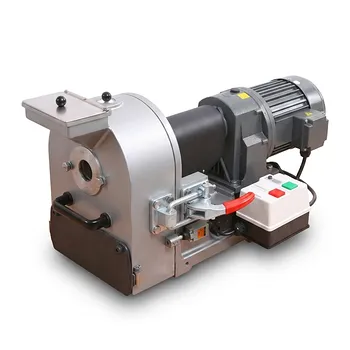
Laboratory Disc Mill for Fine Sample Preparation of Hard and Brittle Materials
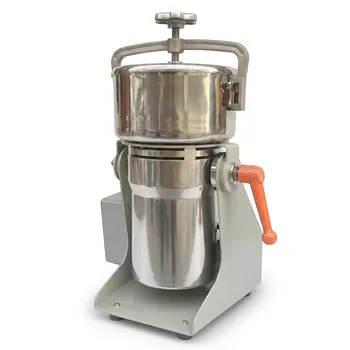
High Speed Laboratory Grinder Efficient Stainless Steel Powder Pulverizer Universal Material Science Mill for Sample Preparation
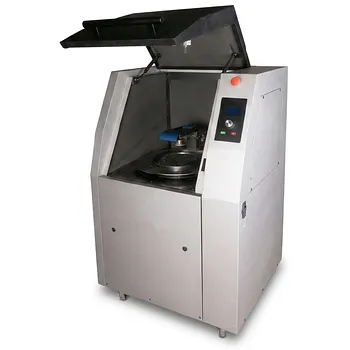
High Speed Vibratory Disc Mill for Spectral Analysis Sample Preparation and Rapid Powder Grinding
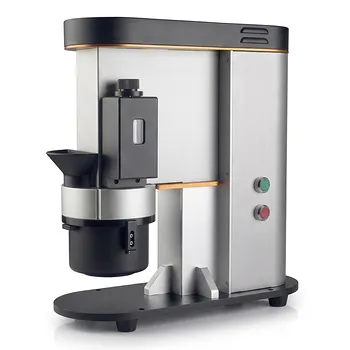
Precision Soil Disc Mill for Laboratory Fine Grinding and Environmental Sample Preparation
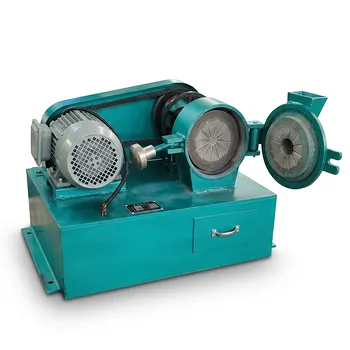
Laboratory Disc Mill Medium Hard Material Grinding Coal Coke Ore Pulverizer
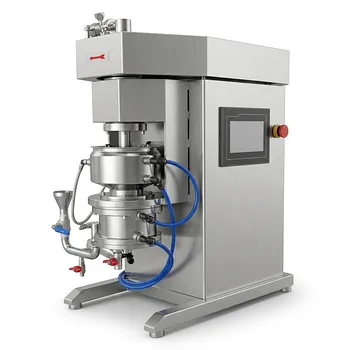
Small Ceramic Structure Laboratory Sand Mill Nanoscale Grinding Dispersion Equipment Seal-less Screen-less Design
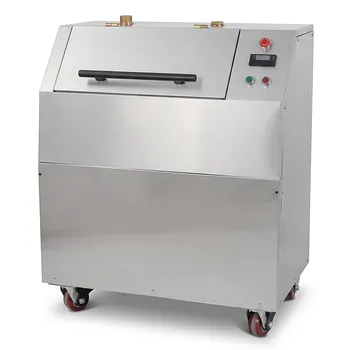
Vibratory Disc Mill for Rapid Fine Grinding and High Throughput Sample Preparation of Hard and Brittle Materials
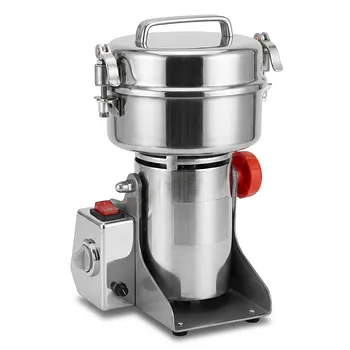
High Speed Laboratory Powder Grinder Small Batch Sample Preparation Mill
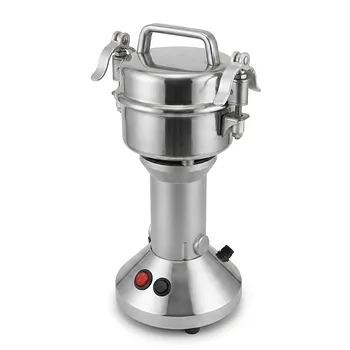
Continuous Feeding Grinding Mill for Dry Fibrous Tough and Hard Materials in Laboratory and Small Production
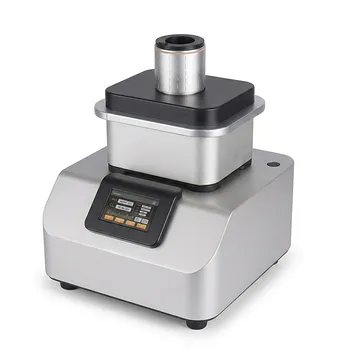
Ultra Centrifugal Mill High Speed Laboratory Grinder for Fibrous and Brittle Sample Preparation
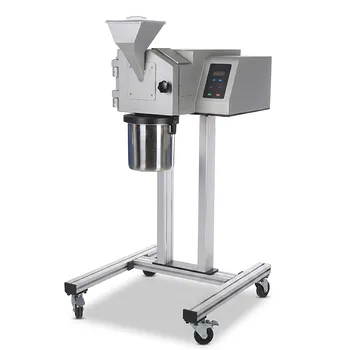
Cross Beater Mill for Brittle Material Grinding and Continuous Fine Crushing Industrial Sample Preparation
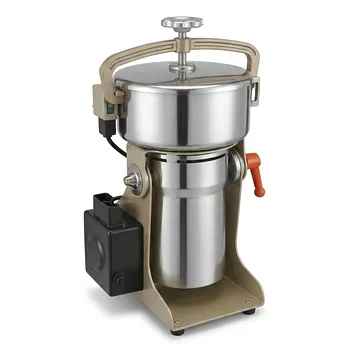
Multifunctional High Efficiency High Speed Laboratory Grinder
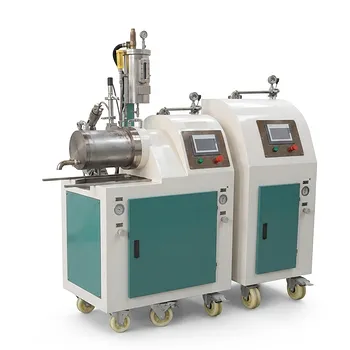
Mass Production Nano Sand Mill for Industrial Nanomaterial Grinding and Dispersion
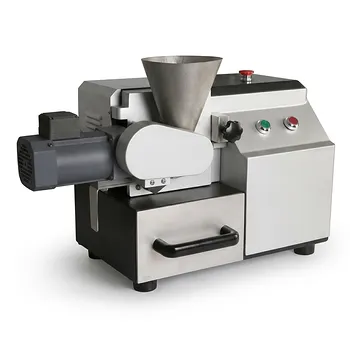
Laboratory Hammer Mill for Coal Quality Analysis and Brittle Mineral Grinding
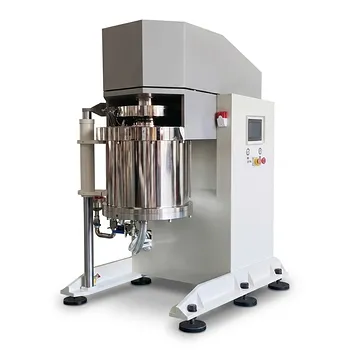
Vertical Nano Bead Mill for Ceramic Materials with Permanent Magnet Motor and High Efficiency Grinding
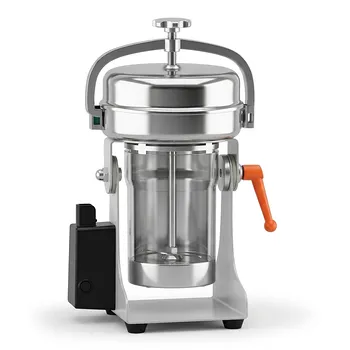
High Efficiency High Speed Grinder 2200W 25000 RPM Laboratory Sample Preparation
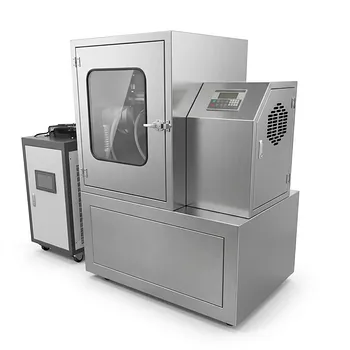
Vibratory Superfine Grinder for Ultra Fine Laboratory Powder Milling

High Energy Laboratory Planetary Ball Mill for Nano Grinding and Material Science Sample Preparation
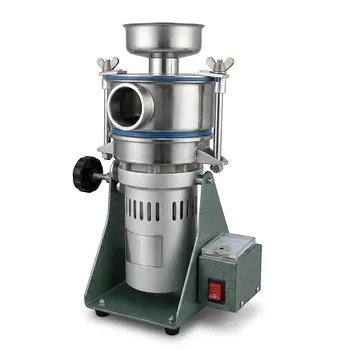
Small Airflow Ultra-Fine Grinder for Laboratory Sample Preparation