The Sieve That Builds Homes: Why a Vibratory Shaker Separates Good Bricks from Rubble
Oct 08, 2026
The Silent Architecture of Dirt
We rarely think about the dirt under our feet as a construction material. It’s just... there. But in the hands of a materials scientist, a lump of red laterite clay becomes a complex micro-structure. It’s a skeleton of grains, surrounded by pores, waiting to be filled or bridged.
When we add waste glass powder to this clay to make eco-friendly bricks, we are trying to change the skeleton. But here is the raw truth: if the particle sizes aren’t right, you are not reinforcing the structure. You are just mixing geological components that will turn into dust under pressure.
The particle size distribution of your raw ingredients isn’t just a data point on a QC chart. It is the blueprint of the brick’s final strength. And the gatekeeper of that blueprint is a vibratory sieve shaker.
The Problem of the Empty Space
Why Bricks Fail Before They Are Fired
Failure in a brick starts in the "interstitial voids"—the tiny gaps between the big grains of clay. Imagine filling a jar with stones. The jar looks full, but actually, most of it is empty air between the stones.
Clay without fine-grained fillers is the same. To make a brick dense and strong, you need "sand" to fill the spaces between the "stones," and then "flour" to fill the spaces between the "sand". If your additive particles are too big, they sit uselessly between the clay grains, creating stress concentration points rather than relieving them.
Water Moves in the Gaps
Waterproofing isn't about a chemical coating; it's about physics. If there is a connected network of tiny capillary tubes in your brick, water will wick through it by a process called capillary action. The only way to stop this is to use a vibratory shaker to grade filler material—typically glass powder—to a specific fineness. You are creating particles so small they physically plug these microscopic tubes, cutting off the water’s migration path before it can even start.
The 100-Mesh Standard: An Uncompromising Threshold
The Art of the Micro-Filler
The target in sustainable brickmaking is often hitting the 100 to 200 mesh range (that’s roughly 150 to 75 microns). Why this specific band?
A particle that is coarse—say, 50 mesh—acts like a boulder in the clay matrix. It won't dissolve or melt effectively during firing. But a particle graded to 200 mesh has a high surface-area-to-volume ratio. It becomes chemically reactive. For waste glass, this means it stops being inert trash and becomes a low-temperature fluxing agent.
The vibratory sieve shaker doesn't just sort these particles; it liberates their chemical potential. By trapping oversized grains on a 100-mesh screen, you ensure that only particles capable of activating during firing make it into the mix. This is the difference between a binder and a filler.
The Illusion of "Good Enough"
There is a psychological trap in mixing: when you see a lot of powder, you assume it covers everything. But distribution is a function of grading analysis.
You need a Uniformity Coefficient (Cu) that tells you the soil is well-graded, not uniform (which is poorly packed). A sieve shaker equipped with multiple standard test sieves allows you to calculate the Curvature Coefficient (Cc) . You aren't just shaking dirt through a mesh; you are reading the structural fingerprint of your raw material. Without this, the mixing ratio is a guess, and every brick becomes a tiny monument to unpredictability.
The Delicate Dance of the Vibratory Sieve Shaker
The Three-Dimensional Shuffle
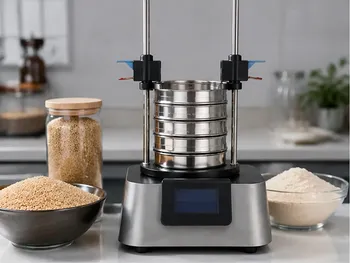
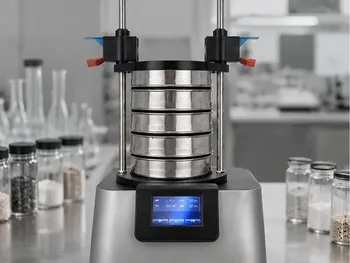
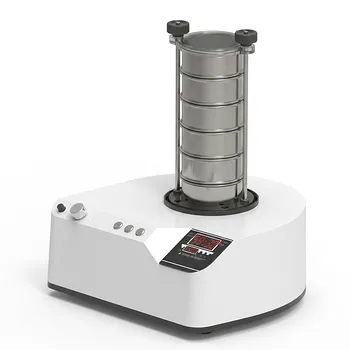
A vibratory sieve shaker doesn't just sift up and down. It uses electromagnetic or rotating eccentric mass vibration to move particles in three dimensions across the mesh. This is horizontal deflection combined with vertical amplitude.
This is important because you don't want particles to just bounce straight up and land on the same mesh hole. You need them to orbit, to spin, to continuously present their smallest axis to the aperture. This mechanical motion transforms a chaotic pile of material into a stratified column: coarse on top, fines on the bottom. It’s a gentle but ruthless statistical executioner; if a particle is oversize by even a micron, the 3D motion guarantees it will never find a hole large enough to pass through on a certified mesh.
The Battle Against Blinding
There is a fragility in this precision. When sieving slightly moist clay or oily waste glass, the mesh faces "blinding"—particles wedge themselves into the openings, building up a cake layer that effectively reduces the mesh size to zero.
Your throughput collapses. A blinded screen is a liar; it tells you that all acceptable material has passed, while actually, fines are trapped above the false barrier. In industrial production of eco-bricks, this isn't just an annoyance; it’s a direct cost. Every minute the shaker is clogged, the kiln is starving for perfectly graded material. This is why modern lab-grade shakers often integrate ultrasonic de-blinding systems or use anti-static slotted meshes for problematic materials.
Translating Sieving into Structural Integrity
Visualizing the Pore Structure
Let’s look at the finished product under a microscope.
A brick made with poorly sieved (wide distribution) glass has a chaotic internal geography: huge cavernous voids, incomplete glass melting, and sharp, unreacted edges. In contrast, a brick made with material passing through a 200-mesh vibratory sieve shaker looks homogeneous. The glass has melted into a smooth vitreous phase that coats the clay spines.
This vitreous phase is the key to waterproofing. It’s not just filling a hole; it’s glazing the internal capillaries from the inside. You create a brick that resists moisture ingress not because you coated the outside, but because you used aggressive mechanical grading to seal the heart of the material.
The Strategy Table
To engineer specific properties, you must match your sieving protocol to your goal. The machine is the decision node.
| Your Core Goal | The Sieving Strategy | The Engineering Reason |
|---|---|---|
| Maximum Compressive Strength | Aggressive screening to a 200-mesh limit for all additives | Ensures zero large inter-particle voids; forces the brick into a state of maximum packing density. |
| Thermal Insulation (Porosity) | Careful fractionation and retention of oversize organics (sawdust/husks) | Creates a controlled, discontinuous pore network; sieve precision ensures no single large void compromises the insulation barrier. |
| Cost-Effective Waterproofing | Minimum 100-mesh pass for waste glass flux | Balances grinding energy cost with the creation of sufficient vitreous melt to seal capillary rims. |
The Complete Sample Preparation Ecosystem
From Rock to Reaction
Isolating that perfect fraction of glass powder doesn't start with the sieve shaker. It starts with brute force. You need a jaw crusher to break the post-consumer glass bottles into gravel. Then, a planetary ball mill or jet mill to pulverize that gravel into a rough powder.
Only then does the vibratory shaker take over as the precision instrument. It validates the work of the crushers and mills. If you skip the sieving step, you are blind to an oversize protective layer forming inside your mill jar. This is systematic thinking. The mill produces the surface area; the shaker confirms the distribution.
Applying Isostatic Pressure
Once you have your perfectly graded powder mixed in a powder mixer and perhaps defoamed using a planetary centrifugal mixer, you move to shaping. The eco-brick mix is often pressed. A standard lab press might do for simple shapes, but for complex engineering bricks with perfect density uniformity, a Cold Isostatic Press (CIP) applies pressure uniformly from all directions via a liquid medium. The combined effect of perfect grading (from your shaker) and perfectly uniform pressure (from the CIP) eliminates anisotropic shrinkage during firing. The brick comes out of the kiln straight and true.
The Psychology of Precision
Welcoming the Bottleneck
Engineers often fear the sieve shaker because it looks like a bottleneck. The grinding takes seconds; the sieving takes minutes. It’s human nature to want to speed up the process, to open the mesh, to shake with more amplitude, to get the material through faster.
But the bottleneck is the point of control. It is the central check against entropy. In the production of sustainable housing materials, accepting this deliberate pause is a mark of rigor. It is the moment you guarantee that the final product won't just look like a brick, but act like a brick, standing for decades against rain and weight. You are not just manufacturing; you are curating a particle size distribution.
The Invisible Defense
When a family lives in a house made of these bricks, they never see the 200-mesh glass powder. They never feel the dense, non-capillary internal walls. They just know the inside is dry when it rains.
That dryness, that structural quietness, is a gift of the vibratory sieve shaker. It’s the final, almost romantic translation of a granular specification into the dignity of a solid, standing wall.
To achieve this level of material integrity—bridging the gap between waste glass and waterproof housing—requires an integrated system where crushing, milling, sieving, and pressing work in perfect harmony. The quality of the final brick is already determined in the first minutes of sample preparation. Contact Our Experts
Quick Links
Suggested Products
Vibratory Sieve Shaker Electromagnetic 3D Motion Powder Particle Size Analyzer for Dry and Wet Sieving Stainless Steel Laboratory Vibratory Test Sieve Shaker Laboratory Dry and Wet Three Dimensional Vibratory Sieve Shaker for Particle Analysis Dry Three Dimensional Vibratory Sieve Shaker Small Laboratory Vibratory Sieve Shaker for Powder Gradation and Particle Size AnalysisFurther Reading
The Hidden Economics of Particle Size: Why the Most Overlooked Variable in Material Science Controls Everything The Invisible Architecture of Powder: How a Vibratory Sieve Shaker Decides What Your Amaranth Bread Becomes The Particle-Size Lever: Why the Most Overlooked Step in Catalyst Design Determines Everything Else When Glass Melts Fail, It Was Never the Furnace: The Hidden Economics of Sand Gradation The Quarter-Millimeter Margin: Why Vibratory Sieve Precision Determines Artificial Stone Profitability
PowderPreparation
Last updated on May 14, 2026
Related Products
Vibratory Sieve Shaker Electromagnetic 3D Motion Powder Particle Size Analyzer for Dry and Wet Sieving
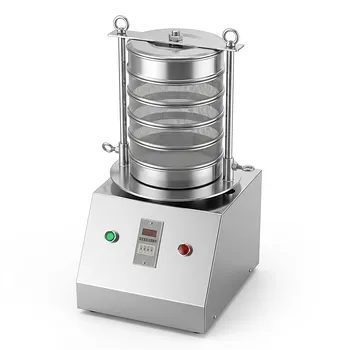
Stainless Steel Laboratory Vibratory Test Sieve Shaker
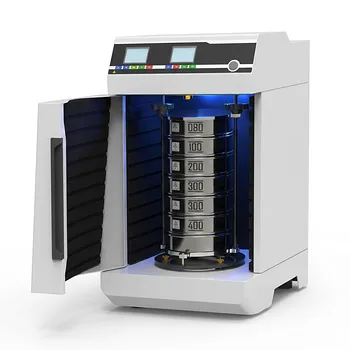
Laboratory Dry and Wet Three Dimensional Vibratory Sieve Shaker for Particle Analysis
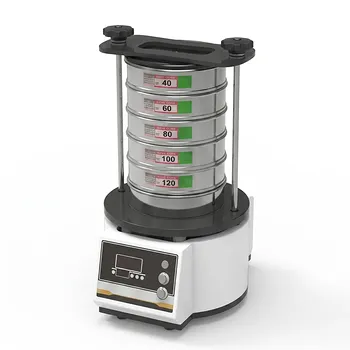
Dry Three Dimensional Vibratory Sieve Shaker
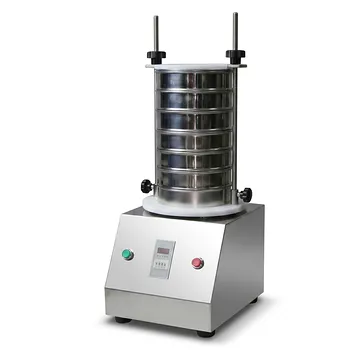
Small Laboratory Vibratory Sieve Shaker for Powder Gradation and Particle Size Analysis
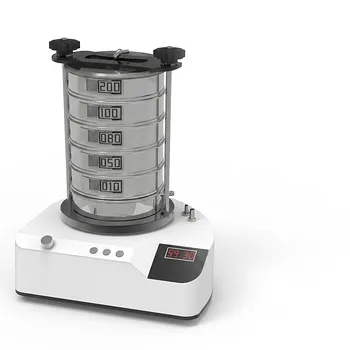
Heavy Duty Dry Three Dimensional Vibratory Sieve Shaker for Particle Separation
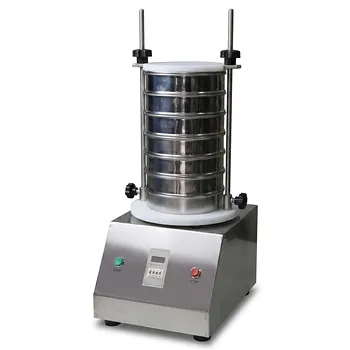
Laboratory Vibratory Test Sieve Shaker for Precision Particle Size Analysis and Powder Grading
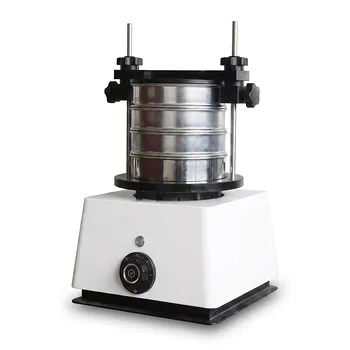
Small Laboratory Vibrating Sieve Shaker for Precise Particle Size Analysis
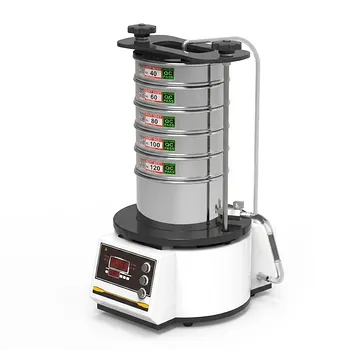
High Frequency Wet Three-Dimensional Vibrating Sieve Shaker for Dry and Wet Particle Size Analysis

High Frequency Cabinet Type Three-Dimensional Rotary Vibrating Sieve Shaker for Dry Sieving and Particle Classification
三维电磁微量振动筛分仪
Small Vibrating Ultrafine Grinder for Traditional Chinese Medicine
Vibratory Superfine Grinder for Ultra Fine Laboratory Powder Milling
Automatic Vibrating Powder Feeder for Laboratory Material Processing Precision Vibratory Hopper Feeder for Granular and Powder Material Handling Industrial Grade Vibrating Tray Feeder for Consistent Material Sample Preparation
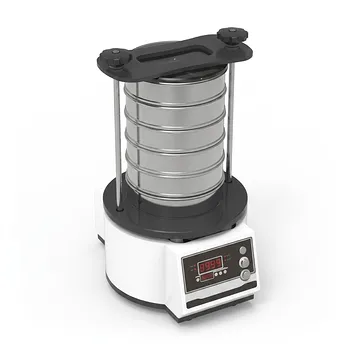
Tapping Oscillating Sieve Shaker for Dry and Wet Particle Size Analysis
High Speed Vibratory Disc Mill for Spectral Analysis Sample Preparation and Rapid Powder Grinding
Dual Jar High Energy Vibratory Ball Mill
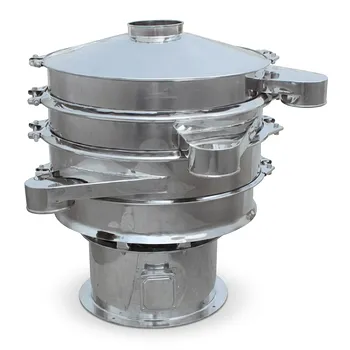
Stainless Steel Rotary Vibrating Sieve High Precision Circular Vibratory Separator Industrial Powder Grading Machine Multi Layer Sifting Equipment
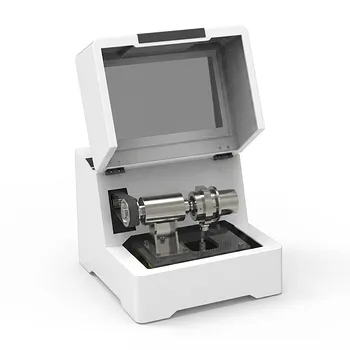
Single Tank High Energy Vibratory Ball Mill for Laboratory Grinding and Mixing