Why must the ball-to-powder ratio be strictly controlled in the high-energy ball milling process? Optimize Quality.
Updated 4 months ago
Strict control of the ball-to-powder ratio (BPR) is the fundamental lever for regulating grinding energy density. It ensures that mechanical energy is efficiently transferred to the powder through an optimized frequency of impacts and shear forces. Without this precision, the process risks either insufficient pulverization or excessive thermal damage and material contamination.
The ball-to-powder ratio (BPR) determines the balance between collision energy and material volume, directly impacting the efficiency of energy distribution. Maintaining a specific ratio is essential to achieve consistent particle refinement, prevent equipment wear, and ensure the chemical purity of the final product.
Optimizing Energy Transfer and Distribution
Defining Grinding Energy Density
The BPR is the primary factor that dictates the grinding energy density within the milling jar. A specific ratio, such as 10:1, ensures that each unit of powder receives a consistent amount of impact energy and collision frequency.
Facilitating Mechanical Deformation
Proper ratios ensure the powder receives sufficient impact energy to undergo the necessary mechanical deformation and alloying. This is critical for synthesizing complex materials like high-entropy alloys or nanocrystalline structures where phase composition depends on energy input.
Managing Free Space for Media Movement
A strictly controlled ratio maintains the necessary free volume within the grinding jar. In dry grinding, a common guideline is to leave one-third of the jar as free space to allow the grinding balls to move, accelerate, and strike the material with maximum force.
Maintaining Material Quality and Purity
Controlling Thermal Accumulation
Strict BPR management prevents excessive heat accumulation caused by friction and high-frequency collisions. If the ratio of balls is too high, the resulting thermal energy can alter the material properties or cause unwanted phase transitions.
Minimizing Media Wear and Contamination
An optimized BPR avoids excessive media-to-media collisions, which occur when there is too little powder to cushion the impact. Reducing these collisions minimizes the wear on the grinding balls and jar walls, thereby protecting the chemical purity of the alloy or composite.
Achieving Specific Material Properties
The BPR directly influences the final magnetic and adsorption properties of the material. By controlling energy distribution, researchers can precisely tune saturation magnetization, coercivity, or the ion adsorption performance of refined particles like zeolites.
Understanding the Trade-offs and Pitfalls
The Risk of the "Buffering Effect"
When the BPR is too low (excessive powder), a buffering effect occurs where the material absorbs the impact without being fractured. This leads to low pulverization efficiency and a failure to reach the desired particle size.
Contamination vs. Refinement Speed
Increasing the BPR can accelerate the reduction of grain size to the nanoscale. However, this higher energy environment significantly increases the risk of powder contamination from the milling media and vessel components.
Equipment Overload and Stability
Inconsistent feeding or incorrect ratios can lead to equipment overload or "plugging" of the mill. Precise control ensures the stability of the output particle size and protects the mechanical integrity of the planetary ball mill.
How to Apply This to Your Process
When determining the ideal ratio for your high-energy ball milling application, consider the following technical goals:
- If your primary focus is maximum particle refinement: Utilize a higher BPR (e.g., 10:1 or 15:1) while monitoring for media wear and implementing cooling breaks to manage thermal accumulation.
- If your primary focus is high chemical purity: Opt for a lower BPR to minimize media-to-media contact and use high-hardness grinding media to prevent contamination of the alloy.
- If your primary focus is laboratory repeatability: Strictly define and document the weight-based BPR and volume-based filling levels (e.g., the 1/3 rule) to ensure consistent energy dissipation across batches.
- If your primary focus is composite precursor formation: Balance shear and impact forces by selecting a ratio that ensures the secondary phase is strongly embedded into the surface of the matrix particles.
Mastering the ball-to-powder ratio allows you to transform ball milling from a chaotic mechanical process into a precise tool for material engineering.
Summary Table:
| Key Factor | Impact of Strict BPR Control | Core Benefit |
|---|---|---|
| Energy Density | Regulates collision frequency and impact force | Efficient pulverization & alloying |
| Thermal Management | Prevents excessive friction-induced heat | Protects phase composition & properties |
| Material Purity | Minimizes media-to-media contact and wear | Reduces chemical contamination |
| Particle Size | Prevents the "buffering effect" of excess powder | Ensures consistent nanoscale refinement |
| Equipment Safety | Balances load and volume within the jar | Prevents mill overload and mechanical wear |
Elevate Your Material Research with Precision Powder Solutions
Achieving the perfect ball-to-powder ratio is only the first step in successful material synthesis. At [Your Brand Name], we provide complete laboratory sample preparation solutions tailored for material science professionals. We specialize in high-performance powder processing and compaction equipment designed to deliver repeatable, high-purity results.
Our extensive product line includes:
- Advanced Milling: Planetary ball mills, jet mills, liquid nitrogen cryogenic grinders, and rotor mills.
- Crushing & Sizing: Jaw/roll crushers and vibratory/air-jet sieve shakers with precision test sieves.
- Mixing & De-aeration: Powder mixers and vacuum defoaming mixers.
- Superior Compaction: A full spectrum of hydraulic presses, including Cold/Warm Isostatic Presses (CIP/WIP), XRF pellet presses, and vacuum hot presses.
Whether you are refining nanocrystalline structures or synthesizing high-entropy alloys, our equipment ensures maximum control over your process.
Ready to optimize your laboratory efficiency? Contact our technical experts today to find the ideal equipment for your specific application.
References
- Luh Ayu Melinia, Masno Ginting. Analisa Pasir Besi Alam dari Sungai Musi Sumatera Selatan. DOI: 10.56064/jps.v24i3.716
Mentioned Products
- High Energy Planetary Ball Mill for Nano Scale Grinding and Mechanical Alloying
- High Energy Hybrid Vibratory Ball Mill for Grinding Mixing and Cell Disruption
- High Energy Laboratory Planetary Ball Mill for Nano Grinding and Material Science Sample Preparation
- High Energy Omnidirectional Planetary Ball Mill 16L
- Ultra-Low Temperature Cryogenic High-Energy Vibratory Ball Mill
People Also Ask
- Why is a high-energy planetary ball mill used for nano-milling As4Se3? Achieve Expert Structural Transformation
- What role do high-energy planetary ball mills play in FDM composite filament preparation? Optimize Material Performance
- What is the role of a high-energy planetary ball mill in the exfoliation of modified WSe2? Achieve Nano-Precision
- What is the function of a planetary ball mill in glass-ceramic sintering? Optimize Reactivity and Uniformity
- What is the role of a high-energy planetary ball mill in the preparation of high-performance nano-ceramics? Key Guide

Tech Team · PowderPreparation
Last updated on Jun 03, 2026
Related Products

High Energy Planetary Ball Mill for Nano Scale Grinding and Mechanical Alloying
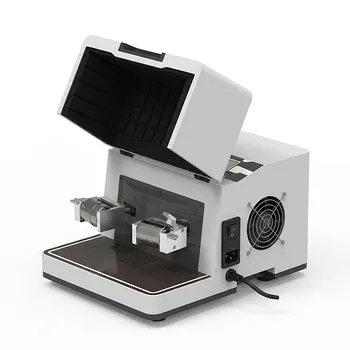
High Energy Hybrid Vibratory Ball Mill for Grinding Mixing and Cell Disruption

High Energy Laboratory Planetary Ball Mill for Nano Grinding and Material Science Sample Preparation

High Energy Omnidirectional Planetary Ball Mill 16L
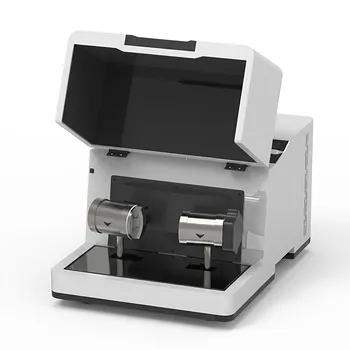
Ultra-Low Temperature Cryogenic High-Energy Vibratory Ball Mill
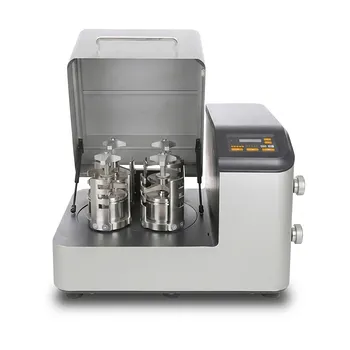
High Energy Planetary Ball Mill for Nano Scale Grinding and Colloidal Mixing in Material Science Research

Nano High Energy Vibratory Ball Mill with Heating and Temperature Control

High Energy Omnidirectional Planetary Ball Mill 20L
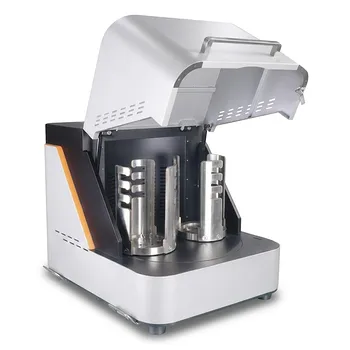
High Energy Laboratory Planetary Ball Mill for Nano Grinding and Colloidal Mixing of Hard and Brittle Materials
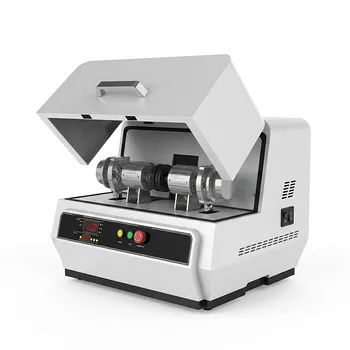
Dual Jar High Energy Vibratory Ball Mill

Multi-Platform Nanoscale High-Energy Vibratory Ball Mill
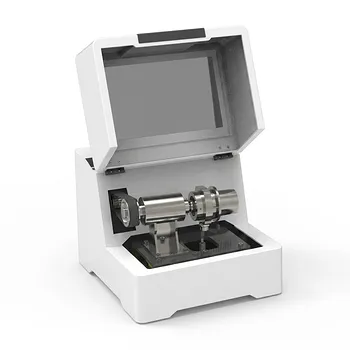
Single Tank High Energy Vibratory Ball Mill for Laboratory Grinding and Mixing
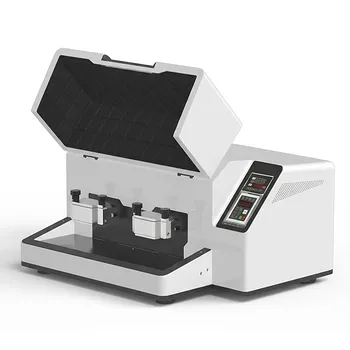
Nanoscale High-Energy Vibratory Ball Mill for Laboratory Sample Preparation, Mechanochemistry, and Mechanical Alloying
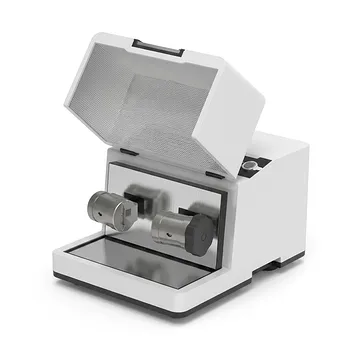
Heating Temperature Controlled High Energy Vibratory Ball Mill

Nano High Energy Vibratory Ball Mill for Laboratory Sample Preparation

Vertical Square Planetary Ball Mill for Laboratory Sample Preparation and Nanoscale Grinding
Nanoscale High Energy Vibratory Ball Mill Low Temperature

8L Planetary Ball Mill for Laboratory Grinding and Sample Preparation
Dual Station Planetary Ball Mill 24L
