Why is secondary milling necessary for NN-CZ-xBNT ceramic powders? Key to High-Performance Sintering
Updated 4 months ago
Secondary milling is the critical bridge between synthesized powder and a high-performance ceramic component. This process ensures the uniform dispersion of the binder across particle surfaces while simultaneously achieving a highly homogenized mixture through high-speed rotation (e.g., 700 r/min). By further micronizing crystal grains and breaking down hard agglomerates, secondary milling guarantees the fluidity and microstructural consistency required for high-quality green body formation.
Core Takeaway: Secondary high-energy ball milling transforms calcined ceramic powders into a processable, homogenized state by ensuring uniform binder coating and eliminating agglomerates. This step is a prerequisite for achieving high densification and consistent electrical properties in the final sintered ceramic.
Achieving Uniform Binder Dispersion and Homogenization
The Role of PVB Distribution
The primary purpose of adding a binder like polyvinyl butyral (PVB) is to provide structural integrity to the green body during molding. High-energy milling forces the binder to coat the surface of each individual ceramic particle uniformly rather than clumping.
Achieving Molecular-Level Homogeneity
High-energy rotation (700 r/min) creates a highly homogenized mixture where the sodium niobate-based (NN-CZ-xBNT) particles and additives are perfectly interleaved. This level of mixing is impossible with low-energy methods and is essential for preventing localized phase variations during sintering.
Improving Powder Fluidity and Granulation
Secondary milling modifies the physical morphology of the powder, enhancing its fluidity. Improved flow characteristics allow the powder to fill molds more effectively, leading to "green bodies" with high microstructural consistency and fewer internal voids.
Eliminating Agglomerates and Increasing Sintering Activity
Breaking Post-Calcination Hard Agglomerates
During the high-temperature calcination or pre-sintering phases, ceramic powders often form hard, molten agglomerates. High-energy milling provides the mechanical impact necessary to break these clusters, restoring the powder to a sub-micron, fine-grained state.
Micronization and Surface Energy
The process further micronizes the crystal grains, significantly increasing the specific surface area of the powder. This increase in surface energy acts as a driving force for sintering, allowing for lower sintering temperatures and higher final density.
Optimization of Electrical Properties
Uniformly distributed particles and modifiers (such as MnO2) help optimize defect dipole behavior during the final firing. This leads to superior insulation resistance and more stable electrical properties in the finished NN-CZ-xBNT ceramic.
Understanding the Trade-offs and Pitfalls
Risk of Impurity Contamination
The high-energy nature of the milling process can lead to wear and tear of the grinding balls and the mill jar. If the milling duration is excessive or the media material is mismatched, impurities (like alumina or zirconia) can leach into the powder, potentially degrading the dielectric performance.
Potential for Over-milling
While refinement is beneficial, over-milling can create powders that are too fine, leading to excessive shrinkage or cracking during the drying and sintering stages. It is vital to balance milling time with the desired particle size distribution.
Heat Generation and Binder Stability
High-speed rotation generates significant frictional heat, which can sometimes lead to the premature degradation or "caking" of organic binders like PVB. Controlled milling cycles or cooling breaks are often necessary to maintain the chemical integrity of the additives.
How to Apply This to Your Project
Recommendations for Process Optimization
Selecting the right milling parameters depends heavily on your final performance requirements for the sodium niobate ceramic.
- If your primary focus is Maximum Theoretical Density: Prioritize longer milling times or higher speeds to maximize surface energy and eliminate all micro-agglomerates.
- If your primary focus is Dielectric Purity: Use high-purity milling media (matching the ceramic composition if possible) and limit milling time to the minimum required for binder dispersion.
- If your primary focus is Shape Precision: Focus on achieving a specific particle size distribution to control sintering shrinkage and prevent warping of the final component.
By meticulously controlling the secondary milling process, you ensure that the complex chemistry of NN-CZ-xBNT powders translates into a reliable, high-performance electronic ceramic.
Summary Table:
| Key Objective | Benefit | Technical Outcome |
|---|---|---|
| Binder Coating | Uniform PVB dispersion | Enhanced green body integrity & moldability |
| Homogenization | Molecular-level mixing | Prevention of localized phase variations |
| Agglomerate Removal | Breaking hard clusters | Sub-micron powder state & higher fluidity |
| Grain Micronization | Increased surface energy | Lower sintering temp & maximum densification |
Elevate Your Ceramic Research with Precision Powder Processing
Achieving high-density NN-CZ-xBNT ceramics requires more than just the right formula—it demands superior processing equipment. We provide complete laboratory sample preparation solutions for material science, specializing in high-energy powder processing and compaction.
Our extensive line includes Planetary Ball Mills, Jet Mills, and Vibratory Sieve Shakers for precise particle size control, as well as a full spectrum of Hydraulic Presses, including Cold/Warm Isostatic Presses (CIP/WIP), XRF Pellet Presses, and Vacuum Hot Presses for high-quality green body formation.
Optimize your material performance today—Contact our experts for a tailored solution!
References
- Liang Chen, Jun Chen. Design of hierarchical-heterostructure antiferroelectrics for ultrahigh capacitive energy storage. DOI: 10.1038/s41467-025-65694-z
Mentioned Products
- High Energy Planetary Ball Mill for Nano Scale Grinding and Mechanical Alloying
- High Energy Hybrid Vibratory Ball Mill for Grinding Mixing and Cell Disruption
- High Energy Laboratory Planetary Ball Mill for Nano Grinding and Material Science Sample Preparation
- High Energy Omnidirectional Planetary Ball Mill 16L
- Ultra-Low Temperature Cryogenic High-Energy Vibratory Ball Mill
People Also Ask
- Why is a high-energy planetary ball mill used for nano-milling As4Se3? Achieve Expert Structural Transformation
- What role do high-energy planetary ball mills play in FDM composite filament preparation? Optimize Material Performance
- What is the role of a high-energy planetary ball mill in the exfoliation of modified WSe2? Achieve Nano-Precision
- What is the function of a planetary ball mill in glass-ceramic sintering? Optimize Reactivity and Uniformity
- What is the role of a high-energy planetary ball mill in the preparation of high-performance nano-ceramics? Key Guide

Tech Team · PowderPreparation
Last updated on Jun 03, 2026
Related Products

High Energy Planetary Ball Mill for Nano Scale Grinding and Mechanical Alloying

High Energy Hybrid Vibratory Ball Mill for Grinding Mixing and Cell Disruption

High Energy Laboratory Planetary Ball Mill for Nano Grinding and Material Science Sample Preparation

High Energy Omnidirectional Planetary Ball Mill 16L
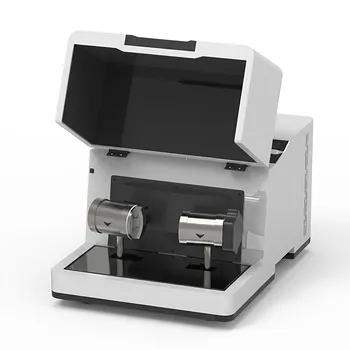
Ultra-Low Temperature Cryogenic High-Energy Vibratory Ball Mill
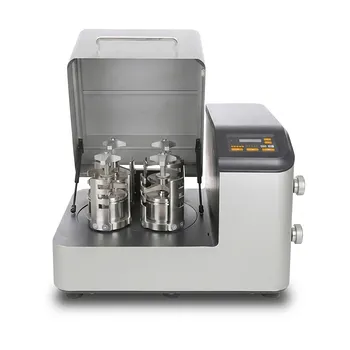
High Energy Planetary Ball Mill for Nano Scale Grinding and Colloidal Mixing in Material Science Research

Nano High Energy Vibratory Ball Mill with Heating and Temperature Control

High Energy Omnidirectional Planetary Ball Mill 20L
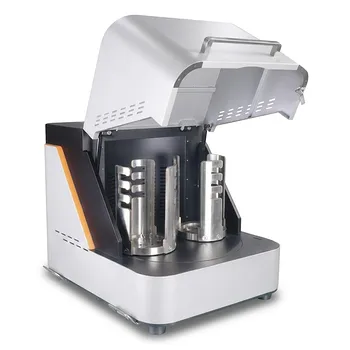
High Energy Laboratory Planetary Ball Mill for Nano Grinding and Colloidal Mixing of Hard and Brittle Materials
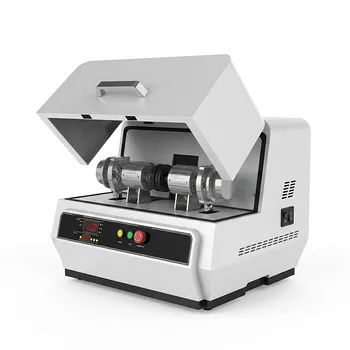
Dual Jar High Energy Vibratory Ball Mill

Multi-Platform Nanoscale High-Energy Vibratory Ball Mill
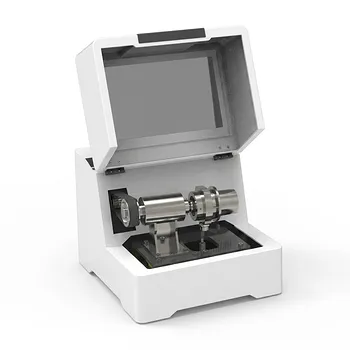
Single Tank High Energy Vibratory Ball Mill for Laboratory Grinding and Mixing
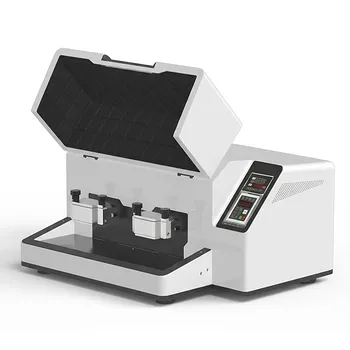
Nanoscale High-Energy Vibratory Ball Mill for Laboratory Sample Preparation, Mechanochemistry, and Mechanical Alloying
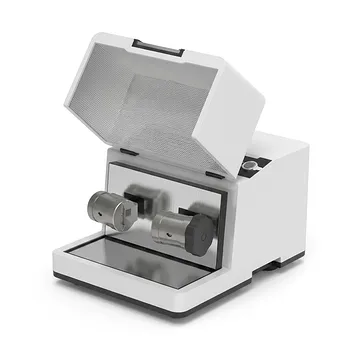
Heating Temperature Controlled High Energy Vibratory Ball Mill

Nano High Energy Vibratory Ball Mill for Laboratory Sample Preparation

Vertical Square Planetary Ball Mill for Laboratory Sample Preparation and Nanoscale Grinding
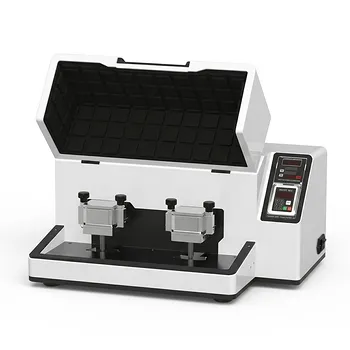
Nanoscale High Energy Vibratory Ball Mill Low Temperature
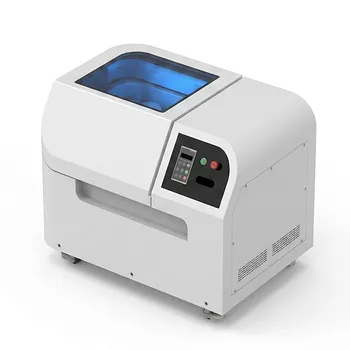
8L Planetary Ball Mill for Laboratory Grinding and Sample Preparation
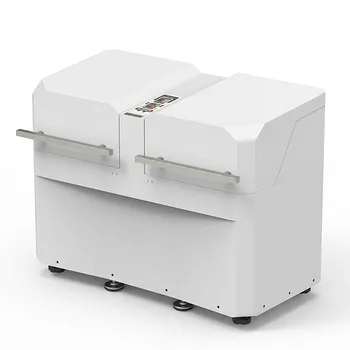
Dual Station Planetary Ball Mill 24L
