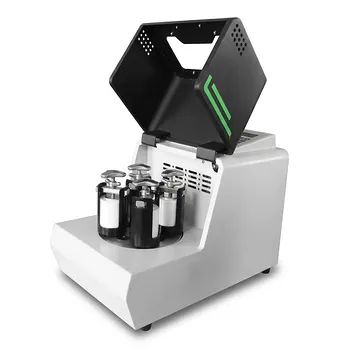
Why is high-energy ball milling essential for WC-Co? Achieve Nanoscale Refinement & Superior Hard Alloy Performance.
Updated 3 months ago
High-energy ball milling is the essential mechanism for transforming raw tungsten and cobalt into nanocrystalline powders by providing the mechanical force necessary for extreme grain refinement and atomic-level alloying. This process reduces tungsten carbide (WC) grains to the nanometer scale, significantly increasing their specific surface area and chemical reactivity. Consequently, these powders produce hard alloy tools with exceptional hardness and wear resistance that cannot be achieved through conventional mixing methods.
High-energy ball milling drives materials into a non-equilibrium state, using intense mechanical impact to store defect energy and force atomic-scale mixing. This process is the only viable path to achieving the ultrafine grain structures and compositional uniformity required for high-performance nanocrystalline hard alloys.
Achieving Ultrafine Grain Refinement
The Power of Mechanical Impact
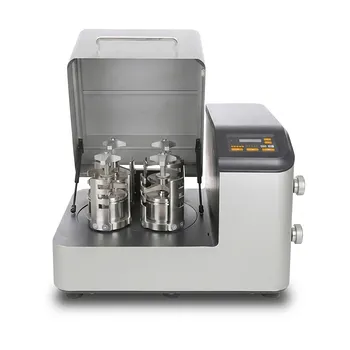
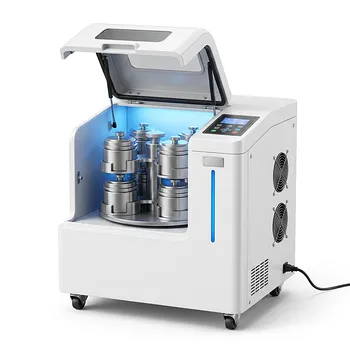
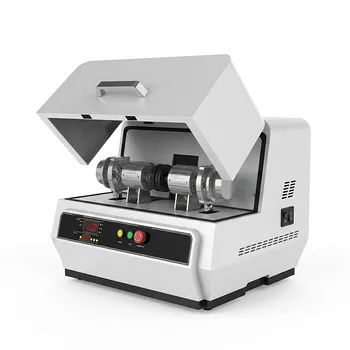
High-energy ball mills, such as planetary, vibratory, or stirred mills, utilize high-frequency, heavy-duty impacts to crush materials. These mills generate intense impact and shear forces that repeatedly fracture and cold-weld powder particles. This cycle continues until the tungsten carbide grains reach a nanometer scale, typically between 13 nm and 18 nm.
Increased Reactivity and Surface Area
Refining grains to the nanometer scale exponentially increases their specific surface area. This high surface area leads to increased chemical reactivity and powder activity. Enhanced activity is vital because it ensures the powder responds more effectively during the subsequent pressing and sintering stages.
The Role of Cryogenic Milling
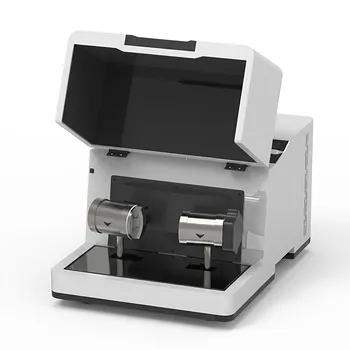
When performed in a liquid nitrogen environment, known as cryogenic high-energy ball milling, the material’s brittleness increases. This ultra-low temperature environment (around -50°C) improves grinding efficiency while inhibiting oxidation and nitridation. The result is a high-purity, nanostructured architecture that maintains its activity for final tool production.
Mechanical Alloying and Energy Storage
Overcoming Thermodynamic Barriers
High-energy milling provides the mechanical work required to force elements into a supersaturated solid solution. Under conventional thermodynamic conditions, certain elements might not mix; however, the high-speed rotation and impact force these atoms into the tungsten lattice. This non-equilibrium processing is critical for creating structures that lead to phase-separation-induced accelerated sintering.
Accumulating Lattice Defects
The process injects a massive amount of excess defect energy into the powder. This energy accumulation creates high-density lattice defects and strain energy within the particles. These defects significantly reduce the activation energy required for chemical transformations during the sintering process.
Driving Force for Stability
By forcing the formation of non-equilibrium solid solutions, the milling process creates a foundation for thermodynamic stability. This occurs through grain boundary segregation, where the excess energy helps stabilize the nanostructure. This structural foundation is what allows the material to retain its "nano" properties even after being heated and formed.
Ensuring Compositional Uniformity
Atomic-Scale Mixing
For high-performance tools, components must be distributed uniformly at the atomic scale. High-energy ball milling breaks down clusters of ceramic particles and embeds them directly into the metal powder. This ensures that the cobalt binder is perfectly dispersed among the tungsten carbide grains.
Breaking Down Segregation
Conventional mixing often results in "clumping" or segregation of different elements, which leads to weak spots in the final tool. The powerful shear forces of high-energy milling eliminate segregation between components. This creates a uniform microstructural foundation essential for forming a stable single-phase solid solution during sintering.
Strengthening via Dispersion
The uniform distribution achieved through milling facilitates dispersion strengthening. By ensuring that nano-reinforcements are evenly spread throughout the matrix, the final hard alloy gains superior structural integrity. This uniformity is the primary reason why milled powders result in tools with such high fracture toughness and durability.
Understanding the Trade-offs
Risk of Contamination
The intense nature of high-energy impacts often leads to wear on the grinding media and the mill lining. This can introduce impurities, such as iron or other mill materials, into the WC-Co powder. Controlling this contamination requires careful selection of milling balls (often made of WC-Co themselves) and precise timing.
Heat Generation and Oxidation
Significant mechanical work generates substantial heat, which can lead to unwanted oxidation of the fine powders. While cryogenic milling mitigates this, standard high-energy milling requires protective atmospheres or cooling cycles to prevent the degradation of the powder's chemical properties.
Structural Sensitivity
Because the powders are in a high-energy, non-equilibrium state, they are highly sensitive to subsequent processing temperatures. If the sintering temperature is not strictly controlled, the "nano" grains can grow rapidly, negating the benefits of the high-energy milling process.
How to Apply This to Your Production Goal
Choosing the Right Milling Strategy
- If your primary focus is maximum hardness and wear resistance: Utilize high-energy planetary milling to achieve the smallest possible grain size (below 20 nm) and maximize lattice defect energy.
- If your primary focus is powder purity and oxidation control: Implement cryogenic high-energy ball milling to maintain a low-temperature environment and inhibit chemical degradation during refinement.
- If your primary focus is rapid sintering and high throughput: Prioritize a milling duration that maximizes the accumulation of strain energy, effectively lowering the activation energy needed for the furnace stage.
High-energy ball milling is not merely a grinding step; it is a sophisticated mechanical alloying process that dictates the final performance of nanocrystalline hard alloy tools.
Summary Table:
| Process Mechanism | Key Advantage | Impact on Final Product |
|---|---|---|
| Grain Refinement | Mechanical impact & shear | Reaches 13-18 nm scale for extreme hardness |
| Mechanical Alloying | Atomic-scale mixing | Creates supersaturated solutions for stability |
| Energy Accumulation | Excess defect energy | Lowers activation energy for faster sintering |
| Dispersion Control | Eliminates segregation | Ensures uniform cobalt binder distribution |
Elevate Your Material Processing with Professional Lab Solutions
At [Your Brand Name], we specialize in providing complete laboratory sample preparation solutions tailored for material science. Whether you are refining nanocrystalline powders or compacting advanced hard alloys, our high-performance equipment ensures precision and reliability at every stage.
Our extensive product line includes:
- Milling & Grinding: Planetary ball mills, jet mills, and liquid nitrogen cryogenic grinders for ultrafine refinement.
- Powder Processing: Crushers, sieve shakers (vibratory/air-jet), and high-efficiency powder or defoaming mixers.
- Advanced Compaction: A full spectrum of hydraulic presses, including Cold/Warm Isostatic Presses (CIP/WIP), vacuum hot presses, and standard lab presses.
Ready to optimize your nanocrystalline WC-Co production? Contact our technical team today to find the perfect equipment configuration for your research or manufacturing needs.
References
- P. Sarma, Anil Borah. Solid Lubricants in Sustainable Manufacturing: A Review of Processing Techniques, Materials and Applications. DOI: 10.15282/ijame.22.4.2025.1.0978
Mentioned Products
- High Energy Planetary Ball Mill for Nano Scale Grinding and Mechanical Alloying
- High Energy Hybrid Vibratory Ball Mill for Grinding Mixing and Cell Disruption
- High Energy Omnidirectional Planetary Ball Mill 16L
- High Energy Laboratory Planetary Ball Mill for Nano Grinding and Material Science Sample Preparation
- Ultra-Low Temperature Cryogenic High-Energy Vibratory Ball Mill
People Also Ask
- Why is a high-energy planetary ball mill used for nano-milling As4Se3? Achieve Expert Structural Transformation
- What role do high-energy planetary ball mills play in FDM composite filament preparation? Optimize Material Performance
- What is the role of a high-energy planetary ball mill in the exfoliation of modified WSe2? Achieve Nano-Precision
- What is the function of a planetary ball mill in glass-ceramic sintering? Optimize Reactivity and Uniformity
- What is the role of a high-energy planetary ball mill in the preparation of high-performance nano-ceramics? Key Guide

Tech Team · PowderPreparation
Last updated on May 14, 2026
Related Products
High Energy Planetary Ball Mill for Nano Scale Grinding and Mechanical Alloying

High Energy Hybrid Vibratory Ball Mill for Grinding Mixing and Cell Disruption
High Energy Omnidirectional Planetary Ball Mill 16L
High Energy Laboratory Planetary Ball Mill for Nano Grinding and Material Science Sample Preparation
Ultra-Low Temperature Cryogenic High-Energy Vibratory Ball Mill

Nano High Energy Vibratory Ball Mill with Heating and Temperature Control
High Energy Planetary Ball Mill for Nano Scale Grinding and Colloidal Mixing in Material Science Research
High Energy Omnidirectional Planetary Ball Mill 20L
Dual Jar High Energy Vibratory Ball Mill

Multi-Platform Nanoscale High-Energy Vibratory Ball Mill
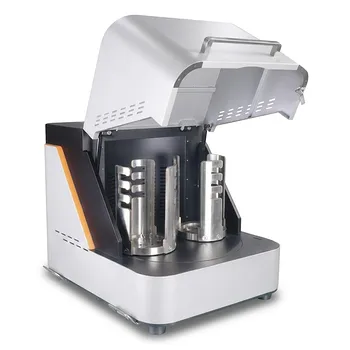
High Energy Laboratory Planetary Ball Mill for Nano Grinding and Colloidal Mixing of Hard and Brittle Materials
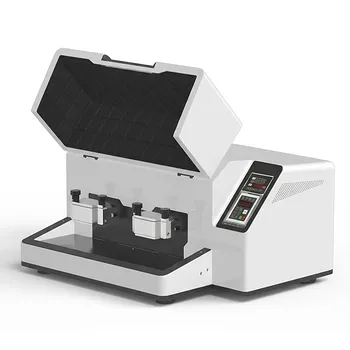
Nanoscale High-Energy Vibratory Ball Mill for Laboratory Sample Preparation, Mechanochemistry, and Mechanical Alloying
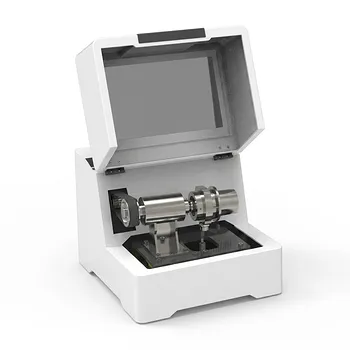
Single Tank High Energy Vibratory Ball Mill for Laboratory Grinding and Mixing
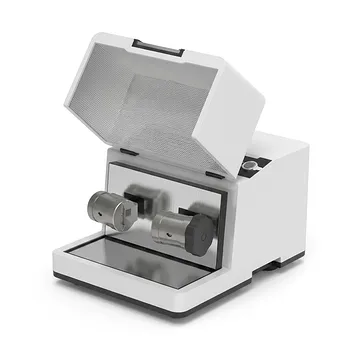
Heating Temperature Controlled High Energy Vibratory Ball Mill

Nano High Energy Vibratory Ball Mill for Laboratory Sample Preparation
Nanoscale High Energy Vibratory Ball Mill Low Temperature
Vertical Square Planetary Ball Mill for Laboratory Sample Preparation and Nanoscale Grinding

8L Planetary Ball Mill for Laboratory Grinding and Sample Preparation
Planetary Ball Mill 12L