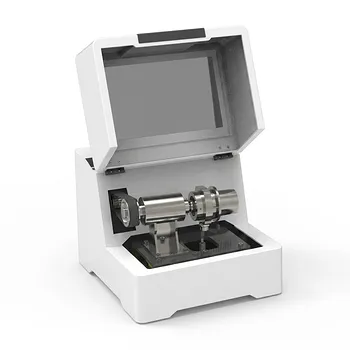
What is the purpose of high-energy planetary ball milling for Fe-MMCs? Achieve Mechanical Alloying & Uniformity
Updated 3 months ago
The primary purpose of using a high-energy planetary ball mill in the preparation of Iron-Based Metal Matrix Composites (Fe-MMCs) is to achieve mechanical alloying and a uniform distribution of reinforcement particles within the iron matrix. Through high-speed rotation and intense mechanical force, the mill refines powder particles to the nanometer scale, ensuring that components like graphite, SiC, or Cu are thoroughly integrated. This process establishes the critical microstructural foundation necessary to achieve high performance and low porosity during subsequent consolidation phases.
High-energy planetary ball milling uses intense mechanical forces to physically blend, refine, and activate powders at a structural level. This creates a homogeneous precursor material that is essential for producing high-density, high-strength metal matrix composites.
The Mechanics of High-Energy Milling
The Dynamics of Counter-Rotation
A planetary ball mill operates through the simultaneous rotation of a supporting sun disk and the counter-rotation of individual milling jars. This dual-rotation movement generates powerful centrifugal forces that propel grinding balls against the powder and jar walls.
The resulting high-speed collisions provide the kinetic energy required to facilitate mechanical alloying, a process that would not occur through simple mixing.
Impact and Shear Forces
The milling process relies on a combination of high-energy impact and intense shear friction. These forces are capable of breaking down micro-scale powders—such as iron and barium sulfate—into nano-scale particles.
By operating at high speeds (such as 600 rpm), the mill generates enough energy to overcome the bonding forces between crystal grains, significantly increasing the powder's specific surface area.
Microstructural Transformation and Homogeneity
Particle Refinement and Nanocrystallization
Continuous impact and shear forces induce nanocrystallization, reducing grain sizes to as low as 12–14 nm. This refinement is critical for improving the mechanical strength of the final Fe-MMC.
The process also introduces significant dislocations and internal micro-strains within the powder particles. These defects increase the reactivity of the material, making subsequent sintering and hot-pressing more efficient.
Uniform Phase Distribution
Achieving a "homogeneous microstructure" is the primary goal of milling reinforcements into a metal matrix. The mill ensures that nano-reinforcement phases are evenly embedded, preventing the segregation of components.
In some cases, this leads to the formation of a core-shell microstructure, where reinforcements surround the iron core. This specific arrangement is vital for determining the magnetic and mechanical performance of the finished sample.
The Role of Mechanical Alloying
Cold Welding and Fracturing
High-energy milling involves a repetitive cycle of cold welding and fracturing of powder particles. When particles are trapped between grinding balls, they are flattened and welded together, only to be broken apart by subsequent impacts.
This cycle facilitates the forced mixing of heterogeneous elements at the atomic scale. It allows for the preparation of metastable solid solutions that exceed the limits of standard thermodynamic equilibrium.
Surface Activation
The milling process continuously exposes fresh metal surfaces, which is particularly useful for promoting chemical reactions or surface coatings. This "mechanical chemical activation" ensures that the different components of the Fe-MMC bond more effectively during the pressing stage.
Understanding the Trade-offs and Limitations
Potential for Contamination
The same high-energy forces that refine the powder can also cause wear and tear on the grinding media (balls and jars). This often introduces small amounts of impurities from the milling equipment into the composite.
Heat Generation and Material Stability
Intense friction generates significant heat within the jars, which can lead to unwanted phase transformations or the oxidation of sensitive powders. Careful monitoring of milling duration and cooling intervals is often required to maintain material integrity.
Energy Consumption and Scaling
High-energy ball milling is an energy-intensive process that requires precise control over parameters like ball-to-powder ratio and rotation speed. While effective for laboratory-scale synthesis, scaling the process for mass production requires balancing energy costs against material quality.
How to Optimize Milling for Your Project
Making the Right Choice for Your Goal
To achieve the best results with Iron-Based Metal Matrix Composites, the milling parameters must be aligned with the desired final properties of the material.
- If your primary focus is Maximum Density: Use high-speed milling to maximize particle refinement, as smaller particles fill voids more effectively during hot pressing to ensure low porosity.
- If your primary focus is Magnetic Performance: Prioritize the formation of a core-shell microstructure by adjusting milling time to ensure reinforcements wrap around the iron core without excessive fracturing.
- If your primary focus is Chemical Purity: Opt for shorter milling cycles or specialized wear-resistant jars (like tungsten carbide) to minimize contamination from the grinding media.
By precisely controlling the mechanical energy delivered during the milling phase, you can engineer a microstructural foundation that dictates the ultimate success of your metal matrix composite.
Summary Table:
| Key Process | Primary Benefit | Impact on Fe-MMCs |
|---|---|---|
| Mechanical Alloying | Forced atomic-scale mixing | Creates metastable solid solutions beyond equilibrium |
| Particle Refinement | Reduction to nanometer scale | Increases reactivity and enhances mechanical strength |
| Homogenization | Uniform phase distribution | Prevents particle segregation; enables core-shell structures |
| Surface Activation | Increased surface energy | Promotes superior bonding during sintering and pressing |
Elevate Your Material Research with Precision Powder Solutions
Achieving the perfect microstructural foundation for Iron-Based Metal Matrix Composites requires more than just mixing—it requires precision engineering. At KINTEK, we provide complete laboratory sample preparation solutions tailored for material science innovators.
From our high-energy planetary ball mills, jet mills, and cryogenic grinders to our advanced compaction line—including Cold/Warm Isostatic Presses (CIP/WIP), vacuum hot presses, and XRF pellet presses—we offer the specialized equipment needed to ensure your powders achieve maximum density and homogeneity.
Ready to optimize your Fe-MMC synthesis? Contact our technical experts today to find the ideal equipment for your lab!
References
- Azam Beigi Kheradmand, Bejan Hamawandi. Tribological Characterization of Reinforced Fe Matrix Composites with Hybrid Reinforcement of C, Cu, and SiC Particulates. DOI: 10.3390/cryst12050598
Mentioned Products
- High Energy Planetary Ball Mill for Nano Scale Grinding and Mechanical Alloying
- High Energy Omnidirectional Planetary Ball Mill 16L
- High Energy Laboratory Planetary Ball Mill for Nano Grinding and Colloidal Mixing of Hard and Brittle Materials
- High Energy Omnidirectional Planetary Ball Mill 20L
- High Energy Planetary Ball Mill for Nano Scale Grinding and Colloidal Mixing in Material Science Research
People Also Ask
- Why is a high-energy planetary ball mill used for nano-milling As4Se3? Achieve Expert Structural Transformation
- What role do high-energy planetary ball mills play in FDM composite filament preparation? Optimize Material Performance
- What is the role of a high-energy planetary ball mill in the exfoliation of modified WSe2? Achieve Nano-Precision
- What is the function of a planetary ball mill in glass-ceramic sintering? Optimize Reactivity and Uniformity
- What is the role of a high-energy planetary ball mill in the preparation of high-performance nano-ceramics? Key Guide

Tech Team · PowderPreparation
Last updated on Jun 03, 2026
Related Products

High Energy Planetary Ball Mill for Nano Scale Grinding and Mechanical Alloying
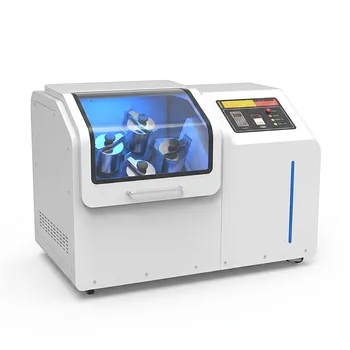
High Energy Omnidirectional Planetary Ball Mill 16L

High Energy Laboratory Planetary Ball Mill for Nano Grinding and Colloidal Mixing of Hard and Brittle Materials
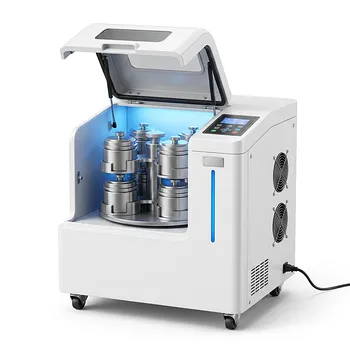
High Energy Omnidirectional Planetary Ball Mill 20L
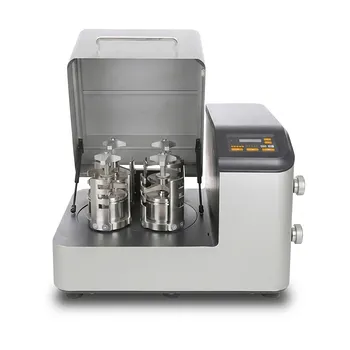
High Energy Planetary Ball Mill for Nano Scale Grinding and Colloidal Mixing in Material Science Research

High Energy Laboratory Planetary Ball Mill for Nano Grinding and Material Science Sample Preparation

8L Planetary Ball Mill for Laboratory Grinding and Sample Preparation
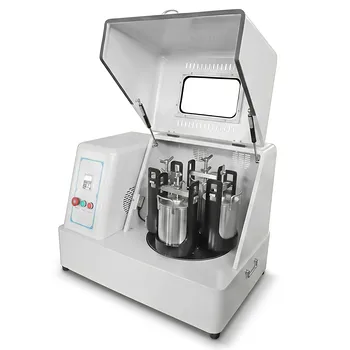
Vertical Square Planetary Ball Mill for Laboratory Sample Preparation and Nanoscale Grinding
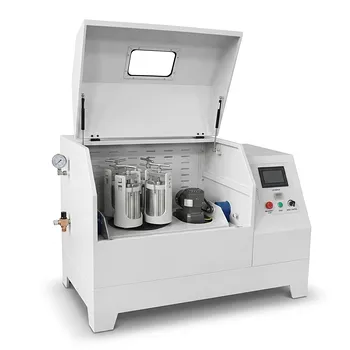
Vertical Production Planetary Ball Mill for High Throughput Powder Processing

Miniature Planetary Ball Mill with Vacuum Grinding and High Efficiency for Laboratory Sample Preparation
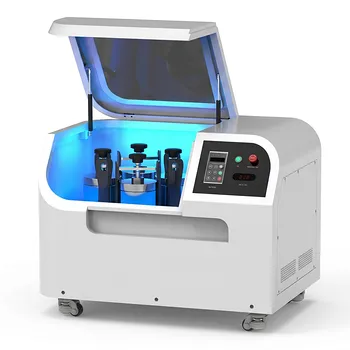
Planetary Ball Mill 12L

Dual Station Planetary Ball Mill 24L
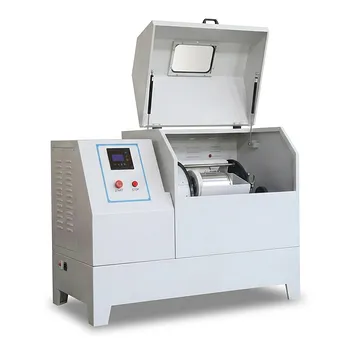
Heavy Duty Horizontal Planetary Ball Mill for Efficient Industrial Grinding and Sample Preparation

Multi-Platform Nanoscale High-Energy Vibratory Ball Mill
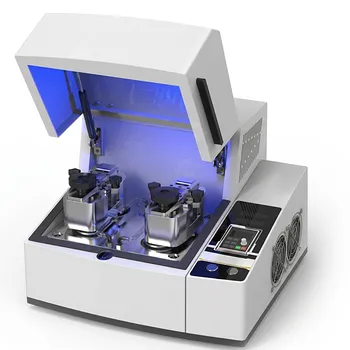
Laboratory Nano High Energy Ball Mill Ultrafine Grinding Mechanical Alloying

High Energy Hybrid Vibratory Ball Mill for Grinding Mixing and Cell Disruption

Nano High Energy Vibratory Ball Mill with Heating and Temperature Control

Nanoscale High-Energy Vibratory Ball Mill for Laboratory Sample Preparation, Mechanochemistry, and Mechanical Alloying

Nano High Energy Vibratory Ball Mill for Laboratory Sample Preparation