Why is high-energy ball milling essential for Al-GO composites? Achieve uniform graphene dispersion and bonding.
Updated 4 months ago
High-energy ball milling (HEBM) is the critical bridge between raw materials and a high-performance composite. It is essential because it overcomes the natural tendency of Graphene Oxide (GO) to agglomerate by using mechanical impact and shear forces to break clusters and embed the reinforcement directly into the aluminum particles. This process ensures a level of microstructural uniformity and interfacial bonding that standard mixing techniques cannot achieve.
High-energy ball milling is necessary to solve the twin challenges of graphene agglomeration and poor interfacial bonding in metal matrix composites. By subjecting materials to repeated cycles of cold welding and fracturing, it creates a homogenous pre-dispersion that is vital for the mechanical integrity of the final Aluminum-GO structure.
Overcoming the Agglomeration Barrier
The Challenge of Van der Waals Forces
Graphene Oxide possesses an extremely high specific surface area, which makes it highly prone to clumping due to strong van der Waals forces. In standard mixing, these forces cause GO to segregate, leading to "soft spots" in the composite that degrade mechanical properties.
Mechanical Disruption of Clusters
HEBM utilizes high-frequency impacts from grinding media to provide the necessary energy to overcome these inter-particle forces. The impact and shear forces generated by high-speed rotation effectively break down GO aggregates into nano-scale layers.
Achieving Spatial Uniformity
By breaking down clusters at the source, the milling process ensures a spatial uniform dispersion of the reinforcement. This prevents the graphene segregation that typically occurs during subsequent processing stages like sintering or extrusion.
The Dynamics of Cold Welding and Fracturing
Embedding the Reinforcement
During the milling process, aluminum powder and GO are subjected to repeated cycles of cold welding and fracturing. These collisions force the graphene layers to become physically embedded into the surface or the interior of the aluminum alloy matrix.
Creating a Nano-Scale Pre-Dispersion
This mechanical alloying process creates a nano-scale pre-dispersion where the GO is no longer a separate phase sitting on top of the powder. Instead, it becomes an integral part of the composite powder particles, providing a foundation for a uniform microstructure.
Refining Particle Size
Graphene oxide acts as a barrier or process control agent during milling, limiting the excessive cold welding of the ductile aluminum powder. This helps to refine the particle size of the resulting composite powder, ensuring it remains at an optimal dimension for further consolidation.
Understanding the Trade-offs and Risks
Potential for Structural Damage
The high energy required to disperse GO can also be destructive to its lattice structure. Prolonged milling or excessive energy may introduce defects into the graphene layers, potentially reducing the thermal or electrical conductivity of the final composite.
Contamination from Milling Media
Extended milling times increase the risk of impurities being introduced from the wear of the grinding balls or the vial walls. Careful selection of milling media (such as stainless steel or zirconia) and milling parameters is required to maintain high material purity.
Energy Consumption and Cost
HEBM is a time-intensive and energy-heavy process compared to simple wet or dry mixing. For industrial-scale production, the benefits of improved mechanical performance must be weighed against the higher operational costs and lower throughput.
How to Apply This to Your Project
When integrating high-energy ball milling into your fabrication workflow, your approach should be dictated by the specific requirements of your application:
- If your primary focus is maximum mechanical strength: Prioritize longer milling times and higher energy settings to ensure deep embedding and mechanical alloying of the GO into the aluminum matrix.
- If your primary focus is preserving the properties of GO: Utilize a step-by-step feeding process and moderate energy levels to achieve dispersion without causing extensive structural damage to the graphene lattice.
- If your primary focus is powder flowability for 3D printing: Monitor the milling duration closely to prevent excessive particle size refinement, ensuring the composite powder maintains the morphology required for consistent layering.
By mastering the balance between energy input and material integrity, you can leverage high-energy ball milling to produce Aluminum-GO composites with superior structural performance.
Summary Table:
| Key Milling Aspect | Impact on Al-GO Fabrication | Primary Benefit |
|---|---|---|
| Agglomeration Control | Breaks Van der Waals forces in GO | Eliminates soft spots and clusters |
| Mechanical Alloying | Repeated cold welding and fracturing | Physically embeds GO into Al matrix |
| Particle Refinement | GO acts as a process control agent | Optimizes powder for sintering/3D printing |
| Interfacial Bonding | Creates nano-scale pre-dispersion | Maximizes final structural integrity |
Optimize Your Al-GO Composite Fabrication with Precision Equipment
Achieving superior mechanical performance in material science requires the right balance of energy and precision. At [Your Brand Name], we provide complete laboratory sample preparation solutions tailored for advanced powder processing and compaction.
Our extensive product lines are designed to help you master the Al-GO milling process:
- High-Performance Milling: Planetary ball mills, jet mills, and cryogenic grinders for achieving nano-scale pre-dispersion.
- Advanced Mixing: Specialized powder mixers and defoaming mixers to ensure spatial uniformity.
- Precision Compaction: A full spectrum of hydraulic presses, including Cold/Warm Isostatic Presses (CIP/WIP), vacuum hot presses, and standard lab presses for final material consolidation.
Ready to enhance your lab's efficiency and composite quality? Contact our technical experts today to find the perfect equipment solution for your material science research!
References
- Amirhossien Bahri, Sajede Roueini Fardi. Mechanical and electrochemical behaviors assessments of Aluminum- Graphene Oxide composites fabricated by mechanical milling and repetitive upsetting extrusion. DOI: 10.52547/jcc.3.3.1
Mentioned Products
- High Energy Planetary Ball Mill for Nano Scale Grinding and Mechanical Alloying
- High Energy Hybrid Vibratory Ball Mill for Grinding Mixing and Cell Disruption
- High Energy Laboratory Planetary Ball Mill for Nano Grinding and Material Science Sample Preparation
- High Energy Omnidirectional Planetary Ball Mill 16L
- Ultra-Low Temperature Cryogenic High-Energy Vibratory Ball Mill
People Also Ask
- Why is a high-energy planetary ball mill used for nano-milling As4Se3? Achieve Expert Structural Transformation
- What role do high-energy planetary ball mills play in FDM composite filament preparation? Optimize Material Performance
- What is the role of a high-energy planetary ball mill in the exfoliation of modified WSe2? Achieve Nano-Precision
- What is the function of a planetary ball mill in glass-ceramic sintering? Optimize Reactivity and Uniformity
- What is the role of a high-energy planetary ball mill in the preparation of high-performance nano-ceramics? Key Guide

Tech Team · PowderPreparation
Last updated on Jun 03, 2026
Related Products

High Energy Planetary Ball Mill for Nano Scale Grinding and Mechanical Alloying

High Energy Hybrid Vibratory Ball Mill for Grinding Mixing and Cell Disruption

High Energy Laboratory Planetary Ball Mill for Nano Grinding and Material Science Sample Preparation
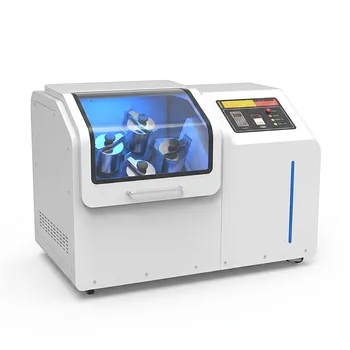
High Energy Omnidirectional Planetary Ball Mill 16L

Ultra-Low Temperature Cryogenic High-Energy Vibratory Ball Mill
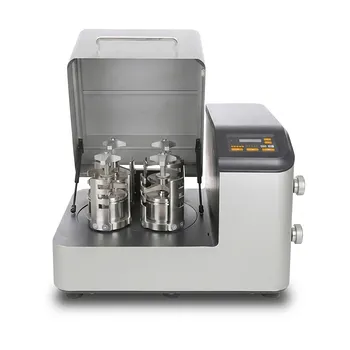
High Energy Planetary Ball Mill for Nano Scale Grinding and Colloidal Mixing in Material Science Research

Nano High Energy Vibratory Ball Mill with Heating and Temperature Control
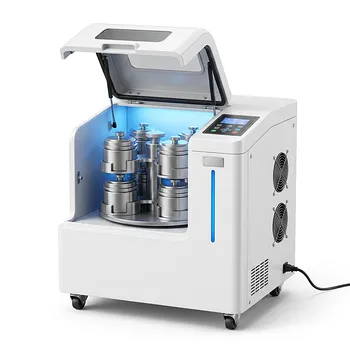
High Energy Omnidirectional Planetary Ball Mill 20L

High Energy Laboratory Planetary Ball Mill for Nano Grinding and Colloidal Mixing of Hard and Brittle Materials
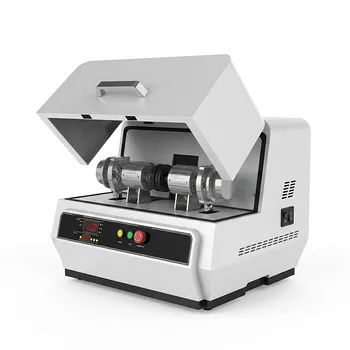
Dual Jar High Energy Vibratory Ball Mill

Multi-Platform Nanoscale High-Energy Vibratory Ball Mill
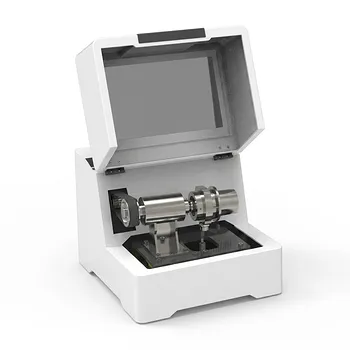
Single Tank High Energy Vibratory Ball Mill for Laboratory Grinding and Mixing

Nanoscale High-Energy Vibratory Ball Mill for Laboratory Sample Preparation, Mechanochemistry, and Mechanical Alloying

Heating Temperature Controlled High Energy Vibratory Ball Mill

Nano High Energy Vibratory Ball Mill for Laboratory Sample Preparation
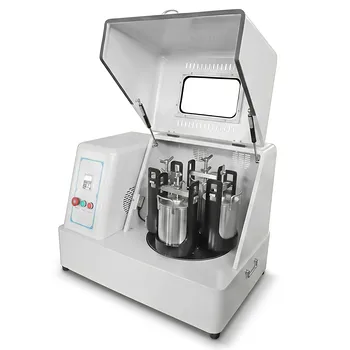
Vertical Square Planetary Ball Mill for Laboratory Sample Preparation and Nanoscale Grinding
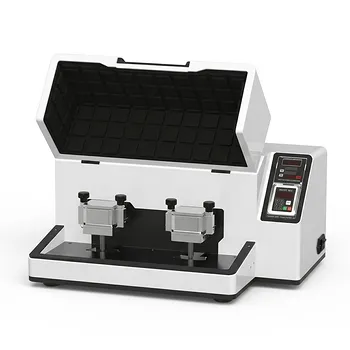
Nanoscale High Energy Vibratory Ball Mill Low Temperature

8L Planetary Ball Mill for Laboratory Grinding and Sample Preparation
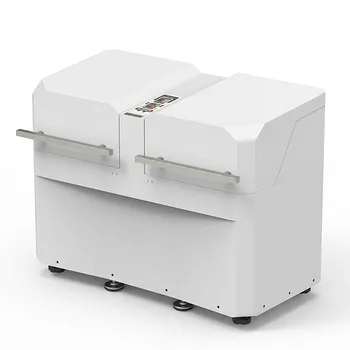
Dual Station Planetary Ball Mill 24L